Singapore Printed Signage Market: Import Trend Analysis
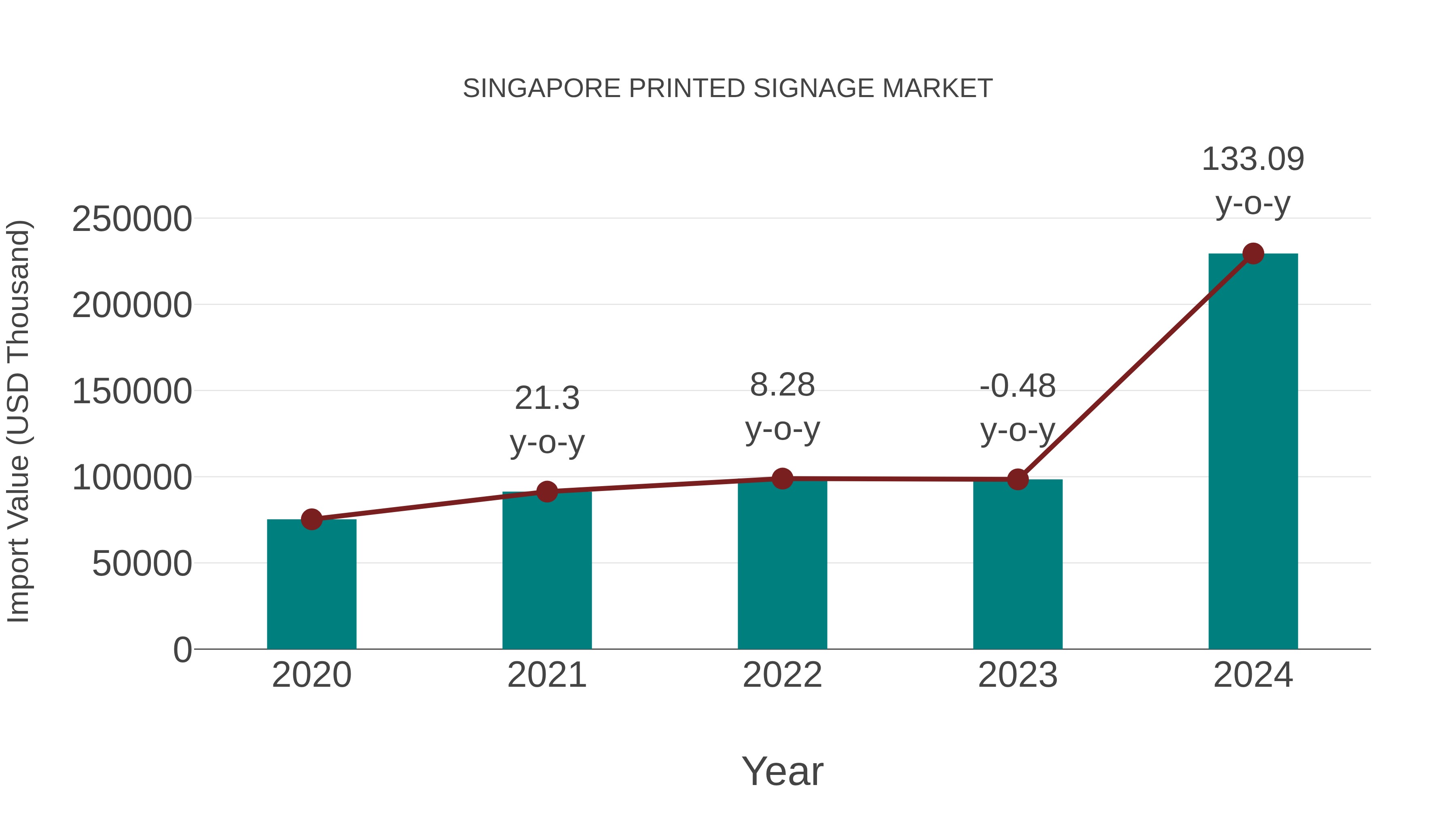
In 2024, Singapore`s printed signage market saw a notable increase in imports. The trend reflected a growing demand for printed signage products, possibly driven by expanding business activities and marketing efforts in the region.
Singapore Printed Signage Market Synopsis
The Singapore printed signage market is a dynamic and growing sector driven by the country`s vibrant economy and diverse business landscape. The market offers a wide range of printed signage solutions including banners, posters, decals, and vehicle wraps, catering to various industries such as retail, hospitality, events, and transportation. With a strong emphasis on quality and innovation, Singaporean businesses are increasingly investing in printed signage to enhance their brand visibility and create impactful marketing campaigns. The market is characterized by a mix of large established printing companies and smaller, specialized firms offering customized solutions. Technological advancements such as digital printing and eco-friendly materials are also shaping the market trends. Overall, the Singapore printed signage market is poised for continued growth, fueled by the increasing demand for visually appealing and effective advertising solutions.
Singapore Printed Signage Market Trends
In the Singapore Printed Signage Market, a notable trend is the growing demand for eco-friendly and sustainable signage solutions. Businesses and consumers are increasingly conscious of their environmental impact, leading to a preference for signage materials that are recyclable, biodegradable, or made from sustainable sources. This shift towards eco-friendly options is driven by both regulatory requirements and a genuine commitment to sustainability. Additionally, there is a rising interest in innovative signage technologies such as digital signage and interactive displays, which offer dynamic and engaging ways to communicate messages to target audiences. As businesses look for ways to stand out in a competitive market, these trends are shaping the Printed Signage Market in Singapore towards more sustainable and technologically advanced solutions.
Singapore Printed Signage Market Challenges
The Singapore Printed Signage Market faces challenges such as increasing competition from digital advertising platforms, technological advancements leading to a shift towards digital signage, and rising production costs due to factors like raw material prices and labor expenses. Additionally, stringent regulations on outdoor advertising and environmental concerns related to printing processes and materials present obstacles for businesses operating in this market. Adapting to the changing preferences of consumers, investing in innovative printing technologies, and focusing on sustainability measures are crucial for companies to overcome these challenges and remain competitive in the Singapore Printed Signage Market.
Singapore Printed Signage Market Investment Opportunities
The Singapore Printed Signage Market offers promising investment opportunities due to the country`s vibrant business environment and strong demand for advertising and branding solutions. With Singapore being a major business hub in Asia, there is a constant need for high-quality and innovative signage to attract customers and enhance brand visibility. Investors can consider opportunities in digital signage technology, eco-friendly materials, and customizable signage solutions to cater to diverse industry needs. Additionally, the growing emphasis on sustainability and visual aesthetics in urban spaces presents avenues for investment in eco-conscious and visually appealing signage products. Overall, the Singapore Printed Signage Market presents a lucrative prospect for investors looking to capitalize on the country`s dynamic commercial landscape and increasing demand for effective advertising solutions.
Jordan Agar Market Government Policies
The Singapore Printed Signage Market is regulated by various government policies aimed at ensuring safety, quality, and compliance. The Building and Construction Authority (BCA) sets standards for signage installation to maintain structural integrity and safety. The Urban Redevelopment Authority (URA) governs the placement and size of outdoor signage to preserve the city`s aesthetics and ensure public safety. The Advertising Standards Authority of Singapore (ASAS) monitors advertising content on printed signage to prevent misleading or offensive messages. Additionally, the National Environment Agency (NEA) enforces regulations on the disposal of signage materials to promote environmental sustainability. Overall, these government policies play a crucial role in shaping the Singapore Printed Signage Market by promoting professionalism, safety, and sustainability in the industry.
Singapore Printed Signage Market Future Outlook
The future outlook for the Singapore Printed Signage Market appears positive, driven by the increasing adoption of digital printing technologies, growing demand for customized and visually appealing signage solutions, and the expanding retail and hospitality sectors in the country. With the rise of e-commerce and online businesses, there is also a need for physical signage to enhance brand visibility and attract customers to brick-and-mortar stores. Additionally, the focus on sustainability and eco-friendly practices is likely to drive the demand for environmentally friendly printing materials and processes in the signage industry. Overall, the Singapore Printed Signage Market is expected to experience steady growth in the coming years, with opportunities for innovation and differentiation through advanced printing techniques and materials.
Key Highlights of the Report:
- Singapore Printed Signage Market Outlook
- Market Size of Singapore Printed Signage Market, 2025
- Forecast of Singapore Printed Signage Market, 2032
- Historical Data and Forecast of Singapore Printed Signage Revenues & Volume for the Period 2022 - 2032F
- Singapore Printed Signage Market Trend Evolution
- Singapore Printed Signage Market Drivers and Challenges
- Singapore Printed Signage Price Trends
- Singapore Printed Signage Porter's Five Forces
- Singapore Printed Signage Industry Life Cycle
- Historical Data and Forecast of Singapore Printed Signage Market Revenues & Volume By Product for the Period 2022 - 2032F
- Historical Data and Forecast of Singapore Printed Signage Market Revenues & Volume By Billboard for the Period 2022 - 2032F
- Historical Data and Forecast of Singapore Printed Signage Market Revenues & Volume By Backlit Display for the Period 2022 - 2032F
- Historical Data and Forecast of Singapore Printed Signage Market Revenues & Volume By Pop Display for the Period 2022 - 2032F
- Historical Data and Forecast of Singapore Printed Signage Market Revenues & Volume By Banner for the Period 2022 - 2032F
- Historical Data and Forecast of Singapore Printed Signage Market Revenues & Volume By Corporate Graphics for the Period 2022 - 2032F
- Historical Data and Forecast of Singapore Printed Signage Market Revenues & Volume By Others for the Period 2022 - 2032F
- Historical Data and Forecast of Singapore Printed Signage Market Revenues & Volume By Type for the Period 2022 - 2032F
- Historical Data and Forecast of Singapore Printed Signage Market Revenues & Volume By Indoor Printed Signage for the Period 2022 - 2032F
- Historical Data and Forecast of Singapore Printed Signage Market Revenues & Volume By Outdoor Printed Signage for the Period 2022 - 2032F
- Historical Data and Forecast of Singapore Printed Signage Market Revenues & Volume By End-user Vertical for the Period 2022 - 2032F
- Historical Data and Forecast of Singapore Printed Signage Market Revenues & Volume By BFSI for the Period 2022 - 2032F
- Historical Data and Forecast of Singapore Printed Signage Market Revenues & Volume By Retail for the Period 2022 - 2032F
- Historical Data and Forecast of Singapore Printed Signage Market Revenues & Volume By Sports and Leisure for the Period 2022 - 2032F
- Historical Data and Forecast of Singapore Printed Signage Market Revenues & Volume By Entertainment for the Period 2022 - 2032F
- Historical Data and Forecast of Singapore Printed Signage Market Revenues & Volume By Transportation and Logistics for the Period 2022 - 2032F
- Historical Data and Forecast of Singapore Printed Signage Market Revenues & Volume By Healthcare for the Period 2022 - 2032F
- Historical Data and Forecast of Singapore Printed Signage Market Revenues & Volume By Others for the Period 2022 - 2032F
- Singapore Printed Signage Import Export Trade Statistics
- Market Opportunity Assessment By Product
- Market Opportunity Assessment By Type
- Market Opportunity Assessment By End-user Vertical
- Singapore Printed Signage Top Companies Market Share
- Singapore Printed Signage Competitive Benchmarking By Technical and Operational Parameters
- Singapore Printed Signage Company Profiles
- Singapore Printed Signage Key Strategic Recommendations






































