Singapore Small Wind Turbine Market: Import Trend Analysis
In 2024, Singapore`s small wind turbine market saw a consistent upward trend in imports. The demand for small wind turbines in Singapore showed a notable increase, reflecting a growing interest in renewable energy sources within the country.
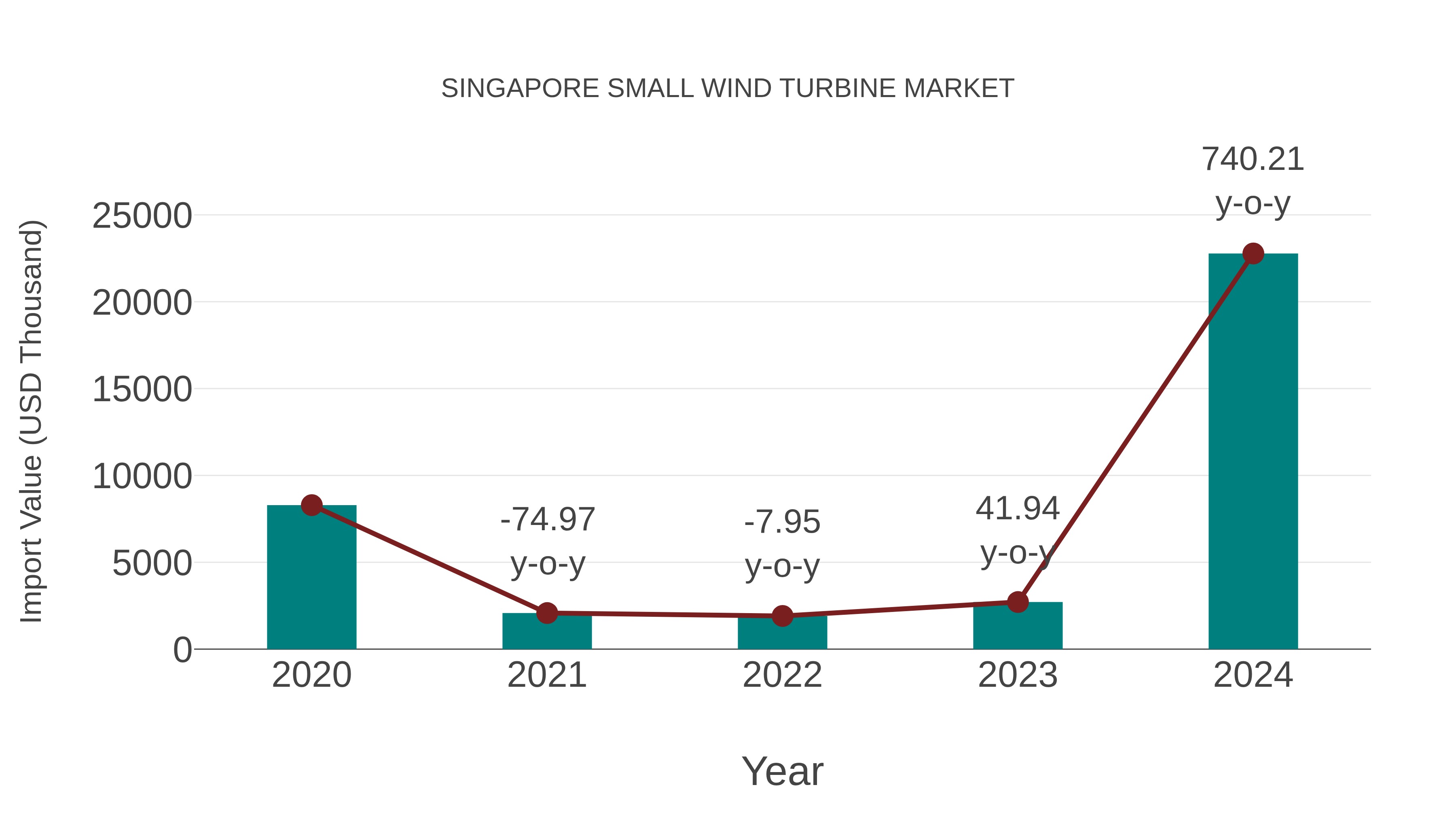
Singapore Small Wind Turbine Market Synopsis
The small wind turbine market in Singapore holds promising prospects as the country seeks to diversify its energy sources and enhance sustainability efforts. Small wind turbines offer a decentralized and renewable energy solution, making them suitable for residential, commercial, and remote applications. With an increasing focus on reducing carbon emissions and promoting clean energy, the adoption of small wind turbines is likely to grow. Government incentives, favorable regulations, and public awareness about renewable energy`s benefits are expected to contribute to the expansion of the small wind turbine market.
Drivers of the Market
The Singapore small wind turbine market is propelled by the nation`s commitment to renewable energy and sustainability. The government`s initiatives and incentives to promote clean energy solutions have encouraged the adoption of small wind turbines. These turbines are seen as a viable option for decentralized energy generation, particularly in remote or off-grid areas. The increasing awareness of environmental concerns and the pursuit of energy independence are key drivers behind the growth of this market.
Challenges of the Market
In the Singapore small wind turbine market, the main challenge is the limited wind resources in the region. Singapore urban landscape and geographical location result in low and inconsistent wind speeds, making it challenging to generate consistent power from small wind turbines. To overcome this, research and development efforts need to focus on improving turbine efficiency and exploring alternative renewable energy sources.
COVID-19 Impact on the Market
The small wind turbine market faced challenges during the pandemic as construction projects and renewable energy investments were temporarily put on hold. The market also experienced supply chain disruptions affecting the availability of components. However, as sustainability goals and renewable energy targets remained a priority for Singapore, investments in small wind turbines resumed. The market is likely to see growth, especially in remote and off-grid areas, as renewable energy sources gain importance.
Key Players in the Market
Prominent players in the Singapore small wind turbine market include Vestas Wind Systems A/S, Siemens Gamesa Renewable Energy, General Electric Company, and Suzlon Energy Limited. These companies offer sustainable wind energy solutions for various applications.
Key Highlights of the Report:
- Singapore Small Wind Turbine Market Outlook
- Market Size of Singapore Small Wind Turbine Market, 2025
- Forecast of Singapore Small Wind Turbine Market, 2032
- Historical Data and Forecast of Singapore Small Wind Turbine Revenues & Volume for the Period 2022-2032F
- Singapore Small Wind Turbine Market Trend Evolution
- Singapore Small Wind Turbine Market Drivers and Challenges
- Singapore Small Wind Turbine Price Trends
- Singapore Small Wind Turbine Porter's Five Forces
- Singapore Small Wind Turbine Industry Life Cycle
- Historical Data and Forecast of Singapore Small Wind Turbine Market Revenues & Volume By Axis Type for the Period 2022-2032F
- Historical Data and Forecast of Singapore Small Wind Turbine Market Revenues & Volume By Horizontal Axis Wind Turbine for the Period 2022-2032F
- Historical Data and Forecast of Singapore Small Wind Turbine Market Revenues & Volume By Vertical Axis Wind Turbine for the Period 2022-2032F
- Historical Data and Forecast of Singapore Small Wind Turbine Market Revenues & Volume By Application for the Period 2022-2032F
- Historical Data and Forecast of Singapore Small Wind Turbine Market Revenues & Volume By On-grid for the Period 2022-2032F
- Historical Data and Forecast of Singapore Small Wind Turbine Market Revenues & Volume By Off-grid for the Period 2022-2032F
- Singapore Small Wind Turbine Import Export Trade Statistics
- Market Opportunity Assessment By Axis Type
- Market Opportunity Assessment By Application
- Singapore Small Wind Turbine Top Companies Market Share
- Singapore Small Wind Turbine Competitive Benchmarking By Technical and Operational Parameters
- Singapore Small Wind Turbine Company Profiles
- Singapore Small Wind Turbine Key Strategic Recommendations






































