Slovakia Art and Sculpture Market Size, Share & Growth Rate
The Slovakia Art and Sculpture Market was estimated at USD 151 Million in 2025 and is projected to reach USD 213 Million by 2032, growing at a CAGR of 5.0% from 2026 to 2032. This growth trajectory is driven by a burgeoning appreciation for contemporary art and a strong cultural identity that encourages investment in local artistic talent. Increasing exposure through digital platforms and art events is enhancing access for a broader audience, thereby fueling market dynamics.
Slovakia Art and Sculpture Market Year-wise Growth Rate and Key Drivers
This graph highlights how the Slovakia Art and Sculpture Market has steadily grown over the years, supported by major growth factors.
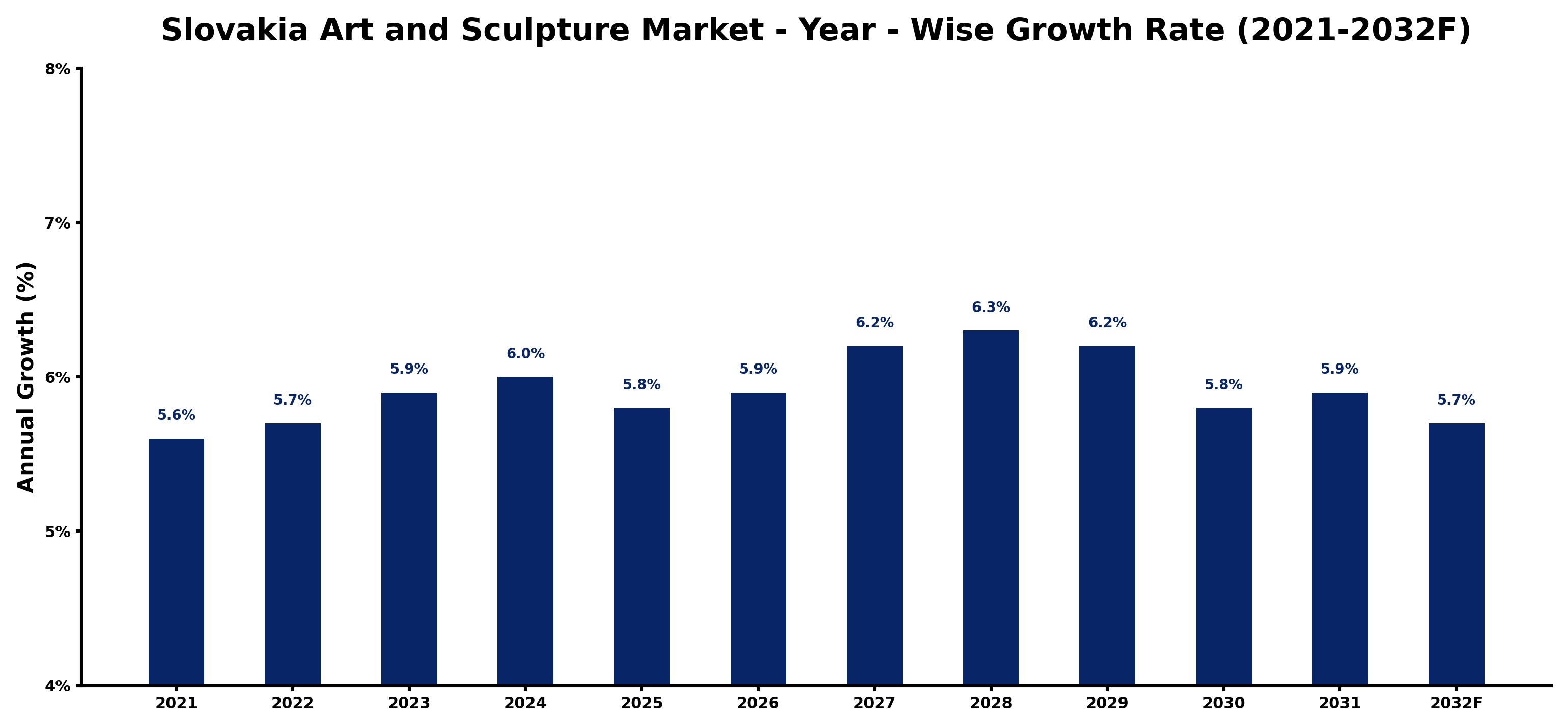
The table below presents the year‑wise growth rates along with the key drivers influencing the market
| Year | Growth Rate | Major Drivers |
| 2021 | 5.6% | Rising electricity demand across industries |
| 2022 | 5.7% | Rising electricity demand across industries |
| 2023 | 5.9% | Expansion of transportation and logistics networks |
| 2024 | 6.0% | Expansion of manufacturing activities |
| 2025 | 5.8% | Expansion of transportation and logistics networks |
| 2026 | 5.9% | Expansion of manufacturing activities |
| 2027 | 6.2% | Growing urbanization and commercial development |
| 2028 | 6.3% | Rapid growth in telecom and data center sectors |
| 2029 | 6.2% | Increasing adoption of advanced technologies |
| 2030 | 5.8% | Increasing industrial infrastructure investments |
| 2031 | 5.9% | Expansion of commercial construction activities |
| 2032 | 5.7% | Expansion of transportation and logistics networks |
Note - Market size estimations and growth projections presented in this report are based on 6Wresearch's advanced forecasting approach, validated with industry datasets as of June 2026.
Slovakia Art and Sculpture Market Synopsis
The strongest force currently shaping the Slovakia Art and Sculpture Market is the rising demand for innovative contemporary artworks. This demand reflects a shift in consumer preferences, as collectors and enthusiasts increasingly seek pieces that incorporate global trends while maintaining local artistic integrity.
Urban centers such as Bratislava are pivotal in this transformation, acting as incubators for emerging artists and contemporary galleries. As these urban hubs flourish, they facilitate collaborations and showcase a diverse range of artistic expressions, further enriching the Slovak art scene.
Slovakia Art and Sculpture Market Key Takeaways
- The market is witnessing a significant shift toward contemporary and experimental art forms.
- Local artists are increasingly blending traditional Slovak influences with global artistic trends.
- Digital platforms are enhancing accessibility and visibility for Slovakian art, creating new selling opportunities.
- Support from government initiatives is crucial for preserving cultural heritage and promoting local artists.
- Emerging interest in sustainability themes is driving the demand for new types of sculptures.
Evaluation of Restraints in Slovakia Art and Sculpture Market
Despite its vibrancy, the Slovakia Art and Sculpture Market faces significant constraints that could impede growth. One primary concern is the limited funding available for artists and art institutions, which can stymie the development of new works and the organization of exhibitions. This lack of financial backing often leads to a reliance on a small pool of local patrons and can limit opportunities for broader exposure of Slovakian artists on the international stage. The resulting challenges in recognition and market penetration can hinder the sustainability of the art community, particularly for emerging talents.
Slovakia Art and Sculpture Market Trends
Current trends in the Slovakia Art and Sculpture Market highlight a growing inclination towards interactive and environmentally conscious artworks. Artists are increasingly employing innovative mediums, encouraging audience engagement, and promoting themes of sustainability. This trend not only reflects a shift in artistic expression but also resonates with a global movement towards environmental awareness. Furthermore, the integration of digital technology into art sales is reshaping traditional galleries, making art more accessible to a global audience.
Slovakia Art and Sculpture Market Opportunities
The Slovakia Art and Sculpture Market is ripe with investment opportunities, especially for those looking to diversify their portfolios. Emerging Slovakian artists, with their fresh perspectives and distinctive styles, are gaining traction, and investing in their work could yield substantial returns as their visibility increases. Additionally, engaging with local art fairs and exhibitions presents excellent networking opportunities for collectors and investors alike, facilitating connections with artists and galleries.
Government Initiatives in the Slovakia Art and Sculpture Market
The Slovak government plays a crucial role in nurturing the art and sculpture market through various initiatives aimed at preserving cultural heritage and supporting local artists. The Ministry of Culture offers grants and funding opportunities designed to stimulate artistic creation and the maintenance of cultural artifacts. Collaborations with cultural organizations to organize exhibitions, fairs, and events are integral to promoting Slovak art on both a local and international scale, ensuring that the country's artistic narrative remains vibrant and visible.
Future Insights of the Slovakia Art and Sculpture Market
Looking ahead, the Slovakia Art and Sculpture Market is poised for significant growth from 2026 to 2032. As contemporary art gains traction, the potential for Slovakian artists to capture international attention is expanding. With ongoing advancements in technology enabling broader outreach, artists will likely find new avenues for displaying their work and connecting with global audiences. The government's continued support and an increased appreciation for local culture will further position Slovakia as an emerging hub for artistic innovation.
Slovakia Art and Sculpture Market Latest Developments (May 2025 - June 2026)
Recent developments in the Slovakia Art and Sculpture Market highlight a concerted effort among artists and galleries to embrace digital platforms, enhancing the visibility of Slovak art on a global scale. Various cultural events are being organized to celebrate local talent, and new funding initiatives are being introduced to bolster support for emerging artists. As the market continues to evolve, collaborations between artists and local businesses are becoming increasingly common, fostering a creative ecosystem that thrives on mutual support and innovation.
Slovakia Art and Sculpture Market - Key Attractiveness of the Report
- 10 Years of Market Numbers
- Historical Data Starting from 2022 to 2025
- Base Year: 2025
- Forecast Data until 2032
- Key Performance Indicators Impacting the Market
- Major Upcoming Developments and Projects
Key Highlights of the Report:
- Slovakia Art and Sculpture Market Outlook
- Market Size of Slovakia Art and Sculpture Market, 2025
- Forecast of Slovakia Art and Sculpture Market, 2032
- Historical Data and Forecast of Slovakia Art and Sculpture Revenues & Volume for the Period 2022-2032F
- Slovakia Art and Sculpture Market Trend Evolution
- Slovakia Art and Sculpture Market Drivers and Challenges
- Slovakia Art and Sculpture Price Trends
- Slovakia Art and Sculpture Porter's Five Forces
- Slovakia Art and Sculpture Industry Life Cycle
- Historical Data and Forecast of Slovakia Art and Sculpture Market Revenues & Volume By Types for the Period 2022-2032F
- Historical Data and Forecast of Slovakia Art and Sculpture Market Revenues & Volume By Artifacts for the Period 2022-2032F
- Historical Data and Forecast of Slovakia Art and Sculpture Market Revenues & Volume By Sculpture for the Period 2022-2032F
- Historical Data and Forecast of Slovakia Art and Sculpture Market Revenues & Volume By Sales Channel for the Period 2022-2032F
- Historical Data and Forecast of Slovakia Art and Sculpture Market Revenues & Volume By Auction Houses for the Period 2022-2032F
- Historical Data and Forecast of Slovakia Art and Sculpture Market Revenues & Volume By Dealers for the Period 2022-2032F
- Historical Data and Forecast of Slovakia Art and Sculpture Market Revenues & Volume By Galleries for the Period 2022-2032F
- Historical Data and Forecast of Slovakia Art and Sculpture Market Revenues & Volume By Art Fairs for the Period 2022-2032F
- Historical Data and Forecast of Slovakia Art and Sculpture Market Revenues & Volume By Online Sales for the Period 2022-2032F
- Historical Data and Forecast of Slovakia Art and Sculpture Market Revenues & Volume By Retail Outlets for the Period 2022-2032F
- Historical Data and Forecast of Slovakia Art and Sculpture Market Revenues & Volume By Artists Studios for the Period 2022-2032F
- Historical Data and Forecast of Slovakia Art and Sculpture Market Revenues & Volume By Others for the Period 2022-2032F
- Historical Data and Forecast of Slovakia Art and Sculpture Market Revenues & Volume By End-user for the Period 2022-2032F
- Historical Data and Forecast of Slovakia Art and Sculpture Market Revenues & Volume By Private Collectors for the Period 2022-2032F
- Historical Data and Forecast of Slovakia Art and Sculpture Market Revenues & Volume By Museums for the Period 2022-2032F
- Historical Data and Forecast of Slovakia Art and Sculpture Market Revenues & Volume By Real Estate Developers for the Period 2022-2032F
- Historical Data and Forecast of Slovakia Art and Sculpture Market Revenues & Volume By Interior Designers for the Period 2022-2032F
- Historical Data and Forecast of Slovakia Art and Sculpture Market Revenues & Volume By Residential Individual Buyers for the Period 2022-2032F
- Historical Data and Forecast of Slovakia Art and Sculpture Market Revenues & Volume By Other Professionals for the Period 2022-2032F
- Slovakia Art and Sculpture Import Export Trade Statistics
- Market Opportunity Assessment By Types
- Market Opportunity Assessment By Sales Channel
- Market Opportunity Assessment By End-user
- Slovakia Art and Sculpture Top Companies Market Share
- Slovakia Art and Sculpture Competitive Benchmarking By Technical and Operational Parameters
- Slovakia Art and Sculpture Company Profiles
- Slovakia Art and Sculpture Key Strategic Recommendations






































