Sri Lanka Art and Sculpture Market Size, Share & Growth Rate
The Sri Lanka Art and Sculpture Market was estimated at USD 328 Million in 2025 and is projected to reach USD 451 Million by 2032, growing at a CAGR of 4.7% from 2026 to 2032. This growth is fueled by the increasing global recognition of Sri Lankan art, a rich cultural heritage that attracts both local and international collectors. The demand for traditional art forms combined with innovative contemporary pieces is resonating well, especially among art enthusiasts eager to explore unique narratives and craftsmanship.
Sri Lanka Art and Sculpture Market Year-wise Growth Rate and Key Drivers
This graph highlights how the Sri Lanka Art and Sculpture Market has steadily grown over the years, supported by major growth factors.
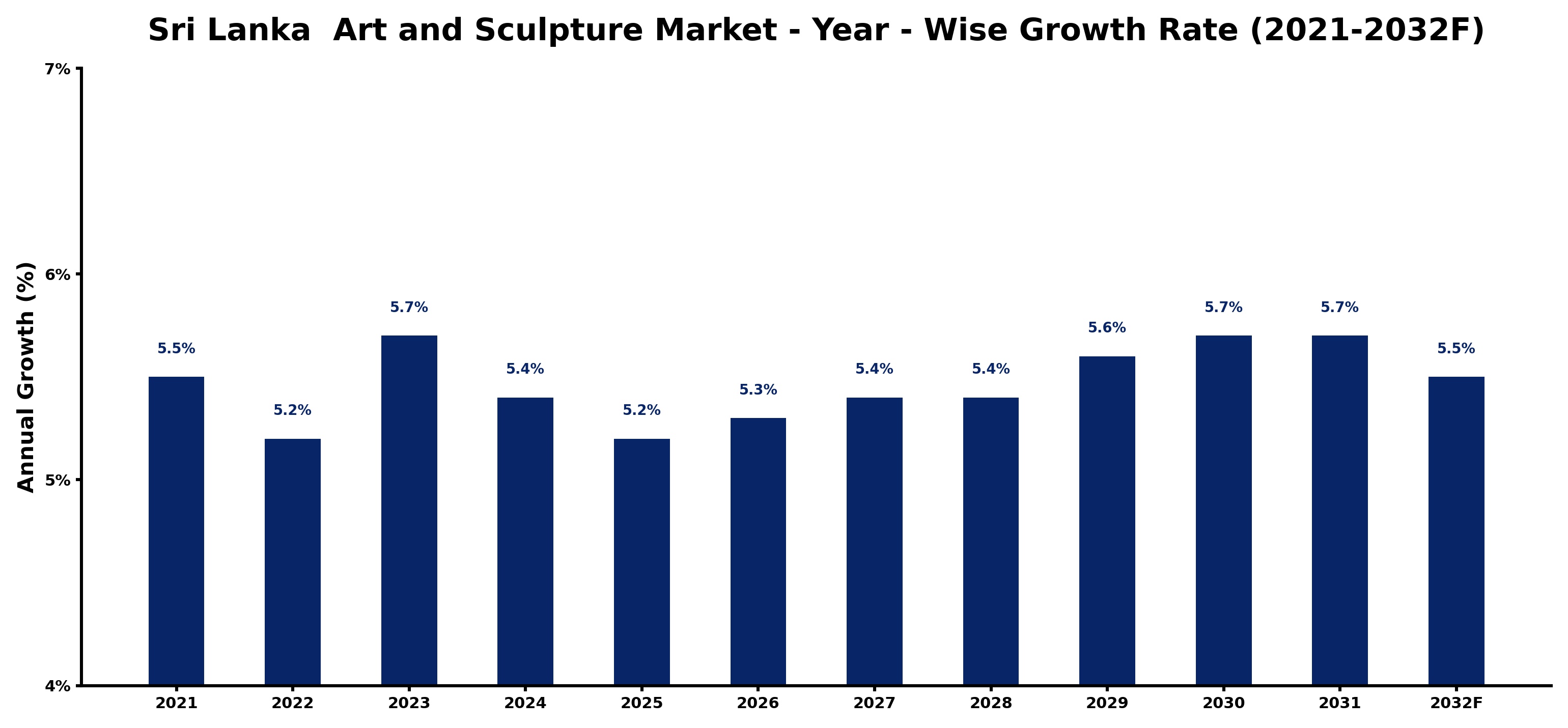
The table below presents the year‑wise growth rates along with the key drivers influencing the market
| Year | Growth Rate | Major Drivers |
| 2021 | 5.5% | Growing renewable energy integration projects |
| 2022 | 5.2% | Rising electricity demand across industries |
| 2023 | 5.7% | Expansion of transportation and logistics networks |
| 2024 | 5.4% | Growing urbanization and commercial development |
| 2025 | 5.2% | Expansion of transportation and logistics networks |
| 2026 | 5.3% | Increasing industrial automation investments |
| 2027 | 5.4% | Growing urbanization and commercial development |
| 2028 | 5.4% | Increasing industrial automation investments |
| 2029 | 5.6% | Rising electricity demand across industries |
| 2030 | 5.7% | Expansion of manufacturing activities |
| 2031 | 5.7% | Rapid growth in telecom and data center sectors |
| 2032 | 5.5% | Rising electricity demand across industries |
Note - Market size estimations and growth projections presented in this report are based on 6Wresearch's advanced forecasting approach, validated with industry datasets as of June 2026.
Sri Lanka Art and Sculpture Market Synopsis
One of the standout features of the Sri Lanka Art and Sculpture Market is the intrinsic value placed on traditional art forms such as Kandyan paintings, Batik art, and intricate wood carvings. These pieces not only reflect the cultural heritage but also cater to the tastes of both local collectors and tourists seeking authentic artifacts.
The contemporary scene is equally vibrant, with emerging artists pushing boundaries while still honoring traditional themes. This dynamic blend enriches the market, creating a diverse portfolio for collectors and investors alike. Galleries, especially in Colombo, play a crucial role in showcasing these artists, thereby enhancing the visibility and accessibility of their works.
Sri Lanka Art and Sculpture Market Key Takeaways
- The market is experiencing a growing interest in traditional and contemporary artworks, enhancing its appeal to collectors.
- Strong craftsmanship and storytelling in art pieces are key drivers for both local and international demand.
- Sustainable and eco-friendly practices are gaining traction among artists, influencing new creations.
- Government initiatives are increasingly supporting local artists and preserving traditional art forms.
- The market's growth potential is further amplified by advancements in online platforms enhancing global exposure.
Evaluation of Restraints in Sri Lanka Art and Sculpture Market
Despite its promising trajectory, the Sri Lanka Art and Sculpture Market faces significant challenges. Limited global exposure remains a barrier, largely due to geographical isolation and insufficient support systems for artists. The proliferation of counterfeit artworks threatens the integrity of genuine creations, creating a mistrust among buyers. Moreover, inadequate formal training opportunities restrict the growth of new talents, making it crucial for stakeholders to devise robust strategies to bolster the sector. Without addressing these issues, the full potential of this vibrant market may remain unrealized.
Sri Lanka Art and Sculpture Market Trends
The current landscape of the Sri Lanka Art and Sculpture Market is shaped by a blend of tradition and modernity. Artists are increasingly adopting sustainable practices, utilizing recycled materials to reflect a growing environmental consciousness. Furthermore, the embrace of digital platforms for art sales is redefining how artists interact with potential buyers, making art more accessible than ever. This trend towards modernization, while retaining cultural narratives, signifies a forward-thinking evolution in the market.
Sri Lanka Art and Sculpture Market Opportunities
Investment opportunities abound within the Sri Lanka Art and Sculpture Market. Art collectors and investors can capitalize on the increasing global recognition of Sri Lankan artists by acquiring unique works. Participating in art auctions, directly purchasing from artists, or even investing in art funds dedicated to Sri Lankan art offers various avenues for engagement. The growing local and international demand for these culturally rich pieces presents a significant opportunity for capital appreciation and diversification in investment portfolios.
Government Initiatives in the Sri Lanka Art and Sculpture Market
The Sri Lankan government has implemented various initiatives aimed at nurturing the Art and Sculpture Market. Policies regulating the export of cultural artifacts work to prevent illegal trafficking, safeguarding the country's artistic heritage. Furthermore, government-sponsored programs that promote local artists and provide platforms for showcasing their work are vital for fostering growth in this sector. These initiatives reflect a commitment to preserving traditional art forms while simultaneously encouraging innovation among contemporary artists.
Future Insights of the Sri Lanka Art and Sculpture Market
Looking ahead to 2026-2032, the Sri Lanka Art and Sculpture Market is poised for significant expansion. Increased tourism and a burgeoning middle class are likely to amplify the demand for both traditional and contemporary art pieces. As global appreciation for Sri Lankan art continues to rise, artists will find enhanced opportunities to reach international audiences. Moreover, the integration of technology in the art market, particularly through online sales platforms, will pave the way for new collectors and investors, ensuring a robust future for this vibrant industry.
Sri Lanka Art and Sculpture Market Latest Developments (May 2025 - June 2026)
In recent months, the Sri Lankan Art and Sculpture Market has seen a surge in exhibitions highlighting local talent. Collaborative initiatives between artists and businesses are emerging, aiming to promote sustainable art practices. Additionally, online platforms have gained traction, allowing artists to connect with a global audience more effectively. The growing interest in cultural tourism is further supporting local artists, enhancing visibility and appreciation for their works.
Sri Lanka Art and Sculpture Market - Key Attractiveness of the Report
- 10 Years of Market Numbers
- Historical Data Starting from 2022 to 2025
- Base Year: 2025
- Forecast Data until 2032
- Key Performance Indicators Impacting the Market
- Major Upcoming Developments and Projects
Key Highlights of the Report:
- Sri Lanka Art and Sculpture Market Outlook
- Market Size of Sri Lanka Art and Sculpture Market, 2025
- Forecast of Sri Lanka Art and Sculpture Market, 2032
- Historical Data and Forecast of Sri Lanka Art and Sculpture Revenues & Volume for the Period 2022-2032F
- Sri Lanka Art and Sculpture Market Trend Evolution
- Sri Lanka Art and Sculpture Market Drivers and Challenges
- Sri Lanka Art and Sculpture Price Trends
- Sri Lanka Art and Sculpture Porter's Five Forces
- Sri Lanka Art and Sculpture Industry Life Cycle
- Historical Data and Forecast of Sri Lanka Art and Sculpture Market Revenues & Volume By Types for the Period 2022-2032F
- Historical Data and Forecast of Sri Lanka Art and Sculpture Market Revenues & Volume By Artifacts for the Period 2022-2032F
- Historical Data and Forecast of Sri Lanka Art and Sculpture Market Revenues & Volume By Sculpture for the Period 2022-2032F
- Historical Data and Forecast of Sri Lanka Art and Sculpture Market Revenues & Volume By Sales Channel for the Period 2022-2032F
- Historical Data and Forecast of Sri Lanka Art and Sculpture Market Revenues & Volume By Auction Houses for the Period 2022-2032F
- Historical Data and Forecast of Sri Lanka Art and Sculpture Market Revenues & Volume By Dealers for the Period 2022-2032F
- Historical Data and Forecast of Sri Lanka Art and Sculpture Market Revenues & Volume By Galleries for the Period 2022-2032F
- Historical Data and Forecast of Sri Lanka Art and Sculpture Market Revenues & Volume By Art Fairs for the Period 2022-2032F
- Historical Data and Forecast of Sri Lanka Art and Sculpture Market Revenues & Volume By Online Sales for the Period 2022-2032F
- Historical Data and Forecast of Sri Lanka Art and Sculpture Market Revenues & Volume By Retail Outlets for the Period 2022-2032F
- Historical Data and Forecast of Sri Lanka Art and Sculpture Market Revenues & Volume By Artists Studios for the Period 2022-2032F
- Historical Data and Forecast of Sri Lanka Art and Sculpture Market Revenues & Volume By Others for the Period 2022-2032F
- Historical Data and Forecast of Sri Lanka Art and Sculpture Market Revenues & Volume By End-user for the Period 2022-2032F
- Historical Data and Forecast of Sri Lanka Art and Sculpture Market Revenues & Volume By Private Collectors for the Period 2022-2032F
- Historical Data and Forecast of Sri Lanka Art and Sculpture Market Revenues & Volume By Museums for the Period 2022-2032F
- Historical Data and Forecast of Sri Lanka Art and Sculpture Market Revenues & Volume By Real Estate Developers for the Period 2022-2032F
- Historical Data and Forecast of Sri Lanka Art and Sculpture Market Revenues & Volume By Interior Designers for the Period 2022-2032F
- Historical Data and Forecast of Sri Lanka Art and Sculpture Market Revenues & Volume By Residential Individual Buyers for the Period 2022-2032F
- Historical Data and Forecast of Sri Lanka Art and Sculpture Market Revenues & Volume By Other Professionals for the Period 2022-2032F
- Sri Lanka Art and Sculpture Import Export Trade Statistics
- Market Opportunity Assessment By Types
- Market Opportunity Assessment By Sales Channel
- Market Opportunity Assessment By End-user
- Sri Lanka Art and Sculpture Top Companies Market Share
- Sri Lanka Art and Sculpture Competitive Benchmarking By Technical and Operational Parameters
- Sri Lanka Art and Sculpture Company Profiles
- Sri Lanka Art and Sculpture Key Strategic Recommendations






































