Slovakia Chlorine Market Top 5 Importing Countries and Market Competition (HHI) Analysis
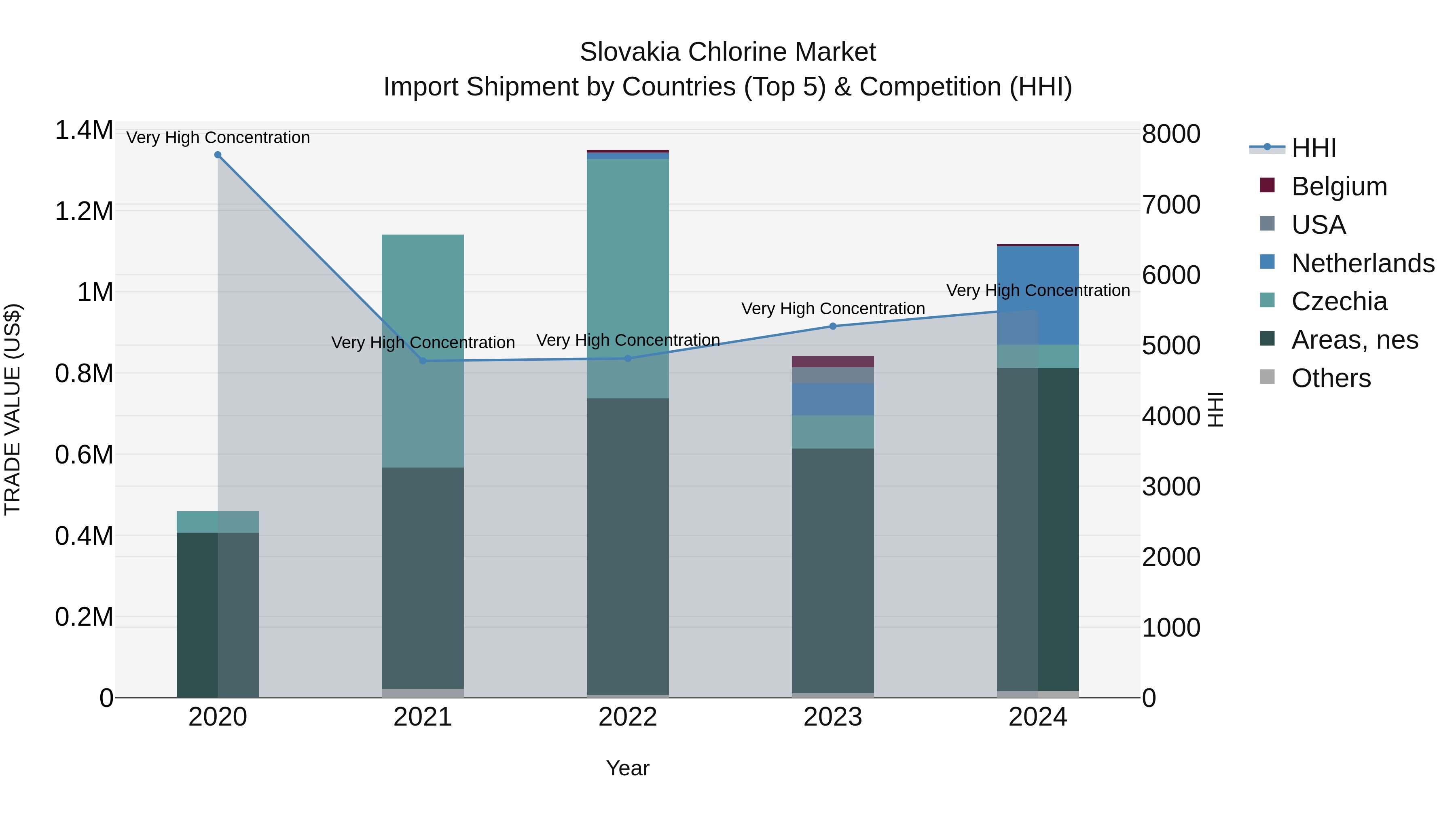
Slovakia`s chlorine import Market Top 5 Importing Countries and Market Competition (HHI) Analysis saw significant growth in 2024, with top countries like Areas, Netherlands, and Czechia leading the way. The high Herfindahl-Hirschman Index (HHI) indicates a concentrated Market Top 5 Importing Countries and Market Competition (HHI) Analysis, while the impressive compound annual growth rate (CAGR) of 24.87% from 2020 to 2024 highlights strong demand. Moreover, the notable growth rate of 32.68% from 2023 to 2024 signals a rapidly expanding Market Top 5 Importing Countries and Market Competition (HHI) Analysis for chlorine imports in Slovakia. This data suggests promising opportunities for suppliers and stakeholders in the chlorine industry looking to tap into the Slovakian Market Top 5 Importing Countries and Market Competition (HHI) Analysis.
Chlorine Market: Slovak Republic vs Top 5 Major Economies in 2027 (Europe)
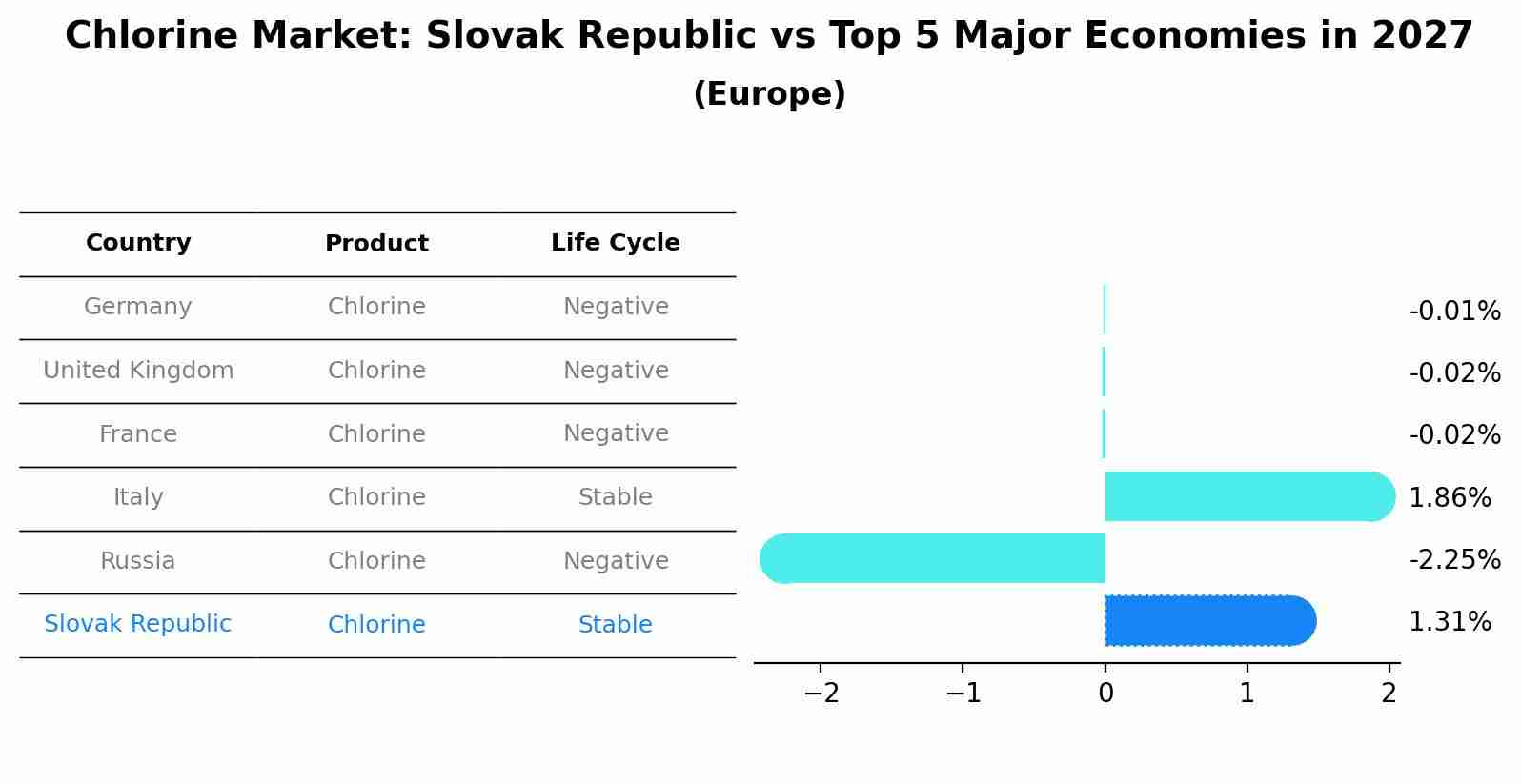
The Chlorine market in Slovak Republic is projected to grow at a stable growth rate of 1.31% by 2027, within the Europe region led by Germany, along with other countries like United Kingdom, France, Italy and Russia, collectively shaping a dynamic and evolving market environment driven by innovation and increasing adoption of emerging technologies.
Slovakia Chlorine Market Overview
The Slovakia Chlorine Market is experiencing steady growth driven by increased demand from various industries such as water treatment, chemical manufacturing, and pharmaceuticals. The market is primarily dominated by major players offering a wide range of chlorine products including liquid chlorine, chlorine gas, and solid chlorine compounds. The demand for chlorine in water treatment applications is particularly significant, as the country continues to invest in improving its water infrastructure. Additionally, the growing awareness of the importance of maintaining hygiene and sanitation standards in various sectors is contributing to the market growth. However, environmental concerns regarding the use of chlorine and stringent regulations regarding its handling and disposal are key challenges faced by market players. Overall, the Slovakia Chlorine Market is poised for continued growth with opportunities for innovation and sustainable practices.
Slovakia Chlorine Market Trends
The Slovakia Chlorine Market is experiencing steady growth due to increasing demand from various industries such as water treatment, pharmaceuticals, and chemical manufacturing. The rising awareness about the importance of water treatment and sanitation has led to a higher usage of chlorine in disinfection processes. Additionally, the expanding construction sector in Slovakia is driving the demand for chlorine-based products used in PVC production. The market is also witnessing a shift towards more sustainable and eco-friendly chlorine production methods to meet regulatory requirements and consumer preferences. Companies are investing in research and development to develop innovative chlorine products with lower environmental impact. Overall, the Slovakia Chlorine Market is expected to continue its growth trajectory in the coming years with a focus on sustainability and technological advancements.
Slovakia Chlorine Market Challenges
In the Slovakia Chlorine Market, one of the main challenges faced is the increasing regulatory pressure to adhere to strict environmental standards and regulations regarding the handling and disposal of chlorine. This has led to higher compliance costs for companies operating in the market. Additionally, the market is also experiencing intense competition from alternative water treatment technologies that are perceived as more environmentally friendly. Another challenge is the volatility in chlorine prices due to factors such as supply chain disruptions and fluctuations in raw material costs. Companies in the Slovakia Chlorine Market need to continuously innovate and invest in sustainable practices to overcome these challenges and maintain their competitive edge in the market.
Slovakia Chlorine Market Investment Opportunities
The Slovakia Chlorine Market presents various investment opportunities for potential investors. With increasing demand for chlorine in industries such as water treatment, pharmaceuticals, and agriculture, there is a growing market for chlorine products and related services. Investing in chlorine production facilities or distribution networks in Slovakia can be a lucrative opportunity. Additionally, advancements in technology and increasing emphasis on environmental sustainability are driving the development of innovative chlorine products and processes, offering avenues for investment in research and development. Furthermore, with Slovakia`s strategic location in Europe and its access to key markets, investing in the Slovakia Chlorine Market can provide opportunities for expansion and growth. Overall, the market`s growth potential, coupled with evolving industry dynamics, make it an attractive prospect for investment in the chlorine sector.
Slovakia Chlorine Market Government Policy
The government of Slovakia has implemented regulations and policies to ensure the safety and quality of chlorine products in the market. These policies include adherence to the European Union regulations on the handling and use of chemicals, particularly those related to chlorine. The government enforces strict guidelines for the production, storage, transportation, and disposal of chlorine to minimize environmental impact and protect public health. Additionally, Slovakia has established licensing requirements for companies involved in the chlorine market to maintain high standards of operation and ensure compliance with safety protocols. Overall, these government policies aim to promote responsible practices within the Slovakia Chlorine Market and safeguard the well-being of both the industry and the general population.
Slovakia Chlorine Market Future Outlook
The Slovakia Chlorine Market is expected to witness steady growth in the coming years due to the increasing demand from various industries such as water treatment, pharmaceuticals, and chemicals. The market is likely to be driven by the growing population, urbanization, and industrial activities in the region. Additionally, stringent environmental regulations regarding water treatment and wastewater management are expected to further boost the demand for chlorine in Slovakia. Key players in the market are likely to focus on product innovation and technological advancements to meet the evolving requirements of end-users. Overall, the Slovakia Chlorine Market is anticipated to experience moderate growth in the foreseeable future, with opportunities for expansion and development in different industry sectors.
Key Highlights of the Report:
- Slovakia Chlorine Market Outlook
- Market Size of Slovakia Chlorine Market, 2021
- Forecast of Slovakia Chlorine Market, 2031
- Historical Data and Forecast of Slovakia Chlorine Revenues & Volume for the Period 2018 - 2031
- Slovakia Chlorine Market Trend Evolution
- Slovakia Chlorine Market Drivers and Challenges
- Slovakia Chlorine Price Trends
- Slovakia Chlorine Porter's Five Forces
- Slovakia Chlorine Industry Life Cycle
- Historical Data and Forecast of Slovakia Chlorine Market Revenues & Volume By Application for the Period 2018 - 2031
- Historical Data and Forecast of Slovakia Chlorine Market Revenues & Volume By EDC/PVC for the Period 2018 - 2031
- Historical Data and Forecast of Slovakia Chlorine Market Revenues & Volume By Isocyanates and Oxygenates for the Period 2018 - 2031
- Historical Data and Forecast of Slovakia Chlorine Market Revenues & Volume By Chloromethanes for the Period 2018 - 2031
- Historical Data and Forecast of Slovakia Chlorine Market Revenues & Volume By Solvents and Epichlorohydrin for the Period 2018 - 2031
- Historical Data and Forecast of Slovakia Chlorine Market Revenues & Volume By Inorganic Chemicals for the Period 2018 - 2031
- Historical Data and Forecast of Slovakia Chlorine Market Revenues & Volume By Other Applications for the Period 2018 - 2031
- Historical Data and Forecast of Slovakia Chlorine Market Revenues & Volume By End-user Industry for the Period 2018 - 2031
- Historical Data and Forecast of Slovakia Chlorine Market Revenues & Volume By Water Treatment for the Period 2018 - 2031
- Historical Data and Forecast of Slovakia Chlorine Market Revenues & Volume By Pharmaceutical for the Period 2018 - 2031
- Historical Data and Forecast of Slovakia Chlorine Market Revenues & Volume By Chemicals for the Period 2018 - 2031
- Historical Data and Forecast of Slovakia Chlorine Market Revenues & Volume By Paper and Pulp for the Period 2018 - 2031
- Historical Data and Forecast of Slovakia Chlorine Market Revenues & Volume By Plastic for the Period 2018 - 2031
- Historical Data and Forecast of Slovakia Chlorine Market Revenues & Volume By Pesticides for the Period 2018 - 2031
- Historical Data and Forecast of Slovakia Chlorine Market Revenues & Volume By Other End-user Industries for the Period 2018 - 2031
- Slovakia Chlorine Import Export Trade Statistics
- Market Opportunity Assessment By Application
- Market Opportunity Assessment By End-user Industry
- Slovakia Chlorine Top Companies Market Share
- Slovakia Chlorine Competitive Benchmarking By Technical and Operational Parameters
- Slovakia Chlorine Company Profiles
- Slovakia Chlorine Key Strategic Recommendations






































