Slovakia Functional Apparel Market Size, Share & Growth Rate
The Slovakia Functional Apparel Market was estimated at USD 432 Million in 2025 and is projected to reach USD 610 Million by 2032, growing at a CAGR of 5.1% from 2026 to 2032. This upward trajectory is largely driven by a heightened awareness among Slovak consumers regarding the benefits of functional clothing, particularly in terms of performance and comfort. As lifestyles evolve, particularly among the younger population, the demand for functional sportswear, outdoor apparel, and athleisure wear is on the rise, fostering a more health-conscious consumer base.
Slovakia Functional Apparel Market Year-wise Growth Rate and Key Drivers
This graph highlights how the Slovakia Functional Apparel Market has steadily grown over the years, supported by major growth factors.
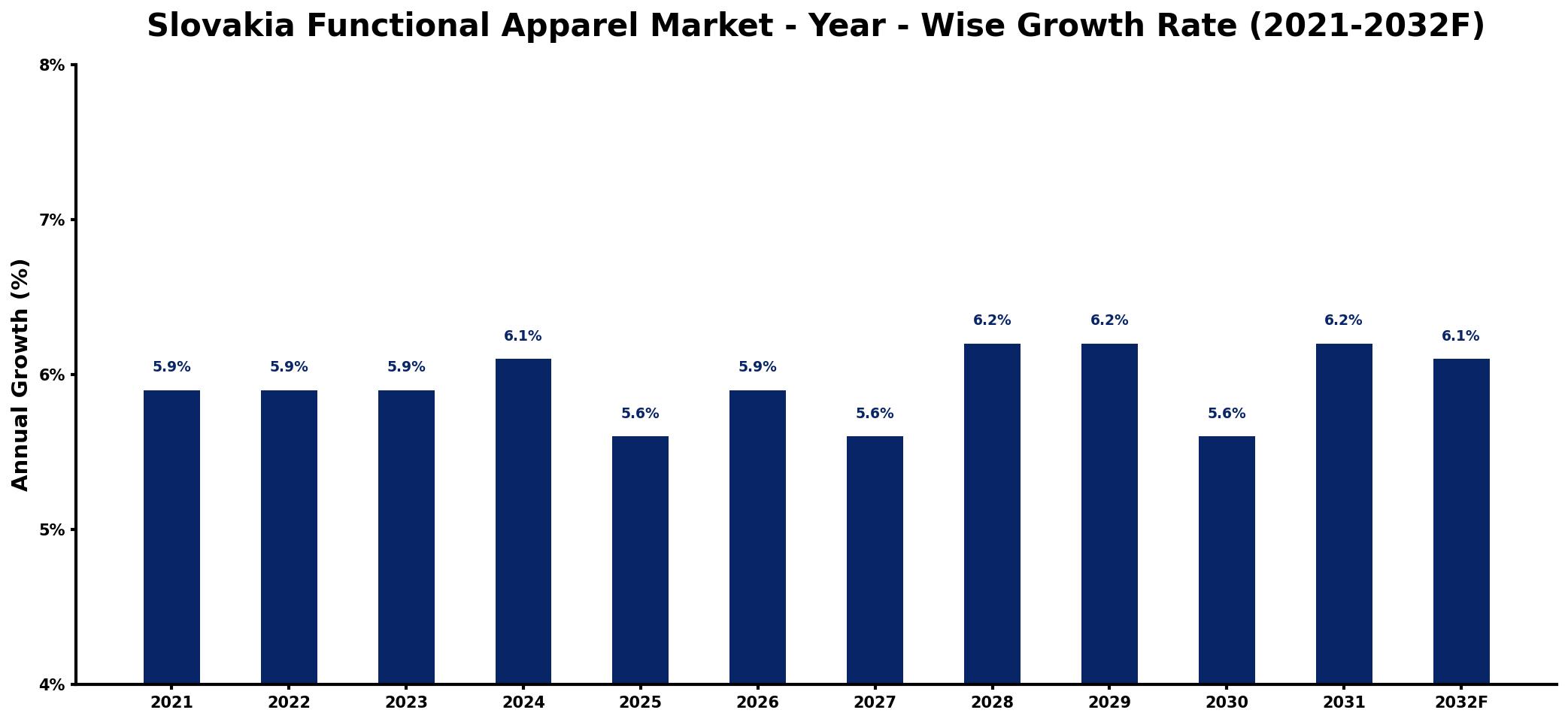
The table below presents the year‑wise growth rates along with the key drivers influencing the market
| Year | Growth Rate | Major Drivers |
| 2021 | 5.9% | Increased consumer health awareness |
| 2022 | 5.9% | Rise in outdoor activities participation |
| 2023 | 5.9% | Growing demand for sustainable materials |
| 2024 | 6.1% | Expansion of e-commerce platforms |
| 2025 | 5.6% | Investments in innovative technologies |
| 2026 | 5.9% | Surge in fitness lifestyle trends |
| 2027 | 5.6% | Rising popularity of athleisure wear |
| 2028 | 6.2% | Enhanced focus on performance features |
| 2029 | 6.2% | Growth in urban fitness initiatives |
| 2030 | 5.6% | Increase in corporate wellness programs |
| 2031 | 6.2% | Development of smart wearables market |
| 2032 | 6.1% | Emergence of personalized clothing solutions |
Note: Market size estimations and growth projections presented in this report are based on 6Wresearch's proprietary forecasting methodology, utilizing the latest available industry data, government publications, and primary research inputs.
Slovakia Functional Apparel Market Synopsis
The Slovakia functional apparel market is currently vibrant, reflecting a clear shift towards performance-oriented clothing solutions. This transformation is spurred by growing interest in outdoor and fitness activities, which are increasingly seen as essential components of a balanced lifestyle.
Consumers are not just looking for clothing that fits well; they are also prioritizing innovative features such as moisture management, UV protection, and temperature control. The rising trend of sustainability further influences purchasing decisions, with many shoppers seeking eco-friendly options without compromising on style or functionality.
Slovakia Functional Apparel Market Key Takeaways
- The market is expanding due to growing consumer awareness of the health benefits associated with functional apparel.
- Demand for multi-functional clothing, especially athleisure, is on the rise as consumers seek versatility in their wardrobes.
- Technological advancements in fabric properties are key drivers of innovation in the market.
- Sustainable and eco-friendly production practices are becoming critical in capturing consumer interest.
- Investment opportunities abound in outdoor and sportswear segments due to an increase in active lifestyles among Slovak consumers.
Evaluation of Restraints in Slovakia Functional Apparel Market
Despite its growth, the Slovakia functional apparel market faces notable restraints. Strong competition from well-established international brands poses a significant challenge for local companies striving to carve out a niche. Additionally, the complexity of educating consumers about the advanced features and benefits of functional apparel can hinder market penetration. Fluctuations in economic conditions may also affect consumer spending power, further impacting sales of premium functional items.
Slovakia Functional Apparel Market Trends
Current trends in the Slovakia functional apparel market are markedly influenced by a growing emphasis on sustainability and multifunctionality. More consumers are inclined to choose garments that can seamlessly transition between various activities, like athleisure that is suitable for both workouts and casual outings. Furthermore, innovations in fabric technology, including moisture-wicking materials and odor-resistant options, are reshaping consumer expectations. The incorporation of smart technologies that enable fitness tracking is also gaining traction, as individuals become increasingly invested in their health metrics.
Slovakia Functional Apparel Market Opportunities
The market presents significant investment opportunities, particularly in the outdoor and sportswear segments. As interest in hiking, cycling, and fitness activities continues to grow, there is a demand for apparel that balances performance with style. Brands focusing on innovative, sustainable materials stand to gain a competitive edge. Additionally, collaborating with local designers to create products tailored to the Slovak market can unlock new avenues for growth, appealing to the cultural nuances and preferences of consumers.
Government Initiatives in the Slovakia Functional Apparel Market
The Slovak government has established various initiatives aimed at bolstering the functional apparel market through policies promoting sustainability and quality standards. With a focus on eco-friendly production practices, the Ministry of Economy and the Ministry of Environment actively support initiatives that encourage the use of sustainable materials within the industry. Regulations ensuring that functional apparel meets safety and performance benchmarks are also in place, enhancing consumer confidence in these products. Additionally, the government advocates for research and development efforts in textiles to drive innovation and competitiveness.
Future Insights of the Slovakia Functional Apparel Market
Looking ahead to 2026-2032, the Slovakia functional apparel market appears poised for continued growth. Increasing consumer engagement in health and wellness pursuits, combined with a rising affinity for multifunctional clothing, is expected to drive demand. As textile technology evolves, brands will have the opportunity to introduce high-performance apparel that enhances user experience and comfort. Furthermore, the growing trend towards athleisure and eco-conscious fashion will likely shape product development, encouraging companies to innovate and adapt in a rapidly changing marketplace.
Slovakia Functional Apparel Market Latest Developments (2025 - 2026)
Recent developments in the Slovakia functional apparel market indicate a robust trend toward sustainability and innovation. Companies are increasingly launching products that utilize recycled materials and smart technologies, responding to consumer preferences for eco-friendliness and functionality. Furthermore, collaborative efforts with local influencers and designers are being employed to enhance brand visibility and strengthen market presence.
Slovakia Functional Apparel Market - Key Attractiveness of the Report
- 10 Years of Market Numbers
- Historical Data Starting from 2022 to 2025
- Base Year: 2025
- Forecast Data until 2032
- Key Performance Indicators Impacting the Market
- Major Upcoming Developments and Projects
Key Highlights of the Report:
- Slovakia Functional Apparel Market Outlook
- Market Size of Slovakia Functional Apparel Market, 2025
- Forecast of Slovakia Functional Apparel Market, 2032
- Historical Data and Forecast of Slovakia Functional Apparel Revenues & Volume for the Period 2022-2032F
- Slovakia Functional Apparel Market Trend Evolution
- Slovakia Functional Apparel Market Drivers and Challenges
- Slovakia Functional Apparel Price Trends
- Slovakia Functional Apparel Porter's Five Forces
- Slovakia Functional Apparel Industry Life Cycle
- Historical Data and Forecast of Slovakia Functional Apparel Market Revenues & Volume By Product Type for the Period 2022-2032F
- Historical Data and Forecast of Slovakia Functional Apparel Market Revenues & Volume By Sportswear for the Period 2022-2032F
- Historical Data and Forecast of Slovakia Functional Apparel Market Revenues & Volume By Activewear for the Period 2022-2032F
- Historical Data and Forecast of Slovakia Functional Apparel Market Revenues & Volume By Protective Clothing for the Period 2022-2032F
- Historical Data and Forecast of Slovakia Functional Apparel Market Revenues & Volume By Others for the Period 2022-2032F
- Historical Data and Forecast of Slovakia Functional Apparel Market Revenues & Volume By Application for the Period 2022-2032F
- Historical Data and Forecast of Slovakia Functional Apparel Market Revenues & Volume By Sports Industry for the Period 2022-2032F
- Historical Data and Forecast of Slovakia Functional Apparel Market Revenues & Volume By Outdoor Clothing for the Period 2022-2032F
- Historical Data and Forecast of Slovakia Functional Apparel Market Revenues & Volume By Healthcare sector for the Period 2022-2032F
- Historical Data and Forecast of Slovakia Functional Apparel Market Revenues & Volume By Distribution Channel for the Period 2022-2032F
- Historical Data and Forecast of Slovakia Functional Apparel Market Revenues & Volume By Offline Store for the Period 2022-2032F
- Historical Data and Forecast of Slovakia Functional Apparel Market Revenues & Volume By Online Store for the Period 2022-2032F
- Slovakia Functional Apparel Import Export Trade Statistics
- Market Opportunity Assessment By Product Type
- Market Opportunity Assessment By Application
- Market Opportunity Assessment By Distribution Channel
- Slovakia Functional Apparel Top Companies Market Share
- Slovakia Functional Apparel Competitive Benchmarking By Technical and Operational Parameters
- Slovakia Functional Apparel Company Profiles
- Slovakia Functional Apparel Key Strategic Recommendations






































