Gallium Market: Slovak Republic vs Top 5 Major Economies in 2027 (Europe)
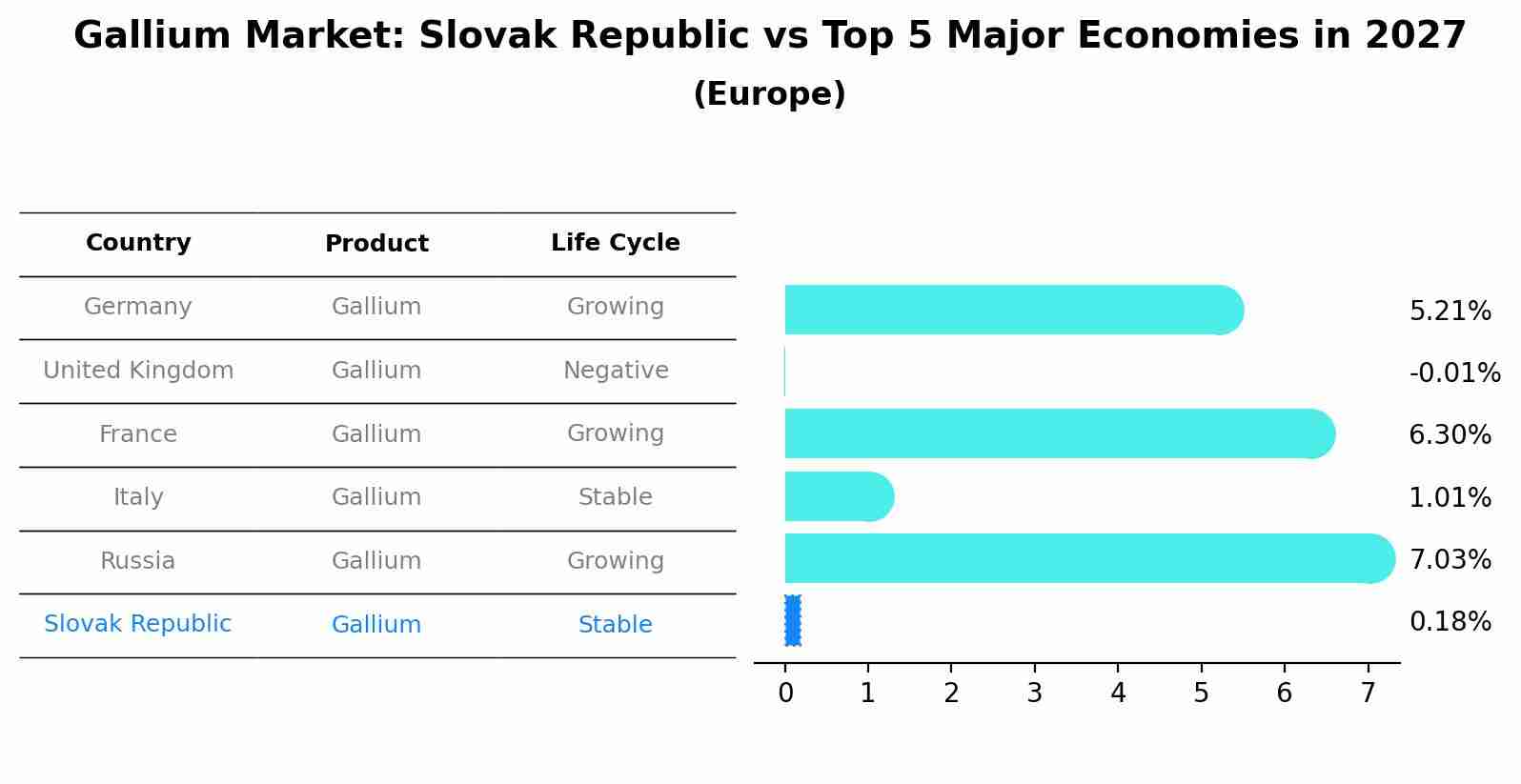
Slovak Republic's Gallium market is anticipated to experience a stable growth rate of 0.18% by 2027, reflecting trends observed in the largest economy Germany, followed by United Kingdom, France, Italy and Russia.
Slovakia Gallium Market Overview
The Slovakia Gallium market is experiencing steady growth driven by increasing demand from the electronics and semiconductor industries. Gallium, a rare metal with unique properties, is widely used in the production of high-tech devices such as LEDs, solar cells, and integrated circuits. Slovakia`s strategic location in central Europe, coupled with its skilled workforce and supportive government policies, has attracted significant investments in the semiconductor sector, fuelling the demand for gallium in the country. The market is characterized by a competitive landscape with key players focusing on research and development activities to introduce innovative gallium-based products. Overall, the Slovakia Gallium market is poised for further growth as technological advancements continue to drive demand for high-performance electronic devices.
Slovakia Gallium Market Trends
The Slovakia Gallium Market is experiencing steady growth due to increasing demand from the electronics and semiconductor industries. Gallium is a crucial component in the production of LED lights, solar panels, and advanced electronics, driving the market forward. The growing focus on energy-efficient technologies and the shift towards renewable energy sources are also contributing to the rising demand for gallium in Slovakia. Additionally, the expansion of the automotive sector and the adoption of electric vehicles are further driving the demand for gallium-based technologies. Overall, the Slovakia Gallium Market is expected to continue its growth trajectory in the coming years, propelled by advancements in technology and increasing applications across various industries.
Slovakia Gallium Market Challenges
In the Slovakia Gallium market, some challenges include limited domestic production leading to dependency on imports, fluctuating global prices affecting the profitability of local businesses, and a lack of awareness among end-users about the benefits of Gallium, hindering market growth. Additionally, competition from other countries with established Gallium industries poses a threat to the market share of Slovakian companies. Regulatory hurdles and logistical issues related to transportation and storage of Gallium also contribute to the challenges faced by players in the Slovakia Gallium market. Overcoming these obstacles will require strategic partnerships, investment in R&D to enhance domestic production capabilities, and targeted marketing efforts to educate consumers about the advantages of using Gallium in various industries.
Slovakia Gallium Market Investment Opportunities
The Slovakia Gallium Market presents promising investment opportunities due to the increasing demand for gallium in various high-tech industries such as electronics, semiconductors, and solar panels. With Slovakia being a key player in the European technology sector, investing in gallium production and processing facilities in the country could yield significant returns. Additionally, the growing focus on renewable energy sources and the shift towards electric vehicles further drive the demand for gallium, making it a lucrative investment option. Collaborating with local companies or setting up joint ventures to leverage Slovakia`s strategic location and skilled workforce can also enhance the investment prospects in the gallium market in Slovakia.
Slovakia Gallium Market Government Policy
The Slovakia government does not currently have specific policies or regulations in place pertaining to the Gallium market. However, as a member of the European Union, Slovakia adheres to the regulations set forth by the EU in relation to the trade and production of Gallium. These regulations primarily focus on environmental protection, health and safety standards, and fair competition within the market. Additionally, Slovakia`s overall industrial policies and economic strategies may indirectly impact the Gallium market within the country. It is important for stakeholders in the Gallium industry in Slovakia to stay informed about any potential changes in EU regulations and to monitor broader economic trends and government initiatives that could affect the market.
Slovakia Gallium Market Future Outlook
The future outlook for the Slovakia Gallium Market appears positive, driven by increasing demand for gallium in various industries such as electronics, semiconductors, and solar panels. Gallium`s unique properties, such as its ability to lower the melting point of alloys and enhance the performance of electronic devices, make it a valuable material for technological advancements. As Slovakia continues to focus on developing its high-tech industries and investing in research and development, the demand for gallium is expected to grow steadily. Additionally, the global shift towards clean energy sources like solar power is likely to further drive the demand for gallium in the coming years. However, market players should keep an eye on factors such as supply chain disruptions and fluctuating prices of gallium in the international market to effectively navigate the evolving landscape.
Key Highlights of the Report:
- Slovakia Gallium Market Outlook
- Market Size of Slovakia Gallium Market, 2021
- Forecast of Slovakia Gallium Market, 2031
- Historical Data and Forecast of Slovakia Gallium Revenues & Volume for the Period 2018 - 2031
- Slovakia Gallium Market Trend Evolution
- Slovakia Gallium Market Drivers and Challenges
- Slovakia Gallium Price Trends
- Slovakia Gallium Porter's Five Forces
- Slovakia Gallium Industry Life Cycle
- Historical Data and Forecast of Slovakia Gallium Market Revenues & Volume By Applications for the Period 2018 - 2031
- Historical Data and Forecast of Slovakia Gallium Market Revenues & Volume By LED for the Period 2018 - 2031
- Historical Data and Forecast of Slovakia Gallium Market Revenues & Volume By Laser Diodes for the Period 2018 - 2031
- Historical Data and Forecast of Slovakia Gallium Market Revenues & Volume By Integrated Circuits for the Period 2018 - 2031
- Historical Data and Forecast of Slovakia Gallium Market Revenues & Volume By Solar Cells for the Period 2018 - 2031
- Slovakia Gallium Import Export Trade Statistics
- Market Opportunity Assessment By Applications
- Slovakia Gallium Top Companies Market Share
- Slovakia Gallium Competitive Benchmarking By Technical and Operational Parameters
- Slovakia Gallium Company Profiles
- Slovakia Gallium Key Strategic Recommendations






































