Slovakia Organic Food Market Size, Share & Growth Rate
The Slovakia Organic Food Market was estimated at USD 191 Million in 2025 and is projected to reach USD 257 Million by 2032, growing at a CAGR of 4.3% from 2026 to 2032. This steady growth can be attributed to a notable increase in consumer awareness regarding health benefits and environmental sustainability. Factors such as rising disposable incomes and heightened concerns over food safety are further propelling demand for organic products across the country.
Slovakia Organic Food Market Year-wise Growth Rate and Key Drivers
This graph highlights how the Slovakia Organic Food Market has steadily grown over the years, supported by major growth factors.
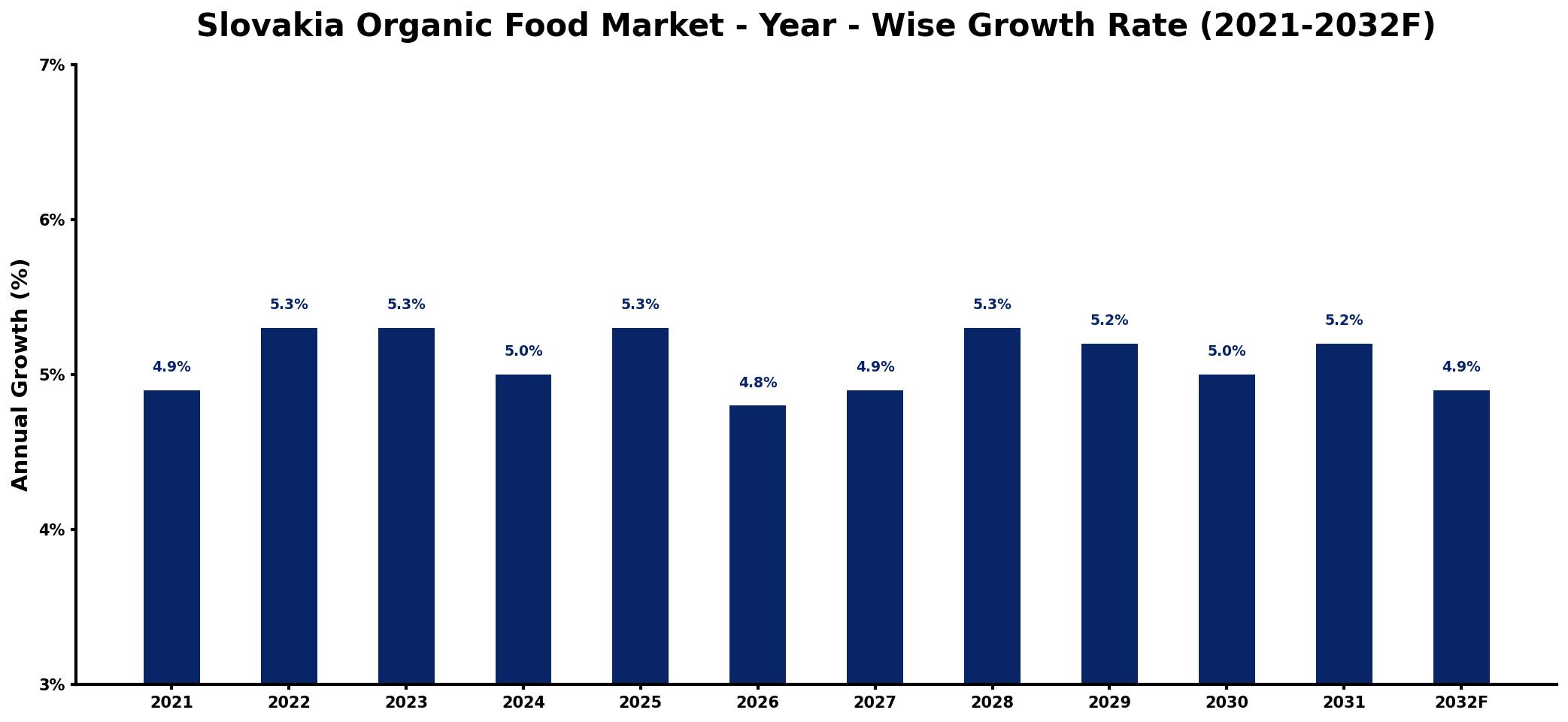
The table below presents the year‑wise growth rates along with the key drivers influencing the market
| Year | Growth Rate | Major Drivers |
| 2021 | 4.9% | Rising consumer health consciousness |
| 2022 | 5.3% | Increased availability of products |
| 2023 | 5.3% | Growing retail distribution networks |
| 2024 | 5.0% | Expansion of local farms |
| 2025 | 5.3% | Surge in online shopping |
| 2026 | 4.8% | Greater environmental awareness initiatives |
| 2027 | 4.9% | growing emerging market penetration |
| 2028 | 5.3% | Investment in sustainable practices |
| 2029 | 5.2% | Emerging market trends analysis |
| 2030 | 5.0% | Strengthened community support programs |
| 2031 | 5.2% | Diversification of product offerings |
| 2032 | 4.9% | Improved supply chain efficiency |
Note: Market size estimations and growth projections presented in this report are based on 6Wresearch's proprietary forecasting methodology, utilizing the latest available industry data, government publications, and primary research inputs.
Slovakia Organic Food Market Synopsis
In recent years, Slovakia has seen a significant increase in the availability of organic fruits and vegetables, which are becoming a staple for health-conscious consumers. The rise in domestic organic production is bolstered by government support, making organic options more accessible in both urban and rural settings.
Furthermore, the market is characterized by a burgeoning interest in organic dairy and meat products, driven by the public's growing skepticism towards conventional farming methods. This shift has stimulated a robust response from supermarkets and specialized stores, which are expanding their organic offerings in line with consumer preferences.
Slovakia Organic Food Market Key Takeaways
- The market is seeing a consistent shift towards organic produce, driven by health and environmental concerns.
- Government incentives are fostering domestic organic farming, enhancing supply chain reliability.
- Online retail platforms are becoming increasingly popular for purchasing organic goods, offering convenience to consumers.
- Competition from imported organic products poses challenges but also encourages local innovation.
- Consumer willingness to pay a premium for organic items is shaping the market landscape.
Evaluation of Restraints in Slovakia Organic Food Market
Despite the market's promising outlook, several restraints continue to limit its potential. Primarily, there is a lingering gap in consumer understanding of organic certifications, leading to confusion and hesitance among potential buyers. Additionally, the infrastructure for organic farming remains underdeveloped, creating challenges in supply chain management. The market also contends with pricing pressures from imported goods that can offer lower prices due to larger scale production in other countries, making it difficult for local producers to compete. Regulatory complexities and certification processes can also create barriers for small-scale producers, further stymieing market growth.
Slovakia Organic Food Market Trends
The trends shaping the Slovakia Organic Food Market are multifaceted. A growing segment of consumers is actively seeking organic packaged foods and beverages, indicating a shift in purchasing habits. In tandem, government initiatives aimed at promoting sustainable agriculture and healthy eating habits are gaining traction, which further propels market growth. The burgeoning online shopping trend is making organic foods more accessible, particularly among younger demographics who prioritize convenience and quality in their food choices.
Slovakia Organic Food Market Opportunities
Investment opportunities in the Slovakia Organic Food Market are flourishing. The increasing consumer demand for organic fruits, vegetables, dairy, meat, and packaged goods signals strong potential for growth. Investors can explore ventures in organic farming, distribution networks, and e-commerce platforms to capitalize on the evolving consumer landscape. Additionally, favorable government policies surrounding organic farming practices enhance the attractiveness of this sector, presenting a lucrative opportunity for stakeholders looking to enter or expand within the market.
Government Initiatives in the Slovakia Organic Food Market
The Slovak government has been proactive in supporting the organic food market through various initiatives. Financial incentives and subsidies for organic farmers encourage sustainable farming practices. Additionally, educational programs aimed at both producers and consumers enhance awareness of organic farming benefits. Regulatory measures ensure the integrity of organic labeling and certification, fostering consumer trust and aligning with broader European Union agricultural standards.
Future Insights of the Slovakia Organic Food Market
Looking ahead to 2026-2032, the Slovakia Organic Food Market is set to expand as consumers continue to prioritize health and sustainability. The trend towards organic foods is supported by rising awareness of food safety and environmental impact, driving an increasing number of consumers to choose organic options. Furthermore, as e-commerce continues to integrate into daily life, accessibility to organic products will improve, further fueling market growth. With a demographic shift leaning towards younger, health-conscious individuals, the market is expected to diversify and present lucrative avenues for both domestic producers and international brands alike.
Slovakia Organic Food Market Latest Developments (2025 - 2026)
Recent developments in the Slovakia Organic Food Market indicate a strong commitment to enhancing organic farming practices and consumer accessibility. Stakeholders are increasingly collaborating to establish better distribution channels, while online platforms are rapidly expanding their organic offerings. Furthermore, there are ongoing discussions around refining government policies to provide even more robust support for local organic producers, enhancing market resilience and competitiveness.
Slovakia Organic Food Market - Key Attractiveness of the Report
- 10 Years of Market Numbers
- Historical Data Starting from 2022 to 2025
- Base Year: 2025
- Forecast Data until 2032
- Key Performance Indicators Impacting the Market
- Major Upcoming Developments and Projects
Key Highlights of the Report:
- Slovakia Organic Food Market Outlook
- Market Size of Slovakia Organic Food Market, 2025
- Forecast of Slovakia Organic Food Market, 2032
- Historical Data and Forecast of Slovakia Organic Food Revenues & Volume for the Period 2022-2032F
- Slovakia Organic Food Market Trend Evolution
- Slovakia Organic Food Market Drivers and Challenges
- Slovakia Organic Food Price Trends
- Slovakia Organic Food Porter's Five Forces
- Slovakia Organic Food Industry Life Cycle
- Historical Data and Forecast of Slovakia Organic Food Market Revenues & Volume By Food Type for the Period 2022-2032F
- Historical Data and Forecast of Slovakia Organic Food Market Revenues & Volume By Fruit & Vegetables for the Period 2022-2032F
- Historical Data and Forecast of Slovakia Organic Food Market Revenues & Volume By Meat for the Period 2022-2032F
- Historical Data and Forecast of Slovakia Organic Food Market Revenues & Volume By Fish & Poultry for the Period 2022-2032F
- Historical Data and Forecast of Slovakia Organic Food Market Revenues & Volume By Dairy Products for the Period 2022-2032F
- Historical Data and Forecast of Slovakia Organic Food Market Revenues & Volume By Frozen & Processed Foods for the Period 2022-2032F
- Historical Data and Forecast of Slovakia Organic Food Market Revenues & Volume By Others for the Period 2022-2032F
- Historical Data and Forecast of Slovakia Organic Food Market Revenues & Volume By Application for the Period 2022-2032F
- Historical Data and Forecast of Slovakia Organic Food Market Revenues & Volume By Commercial for the Period 2022-2032F
- Historical Data and Forecast of Slovakia Organic Food Market Revenues & Volume By Cosmetics & Personal Care for the Period 2022-2032F
- Historical Data and Forecast of Slovakia Organic Food Market Revenues & Volume By Households for the Period 2022-2032F
- Historical Data and Forecast of Slovakia Organic Food Market Revenues & Volume By Others for the Period 2022-2032F
- Slovakia Organic Food Import Export Trade Statistics
- Market Opportunity Assessment By Food Type
- Market Opportunity Assessment By Application
- Slovakia Organic Food Top Companies Market Share
- Slovakia Organic Food Competitive Benchmarking By Technical and Operational Parameters
- Slovakia Organic Food Company Profiles
- Slovakia Organic Food Key Strategic Recommendations






































