Slovakia Vetiver Oil Market Size, Share & Growth Rate
The Slovakia Vetiver Oil Market was estimated at USD 366 Million in 2025 and is projected to reach USD 494 Million by 2032, growing at a CAGR of 4.4% from 2026 to 2032. This growth trajectory is primarily driven by the rising consumer preference for natural and organic products across personal care, aromatherapy, and fragrance sectors. Additionally, the increasing awareness of the therapeutic benefits of vetiver oil is contributing to its growing acceptance and integration into various wellness and skincare products.
Slovakia Vetiver Oil Market Year-wise Growth Rate and Key Drivers
This graph highlights how the Slovakia Vetiver Oil Market has steadily grown over the years, supported by major growth factors.
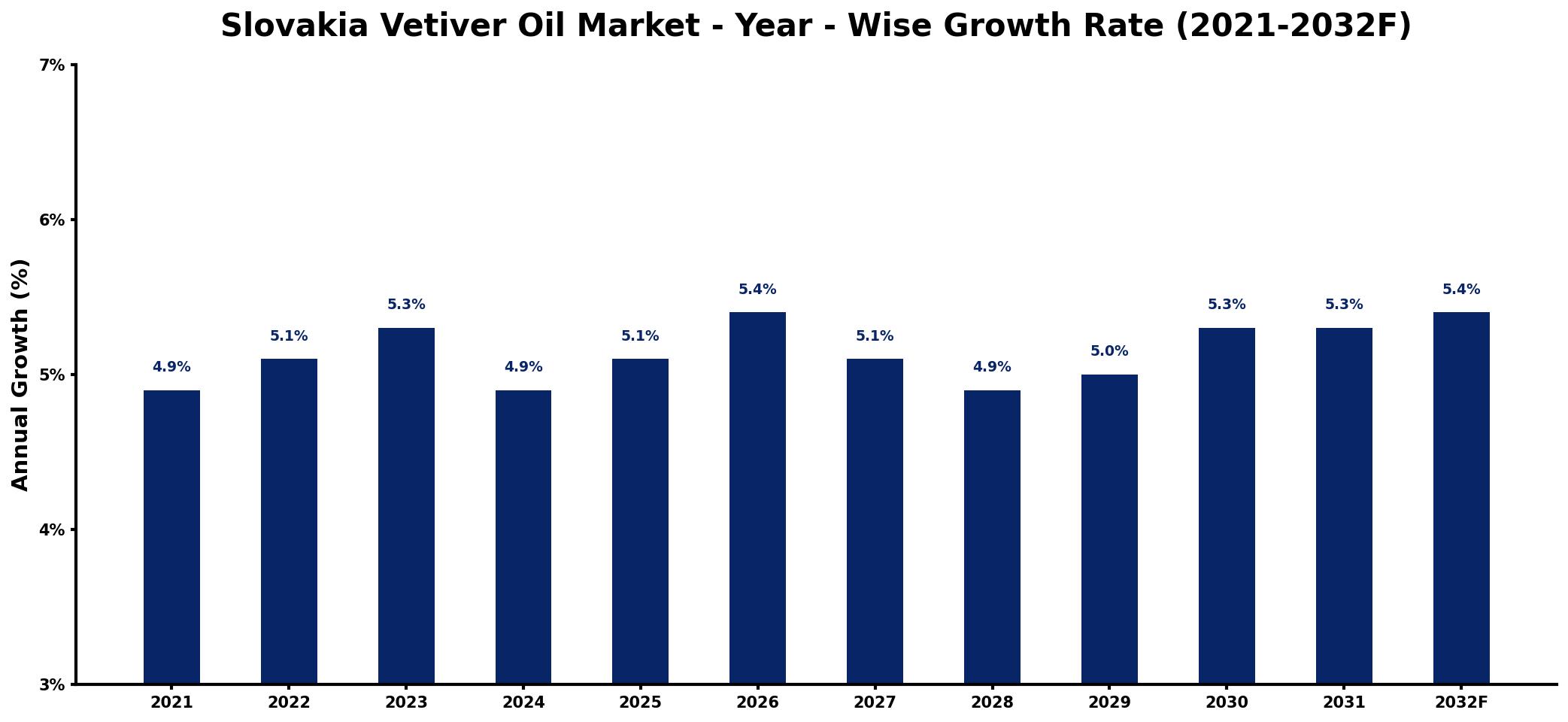
The table below presents the year‑wise growth rates along with the key drivers influencing the market
| Year | Growth Rate | Major Drivers |
| 2021 | 4.9% | Rising demand for natural fragrances |
| 2022 | 5.1% | Expansion in personal care sector |
| 2023 | 5.3% | Increased interest in aromatherapy |
| 2024 | 4.9% | Growth in organic product market |
| 2025 | 5.1% | Surge in wellness tourism initiatives |
| 2026 | 5.4% | Investment in sustainable sourcing practices |
| 2027 | 5.1% | Emergence of eco-friendly brands |
| 2028 | 4.9% | Development of new application methods |
| 2029 | 5.0% | Boost in holistic health awareness |
| 2030 | 5.3% | Collaboration with luxury brands |
| 2031 | 5.3% | Growth of online retail platforms |
| 2032 | 5.4% | rising export shipment volumes |
Note: Market size estimations and growth projections presented in this report are based on 6Wresearch's proprietary forecasting methodology, utilizing the latest available industry data, government publications, and primary research inputs.
Slovakia Vetiver Oil Market Synopsis
The Slovakia Vetiver Oil Market is a distinctive niche within the country's broader essential oils landscape. As consumers become more discerning, the demand for vetiver oil is being fueled by its rich, earthy aroma and myriad therapeutic properties that align with current wellness trends.
Characterized by a limited number of suppliers, the market predominantly comprises small-scale producers and distributors. Despite its modest size, it harbors significant potential for growth, underpinned by an escalating interest in sustainable sourcing practices and the quality of natural remedies.
Slovakia Vetiver Oil Market Key Takeaways
- Growing consumer awareness of the benefits of natural and organic products is driving demand for vetiver oil.
- The market is witnessing a shift towards premium quality and sustainably sourced vetiver oil products.
- Limited competition from established essential oils presents a unique opportunity for vetiver oil to carve out market share.
- Government support for sustainable farming practices is enhancing the industrys competitive landscape.
- Innovative marketing strategies are vital for increasing consumer education and product differentiation.
Evaluation of Restraints in Slovakia Vetiver Oil Market
Despite its potential, the Slovakia Vetiver Oil Market faces notable restraints. The relatively small size of the market compared to more mainstream essential oils can inhibit wider consumer engagement and understanding. Furthermore, the limited awareness surrounding the specific benefits of vetiver oil complicates its marketing and adoption. Sourcing high-quality vetiver oil sustainably also poses challenges, along with fluctuating market prices influenced by external factors such as weather conditions. These dynamics necessitate strategic marketing efforts and collaborations to strengthen the market's presence.
Slovakia Vetiver Oil Market Trends
There is a significant trend toward the incorporation of natural and organic ingredients in personal care products, which is substantially enhancing the demand for vetiver oil in Slovakia. Consumers are increasingly recognizing vetiver oil's calming and grounding properties, particularly in aromatherapy and skincare. Furthermore, sustainability and ethical sourcing practices are becoming paramount, influencing companies to prioritize environmentally responsible vetiver oil production, which appeals to conscious consumers.
Slovakia Vetiver Oil Market Opportunities
The Slovakia Vetiver Oil Market presents compelling investment opportunities, particularly in the realms of production, distribution, and product development. The rising consumer inclination towards natural and sustainable options in beauty and wellness sectors opens doors for innovative product offerings. Investing in sustainable sourcing and organic certifications not only enhances product credibility but also aligns with consumer demand for transparency, ultimately improving market positioning both locally and internationally.
Government Initiatives in the Slovakia Vetiver Oil Market
Government policies in Slovakia are aimed at promoting sustainable cultivation practices and maintaining quality standards within the vetiver oil sector. To incentivize organic farming, the Slovakian government offers support through subsidies and educational programs aimed at encouraging environmentally friendly production techniques. Regulatory measures are also in place to ensure that the quality and purity of vetiver oil align with international standards, facilitating competitive export opportunities.
Future Insights of the Slovakia Vetiver Oil Market
Looking ahead to 2026-2032, the Slovakia Vetiver Oil Market is expected to experience steady growth as consumer awareness regarding its therapeutic properties continues to rise. The adoption of vetiver oil in cosmetics and personal care products for its beneficial characteristics positions it well for future expansion. Increased innovation in product formulations and marketing strategies, coupled with a continued focus on sustainability, will be critical in capitalizing on the burgeoning interest in this niche market.
Slovakia Vetiver Oil Market Latest Developments (2025 - 2026)
In the recent months leading up to mid-2026, the Slovakia Vetiver Oil Market has seen a notable shift towards more eco-friendly production methods. Many local producers are adopting sustainable farming practices in response to consumer demand for transparency and ethical sourcing. There has also been an uptick in collaborations between small-scale farmers and distributors, aimed at enhancing the supply chain's resilience and quality. Moreover, innovative marketing campaigns have emerged, focusing on the natural benefits of vetiver oil and its diverse applications in wellness and beauty products.
Slovakia Vetiver Oil Market - Key Attractiveness of the Report
- 10 Years of Market Numbers
- Historical Data Starting from 2022 to 2025
- Base Year: 2025
- Forecast Data until 2032
- Key Performance Indicators Impacting the Market
- Major Upcoming Developments and Projects
Key Highlights of the Report:
- Slovakia Vetiver Oil Market Outlook
- Market Size of Slovakia Vetiver Oil Market, 2025
- Forecast of Slovakia Vetiver Oil Market, 2032
- Historical Data and Forecast of Slovakia Vetiver Oil Revenues & Volume for the Period 2022-2032F
- Slovakia Vetiver Oil Market Trend Evolution
- Slovakia Vetiver Oil Market Drivers and Challenges
- Slovakia Vetiver Oil Price Trends
- Slovakia Vetiver Oil Porter's Five Forces
- Slovakia Vetiver Oil Industry Life Cycle
- Historical Data and Forecast of Slovakia Vetiver Oil Market Revenues & Volume By Application for the Period 2022-2032F
- Historical Data and Forecast of Slovakia Vetiver Oil Market Revenues & Volume By Medical for the Period 2022-2032F
- Historical Data and Forecast of Slovakia Vetiver Oil Market Revenues & Volume By Food & Beverage for the Period 2022-2032F
- Historical Data and Forecast of Slovakia Vetiver Oil Market Revenues & Volume By Spa & Relaxation for the Period 2022-2032F
- Slovakia Vetiver Oil Import Export Trade Statistics
- Market Opportunity Assessment By Application
- Slovakia Vetiver Oil Top Companies Market Share
- Slovakia Vetiver Oil Competitive Benchmarking By Technical and Operational Parameters
- Slovakia Vetiver Oil Company Profiles
- Slovakia Vetiver Oil Key Strategic Recommendations






































