Slovenia Natural Vanillin Market Size (2020-2030)
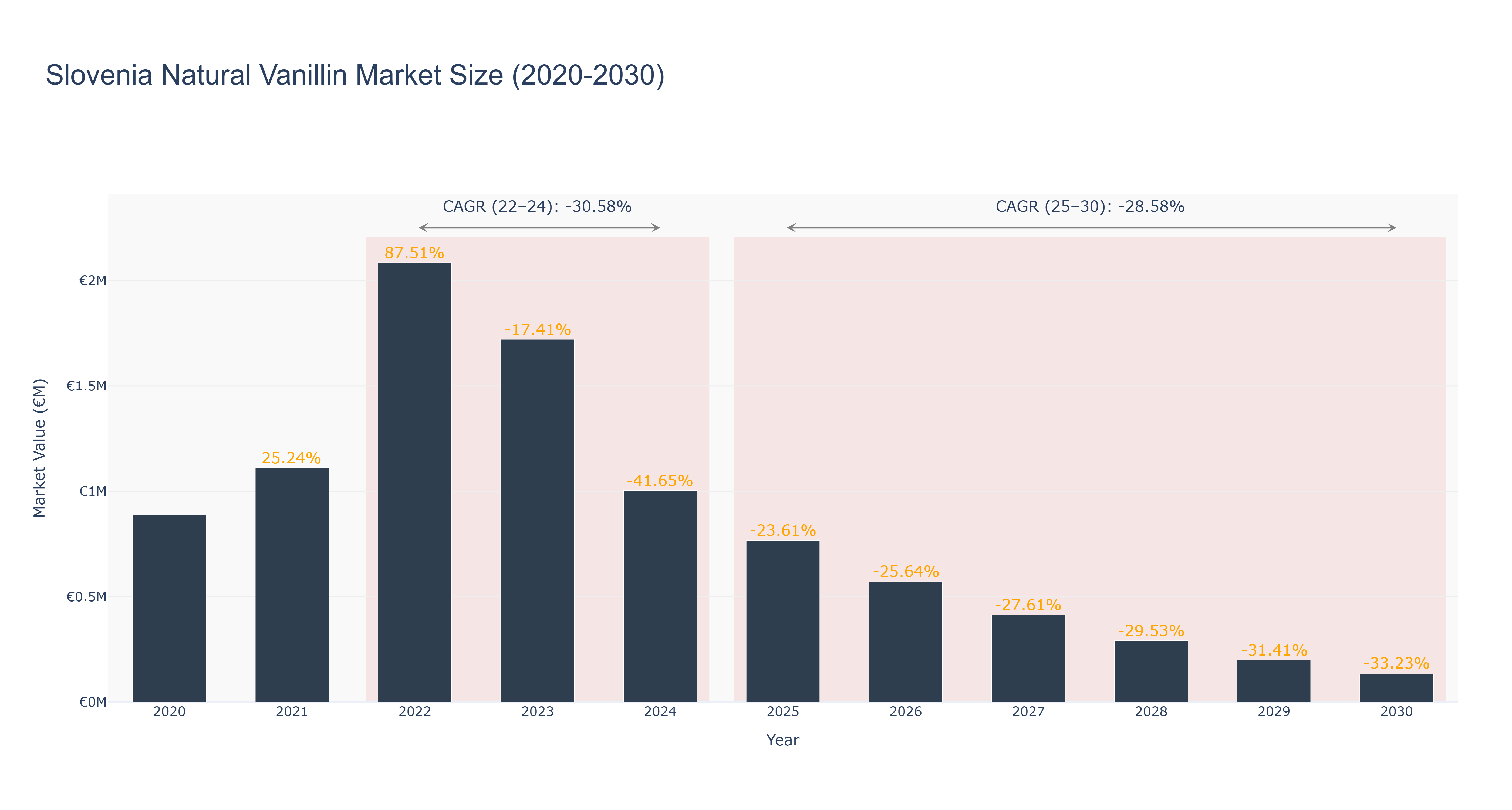
The Slovenia Natural Vanillin Market experienced a peak market size of €2.08 million in 2022, followed by a decline to €0.77 million in 2025. The market is projected to continue decreasing to €0.13 million by 2030, with a CAGR of -28.58% from 2025 to 2030. The significant drop in market size can be attributed to factors such as changing consumer preferences, increased competition, and regulatory challenges impacting the natural vanillin industry. However, despite the downward trend, recent developments indicate a shift towards sustainable sourcing practices and innovative product offerings in the natural vanillin market in Slovenia. Future projects focusing on enhancing production efficiency and product quality are expected to drive growth in the market in the coming years. Industry drivers for the Slovenia Natural Vanillin Market include increasing awareness about health and wellness, demand for clean label ingredients, and the rising popularity of natural flavors in food and beverage products.
Slovenia Natural Vanillin Market: Production & Trade Performance (2019-2025)
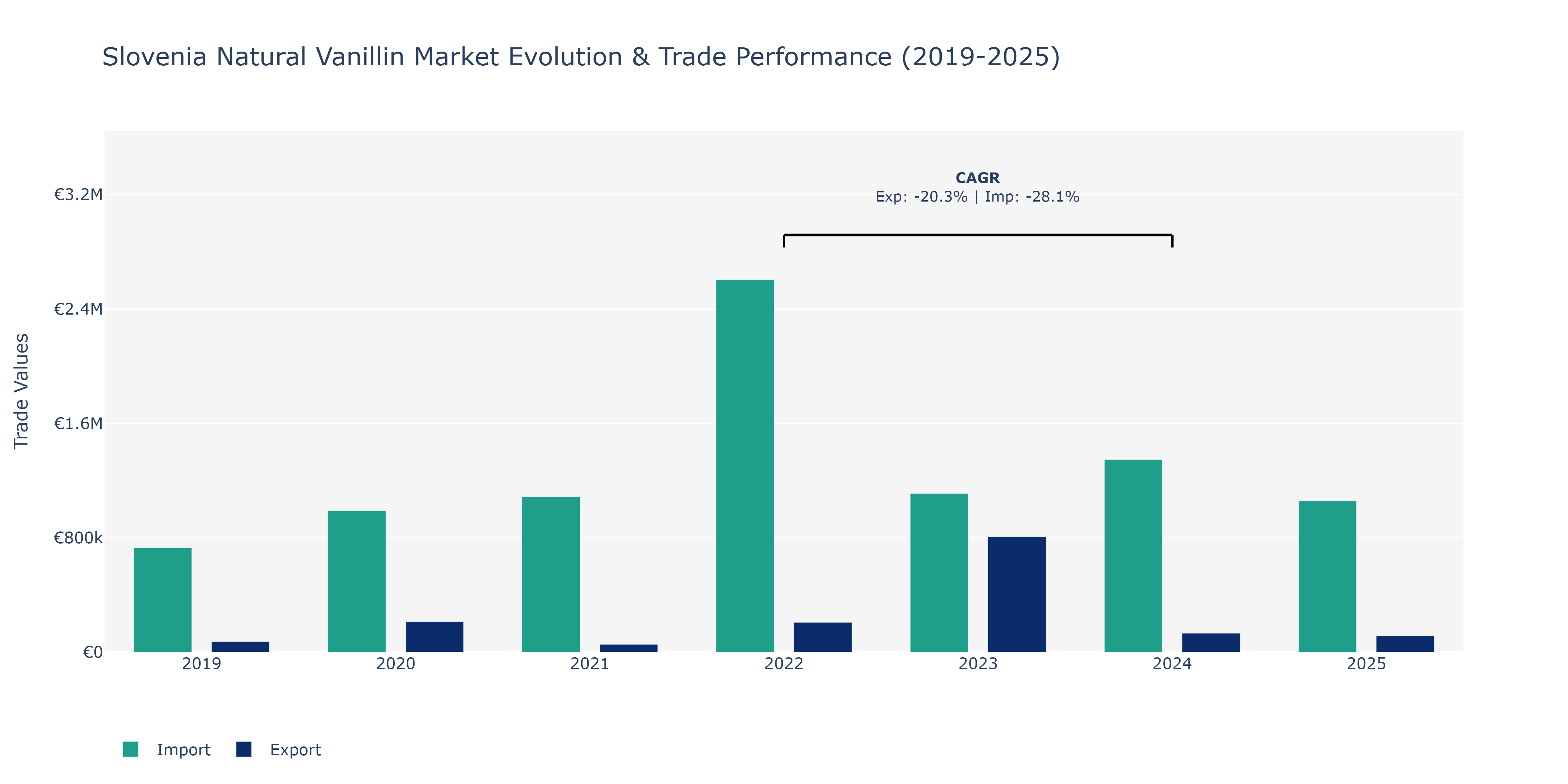
The Slovenia Natural Vanillin Market saw notable fluctuations in both exports and imports from 2019 to 2025. In 2023, exports surged to €807.51 thousand, marking a significant peak, possibly driven by increased demand or favorable market conditions. Conversely, in 2021, exports dropped to €54.47 thousand, reflecting a substantial decline, which could be attributed to supply chain disruptions or shifting consumer preferences. Imports, on the other hand, peaked in 2022 at €2.61 million, showcasing a substantial increase, possibly indicating growing demand for natural vanillin in Slovenia. The market experienced a decline in imports in 2024, reaching €1.35 million, which could be influenced by regulatory changes impacting trade dynamics. These fluctuations highlight the market's sensitivity to various internal and external factors, emphasizing the importance of strategic planning and adaptability for stakeholders in the natural vanillin industry in Slovenia.
Key Highlights of the Report:
- Slovenia Natural Vanillin Market Outlook
- Market Size of Slovenia Natural Vanillin Market, 2025
- Forecast of Slovenia Natural Vanillin Market, 2032
- Historical Data and Forecast of Slovenia Natural Vanillin Revenues & Volume for the Period 2022-2032F
- Slovenia Natural Vanillin Market Trend Evolution
- Slovenia Natural Vanillin Market Drivers and Challenges
- Slovenia Natural Vanillin Price Trends
- Slovenia Natural Vanillin Porter`s Five Forces
- Slovenia Natural Vanillin Industry Life Cycle
- Historical Data and Forecast of Slovenia Natural Vanillin Market Revenues & Volume By Source for the Period 2022-2032F
- Historical Data and Forecast of Slovenia Natural Vanillin Market Revenues & Volume By Vanilla Bean Extract for the Period 2022-2032F
- Historical Data and Forecast of Slovenia Natural Vanillin Market Revenues & Volume By Ferulic Acid Synthesis for the Period 2022-2032F
- Historical Data and Forecast of Slovenia Natural Vanillin Market Revenues & Volume By Eugenol Synthesis for the Period 2022-2032F
- Historical Data and Forecast of Slovenia Natural Vanillin Market Revenues & Volume By Application for the Period 2022-2032F
- Historical Data and Forecast of Slovenia Natural Vanillin Market Revenues & Volume By Food & Beverages for the Period 2022-2032F
- Historical Data and Forecast of Slovenia Natural Vanillin Market Revenues & Volume By Pharmaceuticals for the Period 2022-2032F
- Historical Data and Forecast of Slovenia Natural Vanillin Market Revenues & Volume By Cosmetics & Personal Care for the Period 2022-2032F
- Slovenia Natural Vanillin Import Export Trade Statistics
- Market Opportunity Assessment By Source
- Market Opportunity Assessment By Application
- Slovenia Natural Vanillin Top Companies Market Share
- Slovenia Natural Vanillin Competitive Benchmarking By Technical and Operational Parameters
- Slovenia Natural Vanillin Company Profiles
- Slovenia Natural Vanillin Key Strategic Recommendations






































