Slovenia Organic Shampoo Market: Import Trend Analysis
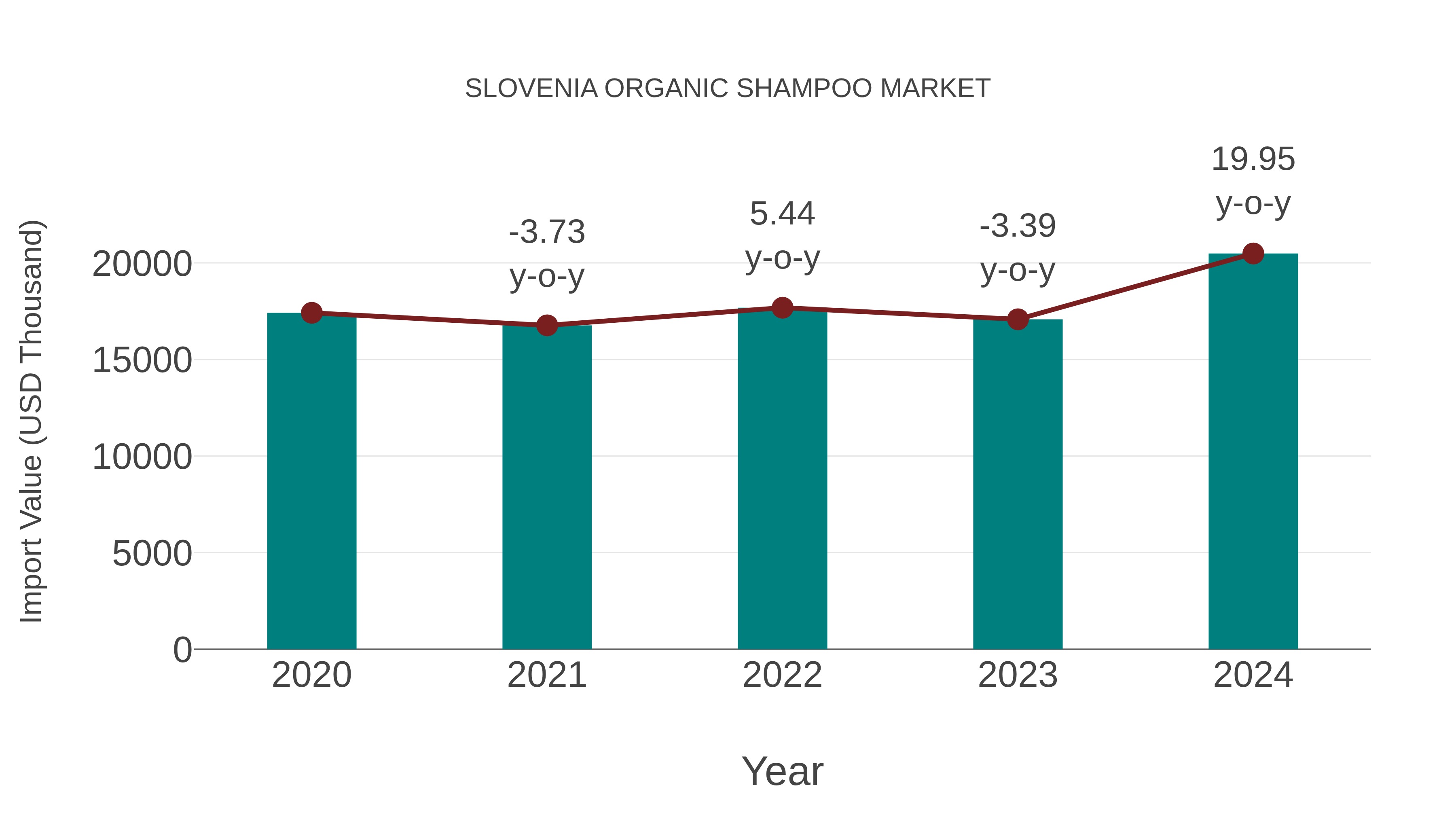
Slovenia import trend for organic shampoo in 2024 showed significant growth, with a 19.95% increase from 2023. The compound annual growth rate (CAGR) for the period 2020-2024 stood at 4.14%. This notable uptick in imports can be attributed to a heightened consumer preference for organic products and a growing awareness of sustainable personal care choices in the market.
Slovenia Organic Shampoo Market Overview
The Slovenia Organic Shampoo Market is experiencing steady growth driven by increasing consumer awareness of the benefits of natural and organic hair care products. Consumers are becoming more conscious of the ingredients in their personal care products and are seeking out shampoos that are free from harsh chemicals, sulfates, and parabens. The market is seeing a rise in demand for organic shampoos made with plant-based ingredients, essential oils, and botanical extracts known for their nourishing and gentle properties. Key players in the market are focusing on product innovation, eco-friendly packaging, and sustainable sourcing practices to cater to the growing interest in organic beauty products. With a shift towards a more sustainable and environmentally-friendly lifestyle, the Slovenia Organic Shampoo Market is poised for further expansion in the coming years.
Slovenia Organic Shampoo Market Trends and Opportunities
The Slovenia Organic Shampoo Market is experiencing growth due to increasing consumer awareness of the benefits of organic and natural ingredients in hair care products. Consumers are becoming more conscious of the potential harmful effects of chemicals in traditional shampoos, leading to a shift towards organic options. This trend presents opportunities for market players to innovate and introduce new organic shampoo products tailored to the specific needs of the Slovenian consumers, such as those formulated for sensitive scalp or with locally sourced ingredients. Additionally, the rising interest in sustainable and eco-friendly products has created a demand for organic shampoos packaged in recyclable materials, offering a competitive edge to brands that prioritize environmental consciousness. Overall, the Slovenia Organic Shampoo Market is poised for further growth and diversification in response to evolving consumer preferences.
Slovenia Organic Shampoo Market Challenges
In the Slovenia Organic Shampoo Market, some of the key challenges include limited consumer awareness and education about the benefits of using organic shampoos compared to traditional ones. Another challenge is the relatively higher price point of organic shampoos, which may deter price-sensitive consumers from making the switch. Additionally, the market faces competition from well-established conventional shampoo brands that have a strong presence and loyal customer base. Distribution channels for organic shampoos may also be limited, making it challenging for these products to reach a wider audience. Overcoming these challenges will require targeted marketing strategies to educate consumers, competitive pricing strategies, and expanding distribution networks to increase accessibility and availability of organic shampoos in Slovenia.
Slovenia Organic Shampoo Market Drivers
The Slovenia Organic Shampoo Market is primarily driven by increasing consumer awareness of the harmful effects of synthetic chemicals found in traditional shampoos. Consumers are becoming more health-conscious and are seeking natural and organic alternatives to promote hair health and overall well-being. The growing trend towards sustainable and eco-friendly products is also fueling the demand for organic shampoos in Slovenia. Additionally, the rise in disposable income and changing consumer preferences towards clean beauty products are further driving the market growth. Manufacturers are responding to these trends by expanding their organic shampoo product lines, using natural ingredients, and emphasizing their eco-friendly and cruelty-free practices to attract and retain environmentally-conscious consumers in Slovenia.
Slovenia Organic Shampoo Market Government Policies
The Slovenian government has implemented policies to promote the organic shampoo market by providing support for organic farming practices and certification. The government has also introduced regulations to ensure transparency and traceability in the production and labeling of organic shampoo products. Additionally, there are incentives and subsidies available for businesses in the organic shampoo market to encourage sustainable practices and innovation. Furthermore, the government enforces strict quality control measures to maintain the integrity of organic products and protect consumers from misleading claims. Overall, the government`s policies aim to foster the growth of the organic shampoo market in Slovenia while promoting environmental sustainability and consumer trust.
Slovenia Organic Shampoo Market Future Outlook
The future outlook for the Slovenia Organic Shampoo Market appears promising, with a growing trend towards natural and eco-friendly personal care products. Consumer awareness regarding the benefits of organic ingredients and sustainable practices is on the rise, driving demand for organic shampoos. This trend is expected to continue in the coming years, fueled by increasing concerns about the environment and personal health. The market is likely to see the entry of new players offering innovative formulations and packaging to cater to the evolving preferences of consumers. Additionally, collaborations with retailers and online platforms for wider distribution channels will further contribute to the market growth. Overall, the Slovenia Organic Shampoo Market is poised for expansion and opportunities for market players to capitalize on the growing demand for organic hair care products.
Key Highlights of the Report:
- Slovenia Organic Shampoo Market Outlook
- Market Size of Slovenia Organic Shampoo Market, 2025
- Forecast of Slovenia Organic Shampoo Market, 2032
- Historical Data and Forecast of Slovenia Organic Shampoo Revenues & Volume for the Period 2022 - 2032F
- Slovenia Organic Shampoo Market Trend Evolution
- Slovenia Organic Shampoo Market Drivers and Challenges
- Slovenia Organic Shampoo Price Trends
- Slovenia Organic Shampoo Porter's Five Forces
- Slovenia Organic Shampoo Industry Life Cycle
- Historical Data and Forecast of Slovenia Organic Shampoo Market Revenues & Volume By Distribution Channel for the Period 2022 - 2032F
- Historical Data and Forecast of Slovenia Organic Shampoo Market Revenues & Volume By Supermarkets/hypermarkets for the Period 2022 - 2032F
- Historical Data and Forecast of Slovenia Organic Shampoo Market Revenues & Volume By Specialty stores for the Period 2022 - 2032F
- Historical Data and Forecast of Slovenia Organic Shampoo Market Revenues & Volume By Online for the Period 2022 - 2032F
- Slovenia Organic Shampoo Import Export Trade Statistics
- Market Opportunity Assessment By Distribution Channel
- Slovenia Organic Shampoo Top Companies Market Share
- Slovenia Organic Shampoo Competitive Benchmarking By Technical and Operational Parameters
- Slovenia Organic Shampoo Company Profiles
- Slovenia Organic Shampoo Key Strategic Recommendations






































