South Africa Caffeine Market Size Growth Rate
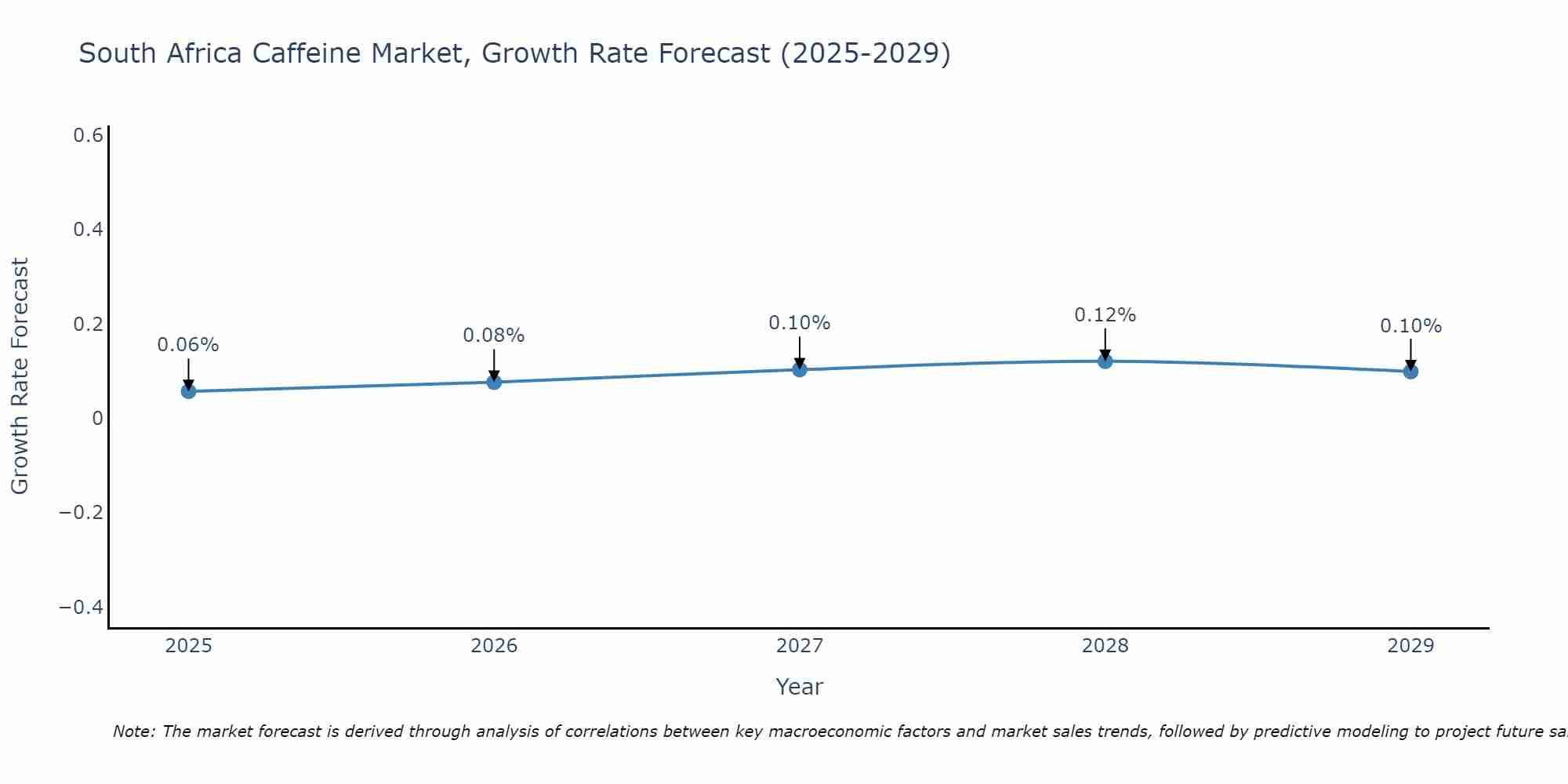
The South Africa Caffeine Market is projected to witness mixed growth rate patterns during 2025 to 2029. Growth accelerates to 0.12% in 2028, following an initial rate of 0.06%, before easing to 0.10% at the end of the period.
South Africa Caffeine Market Overview
Caffeine is widely consumed in South Africa through beverages like coffee, tea, and energy drinks, reflecting cultural preferences and lifestyle trends. Market dynamics include coffee industry growth, health-conscious consumer behaviors, and beverage innovation trends.
Drivers of the market
Growing consumption of caffeinated beverages and functional foods drives the caffeine market in South Africa. Caffeine`s stimulant properties and popularity in coffee, tea, energy drinks, and dietary supplements contribute to its demand among consumers seeking alertness and cognitive benefits.
Challenges of the market
The caffeine market in South Africa is hindered by fluctuating raw material costs, competition from synthetic and alternative stimulants, and regulatory restrictions. Additionally, consumer health concerns and the need for continuous innovation in product formulations present significant challenges.
Government Policy of the market
In the Caffeine Market, government policies aim to ensure the safety and quality of caffeine-containing products. The South African government enforces regulations on the production and use of caffeine in food and beverages, supports research into the health effects of caffeine, and provides guidelines for safe consumption levels.
Key Highlights of the Report:
- South Africa Caffeine Market Outlook
- Market Size of South Africa Caffeine Market, 2024
- Forecast of South Africa Caffeine Market, 2031
- Historical Data and Forecast of South Africa Caffeine Revenues & Volume for the Period 2018 - 2031
- South Africa Caffeine Market Trend Evolution
- South Africa Caffeine Market Drivers and Challenges
- South Africa Caffeine Price Trends
- South Africa Caffeine Porter's Five Forces
- South Africa Caffeine Industry Life Cycle
- Historical Data and Forecast of South Africa Caffeine Market Revenues & Volume By Type for the Period 2018 - 2031
- Historical Data and Forecast of South Africa Caffeine Market Revenues & Volume By Natural Caffeine for the Period 2018 - 2031
- Historical Data and Forecast of South Africa Caffeine Market Revenues & Volume By Synthetic Caffeine for the Period 2018 - 2031
- Historical Data and Forecast of South Africa Caffeine Market Revenues & Volume By Applications for the Period 2018 - 2031
- Historical Data and Forecast of South Africa Caffeine Market Revenues & Volume By Pharmaceuticals for the Period 2018 - 2031
- Historical Data and Forecast of South Africa Caffeine Market Revenues & Volume By Food for the Period 2018 - 2031
- Historical Data and Forecast of South Africa Caffeine Market Revenues & Volume By Beverages for the Period 2018 - 2031
- Historical Data and Forecast of South Africa Caffeine Market Revenues & Volume By Flavours and Fragrances for the Period 2018 - 2031
- South Africa Caffeine Import Export Trade Statistics
- Market Opportunity Assessment By Type
- Market Opportunity Assessment By Applications
- South Africa Caffeine Top Companies Market Share
- South Africa Caffeine Competitive Benchmarking By Technical and Operational Parameters
- South Africa Caffeine Company Profiles
- South Africa Caffeine Key Strategic Recommendations






































