South Africa Knife Market Size Growth Rate
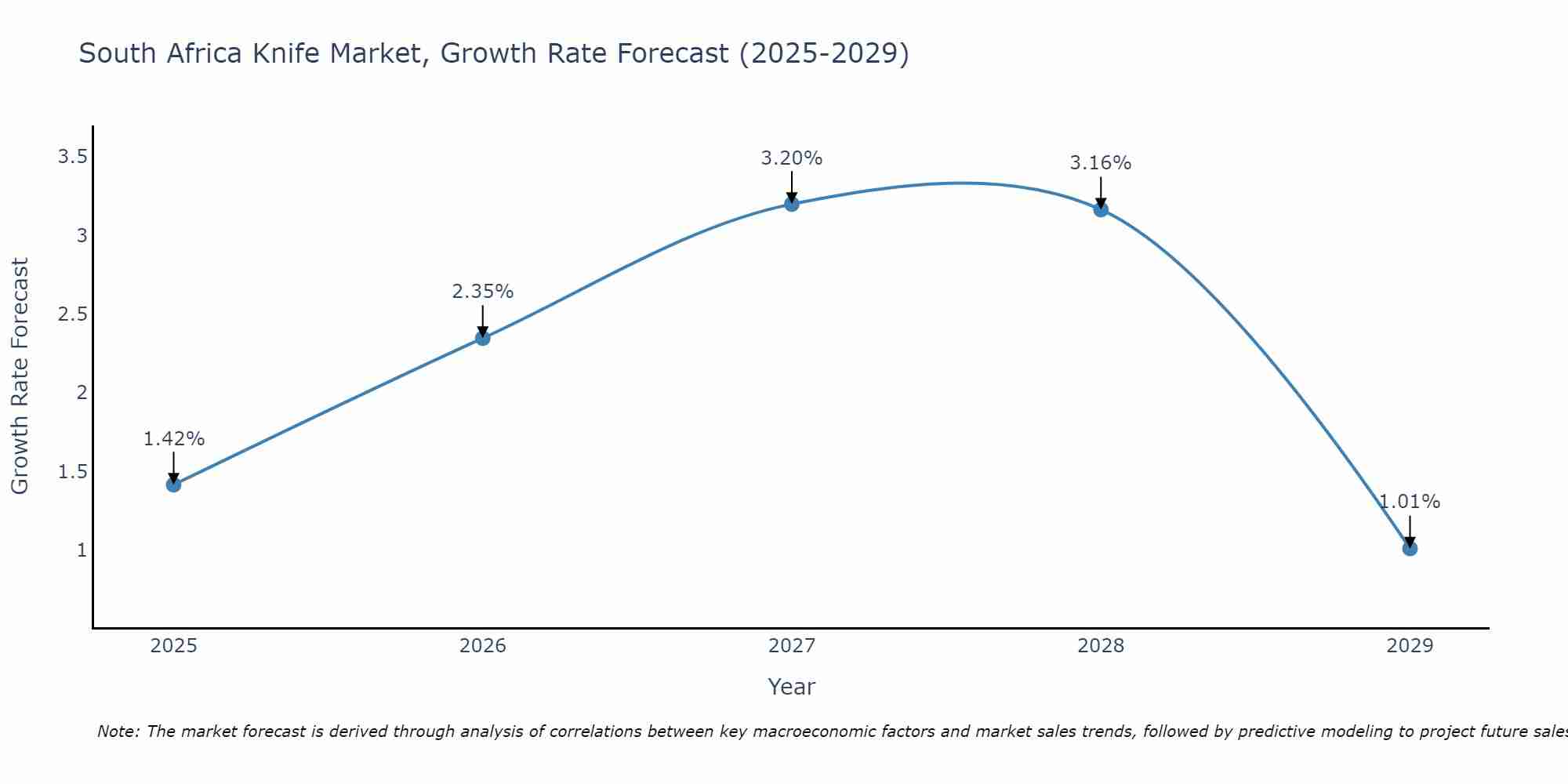
The South Africa Knife Market is projected to witness mixed growth rate patterns during 2025 to 2029. Growth accelerates to 3.20% in 2027, following an initial rate of 1.42%, before easing to 1.01% at the end of the period.
South Africa Knife Market Overview
The South Africa knife market is a robust and diverse industry catering to a range of consumer needs, from everyday kitchen use to outdoor activities and professional culinary requirements. The market offers a wide variety of knives, including chef`s knives, utility knives, hunting knives, and multi-tools, with a mix of local and international brands competing for market share. Traditional knife-making craftsmanship also plays a significant role in the market, with handmade knives from local artisans gaining popularity among collectors and enthusiasts. The market is driven by factors such as innovation in materials and design, increasing demand for high-quality, durable knives, and a growing interest in cooking and outdoor pursuits. Retail channels include specialty knife stores, department stores, online retailers, and outdoor equipment shops, providing consumers with ample options to choose from.
South Africa Knife Market Trends
The South Africa Knife Market is experiencing a growing demand for high-quality, multi-functional knives that offer durability and precision in various applications such as cooking, camping, and outdoor activities. Consumers are increasingly seeking knives with ergonomic designs, advanced blade materials, and innovative features like assisted opening mechanisms and customizable handles. There is also a rising interest in traditional South African knife styles, showcasing local craftsmanship and heritage. Additionally, sustainability and ethical sourcing practices are becoming important factors influencing purchasing decisions, leading to a surge in demand for environmentally-friendly and responsibly-produced knives in the market. Overall, the South Africa Knife Market is witnessing a shift towards premium, versatile knives that cater to both practical and aesthetic preferences of consumers.
South Africa Knife Market Challenges
In the South Africa knife market, challenges include competition from both domestic and international brands, fluctuating raw material prices, and counterfeit products affecting the reputation of genuine brands. Additionally, economic instability and currency fluctuations can impact consumer purchasing power and overall market demand. Furthermore, regulatory issues related to safety standards and import/export restrictions can pose obstacles for manufacturers and distributors. To succeed in this market, companies need to focus on innovation, quality control, and building strong brand loyalty among consumers. Developing effective marketing strategies, investing in product differentiation, and establishing partnerships with reliable suppliers can help navigate these challenges and capitalize on the opportunities within the South Africa knife market.
South Africa Knife Market Investment Opportunities
The South Africa Knife Market offers various investment opportunities for both local and international investors. With a growing interest in outdoor activities, camping, and cooking, there is a demand for high-quality knives in the market. Investing in innovative knife designs, eco-friendly materials, and customization options can attract consumers looking for unique and sustainable products. Additionally, focusing on premium knife brands that cater to collectors and enthusiasts can be a lucrative investment opportunity. Collaborating with local artisans and manufacturers to produce handcrafted knives that showcase traditional craftsmanship can also appeal to consumers seeking authentic and culturally significant products. Overall, the South Africa Knife Market presents potential for growth and diversification through product innovation, sustainability efforts, and strategic partnerships.
South Africa Knife Market Government Policy
The South African government has implemented strict regulations regarding the sale and possession of knives in the country. The legislation categorizes knives based on their blade length and design, with certain types being prohibited for sale to the general public. Additionally, individuals are required to provide a valid reason for owning a knife, such as for work purposes or self-defense, and must obtain a license for carrying certain types of knives in public. These regulations are aimed at reducing crime and ensuring public safety by restricting access to potentially dangerous weapons. Retailers selling knives are also required to adhere to specific guidelines to prevent the sale of illegal or prohibited items in the market.
South Africa Knife Market Future Outlook
The South Africa Knife Market is expected to show steady growth in the coming years driven by factors such as increasing consumer interest in cooking and outdoor activities, as well as the growing popularity of knives as collectibles. The market is likely to benefit from the rising demand for high-quality and specialized knives for various purposes, including culinary, hunting, and survival. Technological advancements in knife manufacturing, such as the use of high-quality materials and innovative designs, are also anticipated to drive market growth. Additionally, the expanding e-commerce sector in South Africa is expected to provide further opportunities for market players to reach a broader customer base and increase sales. Overall, the South Africa Knife Market is poised for positive growth prospects in the foreseeable future.
Key Highlights of the Report:
- South Africa Knife Market Outlook
- Market Size of South Africa Knife Market, 2021
- Forecast of South Africa Knife Market, 2027
- Historical Data and Forecast of South Africa Knife Revenues & Volume for the Period 2018 - 2027
- South Africa Knife Market Trend Evolution
- South Africa Knife Market Drivers and Challenges
- South Africa Knife Price Trends
- South Africa Knife Porter's Five Forces
- South Africa Knife Industry Life Cycle
- Historical Data and Forecast of South Africa Knife Market Revenues & Volume By Product Type for the Period 2018 - 2027
- Historical Data and Forecast of South Africa Knife Market Revenues & Volume By Stainless Steel for the Period 2018 - 2027
- Historical Data and Forecast of South Africa Knife Market Revenues & Volume By Carbon Steel for the Period 2018 - 2027
- Historical Data and Forecast of South Africa Knife Market Revenues & Volume By Alloy Steel for the Period 2018 - 2027
- Historical Data and Forecast of South Africa Knife Market Revenues & Volume By Other Materials for the Period 2018 - 2027
- Historical Data and Forecast of South Africa Knife Market Revenues & Volume By End-Users for the Period 2018 - 2027
- Historical Data and Forecast of South Africa Knife Market Revenues & Volume By Utensils& Kitchen Tools for the Period 2018 - 2027
- Historical Data and Forecast of South Africa Knife Market Revenues & Volume By Weapons& Defence for the Period 2018 - 2027
- Historical Data and Forecast of South Africa Knife Market Revenues & Volume By Others for the Period 2018 - 2027
- South Africa Knife Import Export Trade Statistics
- Market Opportunity Assessment By Product Type
- Market Opportunity Assessment By End-Users
- South Africa Knife Top Companies Market Share
- South Africa Knife Competitive Benchmarking By Technical and Operational Parameters
- South Africa Knife Company Profiles
- South Africa Knife Key Strategic Recommendations






































