South Africa Luxury Leather Goods Market: Import Trend Analysis
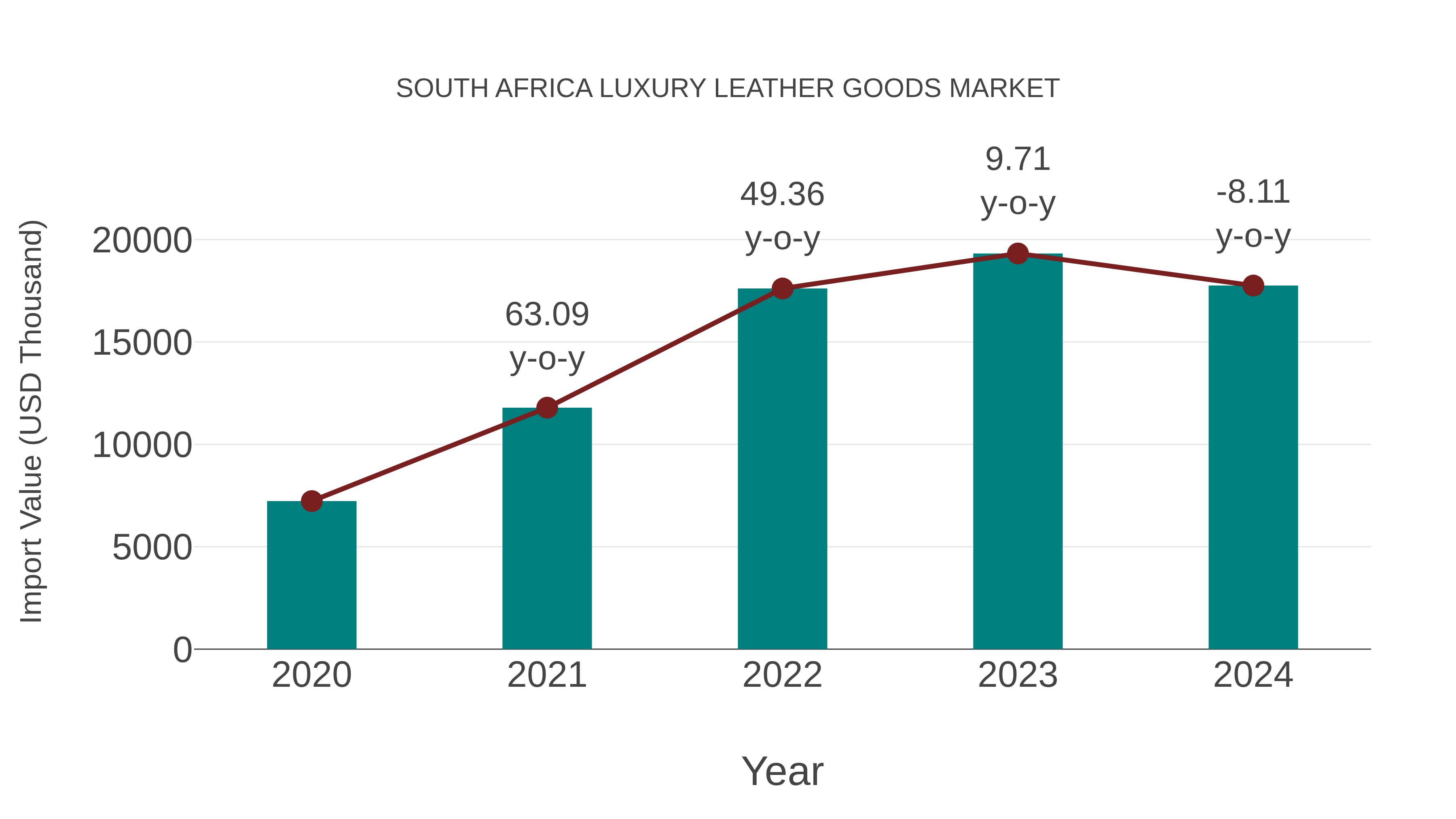
South Africa`s luxury leather goods import trend experienced a decline in growth rate from 2023 to 2024, with a decrease of -8.11%. However, the compound annual growth rate (CAGR) for the period from 2020 to 2024 stood at a notable 25.18%. This shift in momentum could be attributed to changing consumer preferences, economic conditions, or shifts in global trade dynamics.
South Africa Luxury Leather Goods Market Synopsis
The South Africa luxury leather goods market is experiencing steady growth driven by increasing disposable incomes, changing consumer preferences towards premium quality products, and a growing awareness of fashion trends. Key players in the market offer a wide range of luxury leather goods including handbags, wallets, belts, and footwear, catering to a discerning consumer base seeking high-quality and stylish accessories. The market is also influenced by the presence of international luxury brands expanding their footprint in the region, as well as a rise in local designers creating unique and bespoke leather goods. With a focus on craftsmanship, durability, and exclusivity, the South Africa luxury leather goods market presents opportunities for further expansion and innovation in the premium accessories segment.
South Africa Luxury Leather Goods Market Trends
The South Africa luxury leather goods market is experiencing a rise in demand for premium, locally sourced materials and artisanal craftsmanship. Consumers are increasingly seeking unique, high-quality products that reflect their individuality and support sustainability. This trend presents opportunities for luxury brands to differentiate themselves through storytelling and ethical practices, appealing to conscious consumers. With the growing popularity of e-commerce platforms, there is also a significant opportunity for brands to expand their reach and target a wider audience beyond traditional brick-and-mortar stores. Collaborations with local designers and artists, as well as incorporating technology such as customization options and virtual try-on experiences, can further elevate the luxury shopping experience in the South African market.
South Africa Luxury Leather Goods Market Challenges
In the South Africa Luxury Leather Goods Market, several challenges are faced including the impact of economic fluctuations, high import costs of raw materials, increasing competition from international brands, and the presence of counterfeit products. Economic instability and fluctuations in consumer spending can affect the demand for luxury goods, while the high costs of importing quality raw materials such as leather can impact the overall production costs and pricing of goods. Additionally, the presence of international luxury brands in the market intensifies competition for local luxury leather goods brands. Moreover, the prevalence of counterfeit products poses a threat to the reputation and sales of genuine luxury leather goods manufacturers in South Africa. Overcoming these challenges requires strategic pricing, effective marketing strategies, quality control measures, and strong brand positioning to maintain a competitive edge in the market.
South Africa Luxury Leather Goods Market Investment Opportunities
The South Africa Luxury Leather Goods Market is primarily being driven by the growing disposable income and changing consumer preferences towards premium and high-quality products. Increased urbanization, a rising middle class, and a growing awareness of international luxury brands are also key factors fueling the demand for luxury leather goods in the country. Additionally, the influence of social media and celebrity endorsements has played a significant role in shaping consumer perceptions and driving the desire for luxury leather goods. The focus on craftsmanship, exclusivity, and unique designs has further contributed to the market growth as consumers seek products that reflect their individuality and status. Overall, a combination of economic prosperity, evolving consumer tastes, and aspirational lifestyles are driving the South Africa Luxury Leather Goods Market.
South Africa Luxury Leather Goods Market Government Polices
The South African government has implemented various policies that impact the Luxury Leather Goods Market, including import tariffs and regulations on the importation of exotic animal skins used in luxury products. The government`s aim is to protect local industries and promote sustainable practices within the leather goods sector. Additionally, there are policies in place to support local artisans and manufacturers through incentives and financial assistance programs. The government also enforces consumer protection laws to ensure that luxury leather goods meet quality standards and are accurately marketed. Overall, the government`s policies seek to balance economic growth in the luxury leather goods market with environmental sustainability and support for local businesses.
South Africa Luxury Leather Goods Market Future Outlook
The South Africa luxury leather goods market is poised for steady growth in the upcoming years, driven by an increasing disposable income among the middle and upper-class population, growing consumer preference for quality and sustainable products, and a rising demand for luxury items that showcase individuality and status. The market is also expected to benefit from the expanding retail landscape, including the growth of e-commerce platforms, as well as the rising trend of experiential luxury shopping. Furthermore, with a growing awareness of ethical sourcing and craftsmanship, consumers are likely to gravitate towards luxury leather goods that are produced sustainably and ethically. Overall, the South Africa luxury leather goods market presents opportunities for brands that can cater to the evolving preferences and values of the discerning consumers in the region.
Key Highlights of the Report:
- South Africa Luxury Leather Goods Market Outlook
- Market Size of South Africa Luxury Leather Goods Market, 2025
- Forecast of South Africa Luxury Leather Goods Market, 2032
- Historical Data and Forecast of South Africa Luxury Leather Goods Revenues & Volume for the Period 2022 - 2032F
- South Africa Luxury Leather Goods Market Trend Evolution
- South Africa Luxury Leather Goods Market Drivers and Challenges
- South Africa Luxury Leather Goods Price Trends
- South Africa Luxury Leather Goods Porter's Five Forces
- South Africa Luxury Leather Goods Industry Life Cycle
- Historical Data and Forecast of South Africa Luxury Leather Goods Market Revenues & Volume By Product for the Period 2022 - 2032F
- Historical Data and Forecast of South Africa Luxury Leather Goods Market Revenues & Volume By High- Grade for the Period 2022 - 2032F
- Historical Data and Forecast of South Africa Luxury Leather Goods Market Revenues & Volume By Low-Grade for the Period 2022 - 2032F
- Historical Data and Forecast of South Africa Luxury Leather Goods Market Revenues & Volume By Mid-Grade for the Period 2022 - 2032F
- Historical Data and Forecast of South Africa Luxury Leather Goods Market Revenues & Volume By Application for the Period 2022 - 2032F
- Historical Data and Forecast of South Africa Luxury Leather Goods Market Revenues & Volume By Men for the Period 2022 - 2032F
- Historical Data and Forecast of South Africa Luxury Leather Goods Market Revenues & Volume By Women for the Period 2022 - 2032F
- Historical Data and Forecast of South Africa Luxury Leather Goods Market Revenues & Volume By Distribution Channel for the Period 2022 - 2032F
- Historical Data and Forecast of South Africa Luxury Leather Goods Market Revenues & Volume By Offline Retail Stores for the Period 2022 - 2032F
- Historical Data and Forecast of South Africa Luxury Leather Goods Market Revenues & Volume By Online Retail Stores for the Period 2022 - 2032F
- South Africa Luxury Leather Goods Import Export Trade Statistics
- Market Opportunity Assessment By Product
- Market Opportunity Assessment By Application
- Market Opportunity Assessment By Distribution Channel
- South Africa Luxury Leather Goods Top Companies Market Share
- South Africa Luxury Leather Goods Competitive Benchmarking By Technical and Operational Parameters
- South Africa Luxury Leather Goods Company Profiles
- South Africa Luxury Leather Goods Key Strategic Recommendations






































