South Africa Neurology Devices Market Size Growth Rate
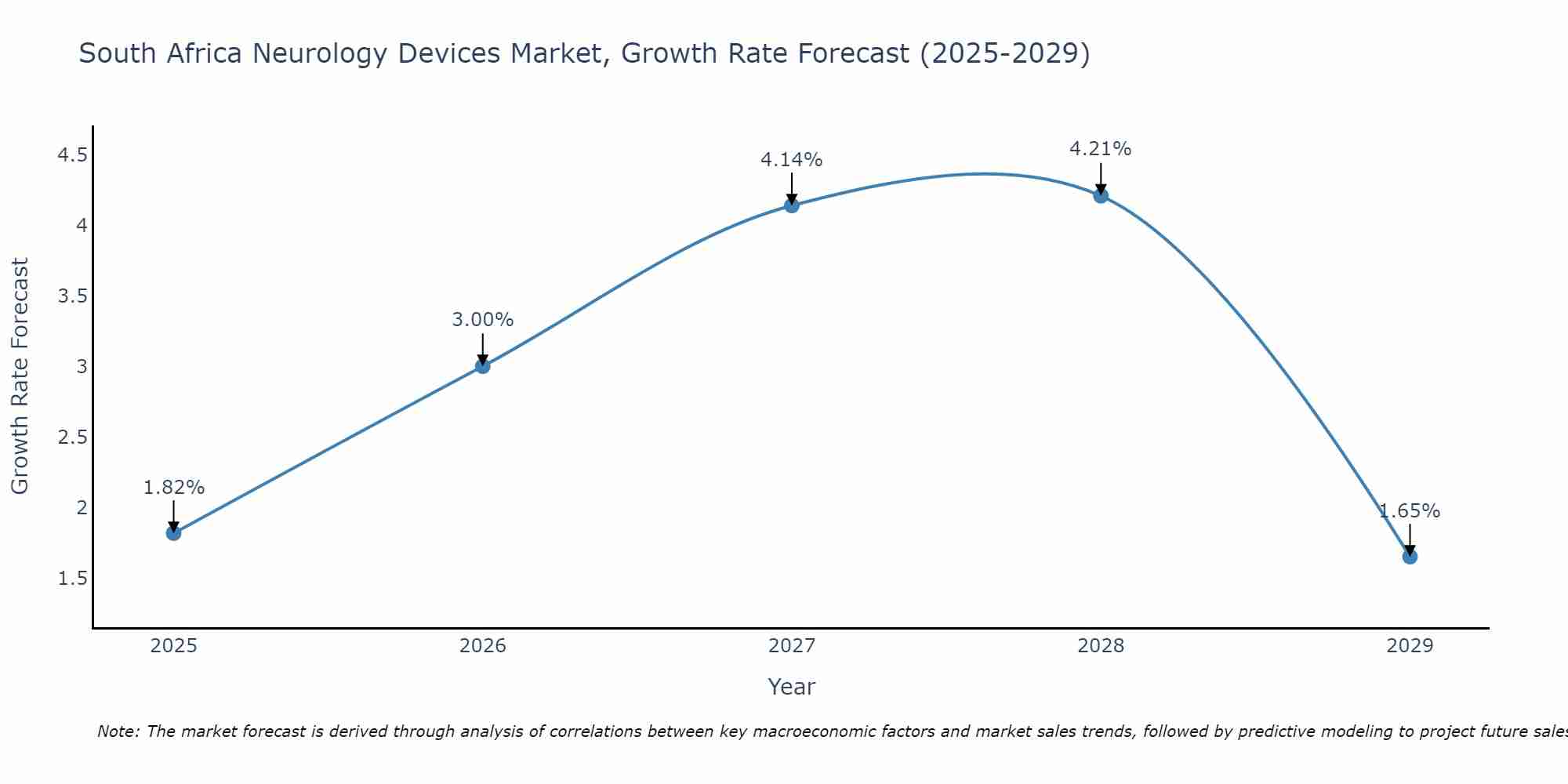
The South Africa Neurology Devices Market is projected to witness mixed growth rate patterns during 2025 to 2029. Growth accelerates to 4.21% in 2028, following an initial rate of 1.82%, before easing to 1.65% at the end of the period.
South Africa Neurology Devices Market Overview
The South African Neurology Devices market is expanding as healthcare providers invest in advanced medical devices for diagnosing and treating neurological disorders. Neurology devices include EEG machines, neurostimulation devices, and diagnostic imaging equipment, supporting accurate diagnosis and patient care. The market growth is driven by the increasing prevalence of neurological conditions and advancements in medical technology.
Drivers of the market
The South Africa Neurology Devices Market is growing due to the rising prevalence of neurological disorders, driving the demand for advanced medical devices and technologies for diagnosis, treatment, and monitoring of neurological conditions.
Challenges of the market
The Neurology Devices market in South Africa faces challenges, including limited access to advanced medical technologies and the high costs associated with neurology devices. Regulatory hurdles and the complexity of obtaining approvals for medical devices further hinder market growth. Moreover, concerns over the affordability of neurology devices and healthcare infrastructure constraints impact adoption rates.
Government Policy of the market
The government promotes the neurology devices market through policies that support healthcare innovation and patient care. Policies emphasize regulatory compliance and patient safety.
Key Highlights of the Report:
- South Africa Neurology Devices Market Outlook
- Market Size of South Africa Neurology Devices Market, 2024
- Forecast of South Africa Neurology Devices Market, 2031
- Historical Data and Forecast of South Africa Neurology Devices Revenues & Volume for the Period 2018 - 2031
- South Africa Neurology Devices Market Trend Evolution
- South Africa Neurology Devices Market Drivers and Challenges
- South Africa Neurology Devices Price Trends
- South Africa Neurology Devices Porter's Five Forces
- South Africa Neurology Devices Industry Life Cycle
- Historical Data and Forecast of South Africa Neurology Devices Market Revenues & Volume By Product for the Period 2018 - 2031
- Historical Data and Forecast of South Africa Neurology Devices Market Revenues & Volume By Neurostimulation Devices for the Period 2018 - 2031
- Historical Data and Forecast of South Africa Neurology Devices Market Revenues & Volume By Neurosurgery Devices for the Period 2018 - 2031
- Historical Data and Forecast of South Africa Neurology Devices Market Revenues & Volume By Interventional Neurology Devices for the Period 2018 - 2031
- Historical Data and Forecast of South Africa Neurology Devices Market Revenues & Volume By Cerebrospinal fluid management devices for the Period 2018 - 2031
- Historical Data and Forecast of South Africa Neurology Devices Market Revenues & Volume By Others for the Period 2018 - 2031
- Historical Data and Forecast of South Africa Neurology Devices Market Revenues & Volume By End User for the Period 2018 - 2031
- Historical Data and Forecast of South Africa Neurology Devices Market Revenues & Volume By Hospitals for the Period 2018 - 2031
- Historical Data and Forecast of South Africa Neurology Devices Market Revenues & Volume By Ambulatory surgery centers for the Period 2018 - 2031
- Historical Data and Forecast of South Africa Neurology Devices Market Revenues & Volume By Neurology clinics for the Period 2018 - 2031
- South Africa Neurology Devices Import Export Trade Statistics
- Market Opportunity Assessment By Product
- Market Opportunity Assessment By End User
- South Africa Neurology Devices Top Companies Market Share
- South Africa Neurology Devices Competitive Benchmarking By Technical and Operational Parameters
- South Africa Neurology Devices Company Profiles
- South Africa Neurology Devices Key Strategic Recommendations






































