South Africa Octopus Market Size Growth Rate
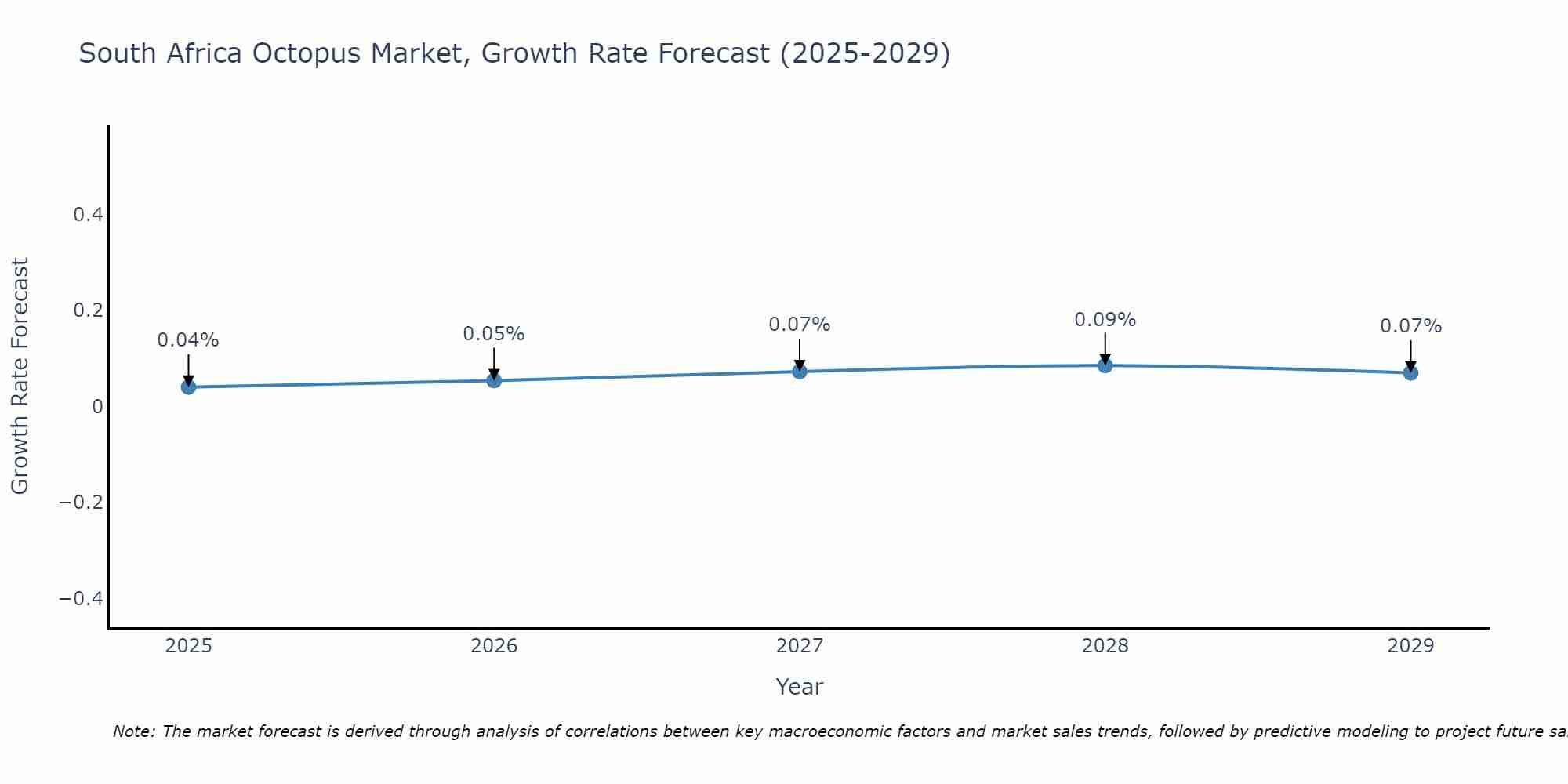
The South Africa Octopus Market is projected to witness mixed growth rate patterns during 2025 to 2029. Starting at 0.04% in 2025, the market peaks at 0.09% in 2028, and settles at 0.07% by 2029.
South Africa Octopus Market Synopsis
The South Africa octopus market is characterized by a growing demand for this seafood delicacy both domestically and internationally. Octopus is a popular dish in South African cuisine, particularly along the coastal regions where it is abundant. The market is driven by factors such as increasing consumer interest in exotic and sustainable seafood options, as well as the growing influence of Mediterranean and Asian culinary trends in the country. However, challenges exist in terms of sustainability and regulation of octopus fishing to ensure the long-term viability of the market. Key players in the South Africa octopus market include seafood suppliers, restaurants, and exporters catering to both local and international demand, with a focus on quality, freshness, and responsible sourcing practices.
South Africa Octopus Market Trends
In the South Africa Octopus Market, there is a growing trend towards sustainable and ethical sourcing practices. Consumers are increasingly concerned about the impact of overfishing on octopus populations and are seeking out products that are sourced responsibly. This trend has led to an increased demand for certified sustainable octopus products and has prompted many South African seafood companies to adopt more transparent supply chain practices. Additionally, there is a rising interest in value-added octopus products such as ready-to-eat dishes and innovative culinary creations, catering to consumers looking for convenient yet premium seafood options. Overall, the South Africa Octopus Market is evolving to meet the changing preferences and ethical considerations of consumers, driving the market towards more sustainable and diverse offerings.
South Africa Octopus Market Challenges
In the South Africa octopus market, some key challenges include sustainability issues due to overfishing and illegal fishing practices, which can lead to a decline in octopus populations and disrupt the ecosystem. Another challenge is the lack of effective management and regulation of the octopus fishery, which can result in inconsistent supply and quality of octopus products. Additionally, there may be issues related to traceability and transparency in the supply chain, which can impact consumer confidence and market competitiveness. Addressing these challenges would require collaboration between government agencies, fishing communities, and industry stakeholders to implement sustainable fishing practices, improve regulatory frameworks, and enhance traceability measures to ensure the long-term viability of the South Africa octopus market.
South Africa Octopus Market Investment Opportunities
The South Africa Octopus Market presents promising investment opportunities due to the growing demand for this seafood delicacy both domestically and internationally. With increasing awareness of the health benefits and culinary appeal of octopus, the market is expected to expand further. Investors can consider opportunities in aquaculture projects for octopus farming to meet the rising demand sustainably. Additionally, investments in processing facilities and distribution networks can capitalize on the potential for export growth. Collaborating with local fishermen and supporting sustainable fishing practices can also be a strategic investment approach in this market. Overall, the South Africa Octopus Market offers diverse investment avenues for those looking to tap into the growing seafood industry and capitalize on the popularity of octopus.
Jordan Agar Market Government Policies
The South Africa Octopus Market is governed by regulations set by the Department of Agriculture, Forestry and Fisheries (DAFF). These regulations aim to ensure the sustainability of the octopus population through quotas, size limits, and closed seasons. The Marine Living Resources Act of 1998 provides the legal framework for managing octopus fisheries, with specific regulations set out in the Octopus Fishery Management Plan. DAFF conducts regular assessments of octopus stocks and collaborates with local fishing communities to enforce compliance with regulations and promote responsible fishing practices. Additionally, the South African government has implemented measures to combat illegal, unreported, and unregulated (IUU) fishing activities in order to protect the octopus population and support the long-term viability of the industry.
South Africa Octopus Market Future Outlook
The South Africa octopus market is anticipated to experience steady growth in the coming years due to increasing consumer demand for seafood products and the rising popularity of octopus dishes in the country. Factors such as the growing awareness of the health benefits of consuming seafood, the expansion of aquaculture practices, and the development of sustainable fishing techniques are expected to drive market growth. Additionally, the rise of seafood restaurants and culinary tourism in South Africa is likely to further boost the demand for octopus. However, challenges such as environmental concerns, fluctuations in supply due to fishing regulations, and competition from other seafood products may impact market growth. Overall, the South Africa octopus market is poised for expansion with opportunities for innovation and sustainable practices to meet the growing demand.
Key Highlights of the Report:
- South Africa Octopus Market Outlook
- Market Size of South Africa Octopus Market, 2024
- Forecast of South Africa Octopus Market, 2031
- Historical Data and Forecast of South Africa Octopus Revenues & Volume for the Period 2021 - 2031
- South Africa Octopus Market Trend Evolution
- South Africa Octopus Market Drivers and Challenges
- South Africa Octopus Price Trends
- South Africa Octopus Porter's Five Forces
- South Africa Octopus Industry Life Cycle
- Historical Data and Forecast of South Africa Octopus Market Revenues & Volume By Product Type for the Period 2021 - 2031
- Historical Data and Forecast of South Africa Octopus Market Revenues & Volume By Fresh for the Period 2021 - 2031
- Historical Data and Forecast of South Africa Octopus Market Revenues & Volume By Processed for the Period 2021 - 2031
- Historical Data and Forecast of South Africa Octopus Market Revenues & Volume By Application for the Period 2021 - 2031
- Historical Data and Forecast of South Africa Octopus Market Revenues & Volume By Commercial for the Period 2021 - 2031
- Historical Data and Forecast of South Africa Octopus Market Revenues & Volume By Food and Beverage for the Period 2021 - 2031
- Historical Data and Forecast of South Africa Octopus Market Revenues & Volume By Distribution Channel for the Period 2021 - 2031
- Historical Data and Forecast of South Africa Octopus Market Revenues & Volume By Direct for the Period 2021 - 2031
- Historical Data and Forecast of South Africa Octopus Market Revenues & Volume By Indirect for the Period 2021 - 2031
- South Africa Octopus Import Export Trade Statistics
- Market Opportunity Assessment By Product Type
- Market Opportunity Assessment By Application
- Market Opportunity Assessment By Distribution Channel
- South Africa Octopus Top Companies Market Share
- South Africa Octopus Competitive Benchmarking By Technical and Operational Parameters
- South Africa Octopus Company Profiles
- South Africa Octopus Key Strategic Recommendations






































