South Africa Oven Market: Import Trend Analysis
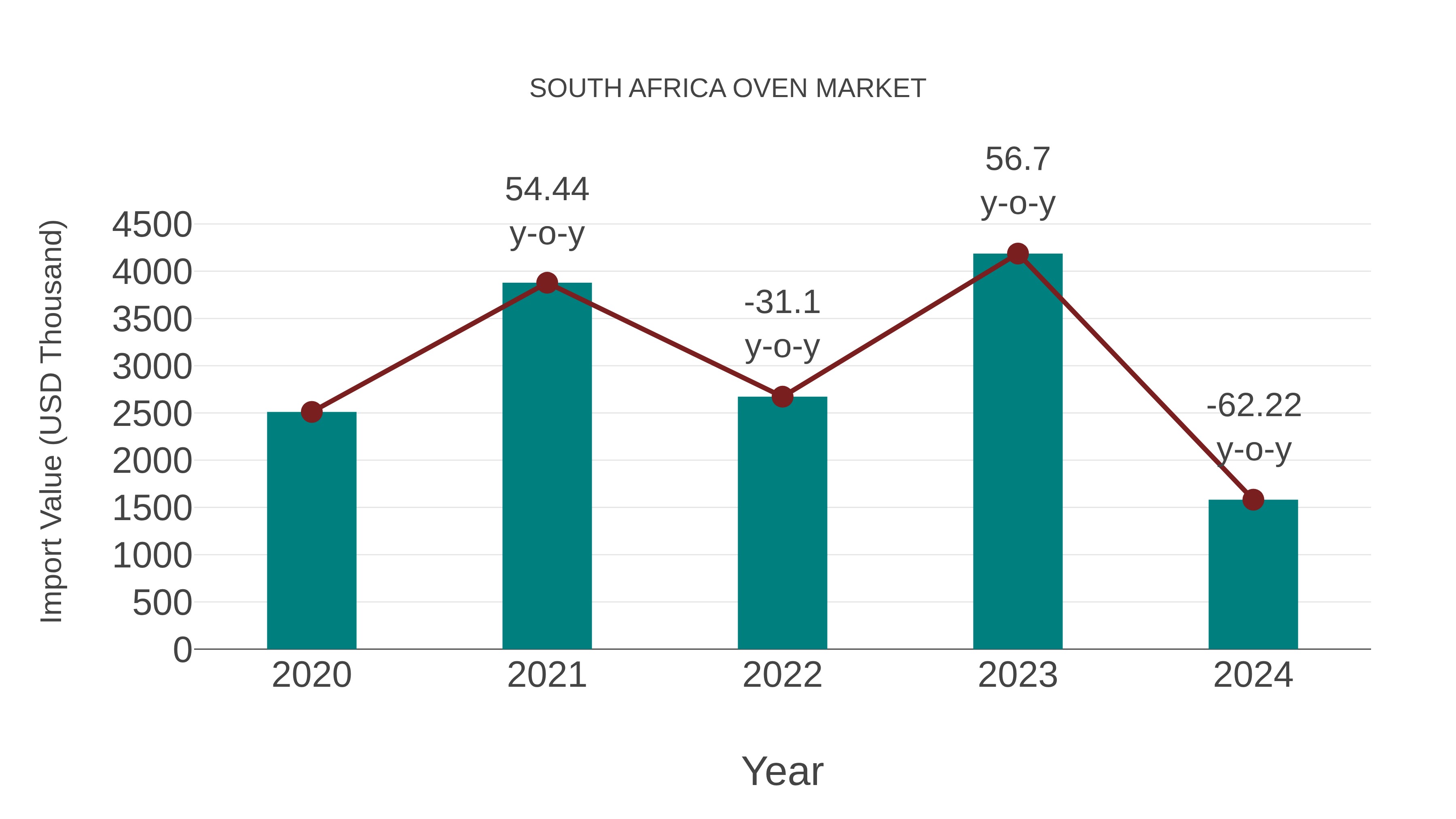
South Africa`s import trend for the oven market experienced a notable decline from 2023 to 2024, with a growth rate of -62.22%. The compound annual growth rate (CAGR) for the period 2020-2024 stood at -10.91%. This sharp decrease in imports can be attributed to shifting consumer preferences, possibly indicating a demand shift towards alternative cooking appliances or market saturation.
South Africa Oven Market Overview
The South Africa oven market is experiencing steady growth driven by increasing urbanization, rising disposable incomes, and evolving consumer lifestyles. Electric ovens are gaining popularity due to their convenience and efficiency, while gas ovens remain prevalent in regions with inconsistent electricity supply. Built-in ovens are witnessing higher demand as they offer a sleek and modern kitchen aesthetic. The trend towards energy-efficient appliances is also shaping the market, with consumers seeking environmentally friendly options. Key players in the South Africa oven market include Defy Appliances, Samsung, LG Electronics, and Whirlpool Corporation, who are focusing on product innovation, competitive pricing, and expanding distribution channels to capture a larger market share. With a growing emphasis on cooking at home and the increasing influence of Western culinary trends, the South Africa oven market is poised for further expansion in the coming years.
South Africa Oven Market Trends and Opportunities
The South Africa oven market is experiencing a growing demand for energy-efficient and multi-functional ovens, driven by increasing consumer awareness of sustainability and convenience. Manufacturers are focusing on innovative features such as smart technology integration, self-cleaning functions, and faster cooking capabilities to meet these evolving consumer preferences. Additionally, the rising trend of home baking and cooking due to the COVID-19 pandemic has further boosted the market for ovens in South Africa. Opportunities in the market include the potential for partnerships with local retailers to expand distribution channels, as well as the development of affordable yet high-quality oven models to cater to a wider consumer base. Overall, the South Africa oven market presents promising prospects for companies that can adapt to changing consumer needs and market dynamics.
South Africa Oven Market Challenges
In the South Africa oven market, challenges include intense competition from both local and international oven manufacturers, leading to price wars and pressure on profit margins. Economic factors such as fluctuations in currency exchange rates and rising input costs also impact the market. Additionally, the high cost of energy in South Africa poses a challenge for consumers looking to purchase and operate ovens, leading to a preference for more energy-efficient models. Furthermore, limited access to reliable electricity in some regions of the country hinders the growth of the oven market as consumers may be hesitant to invest in appliances that require consistent power supply. Overall, navigating these challenges requires oven manufacturers to innovate with energy-efficient and cost-effective solutions to appeal to the diverse consumer base in South Africa.
South Africa Oven Market Drivers
The South Africa Oven Market is primarily driven by the growing demand for convenient cooking appliances due to an increase in urbanization and changing lifestyles. Consumers are seeking efficient and time-saving cooking solutions, which has led to a rise in the adoption of ovens for baking, grilling, and roasting. Additionally, the expanding middle-class population and rising disposable incomes are fueling the demand for premium and technologically advanced ovens with features such as smart connectivity and energy efficiency. Furthermore, the influence of western culinary trends and the popularity of baking and cooking shows are also driving the growth of the oven market in South Africa. Overall, the evolving consumer preferences towards convenience, quality cooking, and modern kitchen appliances are key factors propelling the South Africa Oven Market.
South Africa Oven Market Government Policy
The South African government has implemented various policies related to the oven market to ensure safety, efficiency, and environmental sustainability. These policies include regulations on energy efficiency standards for ovens, aiming to reduce electricity consumption and promote environmentally friendly products. Additionally, there are safety standards in place to protect consumers from potential hazards associated with ovens. The government also encourages the use of locally manufactured ovens to support domestic industries and create job opportunities. Overall, the policies in place aim to balance consumer protection, environmental sustainability, and economic development within the South African oven market.
South Africa Oven Market Future Outlook
The South Africa oven market is projected to experience steady growth in the coming years, driven by factors such as increasing urbanization, rising disposable incomes, and changing consumer preferences towards convenience cooking appliances. The market is expected to benefit from the introduction of advanced technologies, energy-efficient models, and innovative features in ovens. Additionally, growing demand for modern kitchen appliances, coupled with a trend towards open-plan kitchen designs, will further fuel the market growth. Manufacturers are likely to focus on product differentiation, customization options, and competitive pricing strategies to cater to the diverse needs of consumers. Overall, the South Africa oven market is poised for expansion, with opportunities for companies to capitalize on the evolving consumer trends and preferences in the region.
Key Highlights of the Report:
- South Africa Oven Market Outlook
- Market Size of South Africa Oven Market, 2025
- Forecast of South Africa Oven Market, 2032
- Historical Data and Forecast of South Africa Oven Revenues & Volume for the Period 2022 - 2032F
- South Africa Oven Market Trend Evolution
- South Africa Oven Market Drivers and Challenges
- South Africa Oven Price Trends
- South Africa Oven Porter's Five Forces
- South Africa Oven Industry Life Cycle
- Historical Data and Forecast of South Africa Oven Market Revenues & Volume By Type for the Period 2022 - 2032F
- Historical Data and Forecast of South Africa Oven Market Revenues & Volume By Convection for the Period 2022 - 2032F
- Historical Data and Forecast of South Africa Oven Market Revenues & Volume By Grill for the Period 2022 - 2032F
- Historical Data and Forecast of South Africa Oven Market Revenues & Volume By Solo for the Period 2022 - 2032F
- Historical Data and Forecast of South Africa Oven Market Revenues & Volume By Distribution Channel for the Period 2022 - 2032F
- Historical Data and Forecast of South Africa Oven Market Revenues & Volume By Multi-brand Stores for the Period 2022 - 2032F
- Historical Data and Forecast of South Africa Oven Market Revenues & Volume By Exclusive Stores for the Period 2022 - 2032F
- Historical Data and Forecast of South Africa Oven Market Revenues & Volume By E-commerce for the Period 2022 - 2032F
- Historical Data and Forecast of South Africa Oven Market Revenues & Volume By Other Distribution Channels for the Period 2022 - 2032F
- Historical Data and Forecast of South Africa Oven Market Revenues & Volume By Structure for the Period 2022 - 2032F
- Historical Data and Forecast of South Africa Oven Market Revenues & Volume By Built-in for the Period 2022 - 2032F
- Historical Data and Forecast of South Africa Oven Market Revenues & Volume By Countertop for the Period 2022 - 2032F
- Historical Data and Forecast of South Africa Oven Market Revenues & Volume By End Users for the Period 2022 - 2032F
- Historical Data and Forecast of South Africa Oven Market Revenues & Volume By Residential for the Period 2022 - 2032F
- Historical Data and Forecast of South Africa Oven Market Revenues & Volume By Commercial for the Period 2022 - 2032F
- South Africa Oven Import Export Trade Statistics
- Market Opportunity Assessment By Type
- Market Opportunity Assessment By Distribution Channel
- Market Opportunity Assessment By Structure
- Market Opportunity Assessment By End Users
- South Africa Oven Top Companies Market Share
- South Africa Oven Competitive Benchmarking By Technical and Operational Parameters
- South Africa Oven Company Profiles
- South Africa Oven Key Strategic Recommendations






































