South Africa Wooden Furniture Market Size Growth Rate
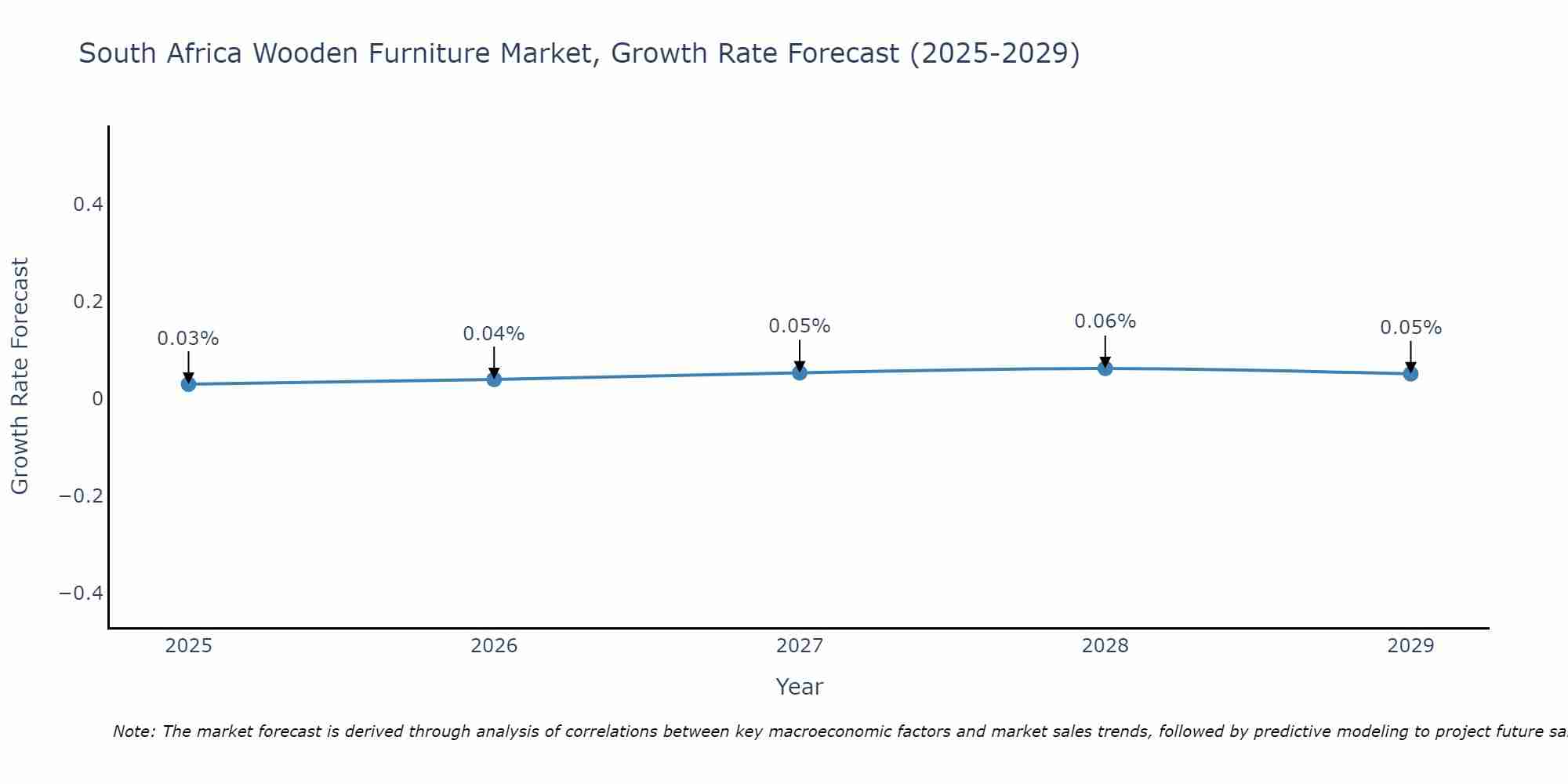
The South Africa Wooden Furniture Market is projected to witness mixed growth rate patterns during 2025 to 2029. Starting at 0.03% in 2025, the market peaks at 0.06% in 2028, and settles at 0.05% by 2029.
South Africa Wooden Furniture Market Overview
The wooden furniture market in South Africa caters to residential, commercial, and institutional sectors, offering a wide range of furniture items crafted from various wood species. The market is influenced by trends in interior design, consumer preferences for durable and aesthetically pleasing furniture, and the growing popularity of customized and eco-friendly furniture products. Domestic production and imports play significant roles in meeting diverse market demands.
Drivers of the market
The South African wooden furniture market is driven by the rising demand for high-quality, aesthetically pleasing, and durable furniture. The growth of the real estate and hospitality sectors, along with an increase in disposable incomes, contributes to the expansion of this market. Additionally, the trend towards customization and the demand for eco-friendly and sustainable furniture options are significant drivers. The local production of wooden furniture and the availability of diverse designs and styles also support market growth.
Challenges of the market
The wooden furniture market in South Africa faces several key challenges. High competition from imported furniture, particularly from countries with lower production costs, puts pressure on local manufacturers. The cost and availability of quality timber are significant issues, compounded by environmental concerns and regulations on deforestation. Additionally, the market is sensitive to economic fluctuations, as furniture is often considered a non-essential purchase, affecting consumer spending during economic downturns. The need for continuous innovation and adaptation to changing consumer tastes and trends also presents an ongoing challenge for the industry.
Government Policy of the market
The wooden furniture market in South Africa is shaped by policies aimed at supporting local manufacturing and sustainable practices. The DTIC`s policies under the IPAP encourage the growth of the furniture manufacturing sector through incentives and support for small and medium enterprises (SMEs). Additionally, forestry management policies by the DEFF ensure the sustainable sourcing of timber, promoting the use of certified wood in furniture production to meet both local and international market demands.
Key Highlights of the Report:
- South Africa Wooden Furniture Market Outlook
- Market Size of South Africa Wooden Furniture Market, 2024
- Forecast of South Africa Wooden Furniture Market, 2031
- Historical Data and Forecast of South Africa Wooden Furniture Revenues & Volume for the Period 2018 - 2031
- South Africa Wooden Furniture Market Trend Evolution
- South Africa Wooden Furniture Market Drivers and Challenges
- South Africa Wooden Furniture Price Trends
- South Africa Wooden Furniture Porter's Five Forces
- South Africa Wooden Furniture Industry Life Cycle
- Historical Data and Forecast of South Africa Wooden Furniture Market Revenues & Volume By Type for the Period 2018 - 2031
- Historical Data and Forecast of South Africa Wooden Furniture Market Revenues & Volume By Hardwood for the Period 2018 - 2031
- Historical Data and Forecast of South Africa Wooden Furniture Market Revenues & Volume By Softwood for the Period 2018 - 2031
- Historical Data and Forecast of South Africa Wooden Furniture Market Revenues & Volume By Material for the Period 2018 - 2031
- Historical Data and Forecast of South Africa Wooden Furniture Market Revenues & Volume By Plywood for the Period 2018 - 2031
- Historical Data and Forecast of South Africa Wooden Furniture Market Revenues & Volume By Laminates for the Period 2018 - 2031
- Historical Data and Forecast of South Africa Wooden Furniture Market Revenues & Volume By MDF for the Period 2018 - 2031
- Historical Data and Forecast of South Africa Wooden Furniture Market Revenues & Volume By Other Materials for the Period 2018 - 2031
- Historical Data and Forecast of South Africa Wooden Furniture Market Revenues & Volume By Product for the Period 2018 - 2031
- Historical Data and Forecast of South Africa Wooden Furniture Market Revenues & Volume By Bedroom for the Period 2018 - 2031
- Historical Data and Forecast of South Africa Wooden Furniture Market Revenues & Volume By Seating for the Period 2018 - 2031
- Historical Data and Forecast of South Africa Wooden Furniture Market Revenues & Volume By Kitchen for the Period 2018 - 2031
- Historical Data and Forecast of South Africa Wooden Furniture Market Revenues & Volume By Other Products for the Period 2018 - 2031
- Historical Data and Forecast of South Africa Wooden Furniture Market Revenues & Volume By Application for the Period 2018 - 2031
- Historical Data and Forecast of South Africa Wooden Furniture Market Revenues & Volume By Residential for the Period 2018 - 2031
- Historical Data and Forecast of South Africa Wooden Furniture Market Revenues & Volume By Commercial for the Period 2018 - 2031
- Historical Data and Forecast of South Africa Wooden Furniture Market Revenues & Volume By Distribution Channel for the Period 2018 - 2031
- Historical Data and Forecast of South Africa Wooden Furniture Market Revenues & Volume By Offline for the Period 2018 - 2031
- Historical Data and Forecast of South Africa Wooden Furniture Market Revenues & Volume By Online for the Period 2018 - 2031
- South Africa Wooden Furniture Import Export Trade Statistics
- Market Opportunity Assessment By Type
- Market Opportunity Assessment By Material
- Market Opportunity Assessment By Product
- Market Opportunity Assessment By Application
- Market Opportunity Assessment By Distribution Channel
- South Africa Wooden Furniture Top Companies Market Share
- South Africa Wooden Furniture Competitive Benchmarking By Technical and Operational Parameters
- South Africa Wooden Furniture Company Profiles
- South Africa Wooden Furniture Key Strategic Recommendations






































