South Korea Antiseptics and Disinfectants Market Summary
The south korea antiseptics and disinfectants market was estimated at USD 306 Million in 2025 and is projected to reach USD 417 Million by 2032, growing at a CAGR of 5.4% from 2026 to 2032.
South Korea Antiseptics and Disinfectants Market Year-wise Growth Rate and Key Drivers
This graph highlights how the South Korea Antiseptics and Disinfectants Market has steadily grown over the past five years, supported by major growth factors.
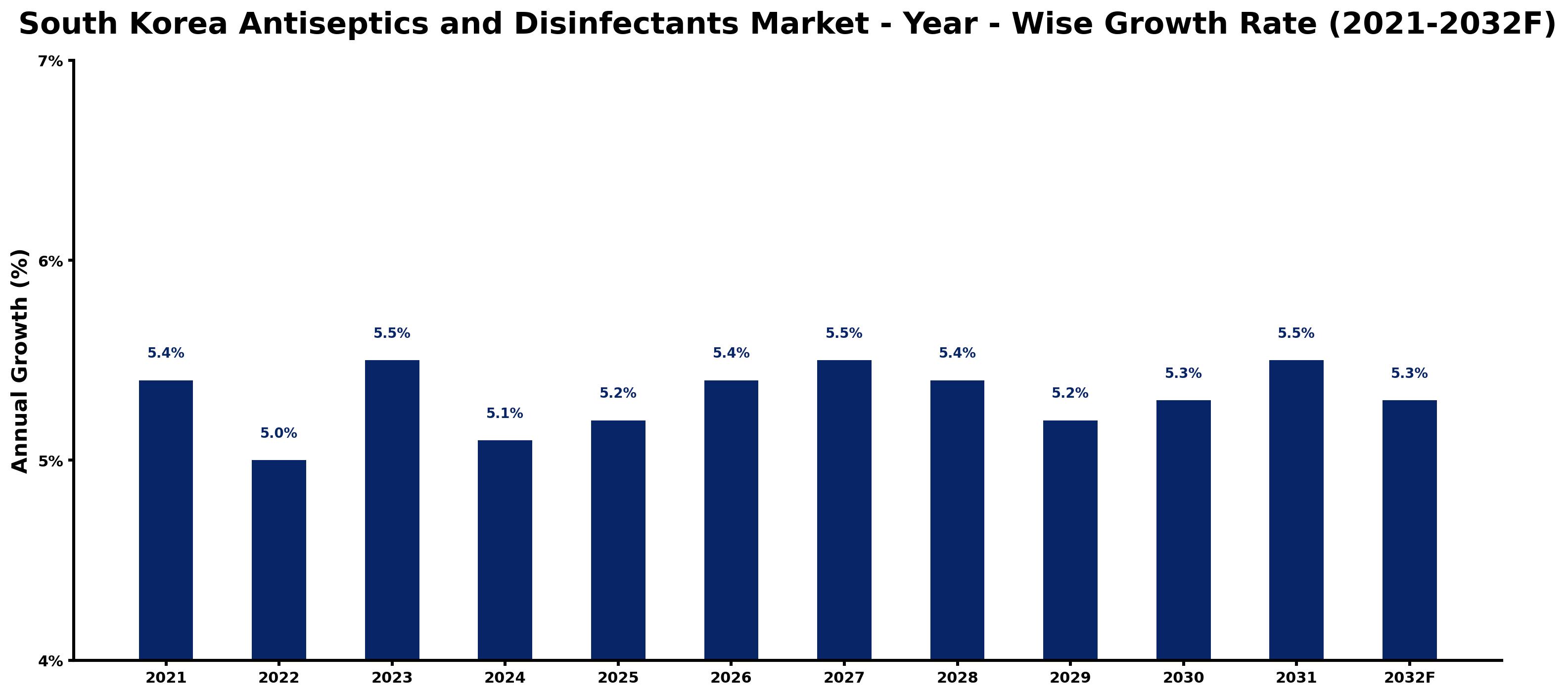
The table below presents the year wise growth rates along with the key drivers influencing the market
| Year | Growth Rate | Major Drivers |
| 2021 | 5.4% | Post-lockdown retail projects emphasized hygiene, boosting antiseptic demand in public spaces. |
| 2022 | 5.0% | Increased consumer awareness regarding health risks led to higher disinfectant purchases. |
| 2023 | 5.5% | Healthcare facilities prioritized infection control, significantly elevating antiseptic product usage. |
| 2024 | 5.1% | Corporate hygiene protocols expanded, prompting businesses to invest in disinfectant solutions. |
| 2025 | 5.2% | E-commerce growth facilitated easier access to antiseptics, reshaping consumer purchasing habits. |
| 2026 | 5.4% | Educational institutions adopted comprehensive sanitization measures, driving up product consumption. |
| 2027 | 5.5% | Sustainability concerns led brands to innovate eco-friendly antiseptic and disinfectant options. |
| 2028 | 5.4% | Technological advancements in formulation improved effectiveness, attracting new customer segments. |
| 2029 | 5.2% | Tourism sector recovery necessitated enhanced hygiene practices in hotels and attractions. |
| 2030 | 5.3% | Collaborations between industries fostered unique synergies, expanding market offerings significantly. |
| 2031 | 5.5% | Urbanization trends influenced consumer preferences for on-the-go disinfectant products. |
| 2032 | 5.3% | Healthcare innovations and cleanliness standards demanded persistent advancements in antiseptic formulations. |
Note - Market size estimations and growth projections presented in this report are based on 6Wresearch's advanced forecasting approach, validated with industry datasets as of June 2026.
South Korea Antiseptics and Disinfectants Market Synopsis
The South Korea Antiseptics and Disinfectants Market is projected to reach 5.4% and witness significant growth during the forecast period (2026-2032). This dynamic market is driven by an increasing emphasis on hygiene and sanitation practices across various segments, including healthcare facilities, public spaces, and households, especially in the post-pandemic era. As awareness about the importance of infection control heightened, demand for products such as hand sanitizers, surface disinfectants, and sterilization solutions has surged, resulting in robust market expansion.
South Korea Antiseptics and Disinfectants Market Growth Drivers
Key drivers of growth in the South Korea Antiseptics and Disinfectants Market include:
- Heightened consumer awareness regarding hygiene practices post-COVID-19 has led to increased demand for antiseptic products.
- The incorporation of advanced formulations that offer longer-lasting effects and are effective against a broader spectrum of pathogens is gaining traction.
- Governmental initiatives, including campaigns promoting cleanliness in public areas and healthcare settings, are further fostering market demand.
- The surge in e-commerce platforms facilitates easier access to these products, enabling consumers to purchase hygiene solutions conveniently.
- Investments in research and development to create eco-friendly, natural, and sustainable products align with evolving consumer preferences.
South Korea Antiseptics and Disinfectants Market Trends and Opportunities
Emerging trends within the South Korea Antiseptics and Disinfectants Market indicate a shift towards eco-friendly products as consumers seek safer alternatives to traditional disinfectants. Companies are innovating to develop formulations that are not only effective but also environmentally sustainable. Moreover, the pandemic's impact has accelerated the adoption of disinfectants in everyday life, whether in homes, workplaces, or public sectors. These trends present significant opportunities for market players to:
- Develop products with biodegradable ingredients to cater to environmentally conscious consumers.
- Leverage digital marketing strategies to enhance brand visibility and product accessibility.
- Expand product lines to target niche segments, such as germicidal disinfectants for specific industries.
- Engage in strategic partnerships with distribution channels to increase market penetration.
- Invest in consumer education initiatives to promote the importance of hygiene and disinfection.
South Korea Antiseptics and Disinfectants Market Challenges and Restraints
Although the South Korea Antiseptics and Disinfectants Market presents numerous growth opportunities, it is not without its challenges:
- Intense competition among existing players has led to pricing pressures and margin erosion.
- Regulatory compliance and stringent standards imposed on product approval add complexity to market entry and expansion.
- Consumer demand for sustainable and natural products necessitates ongoing innovation and adaptation to rapidly changing preferences.
- Supply chain disruptions, exacerbated by the pandemic, are affecting product availability and pricing stability.
- Maintaining product quality and efficacy in the face of rising demand poses ongoing operational challenges for manufacturers.
South Korea Antiseptics and Disinfectants Market Investment Opportunities
The South Korea Antiseptics and Disinfectants Market presents a range of investment opportunities driven by increasing public health standards:
- Investing in innovative product development to fulfill unmet consumer demands can yield high returns.
- There is significant potential for growth within the eco-friendly segment, aligning with national sustainability goals.
- Forming alliances with local distributors can enhance market reach and establish strong supply chains.
- Exploring niche markets, such as medical-grade disinfectants, offers lucrative avenues for investors.
- Investments in advanced manufacturing processes can lead to improved product efficiency and cost-effectiveness.
South Korea Antiseptics and Disinfectants Market Government Investment and Initiatives
The South Korean government has implemented various initiatives to promote the safety and efficacy of antiseptics and disinfectants. These governmental policies include:
- The Ministry of Food and Drug Safety (MFDS) regulates the approval and registration of antifungal products, ensuring they meet established safety standards.
- Regular inspections of manufacturing facilities aim to uphold quality control and compliance with safety protocols.
- The government has launched educational campaigns aimed at informing the public about the importance of using certified products.
- Measures to combat counterfeit and illegal products are enforced through stringent penalties for violations, thus protecting public health.
- Public funding for research and development initiatives supports innovation in the sector, encouraging the creation of new, effective formulations.
South Korea Antiseptics and Disinfectants Market Latest Developments (May 2025 - June 2026)
Recent developments in the South Korea Antiseptics and Disinfectants Market have focused on advancing product technology and meeting consumer demands. The industry has seen a push towards the introduction of clinically tested formulations that cater to specific pathogenic threats. Moreover, there is a notable increase in collaborations among manufacturers to enhance distribution channels and leverage e-commerce platforms effectively. As public interest in hygiene persists, companies are also adapting marketing strategies to emphasize the importance of disinfectant products, thereby driving further growth across the sector.
South Korea Antiseptics and Disinfectants Market - Key Attractiveness of the Report
- 10 Years of Market Numbers
- Historical Data Starting from 2022 to 2025
- Base Year: 2025
- Forecast Data until 2032
- Key Performance Indicators Impacting the Market
- Major Upcoming Developments and Projects
Key Highlights of the Report:
- South Korea Antiseptics and Disinfectants Market Outlook
- Market Size of South Korea Antiseptics and Disinfectants Market, 2025
- Forecast of South Korea Antiseptics and Disinfectants Market, 2032F
- Historical Data and Forecast of South Korea Antiseptics and Disinfectants Revenues & Volume for the Period 2022-2032F
- South Korea Antiseptics and Disinfectants Market Trend Evolution
- South Korea Antiseptics and Disinfectants Market Drivers and Challenges
- South Korea Antiseptics and Disinfectants Price Trends
- South Korea Antiseptics and Disinfectants Porter's Five Forces
- South Korea Antiseptics and Disinfectants Industry Life Cycle
- Historical Data and Forecast of South Korea Antiseptics and Disinfectants Market Revenues & Volume By Type for the Period 2022-2032F
- Historical Data and Forecast of South Korea Antiseptics and Disinfectants Market Revenues & Volume By Quaternary Ammonium Compounds for the Period 2022-2032F
- Historical Data and Forecast of South Korea Antiseptics and Disinfectants Market Revenues & Volume By Chlorine Compounds for the Period 2022-2032F
- Historical Data and Forecast of South Korea Antiseptics and Disinfectants Market Revenues & Volume By Alcohols & Aldehyde Products for the Period 2022-2032F
- Historical Data and Forecast of South Korea Antiseptics and Disinfectants Market Revenues & Volume By Enzyme for the Period 2022-2032F
- Historical Data and Forecast of South Korea Antiseptics and Disinfectants Market Revenues & Volume By Others for the Period 2022-2032F
- Historical Data and Forecast of South Korea Antiseptics and Disinfectants Market Revenues & Volume By Product Type for the Period 2022-2032F
- Historical Data and Forecast of South Korea Antiseptics and Disinfectants Market Revenues & Volume By Enzymatic Cleaners for the Period 2022-2032F
- Historical Data and Forecast of South Korea Antiseptics and Disinfectants Market Revenues & Volume By Medical Device Disinfectants for the Period 2022-2032F
- Historical Data and Forecast of South Korea Antiseptics and Disinfectants Market Revenues & Volume By Surface Disinfectants for the Period 2022-2032F
- Historical Data and Forecast of South Korea Antiseptics and Disinfectants Market Revenues & Volume By End-use for the Period 2022-2032F
- Historical Data and Forecast of South Korea Antiseptics and Disinfectants Market Revenues & Volume By Hospitals for the Period 2022-2032F
- Historical Data and Forecast of South Korea Antiseptics and Disinfectants Market Revenues & Volume By Clinics for the Period 2022-2032F
- Historical Data and Forecast of South Korea Antiseptics and Disinfectants Market Revenues & Volume By Others for the Period 2022-2032F
- South Korea Antiseptics and Disinfectants Import Export Trade Statistics
- Market Opportunity Assessment By Type
- Market Opportunity Assessment By Product Type
- Market Opportunity Assessment By End-use
- South Korea Antiseptics and Disinfectants Top Companies Market Share
- South Korea Antiseptics and Disinfectants Competitive Benchmarking By Technical and Operational Parameters
- South Korea Antiseptics and Disinfectants Company Profiles
- South Korea Antiseptics and Disinfectants Key Strategic Recommendations






































