South Korea Aquarium Fish Market Size, Share & Growth Rate
The South Korea Aquarium Fish Market was estimated at USD 466 Million in 2025 and is projected to reach USD 617 Million by 2032, growing at a CAGR of 4.1% from 2026 to 2032. This promising trajectory is largely fueled by an uptick in aquarium hobbyism, particularly among millennials and urban dwellers who are increasingly captivated by both common and exotic fish species. The growing consciousness around sustainability is also influencing buying patterns, compelling consumers to seek ethically sourced fish.
South Korea Aquarium Fish Market Year-wise Growth Rate and Key Drivers
This graph highlights how the South Korea Aquarium Fish Market has steadily grown over the years, supported by major growth factors.
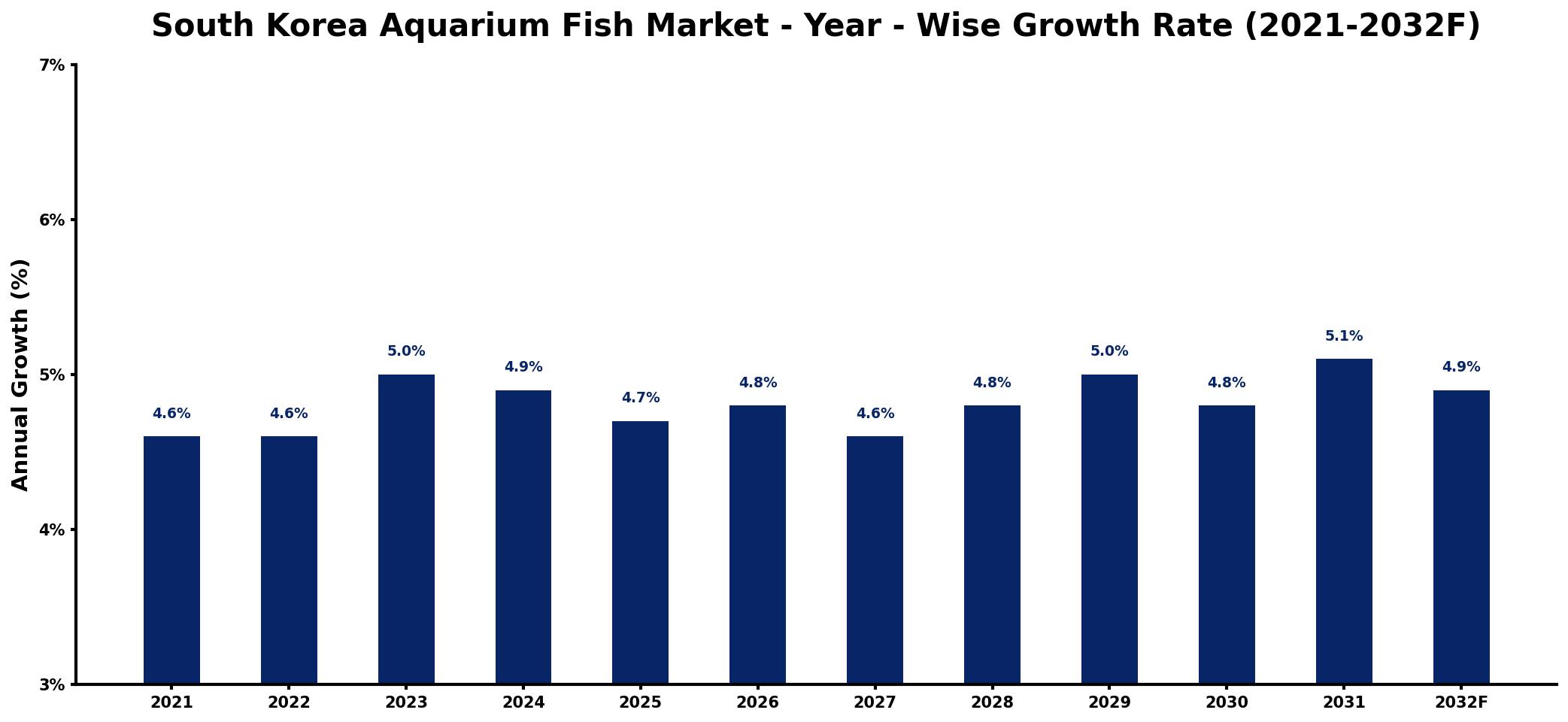
The table below presents the year‑wise growth rates along with the key drivers influencing the market
| Year | Growth Rate | Major Drivers |
| 2021 | 4.6% | rising procurement volume requirements |
| 2022 | 4.6% | Increased disposable income levels |
| 2023 | 5.0% | Expansion of online retail channels |
| 2024 | 4.9% | Growing popularity of aquascaping |
| 2025 | 4.7% | Emergence of new hobbyist communities |
| 2026 | 4.8% | Innovations in sustainable practices |
| 2027 | 4.6% | Increased focus on pet wellness |
| 2028 | 4.8% | Enhanced educational resources available |
| 2029 | 5.0% | Growth in eco-friendly products |
| 2030 | 4.8% | Rise of social media influencers |
| 2031 | 5.1% | Boost in urban gardening trends |
| 2032 | 4.9% | Collaboration with tourism industries |
Note: Market size estimations and growth projections presented in this report are based on 6Wresearch's proprietary forecasting methodology, utilizing the latest available industry data, government publications, and primary research inputs.
South Korea Aquarium Fish Market Synopsis
The South Korea aquarium fish market has seen robust growth, driven by a thriving community of hobbyists and increased consumer interest in exotic species. As awareness about sustainability grows, more consumers are prioritizing ethically sourced and environmentally friendly options, indicating a significant shift toward responsible aquaculture practices.
Looking ahead, the market is poised for expansion, particularly as online sales channels gain prominence, providing easier access to a diverse range of fish. The demand for high-quality, specialty fish and accessories is anticipated to rise, presenting new opportunities for both suppliers and retailers in this evolving landscape.
South Korea Aquarium Fish Market Key Takeaways
- The market is witnessing a shift towards sustainable fish sourcing, emphasizing eco-friendly practices.
- Online retailing is on the rise, enhancing accessibility for consumers seeking a wide variety of aquarium fish.
- There is increasing demand for exotic fish species, with specialty stores catering to niche markets.
- Regulatory measures aim to balance market growth with conservation efforts, impacting species availability.
- Investment opportunities exist in breeding unique fish and supplying aquarium equipment and accessories.
Evaluation of Restraints in South Korea Aquarium Fish Market
The South Korea aquarium fish market faces notable restraints primarily stemming from stringent regulations regarding the import and export of certain fish species. These regulations are essential for conserving biodiversity but may inadvertently limit consumer choices and escalate operational costs for businesses. Moreover, the shift towards sustainable practices necessitates increased investment in captive breeding, which can be financially demanding. Additionally, the burgeoning online marketplace introduces competitive pricing pressures, challenging traditional brick-and-mortar establishments to adapt swiftly to maintain market presence.
South Korea Aquarium Fish Market Trends
The ongoing trend towards sustainability is profoundly influencing the South Korea aquarium fish market, with consumers increasingly favoring fish bred in captivity over wild-caught varieties. This shift is a direct response to ecological concerns surrounding overfishing and habitat destruction. Specialty stores are emerging, showcasing rare and exotic species that cater to the refined tastes of dedicated hobbyists. Furthermore, the ease and convenience of online shopping are shaping purchasing behavior, allowing consumers to access a wider array of fish with minimal effort.
South Korea Aquarium Fish Market Opportunities
The South Korea aquarium fish market offers substantial growth and investment opportunities. Investors can focus on breeding and supplying rare fish species to meet the increasing demand among enthusiasts. There is also a lucrative avenue in developing and marketing aquarium equipment and accessories, including tanks and filtration systems, as more individuals take up fishkeeping. Collaborations with local breeders and the establishment of efficient online sales platforms could further enhance market reach and profitability.
Government Initiatives in the South Korea Aquarium Fish Market
The South Korean government has enacted several initiatives aimed at supporting the aquarium fish market while ensuring environmental sustainability. Policies regulate the import and export of specific fish species to combat illegal trading and protect threatened populations. Moreover, guidelines have been introduced to promote responsible aquaculture practices, encouraging local businesses to adopt sustainable methods. Public education campaigns are also underway to raise awareness about ethical fishkeeping and the importance of conserving marine ecosystems.
Future Insights of the South Korea Aquarium Fish Market
Looking forward to 2026-2032, the South Korea aquarium fish market is set for consistent growth driven by a burgeoning population of aquarium enthusiasts. Factors such as increasing disposable incomes, an evolving culture of pet ownership, and advancements in aquaculture techniques will be pivotal in shaping the landscape. The focus on sustainability will continue to impact consumer choices, with an emphasis on premium, ethically sourced products likely to dominate the market narrative.
South Korea Aquarium Fish Market Latest Developments (2025 - 2026)
Recent developments in the South Korea aquarium fish market indicate a growing emphasis on the digitalization of sales channels. Retailers are increasingly optimizing their online platforms to reach a broader customer base, especially amid changing consumer preferences. The introduction of innovative aquarium technology, such as smart filters and automated feeding systems, has garnered significant attention. Additionally, the push for sustainability has led to more collaborative initiatives among local businesses to promote responsible breeding practices.
South Korea Aquarium Fish Market - Key Attractiveness of the Report
- 10 Years of Market Numbers
- Historical Data Starting from 2022 to 2025
- Base Year: 2025
- Forecast Data until 2032
- Key Performance Indicators Impacting the Market
- Major Upcoming Developments and Projects
Key Highlights of the Report:
- South Korea Aquarium Fish Market Outlook
- Market Size of South Korea Aquarium Fish Market, 2025
- Forecast of South Korea Aquarium Fish Market, 2032
- Historical Data and Forecast of South Korea Aquarium Fish Revenues & Volume for the Period 2022-2032F
- South Korea Aquarium Fish Market Trend Evolution
- South Korea Aquarium Fish Market Drivers and Challenges
- South Korea Aquarium Fish Price Trends
- South Korea Aquarium Fish Porter's Five Forces
- South Korea Aquarium Fish Industry Life Cycle
- Historical Data and Forecast of South Korea Aquarium Fish Market Revenues & Volume By Type for the Period 2022-2032F
- Historical Data and Forecast of South Korea Aquarium Fish Market Revenues & Volume By Freshwater Fish for the Period 2022-2032F
- Historical Data and Forecast of South Korea Aquarium Fish Market Revenues & Volume By Saltwater Fish for the Period 2022-2032F
- Historical Data and Forecast of South Korea Aquarium Fish Market Revenues & Volume By Application for the Period 2022-2032F
- Historical Data and Forecast of South Korea Aquarium Fish Market Revenues & Volume By Commercial Aquarium for the Period 2022-2032F
- Historical Data and Forecast of South Korea Aquarium Fish Market Revenues & Volume By Home Aquarium for the Period 2022-2032F
- South Korea Aquarium Fish Import Export Trade Statistics
- Market Opportunity Assessment By Type
- Market Opportunity Assessment By Application
- South Korea Aquarium Fish Top Companies Market Share
- South Korea Aquarium Fish Competitive Benchmarking By Technical and Operational Parameters
- South Korea Aquarium Fish Company Profiles
- South Korea Aquarium Fish Key Strategic Recommendations






































