South Korea Cloud Security Market Size & Growth Rate (2026-2032)
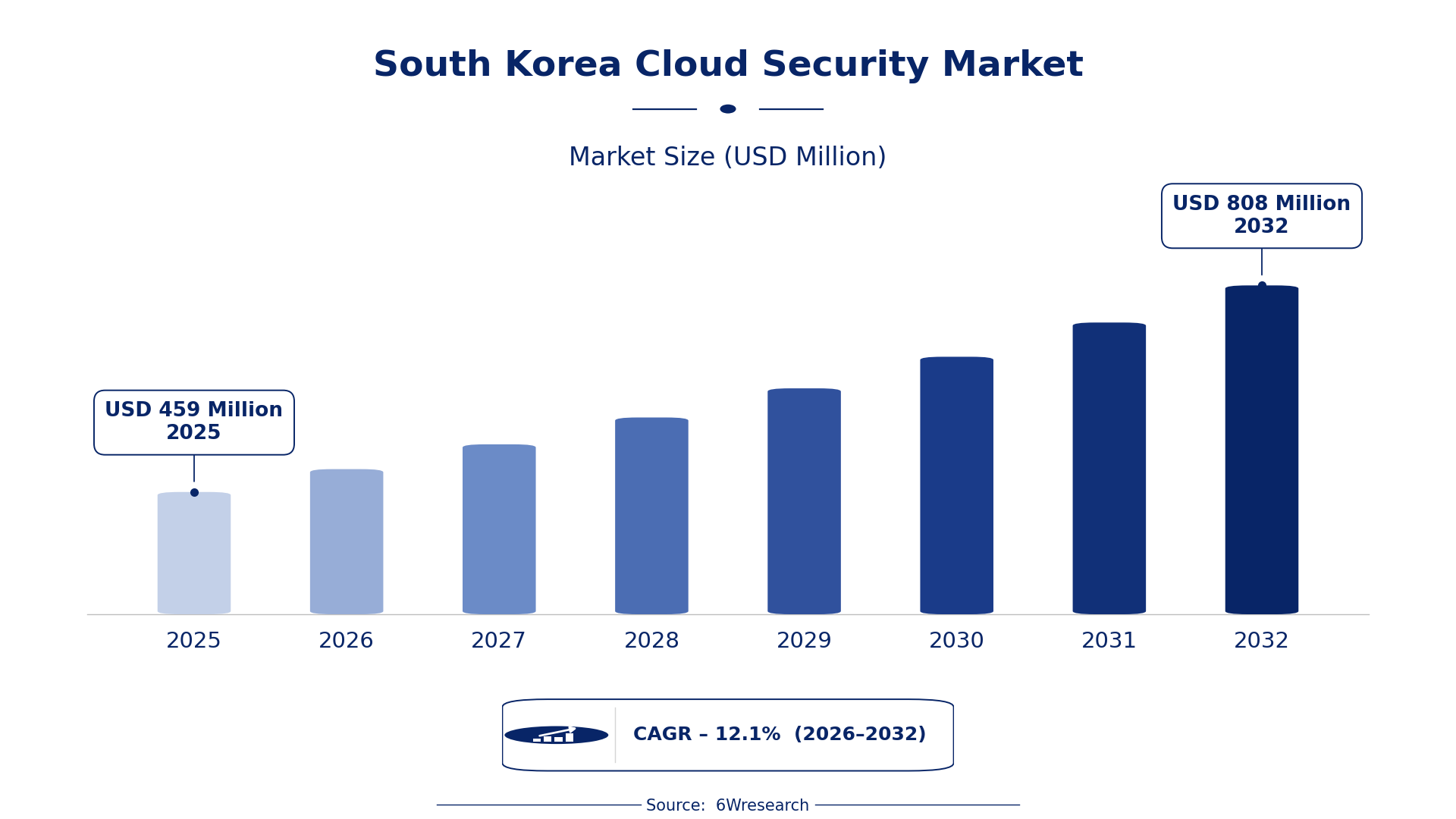
The South Korea Cloud Security Market was estimated at USD 459 Million in 2025 and is projected to reach USD 808 Million by 2032, growing at a CAGR of 12.1% from 2026 to 2032.
South Korea Cloud Security Market Synopsis
In recent years, South Korea's Cloud Security Market has experienced a pronounced shift in focus towards protecting sensitive data amidst rising cyber threats. This market encompasses a diverse array of solutions designed for data protection, threat detection, and compliance, which are vital for enterprises transitioning to cloud environments.
As businesses increasingly migrate to the cloud, the urgency for robust security measures has intensified. The demand for encryption technologies, identity and access management, and advanced threat detection systems has surged, creating a competitive environment where innovation is key to maintaining trust among users.
South Korea Cloud Security Market Year-wise Growth Rate and Key Drivers
This graph illustrates the annual growth rates of the South Korea Cloud Security Market from 2021 to 2032, highlighting a steady upward trajectory and projected expansion over the forecast period.
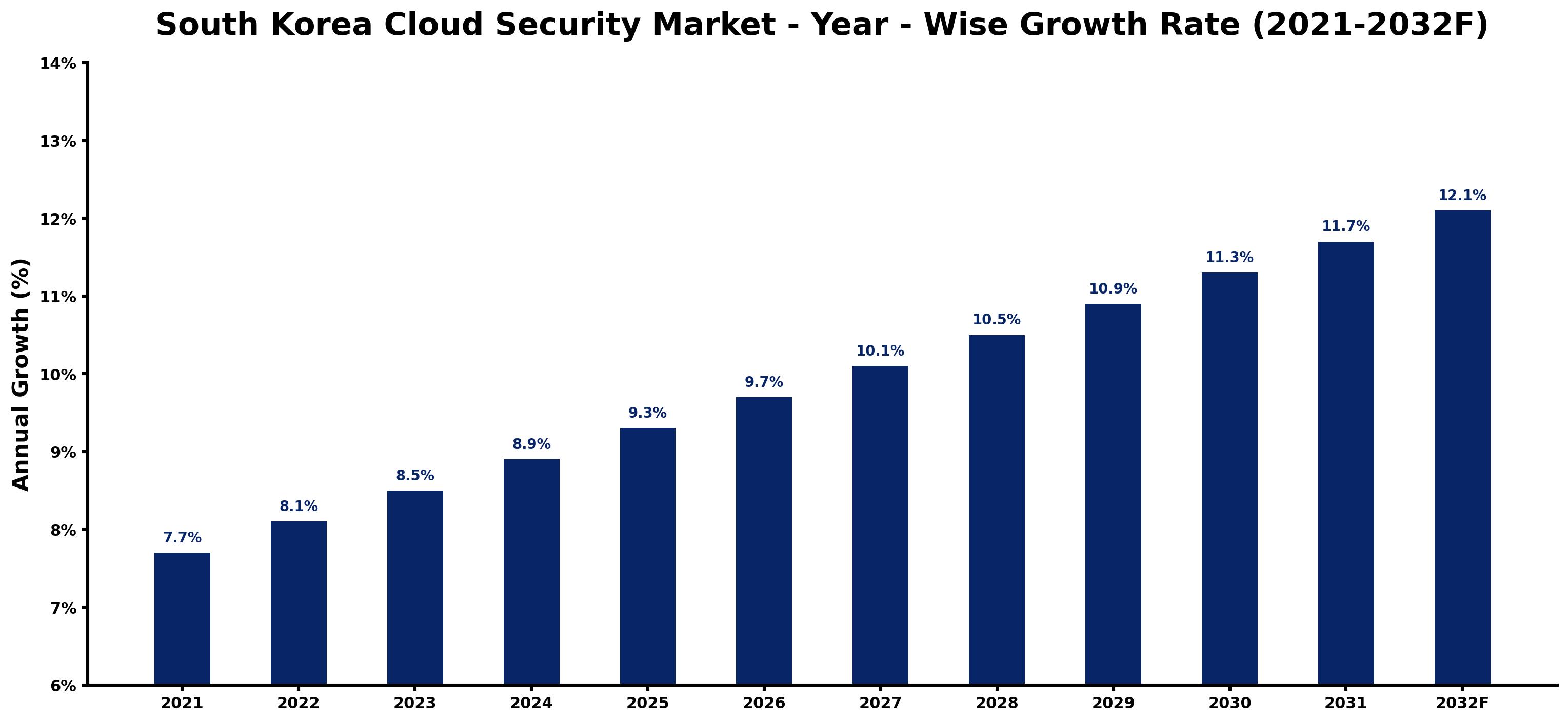
The table below presents the year‑wise growth rates along with the key drivers influencing the market
| Year | Growth Rate | Major Drivers |
| 2021 | 7.7% | KISA's cybersecurity enhancements promoting cloud security adoption. |
| 2022 | 8.1% | Government's digital transformation strategy increasing cloud reliance. |
| 2023 | 8.5% | Rapid growth in e-commerce heightening data protection needs. |
| 2024 | 8.9% | Increased cloud-based services amid remote working trends. |
| 2025 | 9.3% | Cybersecurity awareness campaigns driving demand for solutions. |
| 2026 | 9.7% | Rising incidents of cyberattacks pushing security investments. |
| 2027 | 10.1% | Growing IoT adoption necessitating robust security measures. |
| 2028 | 10.5% | Data privacy laws bolstering cloud security compliance requirements. |
| 2029 | 10.9% | South Korea's push for Smart Factory initiatives enhancing security. |
| 2030 | 11.3% | Cloud security integration in AI technologies increases focus. |
| 2031 | 11.7% | Regulatory guidelines mandating secure cloud environments evolve. |
| 2032 | 12.1% | Increased foreign investment in Korea boosting cloud solutions. |
Note: Market size estimations and growth projections presented in this report are based on 6Wresearch's proprietary forecasting methodology, utilizing the latest available industry data, government publications, and primary research inputs.
South Korea Cloud Security Market Key Takeaways
Below are some of the specific key takeaways from the market, including:
- Increased cyber threats are driving the adoption of cloud security solutions across various sectors.
- Data compliance regulations significantly influence the development and implementation of security measures.
- The market is witnessing rapid advancements in encryption and threat detection technologies.
- Emerging startups are contributing to innovation within the cloud security space, challenging established providers.
- Government policies are actively shaping market dynamics and encouraging best practices in cybersecurity.
Evaluation of Restraints in South Korea Cloud Security Market
Despite its growth, the South Korea Cloud Security Market faces notable restraints. The continuous evolution of cyber threats requires providers to stay ahead with innovative solutions, which can strain resources. Additionally, the complexity of compliance with stringent regulations presents challenges for many organizations, particularly small and medium-sized enterprises. The need for skilled professionals capable of managing sophisticated security technologies adds another layer of difficulty, often limiting the pace of market growth.
South Korea Cloud Security Market Trends
Several trends are currently shaping the demand for cloud security solutions in South Korea. A significant shift towards zero-trust security models emphasizes the importance of stringent verification for every user and device attempting to access corporate resources. Additionally, the integration of artificial intelligence and machine learning for threat detection is gaining traction, enabling faster identification and response to potential breaches.
on top of that, the growing emphasis on data privacy and regulatory compliance is driving organizations to invest in robust security frameworks. This focus on compliance not only supports businesses in avoiding penalties but also enhances their reputation with customers, who are increasingly concerned about how their data is managed.
South Korea Cloud Security Market Opportunities
The landscape of the South Korea Cloud Security Market presents numerous growth opportunities for enterprises and investors. As more organizations recognize the necessity of cloud security, there's substantial potential for expansion in sectors like healthcare, finance, and e-commerce, which are particularly sensitive to data breaches. Providers that specialize in compliance-related security solutions are likely to see increased demand as businesses strive to adhere to regulatory requirements.
on top of that, the rise of remote work has spurred interest in cloud security solutions that facilitate secure access to corporate resources from various locations. Investment in such technologies promises not only to enhance security but also to improve overall operational efficiency.
Government Initiatives in the South Korea Cloud Security Market
The South Korean government is actively shaping the Cloud Security Market through a series of initiatives aimed at enhancing cybersecurity frameworks. Current regulatory measures focus on enforcing stringent data protection laws and promoting best practices in cloud computing. These policies are critical as they foster a secure environment for businesses adopting cloud services, which is essential for building public trust.
- A national cybersecurity regulation framework established in early 2025 mandates enhanced encryption standards for sensitive data.
- Ongoing initiatives support the development of cybersecurity capacity-building programs aimed at increasing the skill sets of IT professionals.
- A public-private partnership initiative is underway, focusing on threat intelligence sharing to bolster collective security efforts against cyber threats.
- Plans for a comprehensive cybersecurity awareness campaign targeting businesses and consumers are set to launch by late 2026.
- The government is expected to introduce further compliance regulations in 2027, enhancing the requirement for security protocols in cloud environments.
Future Insights of the South Korea Cloud Security Market
Looking ahead, the South Korea Cloud Security Market is expected to continue its upward trajectory. By 2032, as digital transformation accelerates across various industries, the demand for advanced security solutions will only intensify. Companies will increasingly prioritize investments in technologies that offer real-time threat detection and response capabilities, reflecting a shift towards proactive cybersecurity measures. This evolution will shape the strategies of both established providers and newcomers aiming to capture a share of the growing market.
South Korea Cloud Security Market Latest Developments
Over the past year, activity within the South Korea Cloud Security Market has ramped up significantly. Organizations are making strategic investments to enhance their security postures in response to escalating cyber threats. This period has seen a proliferation of new products and collaborative efforts aimed at fortifying cloud environments.
- A major technology vendor announced the launch of a next-gen encryption solution in early 2025, aimed at protecting data stored in the cloud.
- An ongoing collaboration between regional cybersecurity firms and government agencies is focused on developing a national threat intelligence sharing platform.
- By mid-2026, a leading enterprise plans to roll out a comprehensive cloud security solution designed specifically for the financial sector, enhancing compliance capabilities.
- A recent partnership established in late 2024 between local universities and tech companies is set to bolster cybersecurity research initiatives, addressing the skills gap in the market.
- Upcoming regulatory changes are expected to be introduced by the government in late 2025, promoting stronger data governance practices among businesses.
South Korea Cloud Security Market - Key Attractiveness of the Report
- 10 Years of Market Numbers
- Historical Data Starting from 2022 to 2025
- Base Year: 2025
- Forecast Data until 2032
- Key Performance Indicators Impacting the Market
- Major Upcoming Developments and Projects
Key Highlights of the Report:
- South Korea Cloud Security Market Outlook
- Market Size of South Korea Cloud Security Market, 2025
- Forecast of South Korea Cloud Security Market, 2032
- Historical Data and Forecast of South Korea Cloud Security Revenues & Volume for the Period 2022-2032F
- South Korea Cloud Security Market Trend Evolution
- South Korea Cloud Security Market Drivers and Challenges
- South Korea Cloud Security Price Trends
- South Korea Cloud Security Porter's Five Forces
- South Korea Cloud Security Industry Life Cycle
- Historical Data and Forecast of South Korea Cloud Security Market Revenues & Volume By Application for the Period 2022-2032F
- Historical Data and Forecast of South Korea Cloud Security Market Revenues & Volume By Visibility for the Period 2022-2032F
- Historical Data and Forecast of South Korea Cloud Security Market Revenues & Volume By Risk Assessment for the Period 2022-2032F
- Historical Data and Forecast of South Korea Cloud Security Market Revenues & Volume By User for the Period 2022-2032F
- Historical Data and Forecast of South Korea Cloud Security Market Revenues & Volume By Data Governance for the Period 2022-2032F
- Historical Data and Forecast of South Korea Cloud Security Market Revenues & Volume By Vertical for the Period 2022-2032F
- Historical Data and Forecast of South Korea Cloud Security Market Revenues & Volume By BFSI for the Period 2022-2032F
- Historical Data and Forecast of South Korea Cloud Security Market Revenues & Volume By IT for the Period 2022-2032F
- Historical Data and Forecast of South Korea Cloud Security Market Revenues & Volume By ITeS for the Period 2022-2032F
- Historical Data and Forecast of South Korea Cloud Security Market Revenues & Volume By Retail for the Period 2022-2032F
- Historical Data and Forecast of South Korea Cloud Security Market Revenues & Volume By Organization Size for the Period 2022-2032F
- Historical Data and Forecast of South Korea Cloud Security Market Revenues & Volume By Large Enterprises for the Period 2022-2032F
- Historical Data and Forecast of South Korea Cloud Security Market Revenues & Volume By SMEs for the Period 2022-2032F
- Historical Data and Forecast of South Korea Cloud Security Market Revenues & Volume By Security Type for the Period 2022-2032F
- Historical Data and Forecast of South Korea Cloud Security Market Revenues & Volume By Perimeter Security for the Period 2022-2032F
- Historical Data and Forecast of South Korea Cloud Security Market Revenues & Volume By Network Security for the Period 2022-2032F
- Historical Data and Forecast of South Korea Cloud Security Market Revenues & Volume By Endpoint Security for the Period 2022-2032F
- Historical Data and Forecast of South Korea Cloud Security Market Revenues & Volume By Application Security for the Period 2022-2032F
- Historical Data and Forecast of South Korea Cloud Security Market Revenues & Volume By Others for the Period 2022-2032F
- Historical Data and Forecast of South Korea Cloud Security Market Revenues & Volume By Service Model for the Period 2022-2032F
- Historical Data and Forecast of South Korea Cloud Security Market Revenues & Volume By IaaS for the Period 2022-2032F
- Historical Data and Forecast of South Korea Cloud Security Market Revenues & Volume By PaaS for the Period 2022-2032F
- Historical Data and Forecast of South Korea Cloud Security Market Revenues & Volume By SaaS for the Period 2022-2032F
- South Korea Cloud Security Import Export Trade Statistics
- Market Opportunity Assessment By Application
- Market Opportunity Assessment By Vertical
- Market Opportunity Assessment By Organization Size
- Market Opportunity Assessment By Security Type
- Market Opportunity Assessment By Service Model
- South Korea Cloud Security Top Companies Market Share
- South Korea Cloud Security Competitive Benchmarking By Technical and Operational Parameters
- South Korea Cloud Security Company Profiles
- South Korea Cloud Security Key Strategic Recommendations






































