South Korea Deli Meat Market Size, Share & Growth Rate
The South Korea Deli Meat Market was estimated at USD 251 Million in 2025 and is projected to reach USD 327 Million by 2032, growing at a CAGR of 3.9% from 2026 to 2032. This anticipated growth is underpinned by a significant shift in consumer behavior toward convenient, ready-to-eat meals, reflecting broader changes in dietary preferences across urban demographics. As lifestyles become increasingly busy, South Koreans are gravitating toward deli meats as essential components for quick meals and snacks.
South Korea Deli Meat Market Year-wise Growth Rate and Key Drivers
This graph highlights how the South Korea Deli Meat Market has steadily grown over the years, supported by major growth factors.
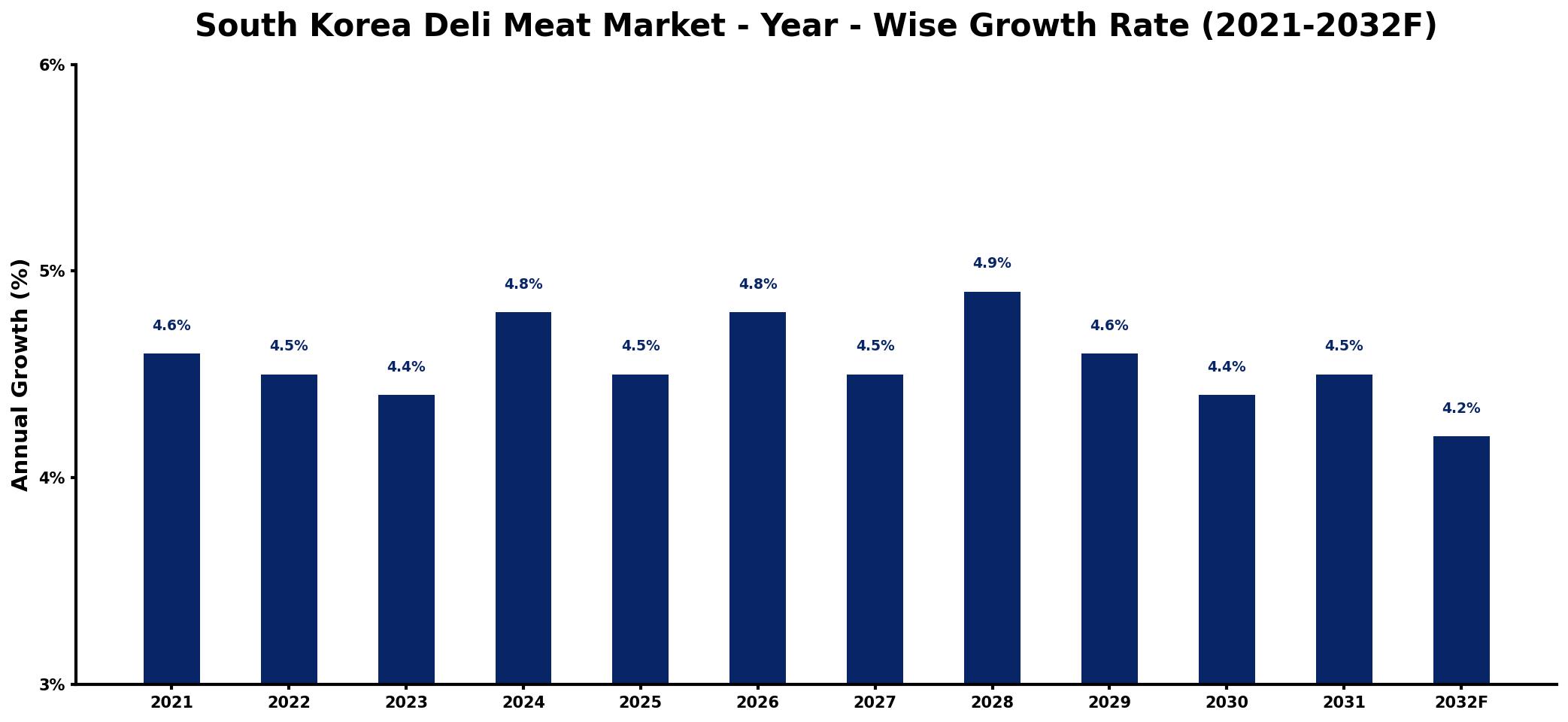
The table below presents the year‑wise growth rates along with the key drivers influencing the market
| Year | Growth Rate | Major Drivers |
| 2021 | 4.6% | Increased consumer health awareness |
| 2022 | 4.5% | Rising demand for convenience foods |
| 2023 | 4.4% | Innovative packaging technology adoption |
| 2024 | 4.8% | Expansion of retail distribution channels |
| 2025 | 4.5% | Growing popularity of protein snacks |
| 2026 | 4.8% | Surge in online food sales |
| 2027 | 4.5% | Increased focus on sustainability practices |
| 2028 | 4.9% | Emergence of gourmet food trends |
| 2029 | 4.6% | Rising interest in local sourcing |
| 2030 | 4.4% | Growth in meal kit subscriptions |
| 2031 | 4.5% | rising export shipment volumes |
| 2032 | 4.2% | enhanced product quality standards |
Note: Market size estimations and growth projections presented in this report are based on 6Wresearch's proprietary forecasting methodology, utilizing the latest available industry data, government publications, and primary research inputs.
South Korea Deli Meat Market Synopsis
The South Korean deli meat market is thriving as more consumers embrace the convenience and diversity of ready-to-eat protein options. Popular deli meats like ham, salami, and turkey have carved a niche within the evolving culinary landscape, appealing particularly to younger, urban populations. This segment offers a delightful array of flavors that enhance everyday meals, from sandwiches to salads.
In recent years, health consciousness has been rising, steering consumers towards high-quality deli meats. As a result, manufacturers are actively innovating their product offerings to align with evolving consumer expectations, focusing on natural ingredients and health-oriented formulations. This responsiveness to market demands is crucial for maintaining competitive advantage in a landscape defined by choice.
South Korea Deli Meat Market Key Takeaways
- The market is fueled by a growing preference for convenience foods and ready-to-eat options.
- Urban lifestyles are significantly influencing dietary habits, with deli meats becoming a staple choice for busy consumers.
- Health-conscious trends are driving innovations in product formulations, emphasizing quality and transparency.
- Regulatory frameworks ensure food safety and consumer protection, enhancing market integrity.
- Collaboration among industry stakeholders is vital for addressing evolving consumer expectations and operational challenges.
Evaluation of Restraints in South Korea Deli Meat Market
While the South Korea deli meat market shows promising growth, several restraints could impede its potential. Shifts in consumer preferences towards fresher, less processed food options are a notable challenge. Additionally, the scrutiny around preservatives and additives in processed meats raises concerns among health-conscious consumers, necessitating reformulations that align with these concerns. Manufacturers must also navigate complex regulatory compliance regarding food safety standards, which can strain operational capacities and affect pricing strategies.
South Korea Deli Meat Market Trends
Emerging trends shaping the South Korea deli meat market include a rising demand for gourmet and artisanal products, as consumers increasingly seek high-quality and unique flavor profiles. Furthermore, the integration of plant-based alternatives is gaining traction, appealing to a segment of consumers interested in reducing meat consumption. In addition, digital shopping platforms and social media marketing are becoming crucial for reaching younger audiences who prefer purchasing groceries online.
South Korea Deli Meat Market Opportunities
The potential for growth in the South Korea deli meat market lies in product innovation and diversification. There is an opportunity for manufacturers to explore clean-label products that highlight natural ingredients and minimal processing. Additionally, expanding distribution channels, particularly online, can enhance accessibility and convenience for consumers. Collaborations with local chefs to create unique deli meat recipes can also stimulate interest and demand.
Government Initiatives in the South Korea Deli Meat Market
Government policies in South Korea play a pivotal role in shaping the deli meat market by establishing stringent hygiene and safety standards. Regulatory bodies focus on ensuring food safety through rigorous monitoring of meat processing practices and ingredient transparency. These initiatives not only protect consumers but also promote fair competition and sustainability among producers, fostering an environment conducive to innovation within the industry.
Future Insights of the South Korea Deli Meat Market
Looking ahead, the South Korea deli meat market is poised for steady growth driven by ongoing shifts in consumer preferences towards convenience and quality. As the market evolves, companies that prioritize transparency, health-conscious formulations, and innovative product offerings will be best positioned to thrive. Additionally, the integration of technology in production and distribution processes will enhance operational efficiencies, creating a robust ecosystem that supports sustained market expansion.
South Korea Deli Meat Market Latest Developments (2025 - 2026)
In recent months, the South Korea deli meat market has witnessed a surge in innovative product launches, with manufacturers increasingly focusing on organic and sustainably sourced meats. There has also been a noticeable uptick in collaborations between food brands and culinary experts to create specialty deli products that cater to gourmet consumers. Digital marketing initiatives have intensified as companies seek to engage younger demographics through social media platforms.
South Korea Deli Meat Market - Key Attractiveness of the Report
- 10 Years of Market Numbers
- Historical Data Starting from 2022 to 2025
- Base Year: 2025
- Forecast Data until 2032
- Key Performance Indicators Impacting the Market
- Major Upcoming Developments and Projects
Key Highlights of the Report:
- South Korea Deli Meat Market Outlook
- Market Size of South Korea Deli Meat Market, 2025
- Forecast of South Korea Deli Meat Market, 2032
- Historical Data and Forecast of South Korea Deli Meat Revenues & Volume for the Period 2022-2032F
- South Korea Deli Meat Market Trend Evolution
- South Korea Deli Meat Market Drivers and Challenges
- South Korea Deli Meat Price Trends
- South Korea Deli Meat Porter's Five Forces
- South Korea Deli Meat Industry Life Cycle
- Historical Data and Forecast of South Korea Deli Meat Market Revenues & Volume By Source for the Period 2022-2032F
- Historical Data and Forecast of South Korea Deli Meat Market Revenues & Volume By Beef for the Period 2022-2032F
- Historical Data and Forecast of South Korea Deli Meat Market Revenues & Volume By Pork for the Period 2022-2032F
- Historical Data and Forecast of South Korea Deli Meat Market Revenues & Volume By Chicken for the Period 2022-2032F
- Historical Data and Forecast of South Korea Deli Meat Market Revenues & Volume By Others for the Period 2022-2032F
- Historical Data and Forecast of South Korea Deli Meat Market Revenues & Volume By Product Type for the Period 2022-2032F
- Historical Data and Forecast of South Korea Deli Meat Market Revenues & Volume By Cured Meat for the Period 2022-2032F
- Historical Data and Forecast of South Korea Deli Meat Market Revenues & Volume By Uncured Meat for the Period 2022-2032F
- Historical Data and Forecast of South Korea Deli Meat Market Revenues & Volume By Sales Channel for the Period 2022-2032F
- Historical Data and Forecast of South Korea Deli Meat Market Revenues & Volume By Hypermarkets/Supermarkets for the Period 2022-2032F
- Historical Data and Forecast of South Korea Deli Meat Market Revenues & Volume By Specialty Stores for the Period 2022-2032F
- Historical Data and Forecast of South Korea Deli Meat Market Revenues & Volume By Convenience Stores for the Period 2022-2032F
- Historical Data and Forecast of South Korea Deli Meat Market Revenues & Volume By Online Channels for the Period 2022-2032F
- Historical Data and Forecast of South Korea Deli Meat Market Revenues & Volume By Others for the Period 2022-2032F
- South Korea Deli Meat Import Export Trade Statistics
- Market Opportunity Assessment By Source
- Market Opportunity Assessment By Product Type
- Market Opportunity Assessment By Sales Channel
- South Korea Deli Meat Top Companies Market Share
- South Korea Deli Meat Competitive Benchmarking By Technical and Operational Parameters
- South Korea Deli Meat Company Profiles
- South Korea Deli Meat Key Strategic Recommendations






































