South Korea Electric Car Market Growth Rate
According to 6Wresearch internal database and industry insights, the South Korea Electric Car Market is projected to grow at a compound annual growth rate (CAGR) of 10.4% during the forecast period from 2026 to 2032.
South Korea Electric Car Market Year-wise Growth Rate and Key Drivers
This graph highlights how the South Korea Electric Car Market has steadily grown over the past five years, supported by major growth Factors.
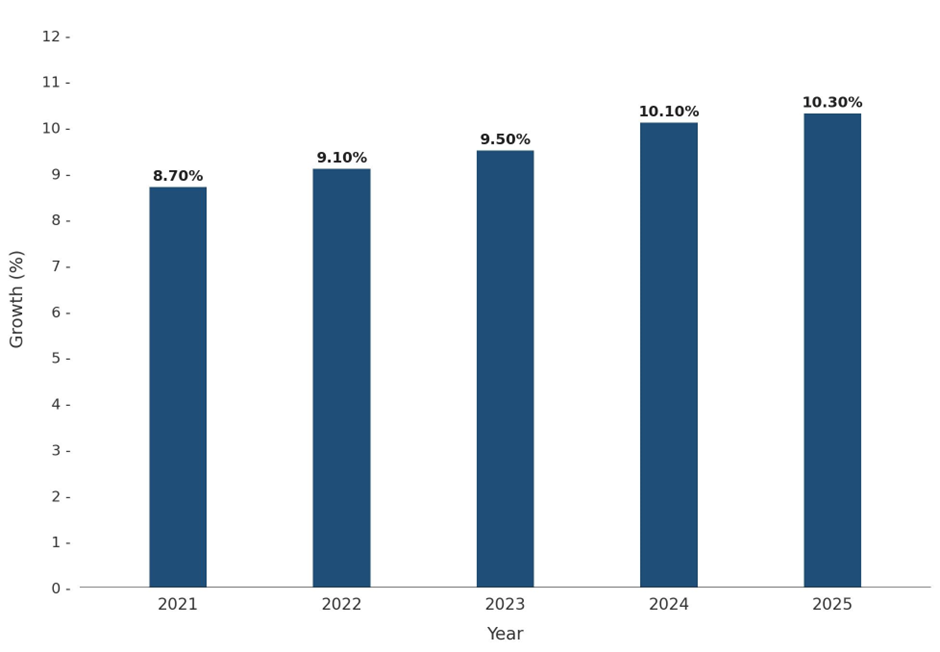
The table below presents the year‑wise growth rates along with the key drivers influencing the market
| Years | Est. Annual Growth in % | Growth Drivers |
| 2021 | 8.7% | The government provides more support and financial incentives to encourage people to adopt electric vehicles.. |
| 2022 | 9.1% | Increasing consumer demand for eco-friendly transportation. |
| 2023 | 9.5% | Expansion of charging infrastructure and battery technology improvements. |
| 2024 | 10.1% | Automotive companies’ shift toward electric vehicle production. |
| 2025 | 10.3% | Rising environmental concerns and regulatory pressure for reducing emissions. |
Topics Covered in the South Korea Electric Car Market Report
The South Korea Electric Car Market report thoroughly covers the market by configuration, and fuel category, key industry trends, providing an unbiased and detailed analysis of ongoing market developments, challenges, opportunities, and market drivers, helping stakeholders align their strategies with current and future market dynamics.
South Korea Electric Car Market Highlights
| Report Name |
South Korea Electric Car Market |
| Forecast period | 2026-2032 |
| CAGR | 10.4% |
| Market Size |
Electric Vehicles |
South Korea Electric Car Market Synopsis
The South Korea Electric Car Market is expanding rapidly driven by the growing consumer demand for significant government incentives,eco-friendly transportation, and advancements in battery technology also increased investments in charging infrastructure and improvements in vehicle performance are also contributing to the market's growth. Additionally, the shift toward sustainability and stricter emissions regulations are accelerating the adoption of electric vehicles. South Korea automotive companies are increasing their focus on electric vehicle production to meet growing demand and government regulations.
Evaluation of Growth Drivers in the South Korea Electric Car Market (2026-2032)
Below mentioned are some prominent drivers and their impact on the market dynamics:
| Drivers | Primary Segments Affected | Why It Matters (Evidence) |
| Government Support and Incentives | BEV, FCEV, HEV, PHEV | Subsidies, tax breaks, and incentives drive consumer adoption. |
| Rising Environmental Concerns | All Vehicle Configurations | The demand for electric cars exists as environmentally conscious customers and governmental regulations support their purchase. |
| Expansion of Charging Infrastructure | BEV, HEV | The increased number of charging stations which currently exists makes it easier for people to adopt electric vehicles. |
| Technological Advancements in Battery Systems | BEV, HEV | Increased range, faster charging times, and better battery life boost EV attractiveness. |
| Automaker Transition to Electric Production | All Fuel Categories | Automotive companies are shifting to electric car production to meet demand. |
The South Korea Electric Car Market Size is projected to grow at a CAGR of 10.4% from 2026 to 2032. The South Korea Electric Car Market is expanding consistently due to, rising environmental awareness, strong government incentives, and technological advancements in electric vehicles and charging infrastructure as increased focus on sustainability and eco-friendly solutions is driving consumer adoption of electric vehicles. Moreover, as governments continue to offer subsidies and tax incentives, the affordability and accessibility of electric cars are improving as technological improvements in battery efficiency, range, and charging speed further support the market growth, ensuring continued expansion in the electric vehicle segment for sustainable transportation solutions.
Evaluation of Restraints in the South Korea Electric Car Market
Below mentioned are some major restraints and their influence on the market dynamics:
| Restraints | Primary Segments Affected | What This Means (Evidence) |
| High Purchase Costs | BEV, PHEV | High upfront costs of electric vehicles may limit access for price-sensitive consumers. |
| Limited Charging Infrastructure | BEV, HEV | Insufficient charging stations hinder long-distance EV usage. |
| Range Anxiety | BEV | Consumers may be hesitant to switch to electric vehicles as they worry about the vehicles' driving distance. |
| Battery Disposal and Recycling Issues | All Segments | The improper disposal of electric vehicle batteries together with the absence of recycling options will stop some customers from choosing electric vehicles. |
| Charging Time | All Vehicle Configurations | Slow charging infrastructure can make EVs less convenient for users. |
South Korea Electric Car Market Challenges
The South Korea Electric Car Industry faces several hinderance in it's growth such as high initial vehicle costs, limited charging infrastructure, and concerns regarding range anxiety. However, the slow pace of battery recycling programs and the need for more efficient disposal methods pose environmental concerns. In order to address these challenges, growing funding in infrastructure, continued innovation in battery technology, and improved recycling and waste management policies are essential.
South Korea Electric Car Market Trends
Here are some major trends changing the South Korea Electric Car Market Growth dynamics:
- Smart Electric Vehicle Growth - The growing popularity of smart technology, such as self-driving vehicles, AI, and connected features is creating interest from the consumers in these products.
- Hybrid Electric Vehicle Growth - With the shift towards more sustainable transportation, there has been an increase in demand for hybrid electric vehicles.
- Solid State Battery Development - Development of solid-state battery technology will create a revolution in the electric vehicle industry due to the higher energy density and shorter time needed to charge them.
- Government Green Initiatives - The South Korean government initiatives to create cleaner air systems and achieve carbon neutrality targets have led to increased electric vehicle demand.
Investment Opportunities in the South Korea Electric Car Market
The South Korea Electric Car Market presents several investment opportunities, including:
- Expansion of EV Charging Infrastructure: The establishment of both private and public EV charging stations through investment will result in more people purchasing and operating electric vehicles.
- Research & Development of Battery Technologies: Innovation in battery technologies such as the new solid-state type of battery will give the consumer in increased driving distance per charge and greatly reduce the amount of time required to recharge their vehicle's battery.
- Introduction of Inexpensive EV Models: The introduction of affordable electric vehicle models will enable low-income consumers to enter the electric vehicle market and increase the number of potential customers.
- Growing Number of EV Fleets: More and more government and business organisations are using EV fleets for the transportation of goods and public transportation.
Top 5 Leading Players in the South Korea Electric Car Market
Below is the list of prominent companies leading the South Korea Electric Car Market Share:
1. Hyundai Motor Company
| Company Name | Hyundai Motor Company |
|---|---|
| Established Year | 1967 |
| Headquarters | Seoul, South Korea |
| Official Website | Click Here |
Hyundai is a leading global electric vehicle manufacturer, offering a wide range of electric and hybrid vehicles with cutting-edge technology.
2. Kia Corporation
| Company Name | Kia Corporation |
|---|---|
| Established Year | 1944 |
| Headquarters | Seoul, South Korea |
| Official Website | Click Here |
Kia offers innovative electric vehicles and has a growing lineup of sustainable mobility solutions.
3. LG Electronics
| Company Name | LG Electronics |
|---|---|
| Established Year | 1958 |
| Headquarters | Seoul, South Korea |
| Official Website | Click Here |
LG is a leading manufacturer of electric vehicle components, including batteries, motors, and charging solutions for electric car manufacturers.
4. Samsung SDI
| Company Name | Samsung SDI |
|---|---|
| Established Year | 1970 |
| Headquarters | Seoul, South Korea |
| Official Website | Click Here |
Samsung SDI is a key player in the electric vehicle market, providing high-performance battery solutions for electric cars.
5. SK Innovation
| Company Name | SK Innovation |
|---|---|
| Established Year | 1962 |
| Headquarters | Seoul, South Korea |
| Official Website | - |
SK Innovation is a leading supplier of electric vehicle batteries, providing energy storage systems for EV manufacturers worldwide.
Government Regulations Introduced in the South Korea Electric Car Market
According to South Korean government data, the South Korean government (Ministry of Environment-MOE) has taken several steps to promote the use of electric vehicles through tax breaks, subsidies, rebates, and incentives, including grants for the installation of charging stations. The Green Car Certification Program has been established to promote green technologies and vehicles, thereby helping to establish a larger electric vehicle market by eliminating barriers to ownership for both consumers and manufacturers.
Future Insights of the South Korea Electric Car Market
The South Korea Electric Car Market appears to be optimistic based on strong government support and increased consumer interest in green transportation alternatives. The ongoing development of new technology related to electric vehicles and the increasing number of hybrid and battery-powered electrical vehicle manufacturers will continue to provide opportunities for future market continuity. By improving the electric vehicle charging infrastructure and assisting with global initiatives related to sustainability, the South Korean government will continue to support the long-term growth of the electric vehicle industry.
Market Segmentation Analysis
The report offers a comprehensive study of the following market segments and their leading categories:
By Configuration - Sports Utility Vehicle (SUV) to Dominate the Market
According to Ritika Kalra, Senior Research Analyst, 6Wresearch, SUVs are expected to dominate the South Korea Electric Car Market due to their popularity among consumers seeking larger, more versatile electric vehicles. The growing trend of electrifying SUVs will significantly contribute to market growth.
By Fuel Category - BEV to Dominate the Market
Battery Electric Vehicles (BEVs) are expected to dominate the market due to their zero-emission nature and growing adoption driven by environmental concerns and government support.
Key Attractiveness of the Report
- 10 Years of Market Numbers
- Historical Data Starting from 2022 to 2025
- Base Year: 2025
- Forecast Data until 2032
- Key Performance Indicators Impacting the Market
- Major Upcoming Developments and Projects
Key Highlights of the Report:
- South Korea Electric Car Market Outlook
- Market Size of South Korea Electric Car Market, 2025
- Forecast of South Korea Electric Car Market, 2032
- Historical Data and Forecast of South Korea Electric Car Revenues & Volume for the Period 2022-2032
- South Korea Electric Car Market Trend Evolution
- South Korea Electric Car Market Drivers and Challenges
- South Korea Electric Car Price Trends
- South Korea Electric Car Porter's Five Forces
- South Korea Electric Car Industry Life Cycle
- Historical Data and Forecast of South Korea Electric Car Market Revenues & Volume By Configuration for the Period 2022-2032
- Historical Data and Forecast of South Korea Electric Car Market Revenues & Volume By Vehicle Congfiguration for the Period 2022-2032
- Historical Data and Forecast of South Korea Electric Car Market Revenues & Volume By Hatchback for the Period 2022-2032
- Historical Data and Forecast of South Korea Electric Car Market Revenues & Volume By Multi-purpose Vehicle for the Period 2022-2032
- Historical Data and Forecast of South Korea Electric Car Market Revenues & Volume By Sedan for the Period 2022-2032
- Historical Data and Forecast of South Korea Electric Car Market Revenues & Volume By Sports Utility Vehicle for the Period 2022-2032
- Historical Data and Forecast of South Korea Electric Car Market Revenues & Volume By Fuel Category for the Period 2022-2032
- Historical Data and Forecast of South Korea Electric Car Market Revenues & Volume By BEV for the Period 2022-2032
- Historical Data and Forecast of South Korea Electric Car Market Revenues & Volume By FCEV for the Period 2022-2032
- Historical Data and Forecast of South Korea Electric Car Market Revenues & Volume By HEV for the Period 2022-2032
- Historical Data and Forecast of South Korea Electric Car Market Revenues & Volume By PHEV for the Period 2022-2032
- South Korea Electric Car Import Export Trade Statistics
- Market Opportunity Assessment By Configuration
- Market Opportunity Assessment By Fuel Category
- South Korea Electric Car Top Companies Market Share
- South Korea Electric Car Competitive Benchmarking By Technical and Operational Parameters
- South Korea Electric Car Company Profiles
- South Korea Electric Car Key Strategic Recommendations
Market Covered
The report offers a comprehensive study of the subsequent market segments:
By Configuration
- Vehicle Configuration
- Hatchback
- Multi-purpose Vehicle
- Sedan
- Sports Utility Vehicle
By Fuel Category
- BEV
- FCEV
- HEV
- PHEV






































