South Korea Ergonomic Chair Market Size, Share & Growth Rate
The South Korea Ergonomic Chair Market was estimated at USD 1301 Million in 2025 and is projected to reach USD 2368 Million by 2032, growing at a CAGR of 8.9% from 2026 to 2032. This upward trajectory is primarily driven by the increasing recognition of the importance of ergonomics in fostering healthier work environments and the growing trend of remote working. As more organizations and individuals seek to enhance comfort and productivity through better seating solutions, the market is positioned for significant growth.
South Korea Ergonomic Chair Market Year-wise Growth Rate and Key Drivers
This graph highlights how the South Korea Ergonomic Chair Market has steadily grown over the years, supported by major growth factors.
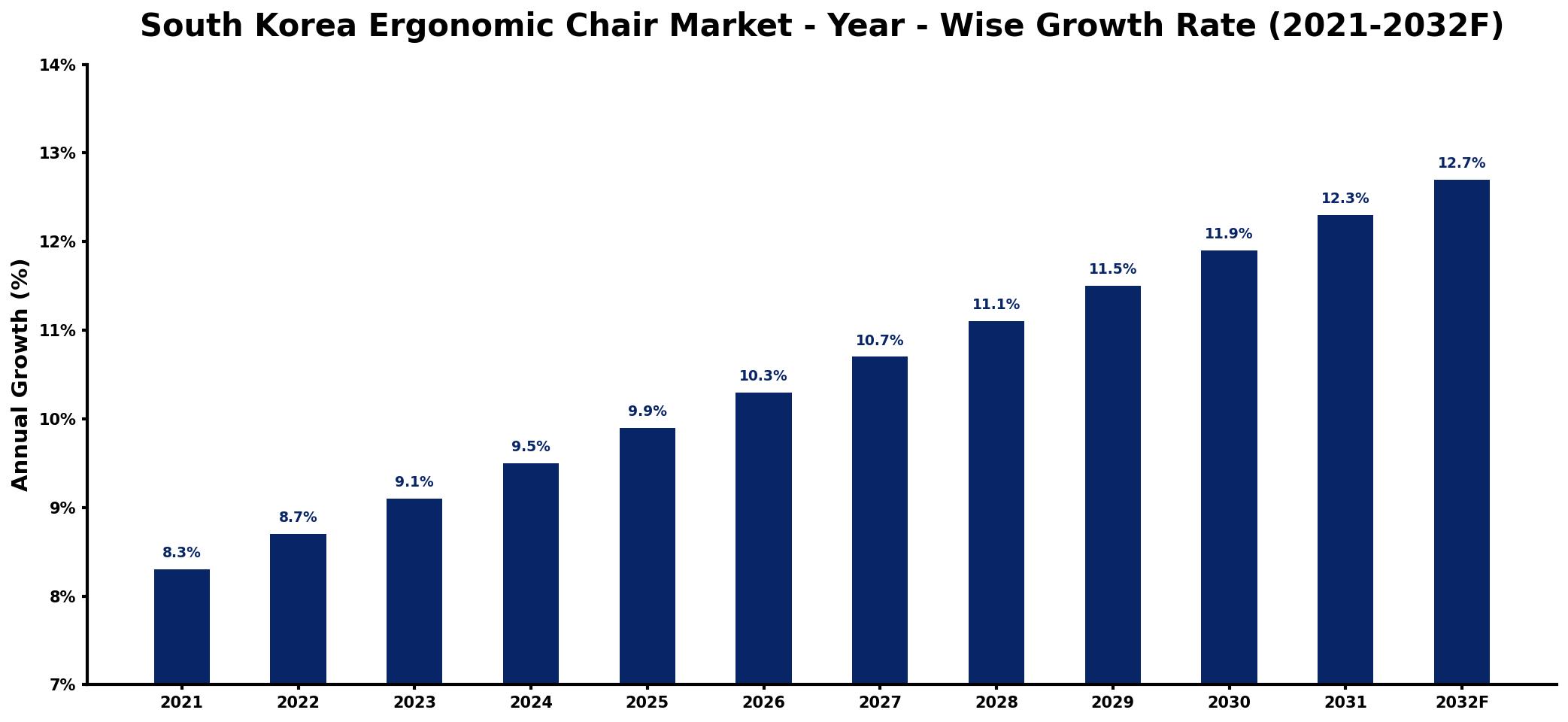
The table below presents the year‑wise growth rates along with the key drivers influencing the market
| Year | Growth Rate | Major Drivers |
| 2021 | 8.3% | Remote work culture expansion |
| 2022 | 8.7% | Growing health awareness initiatives |
| 2023 | 9.1% | Rising demand for home offices |
| 2024 | 9.5% | Increased corporate wellness programs |
| 2025 | 9.9% | Technological advancements in design |
| 2026 | 10.3% | Focus on sustainable materials |
| 2027 | 10.7% | rising procurement volume requirements |
| 2028 | 11.1% | Shift towards flexible workspaces |
| 2029 | 11.5% | Enhanced online retail platforms |
| 2030 | 11.9% | Growing influence of millennials |
| 2031 | 12.3% | Increased focus on productivity |
| 2032 | 12.7% | Emerging trends in home furnishings |
Note: Market size estimations and growth projections presented in this report are based on 6Wresearch's proprietary forecasting methodology, utilizing the latest available industry data, government publications, and primary research inputs.
South Korea Ergonomic Chair Market Synopsis
Currently, the South Korea ergonomic chair market is witnessing a notable shift as more consumers prioritize comfort and health in their seating choices. This change is largely influenced by the rise of flexible work environments and the awareness surrounding musculoskeletal health. Ergonomic chairs are now regarded as essential tools for improving workplace efficiency.
With a variety of options available, consumers are increasingly looking for features such as adjustable settings, lumbar support, and aesthetically pleasing designs that seamlessly integrate into their workspaces. Manufacturers are responding to this demand by innovating and providing more tailored solutions to meet the diverse needs of their clientele.
South Korea Ergonomic Chair Market Key Takeaways
- The market is on a steady growth path, driven by increasing awareness of ergonomic benefits.
- Remote work trends have spurred demand for ergonomic chairs as home office setups become common.
- Customization and innovative designs are key factors influencing consumer purchasing decisions.
- The government actively promotes ergonomic solutions to enhance workplace health standards.
- Technological advancements are leading to the development of smart ergonomic chairs.
Evaluation of Restraints in South Korea Ergonomic Chair Market
Despite the promising growth potential, the South Korea ergonomic chair market faces several restraints. Intense competition, both from local and global players, often leads to aggressive pricing strategies that can erode profit margins. Furthermore, a general lack of widespread consumer education regarding the benefits of ergonomic seating solutions limits market penetration. The high costs associated with sourcing premium materials for chair production can also be a barrier, complicating manufacturers efforts to maintain quality while keeping prices competitive. Finally, rapidly changing design trends demand swift adaptability from manufacturers, which can be challenging in such a dynamic market environment.
South Korea Ergonomic Chair Market Trends
Several key trends are shaping the South Korea ergonomic chair market. Consumers are increasingly favoring chairs that combine style and functionality, leading to a preference for products that are not only comfortable but also visually appealing. Additionally, the integration of smart technology into ergonomic chairs, such as built-in sensors that monitor posture, is becoming a significant differentiator in the market. Sustainable materials are also gaining traction as consumers become more eco-conscious, pushing manufacturers to innovate and incorporate green practices into their production processes.
South Korea Ergonomic Chair Market Opportunities
The South Korea ergonomic chair market presents numerous investment opportunities as businesses increasingly recognize the correlation between employee comfort and productivity. Organizations are eager to reduce health-related costs by investing in quality ergonomic chairs. Furthermore, as remote work continues to be prevalent, the demand for home office ergonomic solutions is expected to surge. Companies that focus on innovative designs and customizable features stand to gain a competitive edge, positioning themselves strategically for market success.
Government Initiatives in the South Korea Ergonomic Chair Market
The South Korean government is actively involved in promoting ergonomic chairs as part of broader workplace safety and health initiatives. Policies encouraging the adoption of ergonomic solutions include financial incentives for businesses, as well as subsidies aimed at supporting the purchase of ergonomic furniture. Additionally, the government offers training programs focused on educating employees about proper ergonomic practices, thereby fostering a culture of health and safety in the workplace. Regulations also exist to ensure that ergonomic chairs meet established design and manufacturing standards.
Future Insights of the South Korea Ergonomic Chair Market
Looking ahead, the South Korea Ergonomic Chair Market is anticipated to undergo substantial growth from 2026 to 2032. Factors such as the increasing emphasis on employee well-being and continued trends towards flexible working arrangements will drive this growth. The integration of smart technologies and an ongoing focus on sustainable materials will further enhance product offerings. With governmental support for ergonomic solutions and a growing acknowledgment of their benefits, the market is set to flourish, paving the way for innovative developments and enhanced consumer engagement.
South Korea Ergonomic Chair Market Latest Developments (2025 - 2026)
Recent developments in the South Korean ergonomic chair market highlight a shift toward more personalized seating solutions. Companies are increasingly collaborating with design professionals to create products that not only meet ergonomic standards but also cater to aesthetic demands. Advances in materials technology have also led to the introduction of lightweight and durable options. Additionally, an uptick in user-friendly online platforms for purchasing ergonomic chairs reflects changing consumer preferences, allowing for greater accessibility and choice.
South Korea Ergonomic Chair Market - Key Attractiveness of the Report
- 10 Years of Market Numbers
- Historical Data Starting from 2022 to 2025
- Base Year: 2025
- Forecast Data until 2032
- Key Performance Indicators Impacting the Market
- Major Upcoming Developments and Projects
Key Highlights of the Report:
- South Korea Ergonomic Chair Market Outlook
- Market Size of South Korea Ergonomic Chair Market, 2025
- Forecast of South Korea Ergonomic Chair Market, 2032
- Historical Data and Forecast of South Korea Ergonomic Chair Revenues & Volume for the Period 2022-2032F
- South Korea Ergonomic Chair Market Trend Evolution
- South Korea Ergonomic Chair Market Drivers and Challenges
- South Korea Ergonomic Chair Price Trends
- South Korea Ergonomic Chair Porter's Five Forces
- South Korea Ergonomic Chair Industry Life Cycle
- Historical Data and Forecast of South Korea Ergonomic Chair Market Revenues & Volume By Application for the Period 2022-2032F
- Historical Data and Forecast of South Korea Ergonomic Chair Market Revenues & Volume By Enterprise Procurement for the Period 2022-2032F
- Historical Data and Forecast of South Korea Ergonomic Chair Market Revenues & Volume By Government Procurement for the Period 2022-2032F
- Historical Data and Forecast of South Korea Ergonomic Chair Market Revenues & Volume By School Procurement for the Period 2022-2032F
- Historical Data and Forecast of South Korea Ergonomic Chair Market Revenues & Volume By Individual Procurement for the Period 2022-2032F
- Historical Data and Forecast of South Korea Ergonomic Chair Market Revenues & Volume By Other for the Period 2022-2032F
- South Korea Ergonomic Chair Import Export Trade Statistics
- Market Opportunity Assessment By Application
- South Korea Ergonomic Chair Top Companies Market Share
- South Korea Ergonomic Chair Competitive Benchmarking By Technical and Operational Parameters
- South Korea Ergonomic Chair Company Profiles
- South Korea Ergonomic Chair Key Strategic Recommendations






































