South Korea Ornamental Fish Market Size, Share & Growth Rate
The South Korea Ornamental Fish Market was estimated at USD 288 Million in 2025 and is projected to reach USD 392 Million by 2032, growing at a CAGR of 4.5% from 2026 to 2032. This growth trajectory is primarily fueled by the rising popularity of aquariums as lifestyle accessories, showcasing the aesthetic appeal of ornamental fish within urban homes and offices. Additionally, the increasing interest in unique and exotic species among hobbyists is enhancing demand, underscoring a cultural shift toward creating personalized aquatic environments.
South Korea Ornamental Fish Market Year-wise Growth Rate and Key Drivers
This graph highlights how the South Korea Ornamental Fish Market has steadily grown over the years, supported by major growth factors.
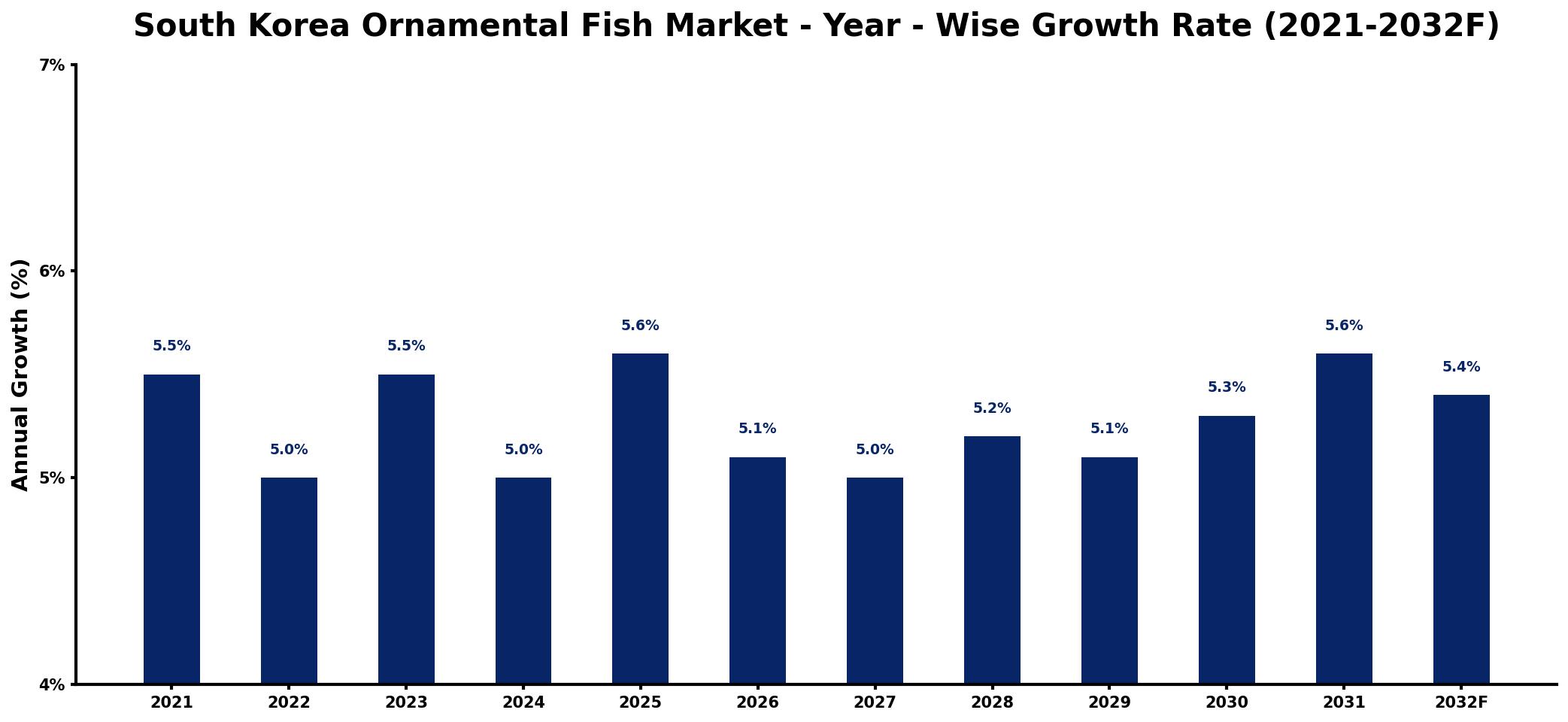
The table below presents the year‑wise growth rates along with the key drivers influencing the market
| Year | Growth Rate | Major Drivers |
| 2021 | 5.5% | Rising urban gardening trends |
| 2022 | 5.0% | Increased interest in aquascaping |
| 2023 | 5.5% | Growing demand for pet accessories |
| 2024 | 5.0% | Expansion of online retail platforms |
| 2025 | 5.6% | Higher disposable income levels |
| 2026 | 5.1% | Increased focus on sustainability |
| 2027 | 5.0% | Growth in educational workshops |
| 2028 | 5.2% | Popularity of home aquariums |
| 2029 | 5.1% | Emergence of innovative technologies |
| 2030 | 5.3% | Enhanced marketing strategies adopted |
| 2031 | 5.6% | Diversification of product offerings |
| 2032 | 5.4% | Strengthened community engagement initiatives |
Note: Market size estimations and growth projections presented in this report are based on 6Wresearch's proprietary forecasting methodology, utilizing the latest available industry data, government publications, and primary research inputs.
South Korea Ornamental Fish Market Synopsis
The South Korea ornamental fish market is currently vibrant, marked by a growing community of aquarium enthusiasts eager to explore diverse species. As aesthetics play a crucial role in the culture, the allure of colorful, exotic fish is compelling more consumers to invest in aquascaping and aquatic life.
This market thrives on the availability of both local and imported species, along with a rich assortment of aquascaping materials. The rising influence of e-commerce is also transforming purchasing habits, enabling consumers to access a wider variety of products conveniently.
South Korea Ornamental Fish Market Key Takeaways
- The market is benefiting from an increase in aquarium hobbyists, particularly in urban areas.
- There is a notable trend towards sustainable practices, influencing breeding and sourcing methods.
- Online sales are significantly expanding, providing consumers with greater access to products.
- Rising disposable incomes are leading to higher investments in quality aquarium equipment and accessories.
- Consumers are increasingly seeking unique and customized fish species to personalize their aquariums.
Evaluation of Restraints in South Korea Ornamental Fish Market
Despite the growth potential, the South Korea ornamental fish market faces several constraints. Strict regulations surrounding the import and export of live fish can limit the variety available to enthusiasts, impacting overall market dynamics. Furthermore, the competitive landscape among local breeders may lead to price wars, squeezing profit margins. Cultural preferences for certain species can also narrow consumer choices, while economic fluctuations can influence discretionary spending on non-essential items like aquariums.
South Korea Ornamental Fish Market Trends
The market is witnessing a significant shift towards unique and exotic fish breeds, driven by consumer desire for individuality. Alongside this, a growing trend in sustainable practices, such as responsible sourcing and captive breeding, is reshaping industry standards. The rise of nano and small-sized species is also noteworthy, catering to urban dwellers with limited space. Additionally, advancements in aquarium technology are empowering consumers to maintain healthier ecosystems, further propelling interest in the hobby.
South Korea Ornamental Fish Market Opportunities
With the ongoing popularity of ornamental fish, substantial investment opportunities are emerging. The increasing middle-class population and their rising disposable income are expected to fuel demand for exotic species. Business prospects abound in breeding, importing, and retailing both fish and accompanying aquarium accessories. Furthermore, the adoption of innovative technologies aimed at improving customer experience and sustainable practices presents a pathway for long-term success within the sector.
Government Initiatives in the South Korea Ornamental Fish Market
The South Korean government has instituted various initiatives aimed at promoting the ornamental fish market while ensuring environmental sustainability. Policies are in place to regulate the import and export of live fish to mitigate the risk of disease and protect native ecosystems. Supportive measures for local breeders, including subsidies and access to training programs, have been introduced to bolster domestic production. Moreover, initiatives promoting eco-friendly aquarium practices align with global sustainability trends.
Future Insights of the South Korea Ornamental Fish Market
Looking ahead to 2026-2032, the South Korea ornamental fish market is poised for steady growth. Urbanization trends will likely continue, fostering demand for low-maintenance pets, such as ornamental fish. As more individuals seek companionship through fish-keeping, this market will broaden its reach. The inclination towards sustainable practices will shape consumer behavior, leading to increased interest in ethically sourced fish and aquascaping materials, thus paving the way for growth and innovation.
South Korea Ornamental Fish Market Latest Developments (2025 - 2026)
In recent months, the ornamental fish market has seen an uptick in online platforms facilitating sales, capitalizing on the e-commerce boom. New breeding techniques emphasizing sustainability have been adopted by several domestic producers, enhancing the availability of unique species. Moreover, there are increased collaborations between retailers and tech developers, aiming to create smarter aquarium systems that cater to the modern consumers needs.
South Korea Ornamental Fish Market - Key Attractiveness of the Report
- 10 Years of Market Numbers
- Historical Data Starting from 2022 to 2025
- Base Year: 2025
- Forecast Data until 2032
- Key Performance Indicators Impacting the Market
- Major Upcoming Developments and Projects
Key Highlights of the Report:
- South Korea Ornamental Fish Market Outlook
- Market Size of South Korea Ornamental Fish Market, 2025
- Forecast of South Korea Ornamental Fish Market, 2032
- Historical Data and Forecast of South Korea Ornamental Fish Revenues & Volume for the Period 2022-2032F
- South Korea Ornamental Fish Market Trend Evolution
- South Korea Ornamental Fish Market Drivers and Challenges
- South Korea Ornamental Fish Price Trends
- South Korea Ornamental Fish Porter's Five Forces
- South Korea Ornamental Fish Industry Life Cycle
- Historical Data and Forecast of South Korea Ornamental Fish Market Revenues & Volume By Product for the Period 2022-2032F
- Historical Data and Forecast of South Korea Ornamental Fish Market Revenues & Volume By Tropical Freshwater for the Period 2022-2032F
- Historical Data and Forecast of South Korea Ornamental Fish Market Revenues & Volume By Temperate for the Period 2022-2032F
- Historical Data and Forecast of South Korea Ornamental Fish Market Revenues & Volume By Marine for the Period 2022-2032F
- Historical Data and Forecast of South Korea Ornamental Fish Market Revenues & Volume By Application for the Period 2022-2032F
- Historical Data and Forecast of South Korea Ornamental Fish Market Revenues & Volume By Commercial for the Period 2022-2032F
- Historical Data and Forecast of South Korea Ornamental Fish Market Revenues & Volume By Household for the Period 2022-2032F
- South Korea Ornamental Fish Import Export Trade Statistics
- Market Opportunity Assessment By Product
- Market Opportunity Assessment By Application
- South Korea Ornamental Fish Top Companies Market Share
- South Korea Ornamental Fish Competitive Benchmarking By Technical and Operational Parameters
- South Korea Ornamental Fish Company Profiles
- South Korea Ornamental Fish Key Strategic Recommendations






































