South Korea Piano Market Size Growth Rate
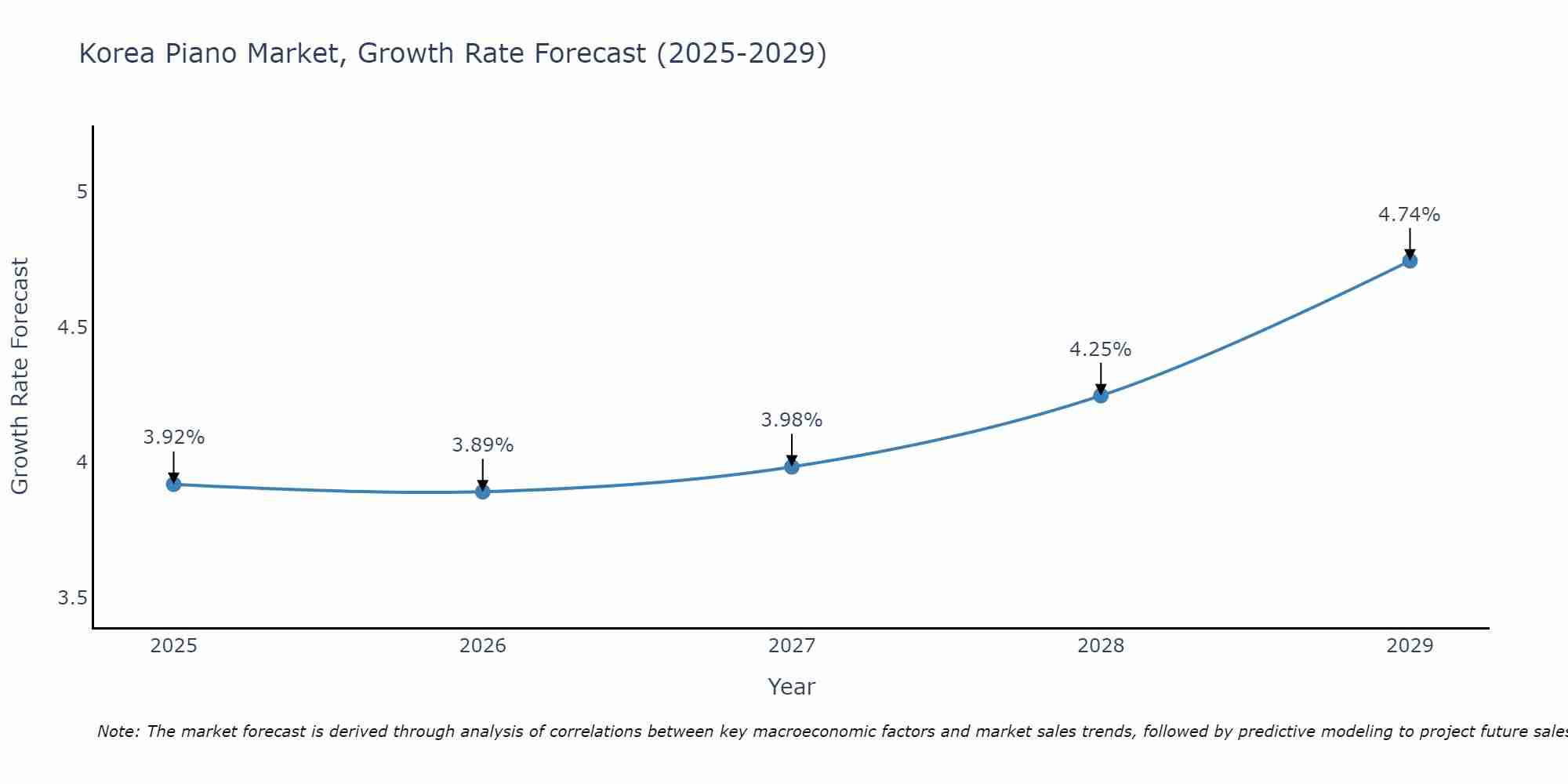
The South Korea Piano Market is projected to witness mixed growth rate patterns during 2025 to 2029. The growth rate starts at 3.92% in 2025 and reaches 4.74% by 2029.
South Korea Piano Market Overview
The piano market in South Korea is vibrant and growing, driven by a strong cultural emphasis on music education and appreciation. The demand for pianos is fueled by a large number of music schools, conservatories, and private music instructors throughout the country. South Koreans place a high value on learning to play the piano, leading to a steady demand for both acoustic and digital pianos. The market is competitive with both domestic and international brands vying for market share. Yamaha, Kawai, and Steinway are popular choices among consumers. Digital pianos are gaining popularity due to their versatility and technological advancements. Additionally, the trend of home entertainment and leisure activities has further boosted the sales of pianos in South Korea.
South Korea Piano Market Trends
The South Korea piano market is currently experiencing a shift towards digital pianos and hybrid models that combine digital technology with the traditional acoustic sound. This trend is driven by the increasing preference for compact and versatile instruments among urban consumers, as well as the advancements in digital sound technology that offer a high-quality playing experience. Additionally, there is a growing interest in piano education and music learning in South Korea, leading to a demand for beginner-friendly digital pianos with learning features. The market is also seeing a rise in online sales channels and virtual piano lessons, catering to the changing consumer behavior influenced by the COVID-19 pandemic. Overall, the South Korea piano market is adapting to the evolving preferences of consumers by offering a diverse range of digital and hybrid piano options.
South Korea Piano Market Challenges
In the South Korea piano market, one of the key challenges faced is the declining interest in traditional musical instruments among the younger generation. With the rising popularity of digital music and technology-driven entertainment options, there is a decreasing number of young people taking up piano lessons or purchasing acoustic pianos. Additionally, the high cost of purchasing and maintaining acoustic pianos poses a financial barrier for many potential customers. Another challenge is the increasing competition from digital pianos and keyboards, which offer more affordable and versatile options for aspiring musicians. To address these challenges, piano manufacturers and retailers in South Korea may need to focus on marketing strategies that emphasize the unique benefits and experience of playing acoustic pianos, as well as offering more flexible pricing and financing options to attract a wider customer base.
South Korea Piano Market Investment Opportunities
The South Korea piano market presents various investment opportunities, driven by factors such as increasing interest in music education, cultural appreciation for classical music, and a growing affluent population willing to invest in high-quality instruments. Investing in piano manufacturing companies or distributors in South Korea can be lucrative, given the country`s reputation for producing high-quality musical instruments. Additionally, there is potential for growth in the digital piano segment, as technology-savvy consumers seek more compact and versatile options. Collaborating with music schools or academies to provide pianos for students could also be a promising investment avenue. Overall, the South Korea piano market offers a mix of traditional and innovative opportunities for investors looking to capitalize on the country`s musical heritage and evolving consumer preferences.
South Korea Piano Market Government Policy
The South Korean government has implemented various policies to support the piano market in the country. These policies include providing subsidies and financial assistance to piano manufacturers to promote innovation and competitiveness. Additionally, the government has also introduced tax incentives and tariff reductions to support the import and export of pianos, making it easier for both domestic and international players to operate in the market. Furthermore, regulations are in place to ensure quality standards and consumer protection in the piano industry. Overall, these government policies are aimed at fostering growth and development in the South Korea piano market by creating a conducive environment for businesses to thrive and for consumers to have access to high-quality pianos.
South Korea Piano Market Future Outlook
The South Korea piano market is expected to experience steady growth in the coming years, driven by a combination of increasing disposable income levels, a growing interest in music education, and a rising awareness of the benefits of music on mental well-being. The market is also likely to see a shift towards digital pianos and hybrid models, as advancements in technology continue to improve the quality and functionality of these instruments. Additionally, the trend of home entertainment and leisure activities is expected to boost demand for pianos among individuals looking for a creative outlet. Overall, the South Korea piano market presents opportunities for both traditional acoustic piano manufacturers and newer entrants offering digital solutions tailored to modern consumer preferences.
Key Highlights of the Report:
- South Korea Piano Market Outlook
- Market Size of South Korea Piano Market, 2024
- Forecast of South Korea Piano Market, 2031
- Historical Data and Forecast of South Korea Piano Revenues & Volume for the Period 2021 - 2031
- South Korea Piano Market Trend Evolution
- South Korea Piano Market Drivers and Challenges
- South Korea Piano Price Trends
- South Korea Piano Porter's Five Forces
- South Korea Piano Industry Life Cycle
- Historical Data and Forecast of South Korea Piano Market Revenues & Volume By Type for the Period 2021 - 2031
- Historical Data and Forecast of South Korea Piano Market Revenues & Volume By Grand Piano for the Period 2021 - 2031
- Historical Data and Forecast of South Korea Piano Market Revenues & Volume By Upright Piano for the Period 2021 - 2031
- Historical Data and Forecast of South Korea Piano Market Revenues & Volume By Application for the Period 2021 - 2031
- Historical Data and Forecast of South Korea Piano Market Revenues & Volume By Learning and Teaching for the Period 2021 - 2031
- Historical Data and Forecast of South Korea Piano Market Revenues & Volume By Entertainment for the Period 2021 - 2031
- Historical Data and Forecast of South Korea Piano Market Revenues & Volume By Other for the Period 2021 - 2031
- South Korea Piano Import Export Trade Statistics
- Market Opportunity Assessment By Type
- Market Opportunity Assessment By Application
- South Korea Piano Top Companies Market Share
- South Korea Piano Competitive Benchmarking By Technical and Operational Parameters
- South Korea Piano Company Profiles
- South Korea Piano Key Strategic Recommendations






































