Spain Leather Market Summary
The spain leather market was estimated at USD 119 Million in 2025 and is projected to reach USD 140 Million by 2032, growing at a CAGR of 3.0% from 2026 to 2032.
Spain Leather Market Year-wise Growth Rate and Key Drivers
This graph highlights how the Spain Leather Market has steadily grown over the past five years, supported by major growth factors.
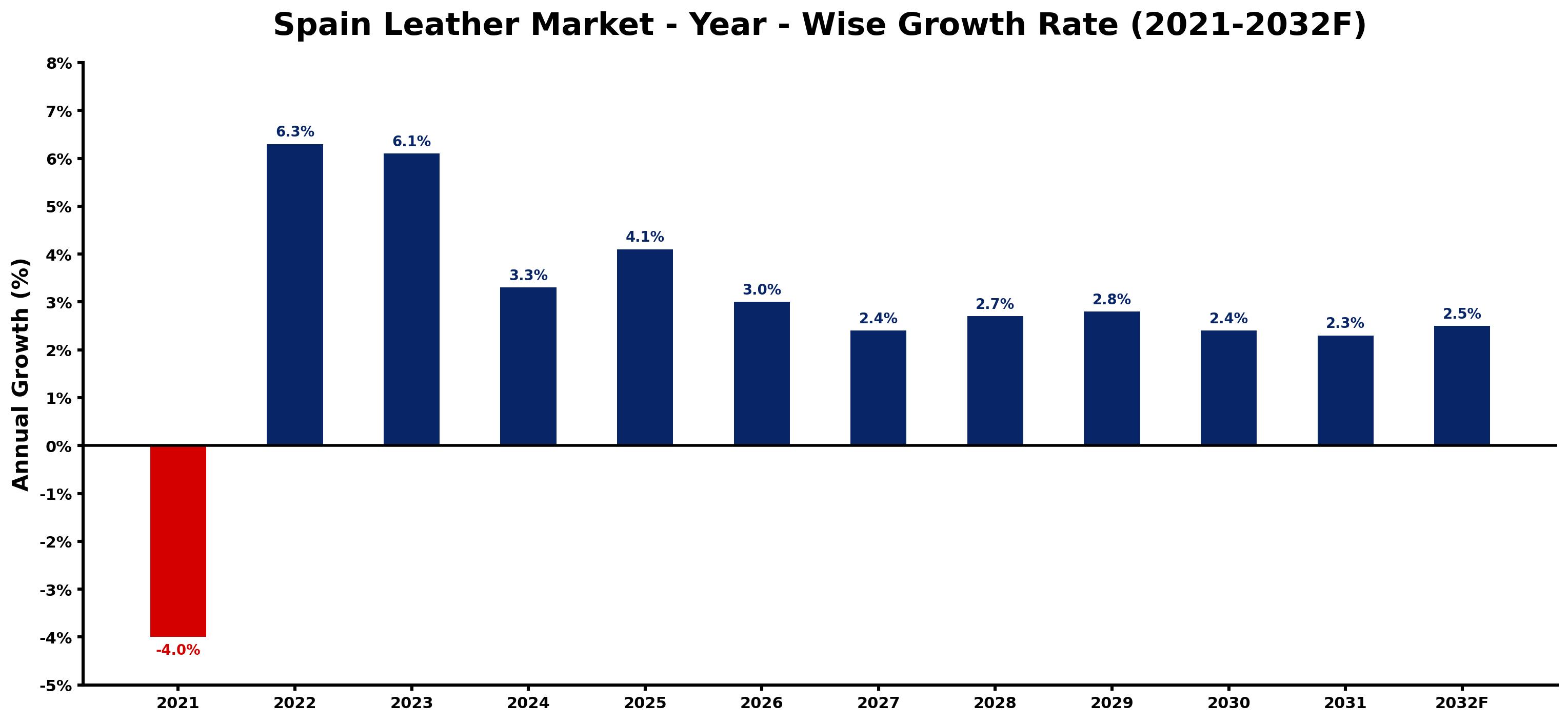
The table below presents the year wise growth rates along with the key drivers influencing the market
| Year | Growth Rate | Major Drivers |
| 2021 | -4.0% | Pandemicrelated restrictions diminished foot traffic in retail areas, severely impacting leather goods sales. |
| 2022 | 6.3% | Luxury brands pivot towards sustainable materials, enhancing leather's eco-friendly appeal. |
| 2023 | 6.1% | Increased online shopping opens new channels for direct leather sales and customer engagement. |
| 2024 | 3.3% | Spanish craftsmanship gains international recognition, enhancing local leather product desirability. |
| 2025 | 4.1% | Emerging fashion trends highlight bespoke leather goods, attracting younger consumer demographics. |
| 2026 | 3.0% | Technological innovations streamline leather production, improving efficiency and reducing waste. |
| 2027 | 2.4% | Revived interest in traditional artisanal practices enhances the narrative around Spanish leather. |
| 2028 | 2.7% | Shifts in consumer preferences favor high-quality, durable leather over fast fashion alternatives. |
| 2029 | 2.8% | Collaborations between designers and local artisans promote unique leather collections and styles. |
| 2030 | 2.4% | Sustainability certifications gain traction, fostering consumer trust in leather products' origins. |
| 2031 | 2.3% | Market diversification leads to custom leather offerings tailored to diverse consumer needs. |
| 2032 | 2.5% | Digital marketing strategies reshape brand visibility, connecting with niche leather market segments. |
Note - Market size estimations and growth projections presented in this report are based on 6Wresearch's advanced forecasting approach, validated with industry datasets as of June 2026.
Spain Leather Market Synopsis
The Spain Leather Market is projected to reach 3.0% and witness significant growth during the forecast period (2026-2032). As the second-largest producer of leather goods globally, following Italy, Spain has established a robust industry characterized by a steady rise in demand for luxury leather items. The market was valued at EUR 8.8 billion in 2019 and is anticipated to escalate to EUR 12 billion by 2026, reflecting a compound annual growth rate (CAGR) of 3.6%. This trajectory is predominantly driven by increased consumer expenditure on high-end products crafted from premium materials, including handbags and outerwear.
Spain Leather Market Growth Drivers
The growth of the Spain Leather Market can be attributed to multiple factors influencing both demand and production aspects:
- Rising Global Demand: The escalating appetite for luxury leather goods in global markets has significantly fueled Spain's leather industry, as consumers increasingly prioritize quality and craftsmanship.
- Consumer Spending Trends: Increased disposable income among consumers has led to higher spending on luxury items, driving growth within the leather sector, particularly in high-end fashion and accessories.
- Technological Advancements: Innovations in manufacturing processes, such as automation, have increased efficiency and product quality, enabling producers to cater to evolving consumer preferences effectively.
- Export Potential: Spain's strategic location and established trade routes enhance its export capabilities, making it a valuable player in the international leather market.
- Sustainable Practices: An increased focus on sustainability in production methods has attracted environmentally conscious consumers, further expanding market opportunities.
Spain Leather Market Trends and Opportunities
The evolution of the Spain Leather Market reveals several key trends and opportunities for future growth:
- Luxury Segment Expansion: There is a noticeable shift towards premium and luxury leather segments, which are becoming increasingly popular among consumers seeking exclusivity and sophistication.
- Customization Services: Rising consumer demand for personalized products is prompting manufacturers to offer bespoke leather goods, capitalizing on the desire for unique items.
- Digital Transformation: The integration of e-commerce and digital marketing strategies has opened new sales channels, allowing manufacturers to reach a broader audience.
- Collaboration with Designers: Partnerships between leather manufacturers and fashion designers are fostering innovative product lines that resonate with modern consumer tastes.
- Focus on Sustainability: The trend towards eco-friendly materials and processes is providing opportunities for brands that prioritize green practices in their production methods.
Spain Leather Market Challenges and Restraints
Despite the growth prospects, the Spain Leather Market faces several challenges that could impact its trajectory:
- Competition from Alternative Materials: The rise of synthetic and alternative materials poses a challenge to traditional leather goods, particularly among budget-conscious consumers.
- Global Economic Uncertainties: Economic fluctuations can adversely affect consumer spending habits, influencing the demand for luxury leather goods.
- Supply Chain Disruptions: Challenges in the supply chain, stemming from geopolitical tensions or environmental factors, can hinder production efficiency and delivery times.
- Regulatory Constraints: Stricter regulations regarding animal welfare and environmental sustainability may present operational challenges for traditional leather manufacturers.
- Skill Shortages: The industry faces a talent gap in skilled artisans who can produce high-quality leather products, potentially jeopardizing product quality and innovation.
Spain Leather Market Government Investment and Initiatives
The Spanish government has made various investments and initiatives aimed at bolstering the leather industry:
- Support for Innovation: Government programs are designed to promote research and development in leather manufacturing techniques, facilitating technological advancements that enhance productivity.
- Export Incentives: Policies encouraging exports help leverage Spain's position as a leading leather goods producer, thereby facilitating international market access.
- Funding for Sustainability: Investments are being directed toward sustainable practices within the leather industry, aligning with global standards for environmental responsibility.
- Training Programs: Initiatives aimed at enhancing vocational training for artisans ensure that skilled labor continues to support the industry's craftsmanship and creativity.
- Public-Private Partnerships: Collaborations between the government and private sector entities aim to strengthen the leather supply chain and promote shared interests in the market's expansion.
Spain Leather Market Latest Developments (May 2025 - June 2026)
Recent developments in the Spain Leather Market indicate a dynamic shift towards innovation and sustainability:
- New Product Launches: A series of innovative leather collections featuring sustainable materials have been introduced, appealing to environmentally conscious consumers.
- Technological Upgrades: Manufacturers have begun adopting advanced manufacturing technologies, enhancing product quality and reducing waste.
- Collaboration Initiatives: Strategic partnerships within the fashion industry have led to unique co-branded products, establishing a trend towards collaborative collections that merge luxury with creativity.
- Revitalization of Traditional Techniques: There is a renewed interest in traditional craftsmanship and artisanal methods, blending heritage with contemporary design to attract niche markets.
- Increased Export Activities: The government has facilitated trade agreements that bolster Spain's leather exports, reinforcing its competitive position on the global stage.
Spain Leather Market - Key Attractiveness of the Report
- 10 Years of Market Numbers
- Historical Data Starting from 2022 to 2025
- Base Year: 2025
- Forecast Data until 2032
- Key Performance Indicators Impacting the Market
- Major Upcoming Developments and Projects
Key Highlights of the Report:
- Spain Leather Market Outlook
- Market Size of Spain Leather Market, 2025
- Forecast of Spain Leather Market, 2032F
- Historical Data and Forecast of Spain Leather Revenues & Volume for the Period 2022-2032F
- Spain Leather Market Trend Evolution
- Spain Leather Market Drivers and Challenges
- Spain Leather Price Trends
- Spain Leather Porter's Five Forces
- Spain Leather Industry Life Cycle
- Historical Data and Forecast of Spain Leather Market Revenues & Volume By Type for the Period 2022-2032F
- Historical Data and Forecast of Spain Leather Market Revenues & Volume By Luggage for the Period 2022-2032F
- Historical Data and Forecast of Spain Leather Market Revenues & Volume By Footwear for the Period 2022-2032F
- Historical Data and Forecast of Spain Leather Market Revenues & Volume By Accessories for the Period 2022-2032F
- Historical Data and Forecast of Spain Leather Market Revenues & Volume By Distribution Channel for the Period 2022-2032F
- Historical Data and Forecast of Spain Leather Market Revenues & Volume By Online for the Period 2022-2032F
- Historical Data and Forecast of Spain Leather Market Revenues & Volume By Offline for the Period 2022-2032F
- Spain Leather Import Export Trade Statistics
- Market Opportunity Assessment By Type
- Market Opportunity Assessment By Distribution Channel
- Spain Leather Top Companies Market Share
- Spain Leather Competitive Benchmarking By Technical and Operational Parameters
- Spain Leather Company Profiles
- Spain Leather Key Strategic Recommendations






































