Brunei Darussalam Leather Market Growth Rate Analysis (2025 - 2031)
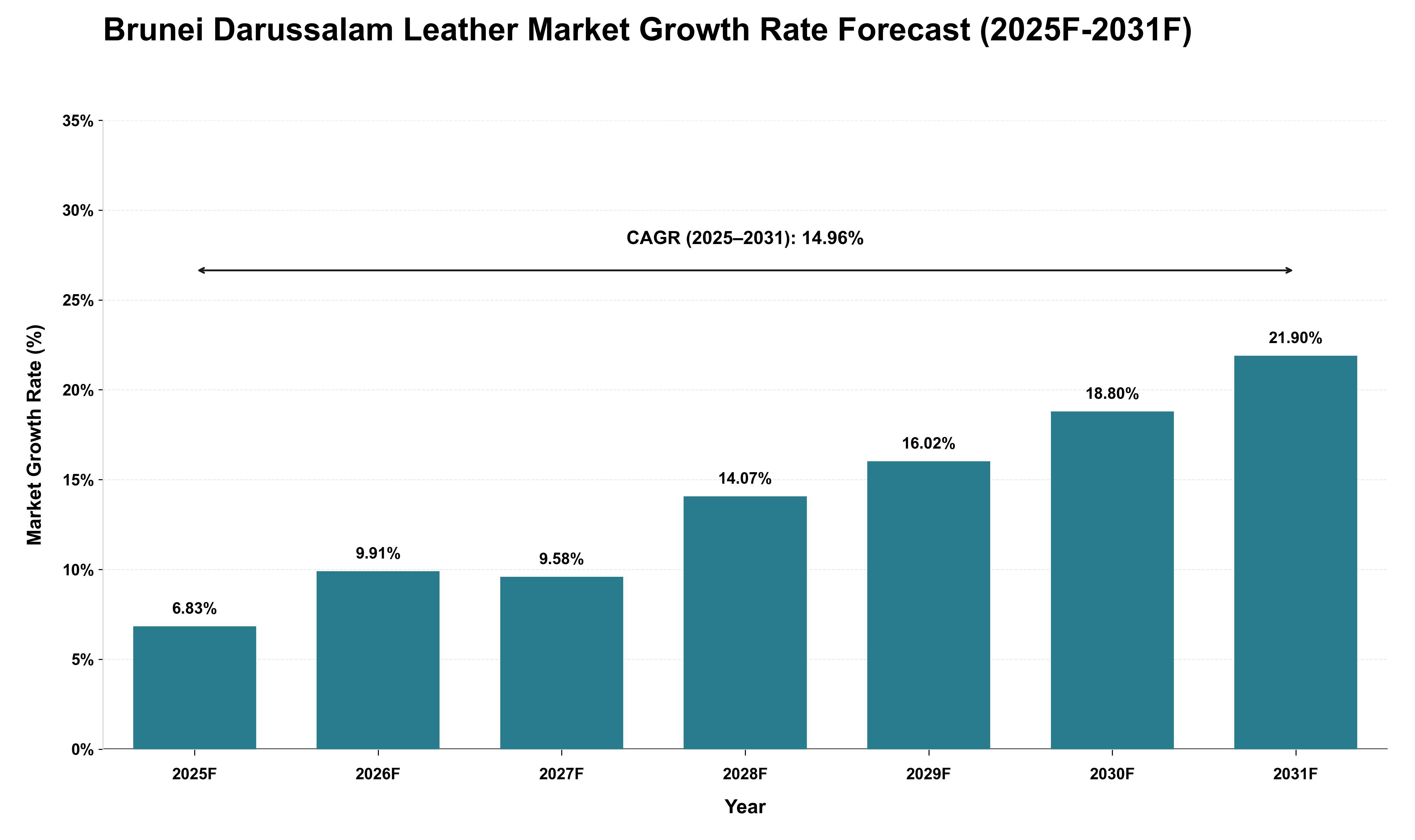
The Brunei Darussalam leather market is projected to experience a robust compound annual growth rate of 14.96% from 2025 to 2031, reflecting significant shifts in consumer preferences and increasing demand for high-quality leather goods. The annual growth rates will escalate notably, with a peak of 21.90% anticipated in 2031, driven by rising disposable incomes and a burgeoning middle class that favors premium products. As global supply chains adapt, Brunei's import dependencies on raw materials will likely influence pricing dynamics and availability, compelling local manufacturers to enhance production capacities. Additionally, cyclical trends in fashion and luxury markets will further stimulate demand for leather products, as consumers increasingly seek sustainable and ethically sourced materials. This competitive landscape will necessitate strategic investments in technology and innovation to maintain quality standards while meeting the escalating market demands throughout the forecast period.
Key Highlights of the Report:
- Brunei Leather Market Outlook
- Market Size of Brunei Leather Market, 2024
- Forecast of Brunei Leather Market, 2031
- Historical Data and Forecast of Brunei Leather Revenues & Volume for the Period 2021-2031
- Brunei Leather Market Trend Evolution
- Brunei Leather Market Drivers and Challenges
- Brunei Leather Price Trends
- Brunei Leather Porter`s Five Forces
- Brunei Leather Industry Life Cycle
- Historical Data and Forecast of Brunei Leather Market Revenues & Volume By Type for the Period 2021-2031
- Historical Data and Forecast of Brunei Leather Market Revenues & Volume By Luggage for the Period 2021-2031
- Historical Data and Forecast of Brunei Leather Market Revenues & Volume By Footwear for the Period 2021-2031
- Historical Data and Forecast of Brunei Leather Market Revenues & Volume By Accessories for the Period 2021-2031
- Historical Data and Forecast of Brunei Leather Market Revenues & Volume By Distribution Channel for the Period 2021-2031
- Historical Data and Forecast of Brunei Leather Market Revenues & Volume By Online for the Period 2021-2031
- Historical Data and Forecast of Brunei Leather Market Revenues & Volume By Offline for the Period 2021-2031
- Brunei Leather Import Export Trade Statistics
- Market Opportunity Assessment By Type
- Market Opportunity Assessment By Distribution Channel
- Brunei Leather Top Companies Market Share
- Brunei Leather Competitive Benchmarking By Technical and Operational Parameters
- Brunei Leather Company Profiles
- Brunei Leather Key Strategic Recommendations






































