Thailand Leather Market: Import Trend Analysis
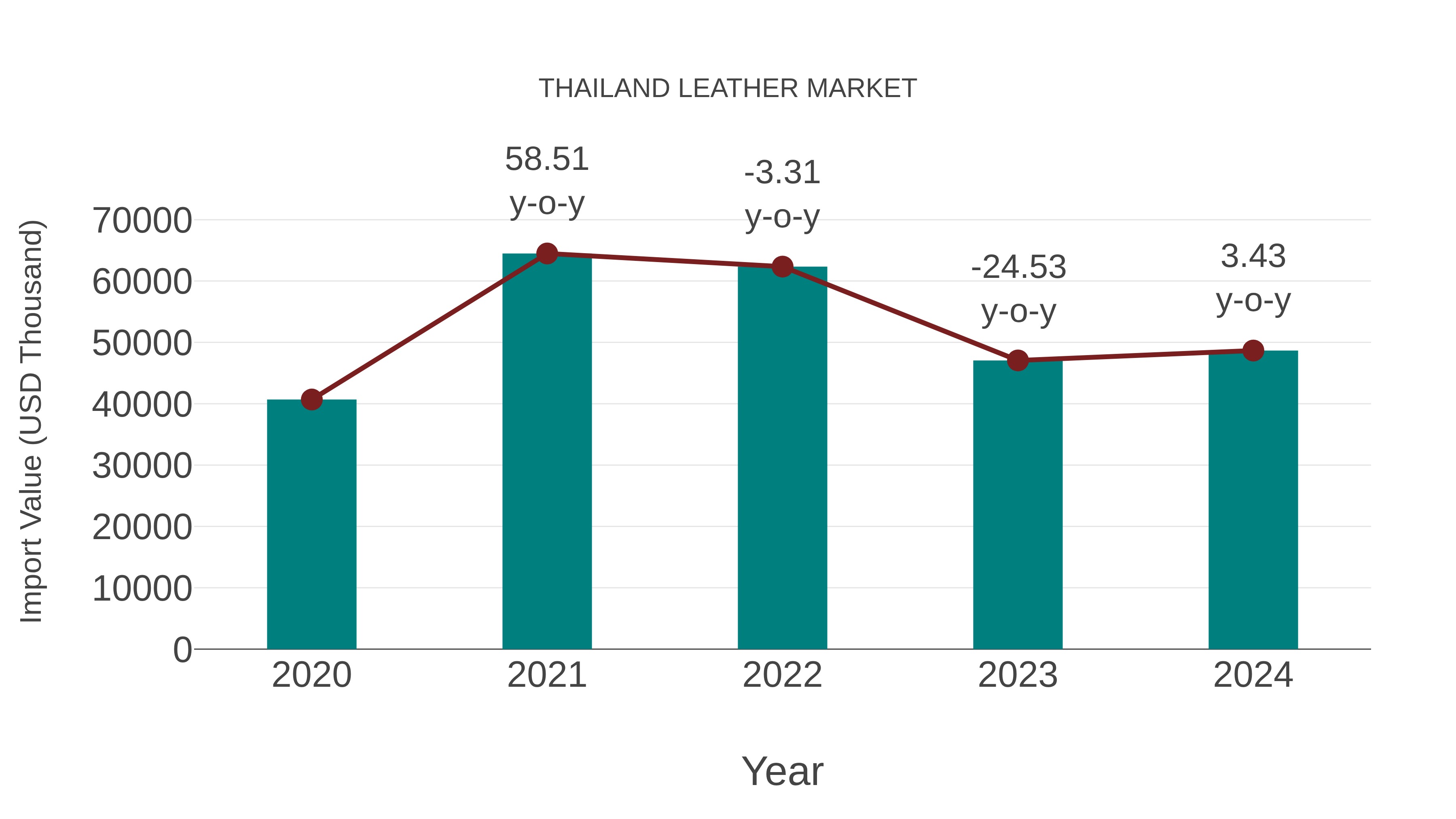
Thailand leather market witnessed a 3.43% import growth from 2023 to 2024, with a compound annual growth rate (CAGR) of 4.58% between 2020 and 2024. This import momentum could be attributed to evolving consumer preferences or changes in trade agreements, indicating market stability amidst shifting global demand patterns.
Thailand Leather Market Synopsis
The leather market in Thailand is expected to witness a CAGR of 3.2% during the forecast period 2020-2026, primarily driven by the increasing demand for leather goods from domestic and international consumers. Factors such as increased disposable income, rising fashion consciousness among youth, and expanding online retail sales are further contributing to the growth of this industry. Additionally, manufacturers are introducing innovative product designs with diverse colors and textures along with attractive pricing strategies that are anticipated to fuel market growth over the projected timeframe. The government initiatives such as free trade agreements (FTA) have also boosted exports in recent years which has augmented overall market development
Key Highlights of the Report:
- Thailand Leather Market Outlook
- Market Size of Thailand Leather Market, 2019
- Forecast of Thailand Leather Market, 2026
- Historical Data and Forecast of Thailand Leather Revenues & Volume for the Period 2016 - 2026
- Thailand Leather Market Trend Evolution
- Thailand Leather Market Drivers and Challenges
- Thailand Leather Price Trends
- Thailand Leather Porter's Five Forces
- Thailand Leather Industry Life Cycle
- Historical Data and Forecast of Thailand Leather Market Revenues & Volume By Type for the Period 2016 - 2026
- Historical Data and Forecast of Thailand Leather Market Revenues & Volume By Luggage for the Period 2016 - 2026
- Historical Data and Forecast of Thailand Leather Market Revenues & Volume By Footwear for the Period 2016 - 2026
- Historical Data and Forecast of Thailand Leather Market Revenues & Volume By Accessories for the Period 2016 - 2026
- Historical Data and Forecast of Thailand Leather Market Revenues & Volume By Distribution Channel for the Period 2016 - 2026
- Historical Data and Forecast of Thailand Leather Market Revenues & Volume By Online for the Period 2016 - 2026
- Historical Data and Forecast of Thailand Leather Market Revenues & Volume By Offline for the Period 2016 - 2026
- Thailand Leather Import Export Trade Statistics
- Market Opportunity Assessment By Type
- Market Opportunity Assessment By Distribution Channel
- Thailand Leather Top Companies Market Share
- Thailand Leather Competitive Benchmarking By Technical and Operational Parameters
- Thailand Leather Company Profiles
- Thailand Leather Key Strategic Recommendations






































