Sri Lanka Functional Apparel Market Size, Share & Growth Rate
The Sri Lanka Functional Apparel Market was estimated at USD 239 Million in 2025 and is projected to reach USD 334 Million by 2032, growing at a CAGR of 4.9% from 2026 to 2032. This trajectory is fueled by an increasing consumer interest in performance-driven clothing that aligns with active and outdoor lifestyles. As the athleisure trend continues to gain traction, Sri Lankan consumers are actively seeking apparel that offers enhanced functionalities, such as moisture-wicking and UV protection, pushing manufacturers to innovate and diversify their product offerings.
Sri Lanka Functional Apparel Market Year-wise Growth Rate and Key Drivers
This graph highlights how the Sri Lanka Functional Apparel Market has steadily grown over the years, supported by major growth factors.
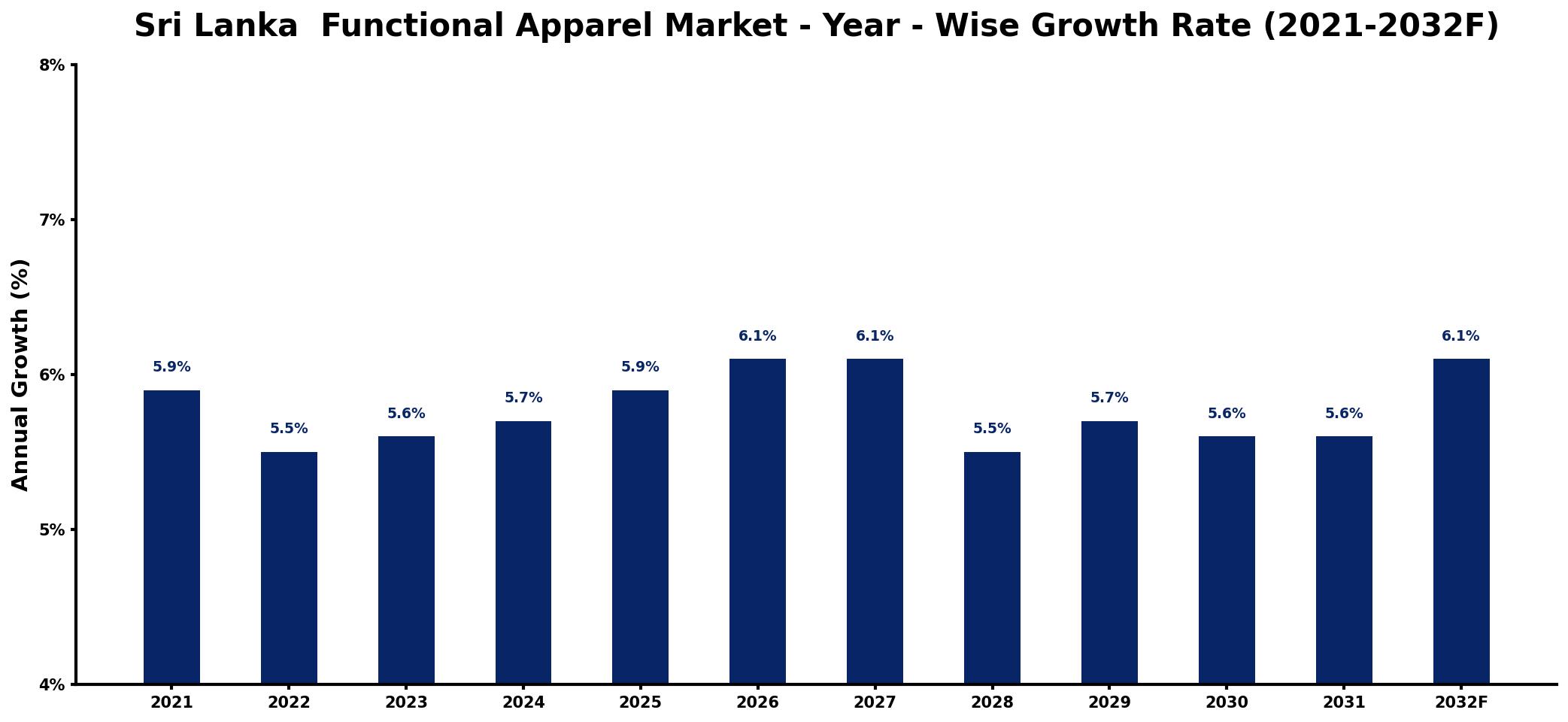
The table below presents the year‑wise growth rates along with the key drivers influencing the market
| Year | Growth Rate | Major Drivers |
| 2021 | 5.9% | Rising health consciousness among consumers |
| 2022 | 5.5% | Increased online shopping adoption rates |
| 2023 | 5.6% | Growth in fitness industry investments |
| 2024 | 5.7% | Expansion of active lifestyle trends |
| 2025 | 5.9% | Emergence of eco-friendly materials |
| 2026 | 6.1% | Technological advancements in manufacturing |
| 2027 | 6.1% | Growing popularity of athleisure culture |
| 2028 | 5.5% | Increased participation in outdoor activities |
| 2029 | 5.7% | increased overall sector activity |
| 2030 | 5.6% | Rise in customization of products |
| 2031 | 5.6% | Strengthening of retail distribution channels |
| 2032 | 6.1% | Investment in sustainable production methods |
Note: Market size estimations and growth projections presented in this report are based on 6Wresearch's proprietary forecasting methodology, utilizing the latest available industry data, government publications, and primary research inputs.
Sri Lanka Functional Apparel Market Synopsis
In Sri Lanka, the demand for functional apparel is surging, especially among athletes and outdoor enthusiasts. The countrys tropical climate necessitates clothing that can withstand heat and humidity, making moisture management and breathability crucial attributes for consumers.
Moreover, the rising awareness regarding health and fitness has transformed apparel choices, leading to an increased focus on athleisure wear. This shift not only attracts younger consumers but also professionals requiring durable clothing in demanding work environments.
Sri Lanka Functional Apparel Market Key Takeaways
- The market is projected to grow significantly due to rising consumer demand for athleisure and performance wear.
- Innovations in textile technology are crucial for manufacturers aiming to differentiate their products.
- Sustainability is a growing concern, influencing purchasing decisions across various demographics.
- Government policies encouraging sustainable practices provide a supportive backdrop for market growth.
- The competitive landscape necessitates strategic partnerships and adaptive business strategies to navigate pricing pressures.
Evaluation of Restraints in Sri Lanka Functional Apparel Market
Despite the promising growth, the Sri Lanka functional apparel market grapples with several constraints. The demand for continual product innovation challenges manufacturers, necessitating significant investment in research and development to create apparel with desired functional attributes. Additionally, rigorous performance testing is required to ensure product quality and consistency, which can extend time-to-market and increase costs. The challenge of aligning with evolving consumer preferences for sustainable production adds a layer of complexity, as brands strive to build loyalty in a competitive landscape.
Sri Lanka Functional Apparel Market Trends
Currently, a distinct trend in the Sri Lanka functional apparel market is the growing preference for sustainability. Consumers are increasingly favoring brands that commit to eco-friendly manufacturing processes and materials. Furthermore, advancements in fabric technology, such as the incorporation of antimicrobial properties and enhanced moisture control, are being embraced by brands eager to meet the sophisticated demands of health-conscious customers.
Additionally, the integration of technology into clothing, such as fitness trackers and smart textiles, is emerging as a pivotal area for innovation. This intersection of functionality and technology is expected to reshape consumer expectations and foster a new wave of market offerings.
Sri Lanka Functional Apparel Market Opportunities
The opportunities in the Sri Lanka functional apparel market lie particularly in leveraging technological advancements and sustainability practices. Brands that successfully develop eco-friendly products while incorporating cutting-edge textile technologies stand to gain significant market share. Additionally, exploring partnerships with fitness and wellness platforms can enhance brand visibility and consumer engagement, opening avenues for collaboration that drives both innovation and sales.
Government Initiatives in the Sri Lanka Functional Apparel Market
The Sri Lankan government is proactively supporting the functional apparel market through policies aimed at encouraging innovation and sustainability within the textile industry. Regulations focusing on product safety, performance standards, and environmentally friendly manufacturing practices are pivotal in shaping a favorable business environment. Additionally, various incentives for research and development initiatives are being introduced, promoting advancements in functional textiles that align with global sustainability benchmarks.
Future Insights of the Sri Lanka Functional Apparel Market
As we look towards 2026-2032, the Sri Lanka functional apparel market is poised for dynamic growth, driven by a convergence of lifestyle changes and technological advancements. The ongoing shift towards health and fitness will likely continue, with consumers seeking more versatile and durable apparel options. Manufacturers that prioritize innovation in fabric technology and sustainability will emerge as leaders, navigating the competitive landscape effectively and meeting the evolving demands of their target audience.
Sri Lanka Functional Apparel Market Latest Developments (2025 - 2026)
Recently, the industry has seen a marked increase in collaborations focusing on sustainable fabric innovations. Manufacturers are increasingly investing in eco-friendly materials, while there has been a notable shift in marketing strategies aimed at younger consumers who prioritize lifestyle and functionality. Trade fairs and exhibitions have also resumed, fostering networking opportunities and showcasing emerging trends that highlight the blend of performance and fashion in functional apparel.
Sri Lanka Functional Apparel Market - Key Attractiveness of the Report
- 10 Years of Market Numbers
- Historical Data Starting from 2022 to 2025
- Base Year: 2025
- Forecast Data until 2032
- Key Performance Indicators Impacting the Market
- Major Upcoming Developments and Projects
Key Highlights of the Report:
- Sri Lanka Functional Apparel Market Outlook
- Market Size of Sri Lanka Functional Apparel Market, 2025
- Forecast of Sri Lanka Functional Apparel Market, 2032
- Historical Data and Forecast of Sri Lanka Functional Apparel Revenues & Volume for the Period 2022-2032F
- Sri Lanka Functional Apparel Market Trend Evolution
- Sri Lanka Functional Apparel Market Drivers and Challenges
- Sri Lanka Functional Apparel Price Trends
- Sri Lanka Functional Apparel Porter's Five Forces
- Sri Lanka Functional Apparel Industry Life Cycle
- Historical Data and Forecast of Sri Lanka Functional Apparel Market Revenues & Volume By Product Type for the Period 2022-2032F
- Historical Data and Forecast of Sri Lanka Functional Apparel Market Revenues & Volume By Sportswear for the Period 2022-2032F
- Historical Data and Forecast of Sri Lanka Functional Apparel Market Revenues & Volume By Activewear for the Period 2022-2032F
- Historical Data and Forecast of Sri Lanka Functional Apparel Market Revenues & Volume By Protective Clothing for the Period 2022-2032F
- Historical Data and Forecast of Sri Lanka Functional Apparel Market Revenues & Volume By Others for the Period 2022-2032F
- Historical Data and Forecast of Sri Lanka Functional Apparel Market Revenues & Volume By Application for the Period 2022-2032F
- Historical Data and Forecast of Sri Lanka Functional Apparel Market Revenues & Volume By Sports Industry for the Period 2022-2032F
- Historical Data and Forecast of Sri Lanka Functional Apparel Market Revenues & Volume By Outdoor Clothing for the Period 2022-2032F
- Historical Data and Forecast of Sri Lanka Functional Apparel Market Revenues & Volume By Healthcare sector for the Period 2022-2032F
- Historical Data and Forecast of Sri Lanka Functional Apparel Market Revenues & Volume By Distribution Channel for the Period 2022-2032F
- Historical Data and Forecast of Sri Lanka Functional Apparel Market Revenues & Volume By Offline Store for the Period 2022-2032F
- Historical Data and Forecast of Sri Lanka Functional Apparel Market Revenues & Volume By Online Store for the Period 2022-2032F
- Sri Lanka Functional Apparel Import Export Trade Statistics
- Market Opportunity Assessment By Product Type
- Market Opportunity Assessment By Application
- Market Opportunity Assessment By Distribution Channel
- Sri Lanka Functional Apparel Top Companies Market Share
- Sri Lanka Functional Apparel Competitive Benchmarking By Technical and Operational Parameters
- Sri Lanka Functional Apparel Company Profiles
- Sri Lanka Functional Apparel Key Strategic Recommendations






































