Sri Lanka Household Cleaning Products Market: Import Trend Analysis
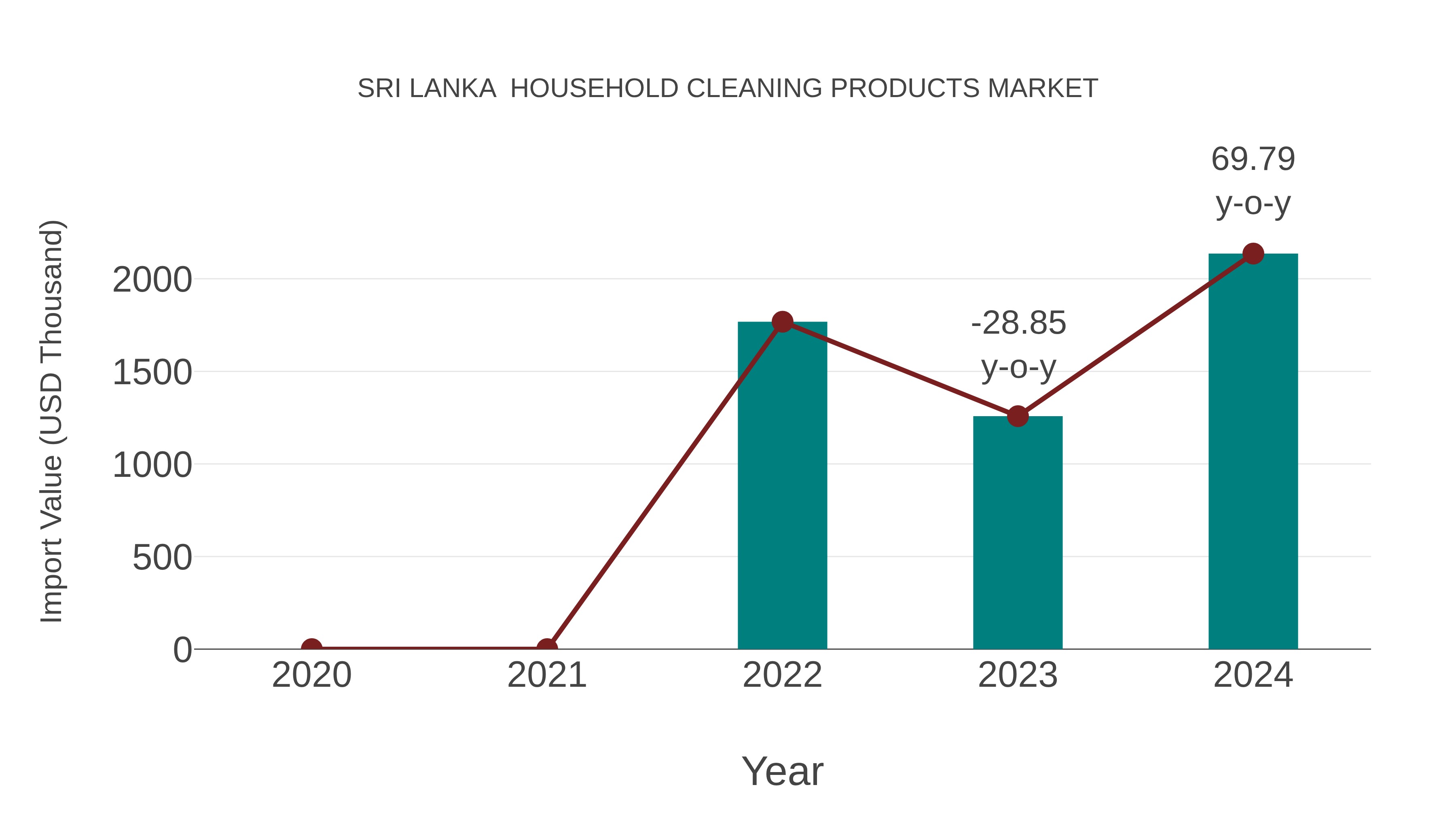
Sri Lanka import trend for household cleaning products market showed significant growth from 2023 to 2024 at 69.79%, with a compound annual growth rate (CAGR) of 9.92% from 2020 to 2024. This surge could be attributed to increasing consumer awareness of hygiene practices during the global pandemic.
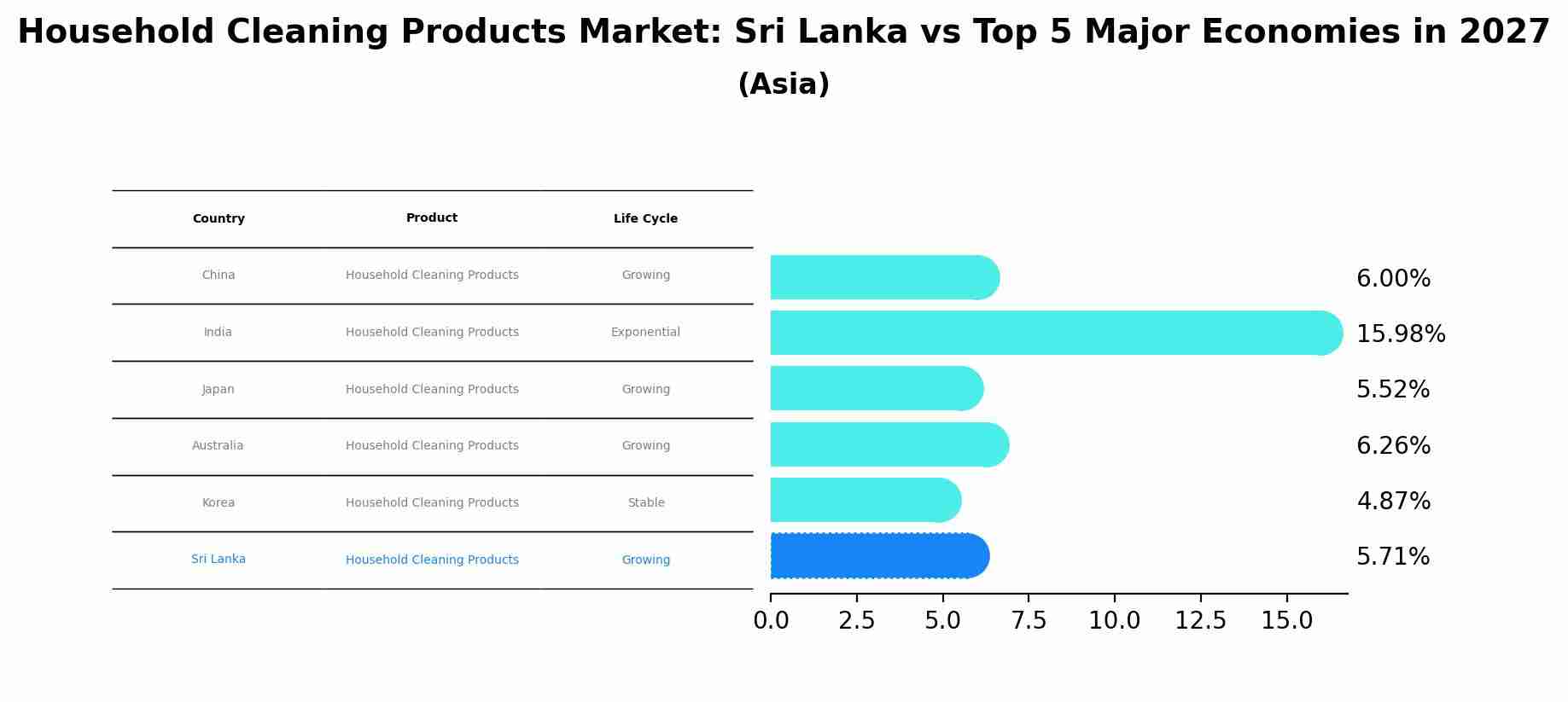
Household Cleaning Products Market: Sri Lanka vs Top 5 Major Economies in 2027 (Asia)
By 2027, Sri Lanka's Household Cleaning Products market is forecasted to achieve a growing growth rate of 5.71%, with China leading the Asia region, followed by India, Japan, Australia and South Korea.
Sri Lanka Household Cleaning Products Market Overview
The household cleaning products market in Sri Lanka is expanding with increasing urbanization and hygiene awareness. Products such as detergents, disinfectants, and surface cleaners are in demand, driven by lifestyle changes and health concerns.
Drivers of the market
The household cleaning products market in Sri Lanka is driven by rising hygiene awareness and changing consumer preferences towards convenient and effective cleaning solutions. Demand for products such as surface cleaners, disinfectants, and laundry detergents is increasing due to urbanization, busy lifestyles, and heightened awareness of health and cleanliness. The market benefits from product innovations, including eco-friendly formulations and packaging, catering to environmentally conscious consumers. Moreover, expanding retail distribution networks and e-commerce platforms contribute to market accessibility and growth.
Challenges of the market
Consumer preferences for eco-friendly products, regulatory compliance for chemical formulations, pricing pressures, and distribution logistics are key challenges in Sri Lanka household cleaning products market.
Government Policy of the market
The government regulates household cleaning products to ensure safety, labeling accuracy, and environmental sustainability. Policies promote the use of eco-friendly ingredients and packaging materials while enforcing standards for product efficacy and consumer protection.
Key Highlights of the Report:
- Sri Lanka Household Cleaning Products Market Outlook
- Market Size of Sri Lanka Household Cleaning Products Market, 2021
- Forecast of Sri Lanka Household Cleaning Products Market, 2028
- Historical Data and Forecast of Sri Lanka Household Cleaning Products Revenues & Volume for the Period 2018 - 2028
- Sri Lanka Household Cleaning Products Market Trend Evolution
- Sri Lanka Household Cleaning Products Market Drivers and Challenges
- Sri Lanka Household Cleaning Products Price Trends
- Sri Lanka Household Cleaning Products Porter's Five Forces
- Sri Lanka Household Cleaning Products Industry Life Cycle
- Historical Data and Forecast of Sri Lanka Household Cleaning Products Market Revenues & Volume By Product Type for the Period 2018 - 2028
- Historical Data and Forecast of Sri Lanka Household Cleaning Products Market Revenues & Volume By Laundry Detergents for the Period 2018 - 2028
- Historical Data and Forecast of Sri Lanka Household Cleaning Products Market Revenues & Volume By Surface Cleaners for the Period 2018 - 2028
- Historical Data and Forecast of Sri Lanka Household Cleaning Products Market Revenues & Volume By Dishwashing Products for the Period 2018 - 2028
- Historical Data and Forecast of Sri Lanka Household Cleaning Products Market Revenues & Volume By Toilet Cleaners for the Period 2018 - 2028
- Historical Data and Forecast of Sri Lanka Household Cleaning Products Market Revenues & Volume By Others for the Period 2018 - 2028
- Sri Lanka Household Cleaning Products Import Export Trade Statistics
- Market Opportunity Assessment By Product Type
- Sri Lanka Household Cleaning Products Top Companies Market Share
- Sri Lanka Household Cleaning Products Competitive Benchmarking By Technical and Operational Parameters
- Sri Lanka Household Cleaning Products Company Profiles
- Sri Lanka Household Cleaning Products Key Strategic Recommendations






































