Sri Lanka Insulated Glass Market Size, Share & Growth Rate
The Sri Lanka Insulated Glass Market was estimated at USD 280 Million in 2025 and is projected to reach USD 382 Million by 2032, growing at a CAGR of 4.5% from 2026 to 2032. This growth trajectory is driven primarily by the rapid urbanization and a surge in infrastructure projects across the country, as well as a pronounced shift towards energy-efficient building materials. Increasing awareness about sustainability and government initiatives to promote eco-friendly construction practices further amplify the demand for insulated glass solutions.
Sri Lanka Insulated Glass Market Year-wise Growth Rate and Key Drivers
This graph highlights how the Sri Lanka Insulated Glass Market has steadily grown over the years, supported by major growth factors.
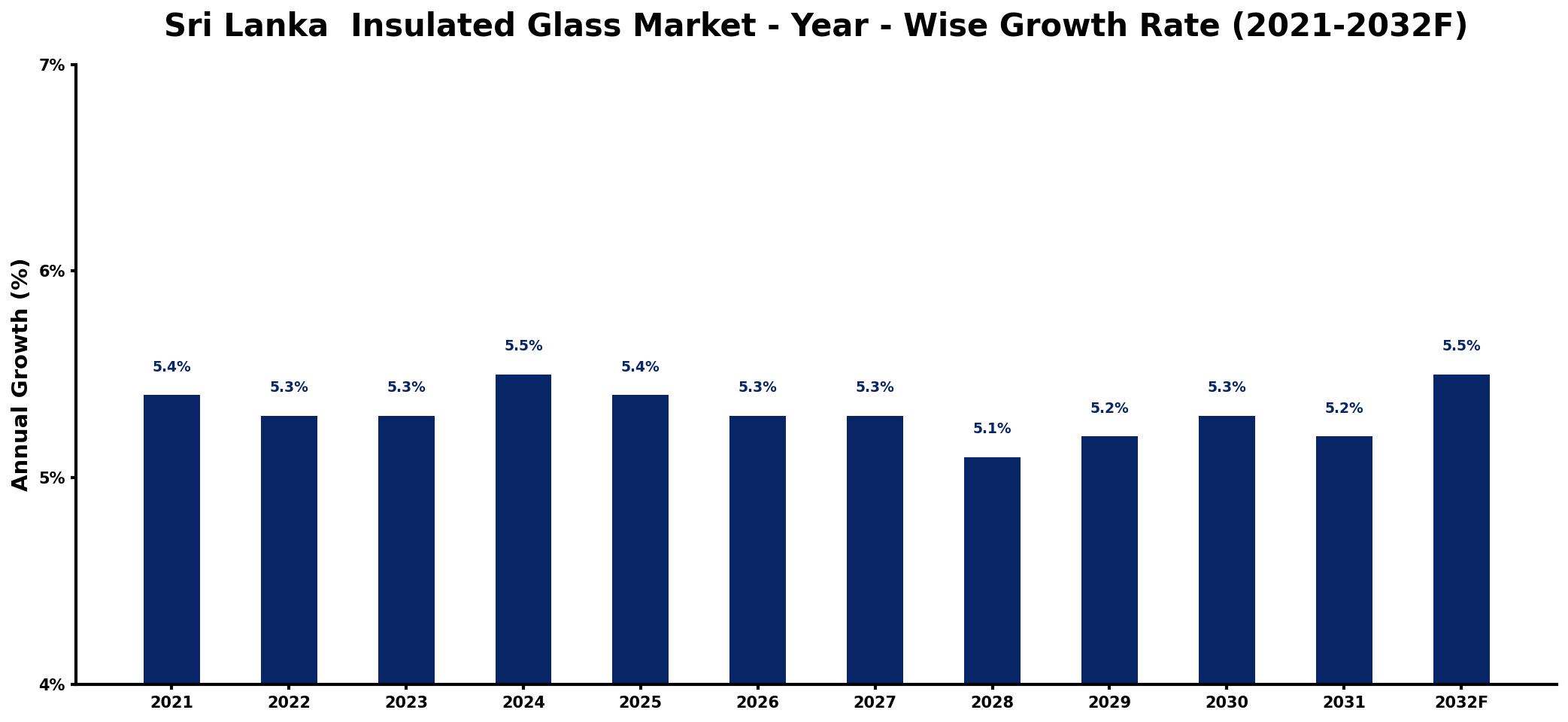
The table below presents the year‑wise growth rates along with the key drivers influencing the market
| Year | Growth Rate | Major Drivers |
| 2021 | 5.4% | Rising construction activity nationwide |
| 2022 | 5.3% | Increased focus on energy efficiency |
| 2023 | 5.3% | Growing demand for sustainable solutions |
| 2024 | 5.5% | Expansion of residential projects |
| 2025 | 5.4% | Investments in commercial infrastructure |
| 2026 | 5.3% | Development of smart building technologies |
| 2027 | 5.3% | Surge in renovation projects |
| 2028 | 5.1% | Emerging trends in architectural design |
| 2029 | 5.2% | Strengthening regulations on energy conservation |
| 2030 | 5.3% | Growth in green building certifications |
| 2031 | 5.2% | Increased consumer awareness regarding sustainability |
| 2032 | 5.5% | Advancements in manufacturing processes |
Note: Market size estimations and growth projections presented in this report are based on 6Wresearch's proprietary forecasting methodology, utilizing the latest available industry data, government publications, and primary research inputs.
Sri Lanka Insulated Glass Market Synopsis
In recent years, the Sri Lanka Insulated Glass Market has been characterized by a robust increase in the demand for energy-efficient building solutions. The combination of double-glazed windows, which offer superior thermal insulation and soundproofing, is gaining traction among homeowners and builders alike, fueled by the construction of both residential and commercial properties.
As urbanization accelerates, the market is also benefitting from the governments commitment to sustainable building practices. Alongside this, advancements in technology are leading to innovative product offerings, catering to the evolving needs of the construction sector, while addressing the pressing concerns related to energy conservation.
Sri Lanka Insulated Glass Market Key Takeaways
- Steady market growth driven by increasing urbanization and infrastructure development.
- Heightened awareness of sustainability boosting demand for energy-efficient insulated glass solutions.
- Technological advancements resulting in enhanced product features, including safety and sound insulation.
- Government incentives supporting the adoption of energy-efficient building materials.
- Investment opportunities arise in manufacturing, raw material supply, and installation services.
Evaluation of Restraints in Sri Lanka Insulated Glass Market
Despite its positive outlook, the Sri Lanka Insulated Glass Market faces certain restraints. The high initial costs associated with installing insulated glass systems remain a significant barrier, particularly for budget-conscious consumers and businesses. Additionally, there exists a limited awareness regarding the long-term benefits of insulated glass among potential customers, which can hinder market penetration. The presence of more affordable alternatives and fluctuating raw material prices add further complexity to the competitive landscape, necessitating focused strategies to overcome these challenges and promote the value of insulated glass solutions.
Sri Lanka Insulated Glass Market Trends
Key trends shaping the Sri Lanka Insulated Glass Market include a noticeable shift towards eco-friendly and high-performance glazing solutions. Consumers are increasingly prioritizing energy efficiency, leading to a surge in the adoption of insulated glass for both residential and commercial buildings. Furthermore, advancements in manufacturing technologies have resulted in the development of products that not only improve thermal performance but also incorporate soundproofing features and enhanced safety measures, positioning insulated glass as a versatile choice for modern construction.
Sri Lanka Insulated Glass Market Opportunities
The growth potential within the Sri Lanka Insulated Glass Market is substantial, primarily driven by the increasing emphasis on energy efficiency in construction. Opportunities abound in the manufacturing of insulated glass units, the supply of innovative raw materials like low-e glass coatings, and the provision of specialized installation services for energy-efficient glazing systems. As the government continues to promote sustainable development and green building practices, investments in this sector promise to yield long-term profitability and growth.
Government Initiatives in the Sri Lanka Insulated Glass Market
The Sri Lankan government has enacted several initiatives to foster the growth of the Insulated Glass Market. These include reducing import duties on raw materials required for the production of insulated glass, which is designed to lower manufacturing costs and enhance market competitiveness. Furthermore, the government offers tax incentives and subsidies aimed at companies investing in energy-efficient technologies, aligning with national objectives to promote sustainable development and lower energy consumption.
Future Insights of the Sri Lanka Insulated Glass Market
Looking ahead to 2026-2032, the Sri Lanka Insulated Glass Market is poised for significant expansion. Continued urbanization, along with an increasing focus on sustainable construction practices, will likely drive demand. Additionally, the ongoing adoption of green building standards and regulations will further bolster the market for insulated glass products. Manufacturers are expected to invest in research and development, creating innovative solutions that cater to the evolving needs of the construction sector in Sri Lanka, ultimately enhancing the market landscape.
Sri Lanka Insulated Glass Market Latest Developments (2025 - 2026)
Recent developments in the Sri Lanka Insulated Glass Market indicate a trend towards more sophisticated manufacturing techniques and improved product performance. Key industry stakeholders are exploring partnerships to enhance supply chain efficiencies and introduce cutting-edge technologies. Additionally, there is an increasing focus on customer education regarding the benefits of insulated glass, as stakeholders aim to broaden the market base by addressing misconceptions and highlighting the long-term advantages of energy-efficient solutions.
Sri Lanka Insulated Glass Market - Key Attractiveness of the Report
- 10 Years of Market Numbers
- Historical Data Starting from 2022 to 2025
- Base Year: 2025
- Forecast Data until 2032
- Key Performance Indicators Impacting the Market
- Major Upcoming Developments and Projects
Key Highlights of the Report:
- Sri Lanka Insulated Glass Market Outlook
- Market Size of Sri Lanka Insulated Glass Market, 2025
- Forecast of Sri Lanka Insulated Glass Market, 2032
- Historical Data and Forecast of Sri Lanka Insulated Glass Revenues & Volume for the Period 2022-2032F
- Sri Lanka Insulated Glass Market Trend Evolution
- Sri Lanka Insulated Glass Market Drivers and Challenges
- Sri Lanka Insulated Glass Price Trends
- Sri Lanka Insulated Glass Porter's Five Forces
- Sri Lanka Insulated Glass Industry Life Cycle
- Historical Data and Forecast of Sri Lanka Insulated Glass Market Revenues & Volume By Type for the Period 2022-2032F
- Historical Data and Forecast of Sri Lanka Insulated Glass Market Revenues & Volume By Heated Insulating Glass for the Period 2022-2032F
- Historical Data and Forecast of Sri Lanka Insulated Glass Market Revenues & Volume By Tempering Insulating Glass for the Period 2022-2032F
- Historical Data and Forecast of Sri Lanka Insulated Glass Market Revenues & Volume By Custom Insulated Glass for the Period 2022-2032F
- Historical Data and Forecast of Sri Lanka Insulated Glass Market Revenues & Volume By Other Glasses for the Period 2022-2032F
- Historical Data and Forecast of Sri Lanka Insulated Glass Market Revenues & Volume By Application for the Period 2022-2032F
- Historical Data and Forecast of Sri Lanka Insulated Glass Market Revenues & Volume By Doors & Partitions for the Period 2022-2032F
- Historical Data and Forecast of Sri Lanka Insulated Glass Market Revenues & Volume By Kitchen Appliances & Cabinets for the Period 2022-2032F
- Historical Data and Forecast of Sri Lanka Insulated Glass Market Revenues & Volume By Floors & Ceilings for the Period 2022-2032F
- Historical Data and Forecast of Sri Lanka Insulated Glass Market Revenues & Volume By Furniture & Curtain Walls for the Period 2022-2032F
- Historical Data and Forecast of Sri Lanka Insulated Glass Market Revenues & Volume By Railings & Bolted Structures for the Period 2022-2032F
- Historical Data and Forecast of Sri Lanka Insulated Glass Market Revenues & Volume By Automotive Glasses for the Period 2022-2032F
- Historical Data and Forecast of Sri Lanka Insulated Glass Market Revenues & Volume By End User for the Period 2022-2032F
- Historical Data and Forecast of Sri Lanka Insulated Glass Market Revenues & Volume By Residential Buildings for the Period 2022-2032F
- Historical Data and Forecast of Sri Lanka Insulated Glass Market Revenues & Volume By Commercial & Institutional Buildings for the Period 2022-2032F
- Historical Data and Forecast of Sri Lanka Insulated Glass Market Revenues & Volume By Industrial Users for the Period 2022-2032F
- Sri Lanka Insulated Glass Import Export Trade Statistics
- Market Opportunity Assessment By Type
- Market Opportunity Assessment By Application
- Market Opportunity Assessment By End User
- Sri Lanka Insulated Glass Top Companies Market Share
- Sri Lanka Insulated Glass Competitive Benchmarking By Technical and Operational Parameters
- Sri Lanka Insulated Glass Company Profiles
- Sri Lanka Insulated Glass Key Strategic Recommendations






































