Sri Lanka Metal Fabrication Market: Import Trend Analysis
Sri Lanka metal fabrication market witnessed a 30.87% import growth from 2023 to 2024, with a CAGR of 45.06% from 2020 to 2024. This significant increase can be attributed to the country`s expanding infrastructure projects and rising demand for fabricated metal products.
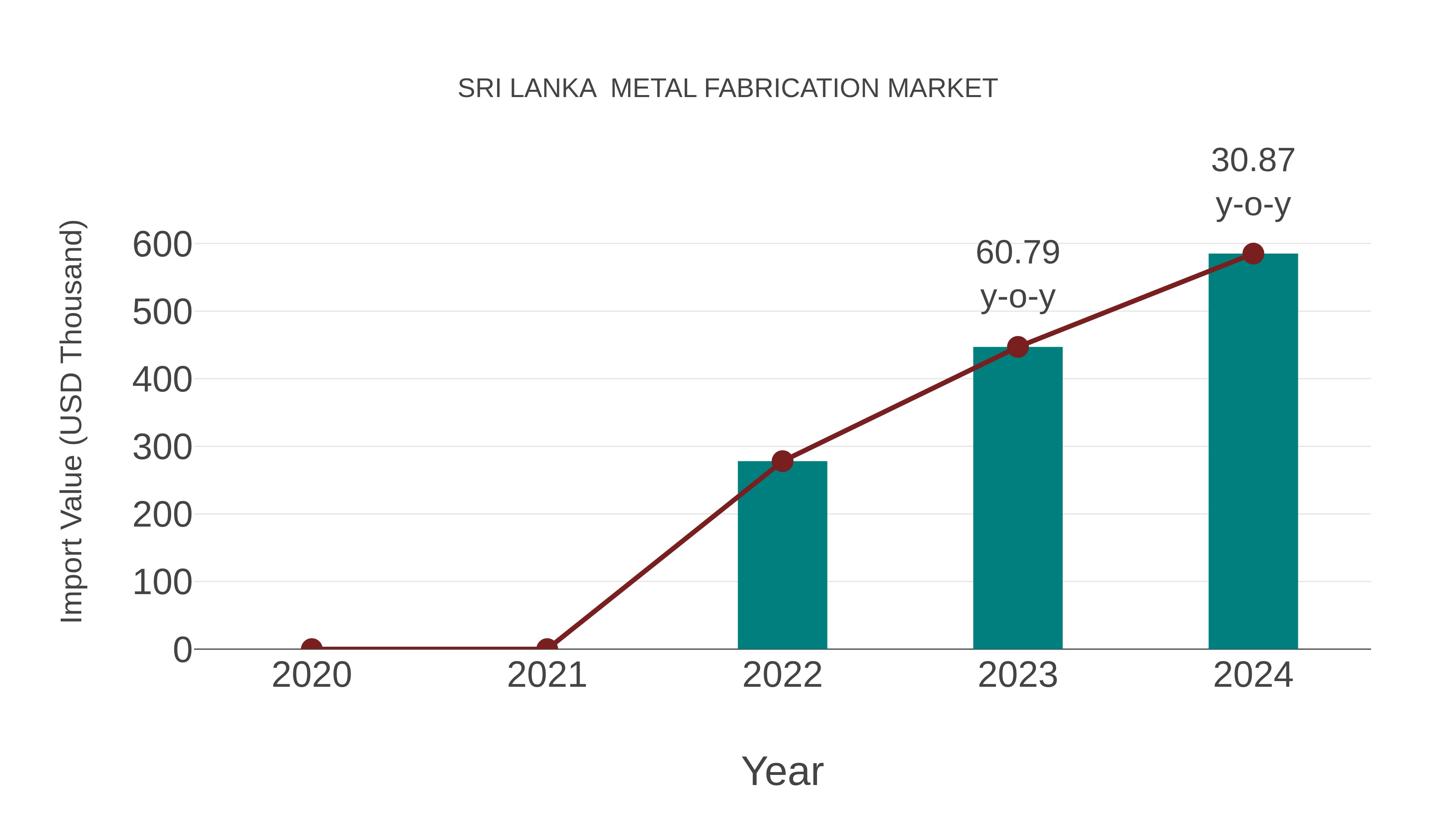
Sri Lanka Metal Fabrication Market Overview
The metal fabrication market in Sri Lanka is thriving, driven by the construction, automotive, and manufacturing industries. This market includes activities such as cutting, bending, and assembling metal components. The growth is fueled by the increasing demand for infrastructure development and the rise of the manufacturing sector in the country.
Drivers of the market
The metal fabrication market in Sri Lanka is driven by the demand for custom metal products and structures in industries such as construction, automotive, shipbuilding, and manufacturing. Metal fabrication processes, including cutting, welding, bending, and assembling, are essential for producing a wide range of metal components and assemblies. The growth of these end-use industries, coupled with the increasing focus on infrastructure development and industrialization, supports the market. Additionally, advancements in fabrication technologies and the adoption of automation and robotics further enhance market growth.
Challenges of the market
Challenges in the Sri Lankan metal fabrication market include technology adoption, material sourcing, and design customization. Businesses must innovate to provide fabricated metal products that meet diverse industry specifications while ensuring cost-effectiveness and quality. Moreover, addressing skilled labor shortages and competitive pricing pressures pose additional hurdles. Investing in automated fabrication technologies, enhancing material supply chains, and offering customized fabrication solutions are critical to overcoming these challenges and meeting growing market demands.
Government Policy of the market
Government policies in Sri Lanka for the metal fabrication market emphasize local manufacturing and technological advancement. Initiatives include providing subsidies and incentives for SMEs, promoting research and development in fabrication technologies, and supporting skills training programs to enhance workforce capabilities.
Key Highlights of the Report:
- Sri Lanka Metal Fabrication Market Outlook
- Market Size of Sri Lanka Metal Fabrication Market, 2025
- Forecast of Sri Lanka Metal Fabrication Market, 2032
- Historical Data and Forecast of Sri Lanka Metal Fabrication Revenues & Volume for the Period 2022-2032F
- Sri Lanka Metal Fabrication Market Trend Evolution
- Sri Lanka Metal Fabrication Market Drivers and Challenges
- Sri Lanka Metal Fabrication Price Trends
- Sri Lanka Metal Fabrication Porter's Five Forces
- Sri Lanka Metal Fabrication Industry Life Cycle
- Historical Data and Forecast of Sri Lanka Metal Fabrication Market Revenues & Volume By End-user Industry for the Period 2022-2032F
- Historical Data and Forecast of Sri Lanka Metal Fabrication Market Revenues & Volume By Manufacturing for the Period 2022-2032F
- Historical Data and Forecast of Sri Lanka Metal Fabrication Market Revenues & Volume By Power and Utilities for the Period 2022-2032F
- Historical Data and Forecast of Sri Lanka Metal Fabrication Market Revenues & Volume By Construction for the Period 2022-2032F
- Historical Data and Forecast of Sri Lanka Metal Fabrication Market Revenues & Volume By Oil and Gas for the Period 2022-2032F
- Historical Data and Forecast of Sri Lanka Metal Fabrication Market Revenues & Volume By Other End-user Industries for the Period 2022-2032F
- Historical Data and Forecast of Sri Lanka Metal Fabrication Market Revenues & Volume By Metal Folding for the Period 2022-2032F
- Historical Data and Forecast of Sri Lanka Metal Fabrication Market Revenues & Volume By Product category for the Period 2022-2032F
- Historical Data and Forecast of Sri Lanka Metal Fabrication Market Revenues & Volume By Structural steel fabrication for the Period 2022-2032F
- Historical Data and Forecast of Sri Lanka Metal Fabrication Market Revenues & Volume By Process Equipment Fabrication for the Period 2022-2032F
- Sri Lanka Metal Fabrication Import Export Trade Statistics
- Market Opportunity Assessment By End-user Industry
- Market Opportunity Assessment By Product category
- Sri Lanka Metal Fabrication Top Companies Market Share
- Sri Lanka Metal Fabrication Competitive Benchmarking By Technical and Operational Parameters
- Sri Lanka Metal Fabrication Company Profiles
- Sri Lanka Metal Fabrication Key Strategic Recommendations






































