Sri Lanka Mushroom Market: Import Trend Analysis
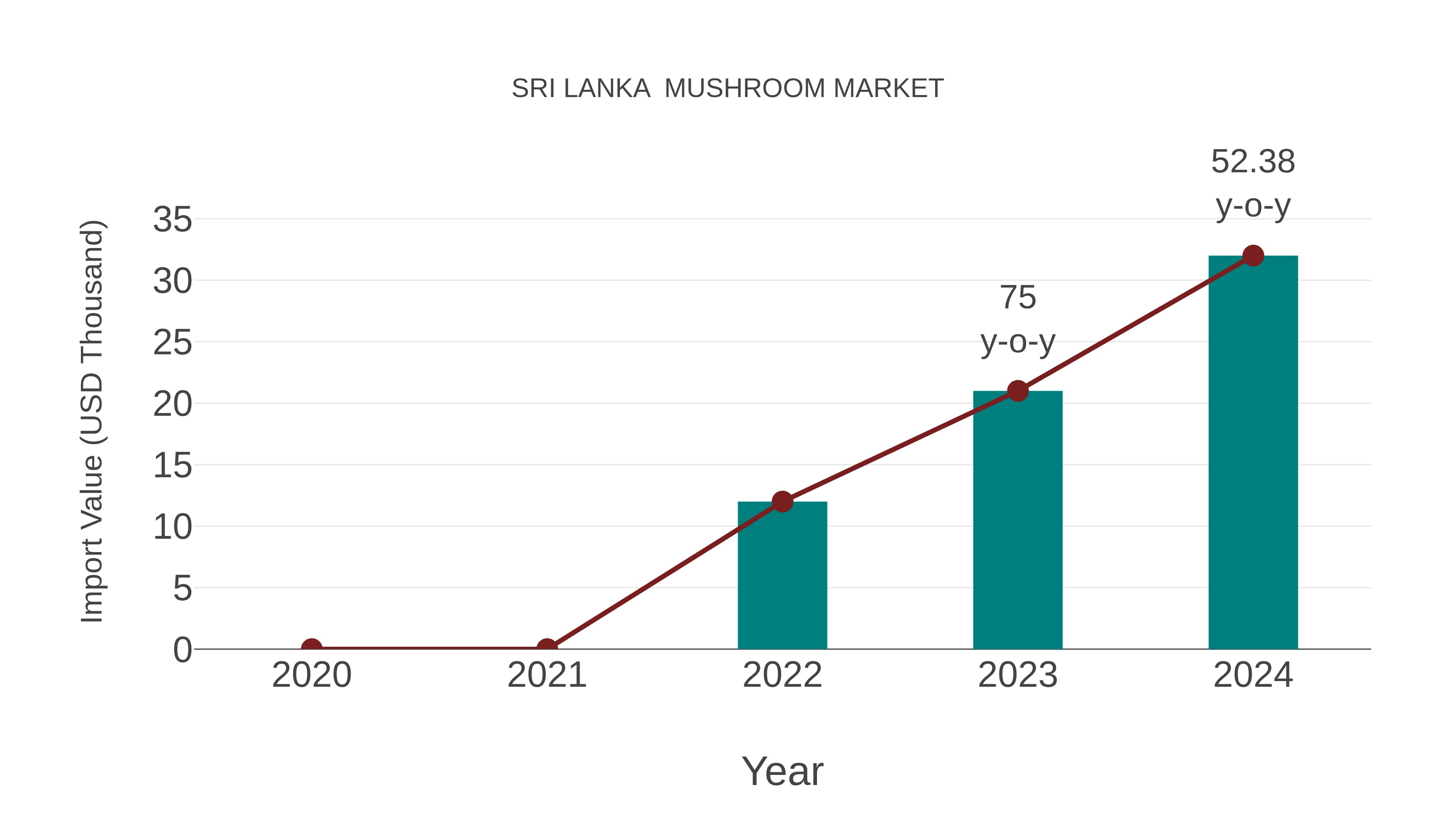
Sri Lanka mushroom market witnessed a notable import trend, with a growth rate of 52.38% from 2023 to 2024. The compound annual growth rate (CAGR) for imports between 2020 and 2024 stood at 63.3%. This surge could be attributed to increasing consumer awareness of the nutritional benefits of mushrooms.
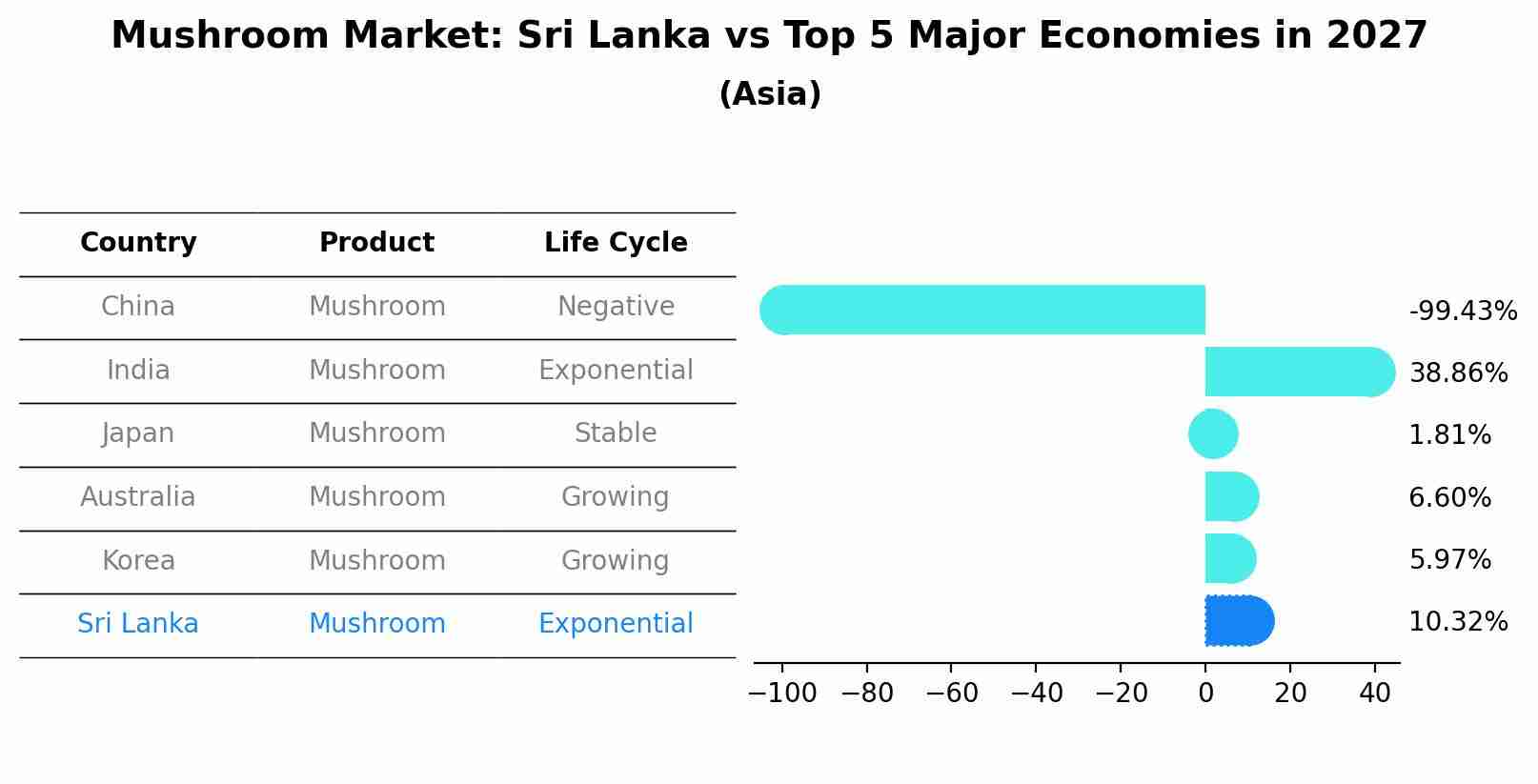
Mushroom Market: Sri Lanka vs Top 5 Major Economies in 2027 (Asia)
In the Asia region, the Mushroom market in Sri Lanka is projected to expand at a high growth rate of 10.32% by 2027. The largest economy is China, followed by India, Japan, Australia and South Korea.
Sri Lanka Mushroom Market Overview
The Sri Lanka mushroom market is experiencing growth driven by increasing consumer awareness of the health benefits associated with mushrooms, such as their high nutritional value and immunity-boosting properties. The market is witnessing a shift towards organic and locally sourced mushrooms, as consumers are becoming more conscious of food quality and safety. Oyster mushrooms are particularly popular in Sri Lanka due to their versatility in cooking and mild flavor profile. The market is also supported by a growing trend of incorporating mushrooms into various cuisines, including traditional Sri Lankan dishes. However, challenges such as limited awareness of mushroom cultivation techniques among farmers and inconsistent supply chain infrastructure hinder the market`s full potential. Overall, the Sri Lanka mushroom market presents opportunities for further growth and innovation in the coming years.
Sri Lanka Mushroom Market Trends
The Sri Lanka Mushroom Market is experiencing a growing trend towards organic and locally sourced mushrooms due to increasing consumer awareness about health and sustainability. There is a rising demand for exotic mushroom varieties such as shiitake, oyster, and reishi, driven by their unique flavors and perceived health benefits. The market is also witnessing an expansion in mushroom cultivation techniques, with a focus on innovative methods such as vertical farming and controlled environment agriculture to improve productivity and quality. Additionally, the popularity of mushroom-based products like powders, extracts, and supplements is on the rise, catering to consumers looking for alternative health solutions. Overall, the Sri Lanka Mushroom Market is evolving to meet the changing preferences and demands of health-conscious consumers.
Sri Lanka Mushroom Market Challenges
In the Sri Lanka Mushroom Market, some key challenges include limited awareness and consumption among the general population, inconsistent supply due to seasonal variations and dependence on weather conditions, inadequate infrastructure for cultivation and distribution, and competition from other agricultural products. Additionally, there are challenges related to the high perishability of mushrooms, leading to issues with storage and transportation. Lack of standardized grading systems and quality control measures also pose a hurdle in ensuring consistent quality for consumers. Furthermore, the industry faces obstacles in terms of access to technology and research for improved cultivation techniques and product development. Overcoming these challenges will require investments in education and awareness campaigns, infrastructure development, and research and development initiatives to boost the growth and sustainability of the Sri Lanka Mushroom Market.
Sri Lanka Mushroom Market Investment Opportunities
The Sri Lankan mushroom market presents promising investment opportunities due to increasing consumer demand for healthy and organic food products. With a growing awareness of the nutritional benefits of mushrooms, there is a rising trend towards incorporating them into diets. Investors can explore opportunities in mushroom cultivation, processing, and distribution to meet the growing demand in the market. Additionally, value-added products such as mushroom extracts, powders, and supplements present avenues for innovation and differentiation. Collaborations with local farmers and research institutions can also enhance the quality and variety of mushroom products offered in the market. Overall, the Sri Lankan mushroom market offers a fertile ground for investment and growth in the agri-food sector.
Sri Lanka Mushroom Market Government Policy
The Sri Lankan government has implemented various policies to support the mushroom market in the country. These policies include providing subsidies and financial assistance to mushroom farmers to encourage production, promoting research and development in the mushroom industry to improve quality and yield, and offering training programs to educate farmers on best practices. Additionally, the government has introduced regulations to ensure food safety standards are met in mushroom production and distribution. There are also efforts to promote exports of Sri Lankan mushrooms to international markets through trade agreements and market development initiatives. Overall, the government policies aim to boost the growth of the mushroom market in Sri Lanka by supporting local farmers and enhancing the competitiveness of the industry.
Sri Lanka Mushroom Market Future Outlook
The future outlook for the Sri Lanka Mushroom Market is promising, driven by increasing consumer awareness of the health benefits associated with mushrooms, such as their high nutritional content and medicinal properties. The growing trend towards plant-based diets and heightened focus on sustainability also contribute to the market growth as mushrooms are considered a sustainable and eco-friendly food source. Additionally, advancements in cultivation technologies and increasing availability of a variety of mushroom species are expected to further boost market expansion. With a rising demand for organic and exotic mushrooms, coupled with government initiatives to promote mushroom cultivation as a source of income for rural communities, the Sri Lanka Mushroom Market is likely to experience steady growth in the coming years.
Key Highlights of the Report:
- Sri Lanka Mushroom Market Outlook
- Market Size of Sri Lanka Mushroom Market, 2025
- Forecast of Sri Lanka Mushroom Market, 2032
- Historical Data and Forecast of Sri Lanka Mushroom Revenues & Volume for the Period 2022 - 2032F
- Sri Lanka Mushroom Market Trend Evolution
- Sri Lanka Mushroom Market Drivers and Challenges
- Sri Lanka Mushroom Price Trends
- Sri Lanka Mushroom Porter's Five Forces
- Sri Lanka Mushroom Industry Life Cycle
- Historical Data and Forecast of Sri Lanka Mushroom Market Revenues & Volume By Product for the Period 2022 - 2032F
- Historical Data and Forecast of Sri Lanka Mushroom Market Revenues & Volume By Button for the Period 2022 - 2032F
- Historical Data and Forecast of Sri Lanka Mushroom Market Revenues & Volume By Shiitake for the Period 2022 - 2032F
- Historical Data and Forecast of Sri Lanka Mushroom Market Revenues & Volume By Oyster for the Period 2022 - 2032F
- Historical Data and Forecast of Sri Lanka Mushroom Market Revenues & Volume By Matsutake for the Period 2022 - 2032F
- Historical Data and Forecast of Sri Lanka Mushroom Market Revenues & Volume By Truffles for the Period 2022 - 2032F
- Historical Data and Forecast of Sri Lanka Mushroom Market Revenues & Volume By Others for the Period 2022 - 2032F
- Historical Data and Forecast of Sri Lanka Mushroom Market Revenues & Volume By Form for the Period 2022 - 2032F
- Historical Data and Forecast of Sri Lanka Mushroom Market Revenues & Volume By Fresh for the Period 2022 - 2032F
- Historical Data and Forecast of Sri Lanka Mushroom Market Revenues & Volume By Processed for the Period 2022 - 2032F
- Historical Data and Forecast of Sri Lanka Mushroom Market Revenues & Volume By Distribution Channel for the Period 2022 - 2032F
- Historical Data and Forecast of Sri Lanka Mushroom Market Revenues & Volume By Direct to Customer for the Period 2022 - 2032F
- Historical Data and Forecast of Sri Lanka Mushroom Market Revenues & Volume By Grocery Stores for the Period 2022 - 2032F
- Historical Data and Forecast of Sri Lanka Mushroom Market Revenues & Volume By Supermarkets & Hypermarkets for the Period 2022 - 2032F
- Historical Data and Forecast of Sri Lanka Mushroom Market Revenues & Volume By Convenience Store for the Period 2022 - 2032F
- Historical Data and Forecast of Sri Lanka Mushroom Market Revenues & Volume By Online Stores for the Period 2022 - 2032F
- Historical Data and Forecast of Sri Lanka Mushroom Market Revenues & Volume By Application for the Period 2022 - 2032F
- Historical Data and Forecast of Sri Lanka Mushroom Market Revenues & Volume By Food for the Period 2022 - 2032F
- Historical Data and Forecast of Sri Lanka Mushroom Market Revenues & Volume By Pharmaceuticals for the Period 2022 - 2032F
- Historical Data and Forecast of Sri Lanka Mushroom Market Revenues & Volume By Cosmetics for the Period 2022 - 2032F
- Sri Lanka Mushroom Import Export Trade Statistics
- Market Opportunity Assessment By Product
- Market Opportunity Assessment By Form
- Market Opportunity Assessment By Distribution Channel
- Market Opportunity Assessment By Application
- Sri Lanka Mushroom Top Companies Market Share
- Sri Lanka Mushroom Competitive Benchmarking By Technical and Operational Parameters
- Sri Lanka Mushroom Company Profiles
- Sri Lanka Mushroom Key Strategic Recommendations






































