Sri Lanka Phenol Market: Import Trend Analysis
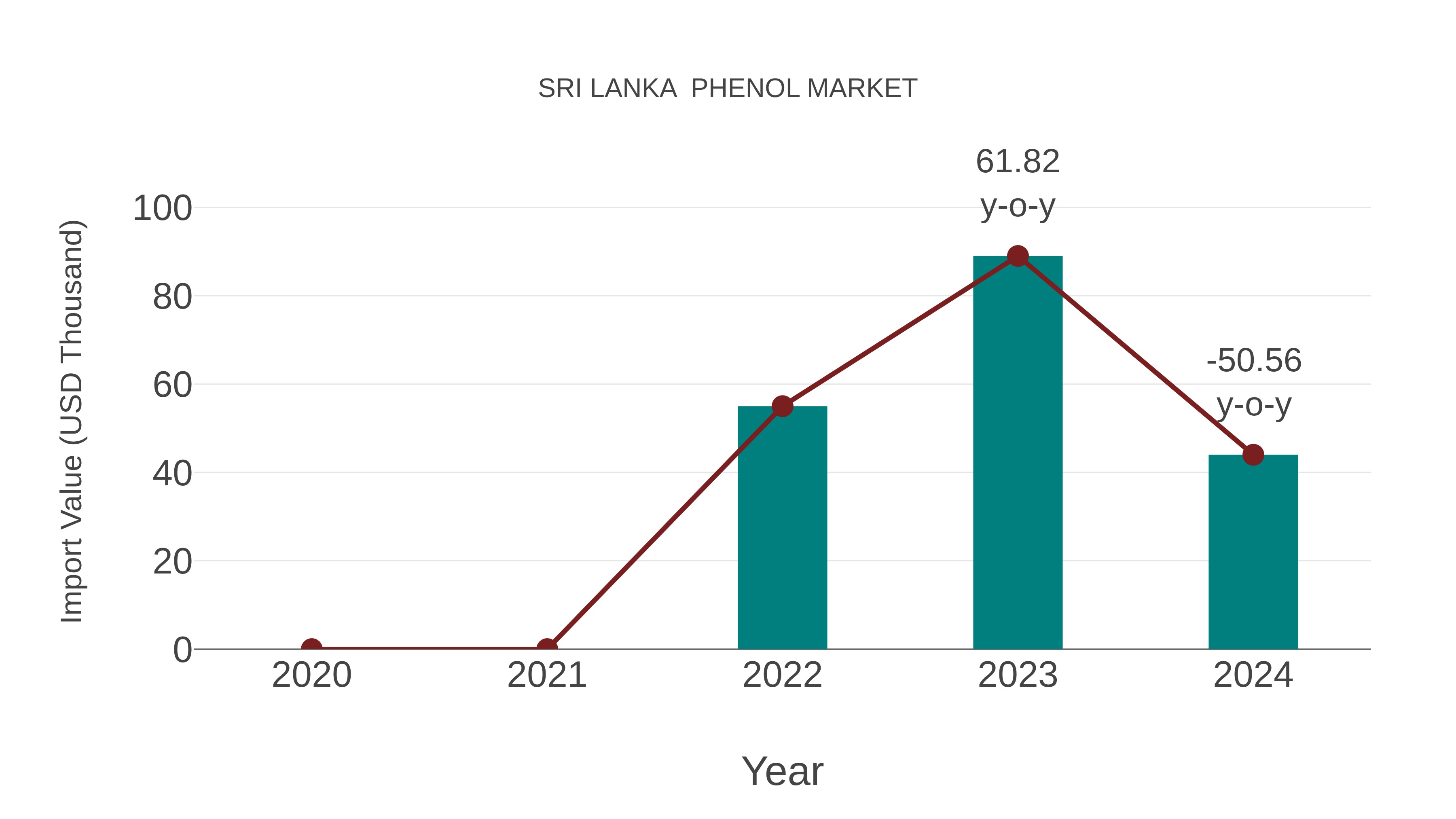
Sri Lanka import trend for the Sri Lanka phenol market experienced a significant decline from 2023 to 2024, with a growth rate of -50.56%. The compound annual growth rate (CAGR) from 2020 to 2024 stood at -10.56%. This decline could be attributed to shifts in demand dynamics or changes in trade policies impacting imports.
Phenol Market: Sri Lanka vs Top 5 Major Economies in 2027 (Asia)
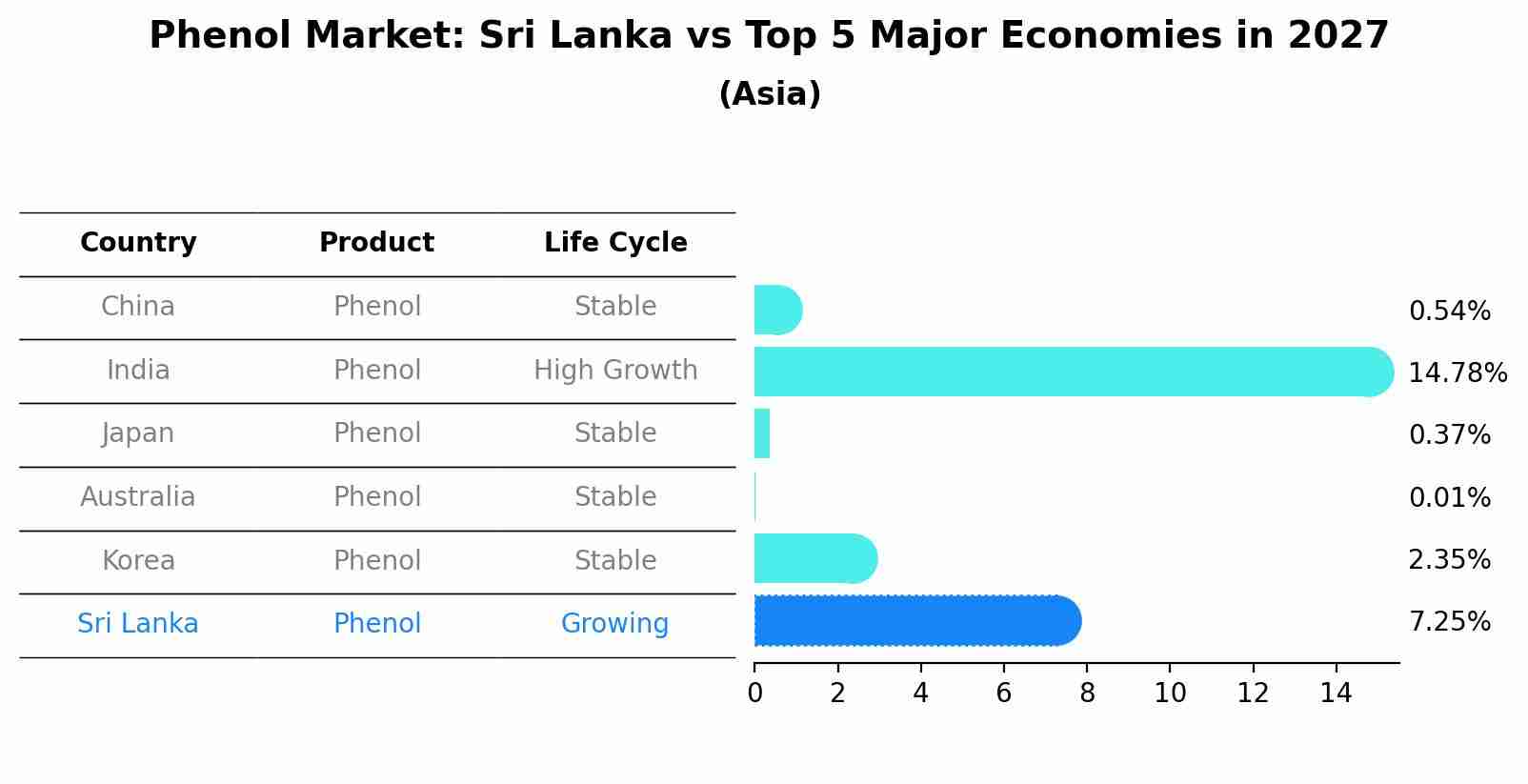
In the Asia region, the Phenol market in Sri Lanka is projected to expand at a growing growth rate of 7.25% by 2027. The largest economy is China, followed by India, Japan, Australia and South Korea.
Sri Lanka Phenol Market Overview
The Sri Lanka Phenol Market is characterized by steady growth driven primarily by the increasing demand from various industries such as pharmaceuticals, textiles, and paints & coatings. Phenol, a versatile chemical compound, finds extensive application in the production of resins, adhesives, and various other chemicals. The market is influenced by factors such as growing industrialization, infrastructure development, and the expanding construction sector in the country. However, challenges related to raw material availability and price volatility may impact market growth. Key players in the Sri Lanka Phenol Market include both domestic manufacturers and international companies, with a focus on product innovation and sustainable practices to stay competitive in the market. Overall, the Sri Lanka Phenol Market is poised for further growth, supported by the country`s economic development and increasing industrial activities.
Sri Lanka Phenol Market Trends
The Sri Lanka Phenol Market is experiencing steady growth due to increasing demand from various industries such as pharmaceuticals, electronics, and automotive. The rising awareness regarding the benefits of phenol in manufacturing products like resins, adhesives, and plastics is driving market growth. There is also a growing trend towards the use of phenol derivatives in the production of personal care products and household cleaners. However, the market faces challenges such as fluctuating raw material prices and environmental concerns related to phenol production. Companies in the Sri Lanka Phenol Market are focusing on innovation, sustainability, and strategic partnerships to stay competitive in the evolving market landscape. Overall, the market is expected to continue growing as industries increasingly rely on phenol for their manufacturing processes.
Sri Lanka Phenol Market Challenges
In the Sri Lanka Phenol Market, some of the key challenges faced include limited domestic production capacity, heavy reliance on imports, fluctuating global prices, and lack of awareness regarding the benefits and applications of phenol-based products. The country`s limited production capacity results in a high dependency on imports, making the market vulnerable to price fluctuations and supply chain disruptions. Additionally, the lack of awareness among consumers and industries about the diverse uses and advantages of phenol-based products hinders market growth and adoption. Addressing these challenges will require investments in expanding domestic production capacity, establishing strategic partnerships with global suppliers, and implementing marketing and educational campaigns to promote the benefits of phenol-based products in various sectors.
Sri Lanka Phenol Market Investment Opportunities
In the Sri Lankan Phenol market, there are several investment opportunities worth considering. With the country`s growing industrial sector and increasing demand for phenol in various applications such as resins, adhesives, and pharmaceuticals, investing in phenol production facilities or trading activities could prove to be lucrative. Additionally, Sri Lanka`s strategic location and access to key markets in Asia make it an attractive base for phenol-related businesses looking to expand regionally. Investing in research and development to innovate new phenol-based products tailored to local market needs could also be a promising avenue for growth. Overall, the Sri Lankan Phenol market presents opportunities for investors to capitalize on the country`s economic development and increasing industrialization.
Sri Lanka Phenol Market Government Policy
Government policies related to the Sri Lanka Phenol Market aim to regulate the production, import, and distribution of phenol to ensure environmental sustainability and public health. The government has implemented strict regulations on the use of phenol in various industries to reduce pollution and promote safe handling practices. Additionally, there are policies in place to monitor the quality of phenol products to safeguard consumer interests and maintain industry standards. The government also encourages research and development in the phenol sector to promote innovation and sustainable practices. Overall, the regulatory framework in Sri Lanka`s phenol market focuses on balancing economic growth with environmental protection and public safety.
Sri Lanka Phenol Market Future Outlook
The Sri Lanka Phenol market is poised for steady growth in the coming years due to increasing demand from various end-use industries such as pharmaceuticals, paints and coatings, and automotive. The market is expected to be driven by factors such as rising population, urbanization, and industrialization in the country. Additionally, the growing awareness about the benefits of phenol in different applications and the availability of advanced technologies for production are likely to further propel market growth. However, challenges such as price volatility of raw materials and environmental concerns regarding phenol production processes may hinder the market expansion. Overall, with the evolving industrial landscape and favorable government initiatives, the Sri Lanka Phenol market is anticipated to show positive growth trends in the foreseeable future.
Key Highlights of the Report:
- Sri Lanka Phenol Market Outlook
- Market Size of Sri Lanka Phenol Market, 2025
- Forecast of Sri Lanka Phenol Market, 2032
- Historical Data and Forecast of Sri Lanka Phenol Revenues & Volume for the Period 2022 - 2032F
- Sri Lanka Phenol Market Trend Evolution
- Sri Lanka Phenol Market Drivers and Challenges
- Sri Lanka Phenol Price Trends
- Sri Lanka Phenol Porter's Five Forces
- Sri Lanka Phenol Industry Life Cycle
- Historical Data and Forecast of Sri Lanka Phenol Market Revenues & Volume By End-users for the Period 2022 - 2032F
- Historical Data and Forecast of Sri Lanka Phenol Market Revenues & Volume By Bisphenol A for the Period 2022 - 2032F
- Historical Data and Forecast of Sri Lanka Phenol Market Revenues & Volume By Phenolic Resins for the Period 2022 - 2032F
- Historical Data and Forecast of Sri Lanka Phenol Market Revenues & Volume By Caprolactam for the Period 2022 - 2032F
- Historical Data and Forecast of Sri Lanka Phenol Market Revenues & Volume By Alkyl Phenyls for the Period 2022 - 2032F
- Historical Data and Forecast of Sri Lanka Phenol Market Revenues & Volume By Others for the Period 2022 - 2032F
- Sri Lanka Phenol Import Export Trade Statistics
- Market Opportunity Assessment By End-users
- Sri Lanka Phenol Top Companies Market Share
- Sri Lanka Phenol Competitive Benchmarking By Technical and Operational Parameters
- Sri Lanka Phenol Company Profiles
- Sri Lanka Phenol Key Strategic Recommendations






































