Sri Lanka Sports Apparel Market Summary
The sri lanka sports apparel market was estimated at USD 497 Million in 2025 and is projected to reach USD 674 Million by 2032, growing at a CAGR of 5.3% from 2026 to 2032.
Sri Lanka Sports Apparel Market Year-wise Growth Rate and Key Drivers
This graph highlights how the Sri Lanka Sports Apparel Market has steadily grown over the past five years, supported by major growth factors.
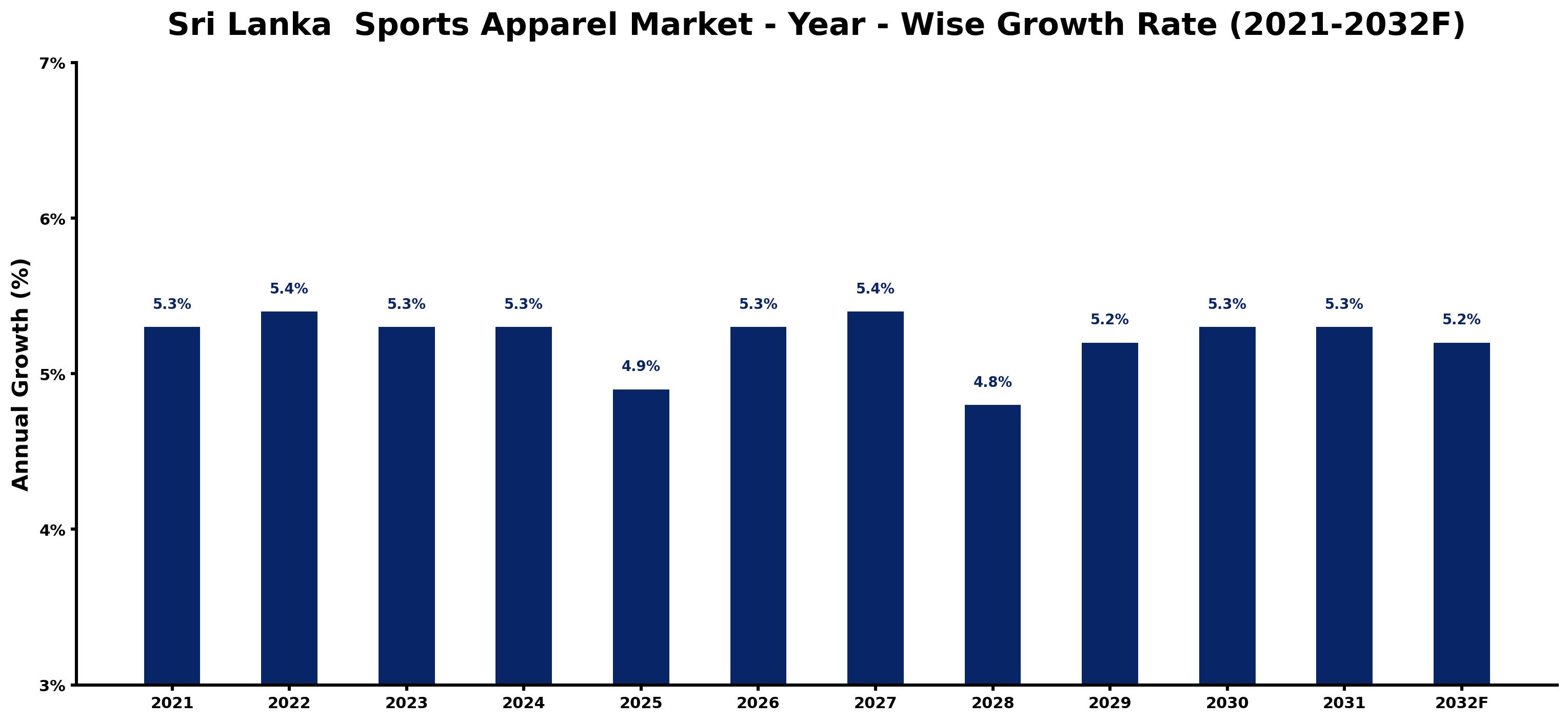
The table below presents the year wise growth rates along with the key drivers influencing the market
| Year | Growth Rate | Major Drivers |
| 2021 | 5.3% | Consumer interest in fitness began to soar amid pandemic recovery efforts. |
| 2022 | 5.4% | Local brands gained traction through targeted marketing and grassroots community engagement. |
| 2023 | 5.3% | Increased participation in sports events stimulated demand for quality sportswear in Sri Lanka. |
| 2024 | 5.3% | E-commerce platforms emerged as significant sales channels for sports apparel brands. |
| 2025 | 4.9% | Fitness influencers played a crucial role in shaping consumer preferences and trends. |
| 2026 | 5.3% | Growing awareness about health prompted a shift towards sustainable sports apparel choices. |
| 2027 | 5.4% | Urbanization trends fueled the popularity of specialized sports activities and related gear. |
| 2028 | 4.8% | International sporting events hosted in Sri Lanka inspired local brands to enhance offerings. |
| 2029 | 5.2% | Collaborations between global and local brands increased product accessibility and variety. |
| 2030 | 5.3% | Technological advancements in fabric production improved performance wear functionality and comfort. |
| 2031 | 5.3% | Youth engagement in sports at schools led to higher demand for youth sports apparel. |
| 2032 | 5.2% | Sustainability-focused consumers increasingly embraced brands with eco-friendly production practices. |
Note - Market size estimations and growth projections presented in this report are based on 6Wresearch's advanced forecasting approach, validated with industry datasets as of June 2026.
Sri Lanka Sports Apparel Market Synopsis
The Sri Lanka Sports Apparel Market is projected to reach 5.3% and witness significant growth during the forecast period (2026-2032). This growth trajectory is driven by various factors, including increasing disposable incomes among consumers, a growing population, and a heightened awareness of health and wellness. As citizens become more health-conscious, they are more inclined to participate in physical activities, further propelling demand for sports apparel. Moreover, governmental initiatives aimed at promoting sports and physical fitness have created a favorable environment for market expansion.
Sri Lanka Sports Apparel Market Growth Drivers
Several key drivers are shaping the future of the Sri Lanka Sports Apparel Market. These include:
- Increasing disposable income levels are empowering consumers to invest in sports apparel, enabling them to purchase higher-quality and branded products.
- The growth of the population, particularly among the youth demographic, is expected to drive demand as this group tends to engage more in sporting activities.
- Rising health consciousness among the populace is influencing purchasing decisions, with more individuals recognizing the importance of fitness and exercise.
- Government-led initiatives, including campaigns to promote physical activities, have been instrumental in fostering interest in sports and athletic apparel.
- The increasing trend of marathons and sporting events organized across the country is further supplementing the demand for sports apparel as participants seek to equip themselves appropriately.
Sri Lanka Sports Apparel Market Trends and Opportunities
The Sri Lanka Sports Apparel Market is witnessing several trends that present significant opportunities for stakeholders. These trends include:
- A rising interest in eco-friendly and sustainable apparel is prompting brands to innovate, thus opening avenues for new product lines tailored to environmentally conscious consumers.
- The growing influence of social media and digital marketing is enabling brands to engage more effectively with potential consumers, thereby expanding their reach.
- Increased participation in team sports and organized fitness classes is driving demand for specialized sports apparel, catering to various activities.
- The emphasis on athleisure wear is blurring the lines between casual and sportswear, creating opportunities for brands to diversify their product offerings.
- Technological advancements in fabric production and design are enhancing the performance qualities of sports apparel, making it appealing to a broader consumer base.
Sri Lanka Sports Apparel Market Challenges and Restraints
While the Sri Lanka Sports Apparel Market shows promising growth potential, it is not without its challenges. Key restraints include:
- Heavy competition from international brands can limit market share for local businesses that may struggle to compete on pricing and innovation.
- Economic fluctuations may affect discretionary spending, leading consumers to prioritize essentials over sports apparel.
- The volatility in raw material prices can impact production costs, potentially leading to increased retail prices that affect consumer demand.
- A lack of adequate retail infrastructure, particularly in rural areas, can hinder market growth by limiting consumer access to sports apparel.
- Adapting to rapidly changing consumer preferences poses a challenge for brands that may struggle to keep pace with trends.
Sri Lanka Sports Apparel Market Government Investment and Initiatives
The Sri Lankan government recognizes the importance of sports and fitness in promoting public health and national pride. Various initiatives have been introduced to foster the growth of the sports apparel market. The Ministry of Sports has implemented programs aimed at increasing public participation in physical activities, thus driving demand for sports-related products and clothing. Financial investments in sports facilities and infrastructure are also on the rise, as the government aims to create an environment conducive to sports engagement. Furthermore, public awareness campaigns are underway to educate citizens about the benefits of active living, which indirectly boosts the apparel market. Proposals to enhance the local production of sports apparel are also being encouraged to reduce reliance on imports and stimulate domestic entrepreneurship.
Sri Lanka Sports Apparel Market Latest Developments (May 2025 - June 2026)
Recent developments in the Sri Lanka Sports Apparel Market reflect an evolving landscape that is responding to both consumer demand and global trends. This period has seen a surge in collaborations between local manufacturers and international brands aimed at expanding product lines while ensuring quality and contemporary design. Simultaneously, there has been an increased focus on digital retail channels, as brands adapt to changing shopping behaviors influenced by the pandemic. Sustainability initiatives have gained traction, with producers exploring innovative materials and recycling practices. Sporting events have also gained momentum, encouraging community participation and further driving apparel sales. The government continues to invest in sports infrastructure, creating a ripple effect in the market and ensuring sustained growth in the future.
Sri Lanka Sports Apparel Market - Key Attractiveness of the Report
- 10 Years of Market Numbers
- Historical Data Starting from 2022 to 2025
- Base Year: 2025
- Forecast Data until 2032
- Key Performance Indicators Impacting the Market
- Major Upcoming Developments and Projects
Key Highlights of the Report:
- Sri Lanka Sports Apparel Market Outlook
- Market Size of Sri Lanka Sports Apparel Market, 2025
- Forecast of Sri Lanka Sports Apparel Market, 2032F
- Historical Data and Forecast of Sri Lanka Sports Apparel Revenues & Volume for the Period 2022-2032F
- Sri Lanka Sports Apparel Market Trend Evolution
- Sri Lanka Sports Apparel Market Drivers and Challenges
- Sri Lanka Sports Apparel Price Trends
- Sri Lanka Sports Apparel Porter's Five Forces
- Sri Lanka Sports Apparel Industry Life Cycle
- Historical Data and Forecast of Sri Lanka Sports Apparel Market Revenues & Volume By End-users for the Period 2022-2032F
- Historical Data and Forecast of Sri Lanka Sports Apparel Market Revenues & Volume By Children for the Period 2022-2032F
- Historical Data and Forecast of Sri Lanka Sports Apparel Market Revenues & Volume By Men for the Period 2022-2032F
- Historical Data and Forecast of Sri Lanka Sports Apparel Market Revenues & Volume By Women for the Period 2022-2032F
- Historical Data and Forecast of Sri Lanka Sports Apparel Market Revenues & Volume By Distribution Channel for the Period 2022-2032F
- Historical Data and Forecast of Sri Lanka Sports Apparel Market Revenues & Volume By E-commerce for the Period 2022-2032F
- Historical Data and Forecast of Sri Lanka Sports Apparel Market Revenues & Volume By Supermarket/Hypermarket for the Period 2022-2032F
- Historical Data and Forecast of Sri Lanka Sports Apparel Market Revenues & Volume By Brand Outlets for the Period 2022-2032F
- Historical Data and Forecast of Sri Lanka Sports Apparel Market Revenues & Volume By Discount Stores for the Period 2022-2032F
- Sri Lanka Sports Apparel Import Export Trade Statistics
- Market Opportunity Assessment By End-users
- Market Opportunity Assessment By Distribution Channel
- Sri Lanka Sports Apparel Top Companies Market Share
- Sri Lanka Sports Apparel Competitive Benchmarking By Technical and Operational Parameters
- Sri Lanka Sports Apparel Company Profiles
- Sri Lanka Sports Apparel Key Strategic Recommendations






































