Sri Lanka Table Olives Market: Import Trend Analysis
Sri Lanka import trend for table olives experienced a decline, with a growth rate of -29.73% from 2023-2024 and a CAGR of -6.71% from 2020-2024. This decline may be attributed to shifting consumer preferences or changes in trade policies impacting the market.
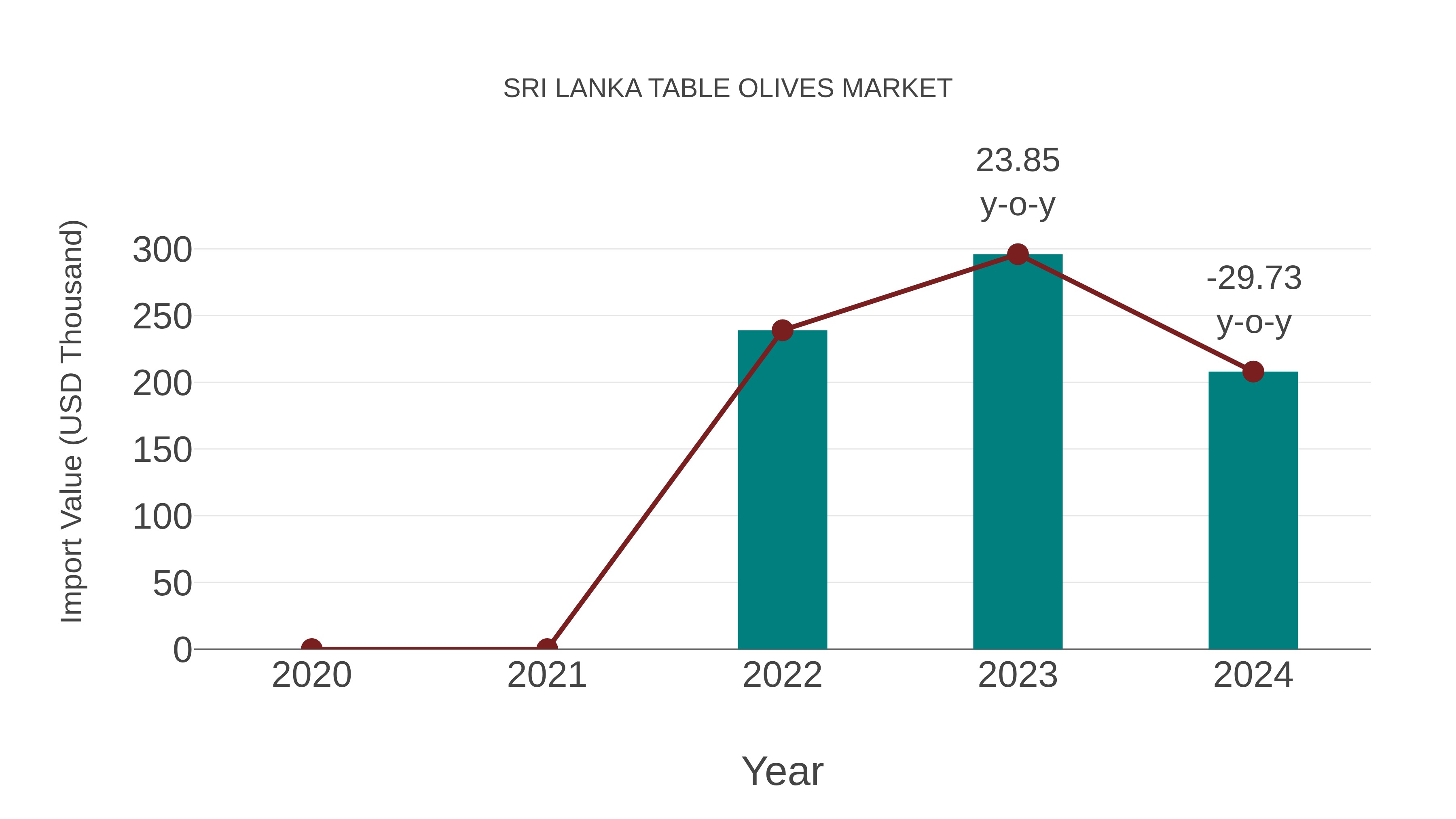
Sri Lanka Table Olives Market Synopsis
The Sri Lanka Table Olives Market is a niche but growing segment within the country`s food industry. While olives are not traditionally a staple in Sri Lankan cuisine, there is a rising trend towards healthy eating and international culinary influences that have contributed to the increased demand for table olives. The market is primarily driven by the growing awareness of the health benefits of olives, such as their high antioxidant content and heart-healthy fats. Local producers are starting to cultivate olives to cater to this demand, although a significant portion of table olives are still imported. The market is expected to continue growing as consumers become more health-conscious and adventurous in their food choices, presenting opportunities for both domestic and international olive producers to capitalize on this emerging trend.
Sri Lanka Table Olives Market Trends
The Sri Lanka Table Olives Market is experiencing growth due to increasing consumer awareness of the health benefits of olives, such as being rich in antioxidants and healthy fats. There is a growing demand for premium and specialty olives, driven by a shift towards healthier eating habits and a preference for gourmet products. Opportunities lie in product innovation, such as flavored olives and convenient packaging options to cater to the busy lifestyles of consumers. Additionally, there is potential for market expansion through increased export opportunities to tap into the global demand for high-quality olives. Collaborating with local farmers to boost olive production and ensuring quality standards will be crucial for market players to capitalize on these trends and opportunities in the Sri Lanka Table Olives Market.
Sri Lanka Table Olives Market Challenges
The Sri Lanka Table Olives Market faces several challenges, including limited awareness and consumption of table olives among the local population. Additionally, the lack of consistent supply and quality standards, as well as high import costs for olives, hinder the market growth. Inadequate infrastructure for processing and packaging olives further restrains the development of the industry. Competition from other popular snacks and lack of promotional activities also pose challenges for market players in increasing the demand for table olives. Overall, improving consumer education, enhancing production and distribution networks, and implementing effective marketing strategies are essential to overcome these obstacles and expand the Sri Lanka Table Olives Market.
Sri Lanka Table Olives Market Investment Opportunities
The Sri Lanka Table Olives Market is primarily driven by increasing consumer awareness about the health benefits of table olives, such as their high content of monounsaturated fats and antioxidants. The growing trend of healthy eating habits and the rising demand for natural and organic food products are also fueling the market growth. Moreover, the expanding retail sector and the availability of a variety of flavored and stuffed table olives are attracting consumers towards this product. Additionally, the rising disposable incomes and changing lifestyles are further boosting the consumption of table olives in Sri Lanka. Overall, the market is expected to continue its growth trajectory as consumers seek nutritious and flavorful food options.
Sri Lanka Table Olives Market Government Polices
Government policies related to the Sri Lanka Table Olives Market include regulations on import and export, quality standards, and support for local farmers. The Sri Lankan government has implemented measures to ensure the quality and safety of table olives produced and imported in the country, such as adhering to food safety standards and labeling requirements. Additionally, there are initiatives to support local olive farmers through subsidies, training programs, and research and development activities to enhance productivity and competitiveness in the market. Import restrictions and tariffs are also in place to protect domestic producers and promote self-sufficiency in olive production. Overall, government policies aim to regulate the market, promote sustainability, and enhance the quality of table olives in Sri Lanka.
Sri Lanka Table Olives Market Future Outlook
The Sri Lanka Table Olives Market is expected to witness steady growth in the coming years due to increasing consumer awareness about the health benefits of olives and their rising popularity in local cuisine. Factors such as the growing trend of healthy eating habits, rising disposable income, and a shift towards Mediterranean diet patterns are likely to drive the demand for table olives in Sri Lanka. Additionally, the presence of various olive cultivators and increasing investments in olive cultivation are expected to further boost market growth. However, challenges such as limited awareness about different olive varieties and high import costs may hinder market expansion to some extent. Overall, the Sri Lanka Table Olives Market is poised for moderate growth, with opportunities for market players to capitalize on the increasing consumer demand for healthy and gourmet food products.
Key Highlights of the Report:
- Sri Lanka Table Olives Market Outlook
- Market Size of Sri Lanka Table Olives Market, 2025
- Forecast of Sri Lanka Table Olives Market, 2032
- Historical Data and Forecast of Sri Lanka Table Olives Revenues & Volume for the Period 2022 - 2032F
- Sri Lanka Table Olives Market Trend Evolution
- Sri Lanka Table Olives Market Drivers and Challenges
- Sri Lanka Table Olives Price Trends
- Sri Lanka Table Olives Porter's Five Forces
- Sri Lanka Table Olives Industry Life Cycle
- Historical Data and Forecast of Sri Lanka Table Olives Market Revenues & Volume By Type for the Period 2022 - 2032F
- Historical Data and Forecast of Sri Lanka Table Olives Market Revenues & Volume By Black Olive for the Period 2022 - 2032F
- Historical Data and Forecast of Sri Lanka Table Olives Market Revenues & Volume By Green Olive for the Period 2022 - 2032F
- Historical Data and Forecast of Sri Lanka Table Olives Market Revenues & Volume By Application for the Period 2022 - 2032F
- Historical Data and Forecast of Sri Lanka Table Olives Market Revenues & Volume By Online Store for the Period 2022 - 2032F
- Historical Data and Forecast of Sri Lanka Table Olives Market Revenues & Volume By Supermarket for the Period 2022 - 2032F
- Historical Data and Forecast of Sri Lanka Table Olives Market Revenues & Volume By Convenience Store for the Period 2022 - 2032F
- Historical Data and Forecast of Sri Lanka Table Olives Market Revenues & Volume By Other for the Period 2022 - 2032F
- Sri Lanka Table Olives Import Export Trade Statistics
- Market Opportunity Assessment By Type
- Market Opportunity Assessment By Application
- Sri Lanka Table Olives Top Companies Market Share
- Sri Lanka Table Olives Competitive Benchmarking By Technical and Operational Parameters
- Sri Lanka Table Olives Company Profiles
- Sri Lanka Table Olives Key Strategic Recommendations






































