Saudi Arabia Table Olives Market: Import Trend Analysis
In 2024, Saudi Arabia`s import of table olives showed a steady increase, driven by rising consumer demand for high-quality olives. The market witnessed a notable uptick in imported olives from various global suppliers, reflecting a growing preference for diverse olive varieties among consumers in the region.
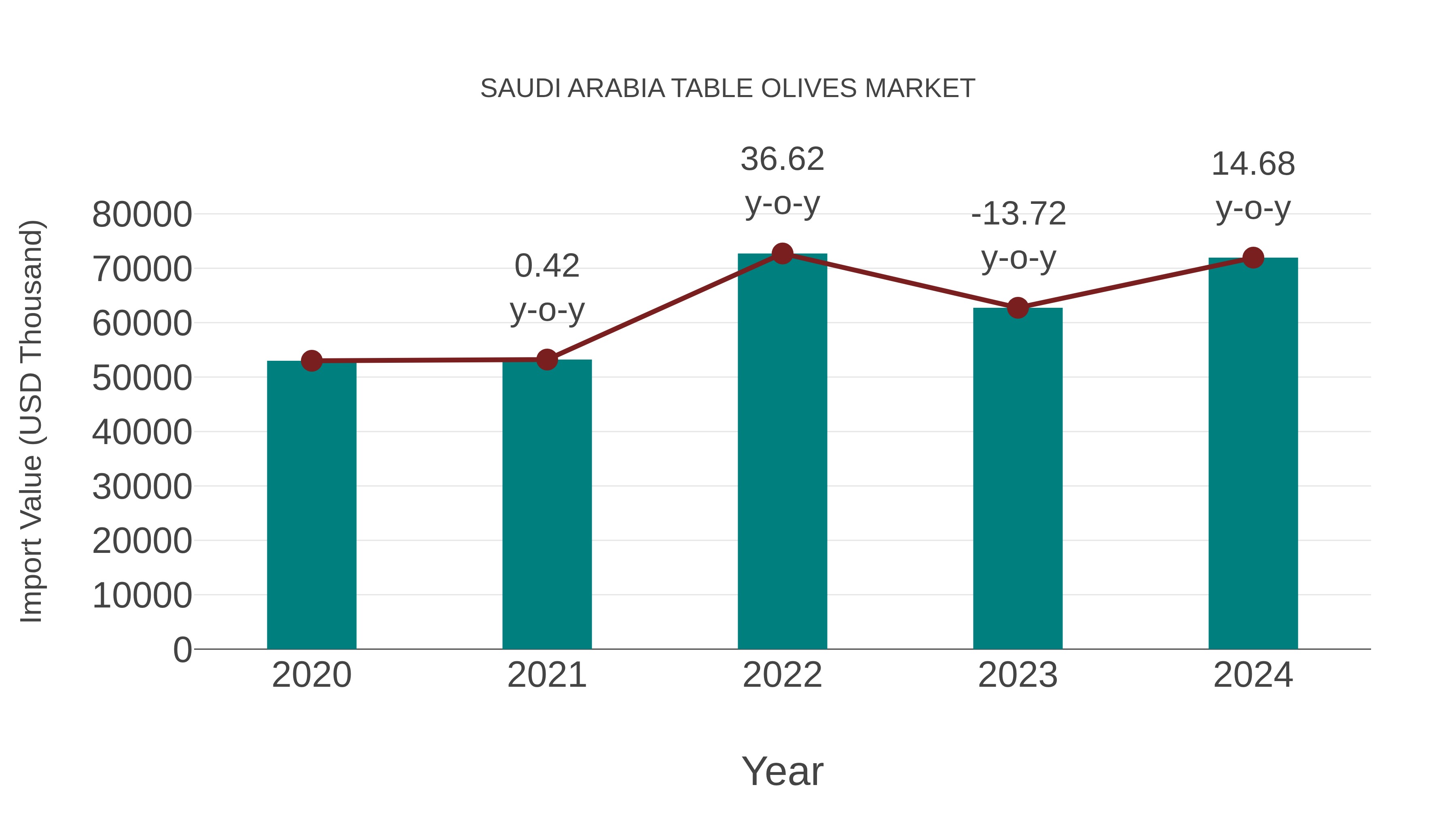
Saudi Arabia Table Olives Market Synopsis
The Saudi Arabia Table Olives Market is witnessing steady growth due to increasing consumer demand for healthier food options and the rising popularity of Mediterranean cuisine in the region. The market is characterized by a variety of table olive types such as green and black olives, with green olives being more preferred. Local production of table olives is limited, leading to a significant portion being imported mainly from countries like Spain, Greece, and Turkey. The market is highly competitive, with key players focusing on product innovation, packaging, and marketing strategies to attract consumers. Factors such as changing consumer preferences, increasing disposable income, and a growing awareness of the health benefits of olives are expected to drive further growth in the Saudi Arabia Table Olives Market.
Saudi Arabia Table Olives Market Trends
The Saudi Arabia Table Olives Market is experiencing a growing demand for healthier snack options, driving the trend towards increased consumption of olives as a nutritious and flavorful choice. Consumers are seeking natural and organic products, leading to opportunities for producers to offer premium and specialty varieties of table olives. The market is also witnessing a shift towards convenient and ready-to-eat olive products, catering to busy lifestyles. Additionally, the rising focus on traditional Middle Eastern cuisine is fueling the popularity of table olives in various dishes. With an increasing awareness of the health benefits of olives and a growing preference for Mediterranean flavors, there is a favorable environment for expansion and innovation within the Saudi Arabia Table Olives Market.
Saudi Arabia Table Olives Market Challenges
In the Saudi Arabia Table Olives Market, some challenges include fierce competition from imported olives, varying consumer preferences, and limited domestic production capacity. The market is heavily reliant on imports to meet the high demand for table olives, leading to price fluctuations due to international market trends and exchange rate fluctuations. Additionally, consumer tastes in Saudi Arabia are diverse, with preferences ranging from traditional green olives to gourmet varieties, making it challenging for producers to cater to a broad audience. Moreover, the domestic production capacity for olives in Saudi Arabia is limited due to factors such as water scarcity and climatic conditions, further intensifying the reliance on imports. To succeed in this market, businesses need to navigate these challenges by focusing on product differentiation, quality assurance, and strategic partnerships with international suppliers.
Saudi Arabia Table Olives Market Investment Opportunities
The Saudi Arabia Table Olives Market is primarily driven by the increasing awareness about the health benefits of olives, such as their high content of monounsaturated fats and antioxidants. Consumer preferences for healthy and natural food options are also contributing to the growth of the market. Additionally, the rising demand for Mediterranean and Middle Eastern cuisine in the region is fueling the consumption of table olives. The growing influence of western food habits and changing lifestyles, leading to a higher demand for convenient and ready-to-eat food products, are further driving the market. Moreover, government initiatives promoting agriculture and food processing industries in Saudi Arabia are supporting the production and distribution of table olives, enhancing market growth prospects.
Saudi Arabia Table Olives Market Government Polices
In Saudi Arabia, government policies related to the Table Olives Market primarily focus on promoting local agricultural production and ensuring food security. The government encourages domestic table olive cultivation through subsidies, technical support, and research initiatives. Import regulations are in place to protect local producers, including tariffs and quality control measures. Additionally, the government has implemented marketing campaigns to increase consumer awareness and demand for Saudi-produced table olives. Overall, these policies aim to boost the competitiveness of the domestic table olive industry, reduce dependency on imports, and enhance self-sufficiency in the agricultural sector.
Saudi Arabia Table Olives Market Future Outlook
The future outlook for the Saudi Arabia Table Olives Market appears promising, driven by factors such as increasing health awareness among consumers, rising demand for Mediterranean cuisine, and growing focus on premium and gourmet food products. The market is expected to witness steady growth as consumers increasingly seek healthier and more diverse food options. Additionally, the government`s initiatives to promote agriculture and self-sufficiency in food production are likely to further boost the domestic production of table olives in the country. Overall, with evolving consumer preferences, expanding distribution channels, and a growing food industry in Saudi Arabia, the table olives market is poised for sustained growth and offers opportunities for both domestic producers and international exporters to capitalize on the market potential.
Key Highlights of the Report:
- Saudi Arabia Table Olives Market Outlook
- Market Size of Saudi Arabia Table Olives Market, 2025
- Forecast of Saudi Arabia Table Olives Market, 2032
- Historical Data and Forecast of Saudi Arabia Table Olives Revenues & Volume for the Period 2022 - 2032F
- Saudi Arabia Table Olives Market Trend Evolution
- Saudi Arabia Table Olives Market Drivers and Challenges
- Saudi Arabia Table Olives Price Trends
- Saudi Arabia Table Olives Porter's Five Forces
- Saudi Arabia Table Olives Industry Life Cycle
- Historical Data and Forecast of Saudi Arabia Table Olives Market Revenues & Volume By Type for the Period 2022 - 2032F
- Historical Data and Forecast of Saudi Arabia Table Olives Market Revenues & Volume By Black Olive for the Period 2022 - 2032F
- Historical Data and Forecast of Saudi Arabia Table Olives Market Revenues & Volume By Green Olive for the Period 2022 - 2032F
- Historical Data and Forecast of Saudi Arabia Table Olives Market Revenues & Volume By Application for the Period 2022 - 2032F
- Historical Data and Forecast of Saudi Arabia Table Olives Market Revenues & Volume By Online Store for the Period 2022 - 2032F
- Historical Data and Forecast of Saudi Arabia Table Olives Market Revenues & Volume By Supermarket for the Period 2022 - 2032F
- Historical Data and Forecast of Saudi Arabia Table Olives Market Revenues & Volume By Convenience Store for the Period 2022 - 2032F
- Historical Data and Forecast of Saudi Arabia Table Olives Market Revenues & Volume By Other for the Period 2022 - 2032F
- Saudi Arabia Table Olives Import Export Trade Statistics
- Market Opportunity Assessment By Type
- Market Opportunity Assessment By Application
- Saudi Arabia Table Olives Top Companies Market Share
- Saudi Arabia Table Olives Competitive Benchmarking By Technical and Operational Parameters
- Saudi Arabia Table Olives Company Profiles
- Saudi Arabia Table Olives Key Strategic Recommendations






































