Sri Lanka Television Broadcasting Market Size, Share & Growth Rate
The Sri Lanka Television Broadcasting Market was estimated at USD 770 Million in 2025 and is projected to reach USD 1341 Million by 2032, growing at a CAGR of 8.2% from 2026 to 2032. This growth trajectory is primarily driven by an increasing demand for diverse programming and the penetration of high-definition and digital content among viewers. The rise of mobile device usage and the enhancement of internet connectivity are further propelling the market as consumers seek more personalized and accessible viewing options.
Sri Lanka Television Broadcasting Market Year-wise Growth Rate and Key Drivers
This graph highlights how the Sri Lanka Television Broadcasting Market has steadily grown over the years, supported by major growth factors.
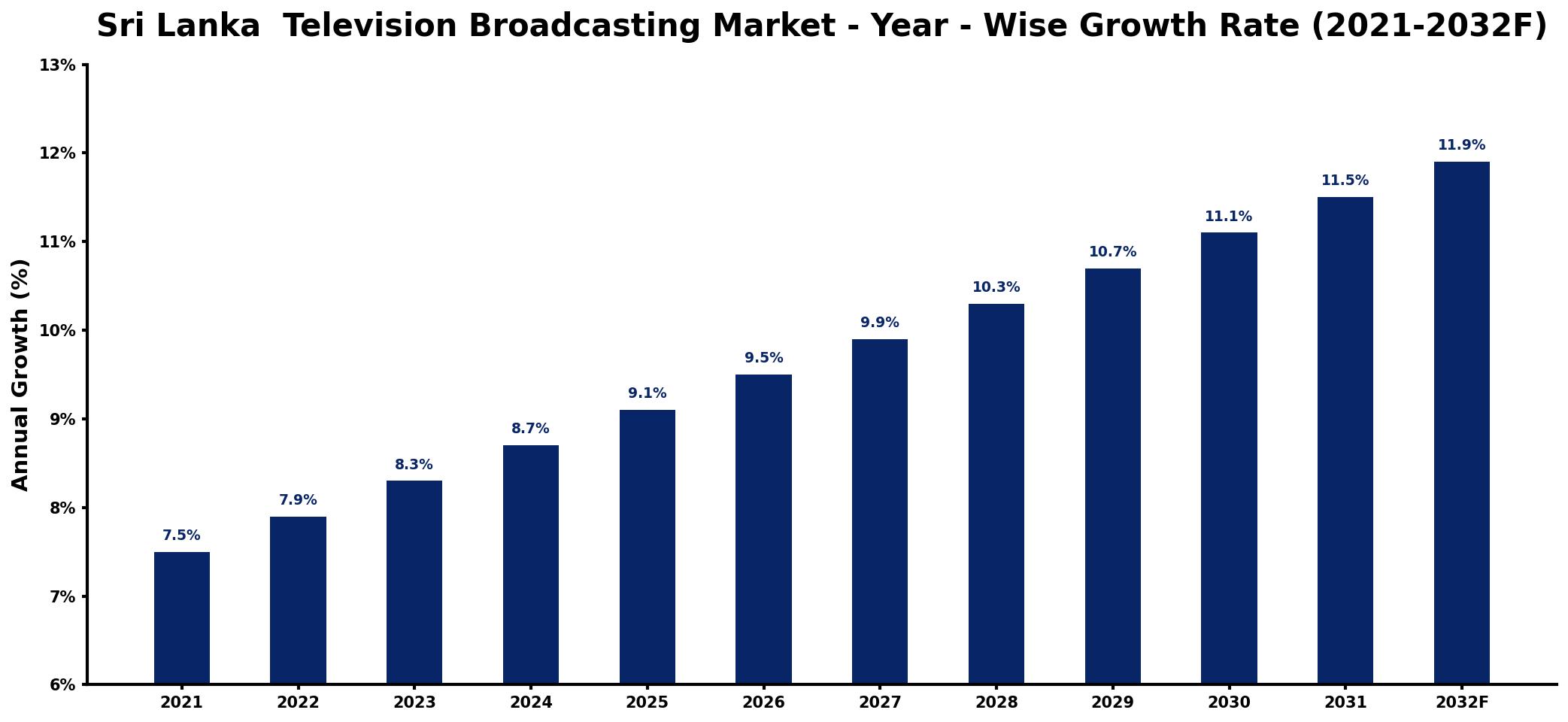
The table below presents the year‑wise growth rates along with the key drivers influencing the market
| Year | Growth Rate | Major Drivers |
| 2021 | 7.5% | rising digital content consumption |
| 2022 | 7.9% | increased mobile viewership trends |
| 2023 | 8.3% | growth in local production investments |
| 2024 | 8.7% | expansion of streaming services availability |
| 2025 | 9.1% | enhanced advertising revenue potential |
| 2026 | 9.5% | diversification of content offerings |
| 2027 | 9.9% | increased interest in original programming |
| 2028 | 10.3% | growing demand for live events |
| 2029 | 10.7% | emergence of new distribution channels |
| 2030 | 11.1% | rising popularity of interactive content |
| 2031 | 11.5% | development of niche audience segments |
| 2032 | 11.9% | increased partnerships with influencers |
Note: Market size estimations and growth projections presented in this report are based on 6Wresearch's proprietary forecasting methodology, utilizing the latest available industry data, government publications, and primary research inputs.
Sri Lanka Television Broadcasting Market Synopsis
In Sri Lanka, the television broadcasting sector is experiencing robust demand for local content, reflecting the audience's increasing preference for culturally relevant programming. This shift is bolstered by state-supported initiatives aimed at promoting Sri Lankan culture through television media.
The competitive landscape is characterized by both state-owned and private broadcasters, creating a rich mix of offerings for viewers. These channels cater to varied tastes, spanning news, entertainment, and educational programming, which helps to maintain a significant audience engagement.
Sri Lanka Television Broadcasting Market Key Takeaways
- The market is poised for significant growth, driven by increased consumer demand for high-quality and diverse content.
- Digital broadcasting and the rise of HD content are reshaping viewer experiences across the country.
- Local content production is gaining traction, enhancing cultural representation in television programming.
- Advertisers play a crucial role in driving revenues within a highly competitive market landscape.
- Investment opportunities are emerging with the expansion of digital platforms and improved internet infrastructure.
Evaluation of Restraints in Sri Lanka Television Broadcasting Market
Despite the promising outlook, several restraints affect the Sri Lanka Television Broadcasting Market. Regulatory constraints impose limits on content that can be aired, potentially stifling innovation. Furthermore, infrastructure challenges, particularly limited access to high-speed internet in rural areas, hinder the distribution of quality broadcasting services. The pressure to maintain advertising revenues amidst growing competition from streaming services poses an additional challenge for traditional broadcasters, pushing them to adapt their business models effectively.
Sri Lanka Television Broadcasting Market Trends
Key trends are defining the Sri Lanka Television Broadcasting Market, including the increased integration of digital content delivery and the emergence of OTT platforms. As audiences gravitate towards on-demand viewing, traditional broadcasters are expanding their offerings by launching streaming services and creating high-quality, engaging content tailored to local preferences. Moreover, there's a noticeable push for the production of locally made television shows that celebrate Sri Lankan culture and talent, reflecting a commitment to relevant and relatable programming.
Sri Lanka Television Broadcasting Market Opportunities
The current landscape of the Sri Lanka Television Broadcasting Market reveals several exciting investment opportunities. With rising disposable incomes and a burgeoning middle-class population, the appetite for diverse television content is expanding. Investors can explore avenues in local content production, secure broadcasting rights for popular international shows, or innovate with niche channels that target specific audience segments. The ongoing technological advancements present significant potential for creating interactive content and enhancing viewer engagement through online platforms.
Government Initiatives in the Sri Lanka Television Broadcasting Market
The Sri Lankan government plays a vital role in regulating the television broadcasting industry, primarily through the Telecommunications Regulatory Commission of Sri Lanka (TRCSL). This body oversees licensing and ensures compliance with technical and content standards, promoting a competitive market. While there are guidelines limiting foreign ownership, the government encourages local content production, aiming to maintain cultural integrity while fostering a diverse media landscape.
Future Insights of the Sri Lanka Television Broadcasting Market
Looking ahead to 2026-2032, the Sri Lanka Television Broadcasting Market is expected to flourish, bolstered by technological advancements and evolving consumer habits. Greater internet penetration and mobile device accessibility will enhance reach, allowing broadcasters to engage a wider audience. Nevertheless, the industry will need to navigate challenges such as regulatory pressures and the competition posed by digital platforms to maintain growth momentum. An emphasis on high-quality, locally relevant content will be key to attracting and retaining viewers in this dynamic landscape.
Sri Lanka Television Broadcasting Market Latest Developments (2025 - 2026)
In recent months, the Sri Lanka Television Broadcasting Market has seen increased investments in digital platforms, reflecting a shift towards modern viewing preferences. Broadcasters are launching initiatives to improve content delivery through online streaming services while enhancing the quality of local programming. Furthermore, collaborations between broadcasters and production houses have emerged, fostering innovative content that resonates with local audiences. These developments indicate a proactive response to the changing media landscape.
Sri Lanka Television Broadcasting Market - Key Attractiveness of the Report
- 10 Years of Market Numbers
- Historical Data Starting from 2022 to 2025
- Base Year: 2025
- Forecast Data until 2032
- Key Performance Indicators Impacting the Market
- Major Upcoming Developments and Projects
Key Highlights of the Report:
- Sri Lanka Television Broadcasting Market Outlook
- Market Size of Sri Lanka Television Broadcasting Market, 2025
- Forecast of Sri Lanka Television Broadcasting Market, 2032
- Historical Data and Forecast of Sri Lanka Television Broadcasting Revenues & Volume for the Period 2022-2032F
- Sri Lanka Television Broadcasting Market Trend Evolution
- Sri Lanka Television Broadcasting Market Drivers and Challenges
- Sri Lanka Television Broadcasting Price Trends
- Sri Lanka Television Broadcasting Porter's Five Forces
- Sri Lanka Television Broadcasting Industry Life Cycle
- Historical Data and Forecast of Sri Lanka Television Broadcasting Market Revenues & Volume By Type for the Period 2022-2032F
- Historical Data and Forecast of Sri Lanka Television Broadcasting Market Revenues & Volume By Television Station for the Period 2022-2032F
- Historical Data and Forecast of Sri Lanka Television Broadcasting Market Revenues & Volume By Television Network for the Period 2022-2032F
- Historical Data and Forecast of Sri Lanka Television Broadcasting Market Revenues & Volume By Broadcaster Type for the Period 2022-2032F
- Historical Data and Forecast of Sri Lanka Television Broadcasting Market Revenues & Volume By Public for the Period 2022-2032F
- Historical Data and Forecast of Sri Lanka Television Broadcasting Market Revenues & Volume By Commercial for the Period 2022-2032F
- Historical Data and Forecast of Sri Lanka Television Broadcasting Market Revenues & Volume By Revenue Source for the Period 2022-2032F
- Historical Data and Forecast of Sri Lanka Television Broadcasting Market Revenues & Volume By Subscription-based for the Period 2022-2032F
- Historical Data and Forecast of Sri Lanka Television Broadcasting Market Revenues & Volume By Advertisement-based for the Period 2022-2032F
- Sri Lanka Television Broadcasting Import Export Trade Statistics
- Market Opportunity Assessment By Type
- Market Opportunity Assessment By Broadcaster Type
- Market Opportunity Assessment By Revenue Source
- Sri Lanka Television Broadcasting Top Companies Market Share
- Sri Lanka Television Broadcasting Competitive Benchmarking By Technical and Operational Parameters
- Sri Lanka Television Broadcasting Company Profiles
- Sri Lanka Television Broadcasting Key Strategic Recommendations






































