Eswatini Machining Centers Market Growth Rate Analysis (2025 - 2031)
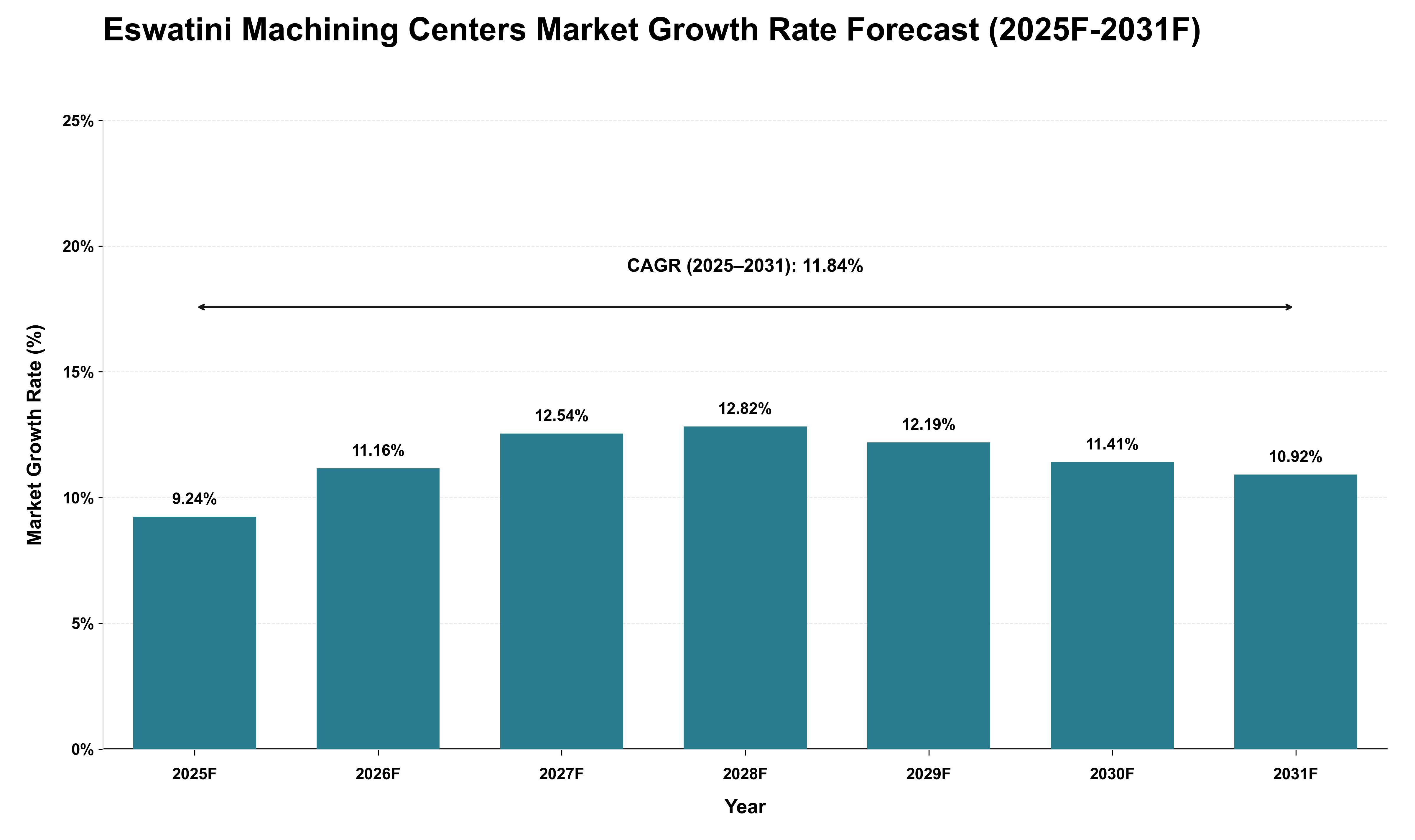
From 2025 onward, the Eswatini machining centers market is poised to experience robust growth, driven by increasing demand for precision engineering across various sectors. The forecasted CAGR of 11.84% reflects a strong trajectory, with annual growth rates peaking at 12.82% in 2028 before gradually tapering off. This trend will be influenced by the availability and pricing of raw materials essential for manufacturing machining centers, such as steel and aluminum, which are expected to face upward pressure due to global supply chain dynamics and fluctuating commodity prices. Additionally, Eswatini's reliance on imports for advanced machinery components may lead to price volatility, impacting overall production costs. As local industries expand their capabilities and seek technological advancements, the interplay between raw material accessibility and import dependencies will significantly shape the market landscape through 2031, fostering a competitive environment that encourages innovation and efficiency in production processes.
Key Highlights of the Report:
- Swaziland Machining Centers Market Outlook
- Market Size of Swaziland Machining Centers Market, 2024
- Forecast of Swaziland Machining Centers Market, 2031
- Historical Data and Forecast of Swaziland Machining Centers Revenues & Volume for the Period 2021-2031
- Swaziland Machining Centers Market Trend Evolution
- Swaziland Machining Centers Market Drivers and Challenges
- Swaziland Machining Centers Price Trends
- Swaziland Machining Centers Porter`s Five Forces
- Swaziland Machining Centers Industry Life Cycle
- Historical Data and Forecast of Swaziland Machining Centers Market Revenues & Volume By Product for the Period 2021-2031
- Historical Data and Forecast of Swaziland Machining Centers Market Revenues & Volume By Vertical Machining Center for the Period 2021-2031
- Historical Data and Forecast of Swaziland Machining Centers Market Revenues & Volume By Horizontal Machining Center for the Period 2021-2031
- Historical Data and Forecast of Swaziland Machining Centers Market Revenues & Volume By Others for the Period 2021-2031
- Historical Data and Forecast of Swaziland Machining Centers Market Revenues & Volume By Application for the Period 2021-2031
- Historical Data and Forecast of Swaziland Machining Centers Market Revenues & Volume By Automotive for the Period 2021-2031
- Historical Data and Forecast of Swaziland Machining Centers Market Revenues & Volume By General Machinery for the Period 2021-2031
- Historical Data and Forecast of Swaziland Machining Centers Market Revenues & Volume By Precision Engineering for the Period 2021-2031
- Historical Data and Forecast of Swaziland Machining Centers Market Revenues & Volume By Transport Machinery for the Period 2021-2031
- Historical Data and Forecast of Swaziland Machining Centers Market Revenues & Volume By Others for the Period 2021-2031
- Swaziland Machining Centers Import Export Trade Statistics
- Market Opportunity Assessment By Product
- Market Opportunity Assessment By Application
- Swaziland Machining Centers Top Companies Market Share
- Swaziland Machining Centers Competitive Benchmarking By Technical and Operational Parameters
- Swaziland Machining Centers Company Profiles
- Swaziland Machining Centers Key Strategic Recommendations






































