Sweden Cyclohexane Market Size (2020-2030)
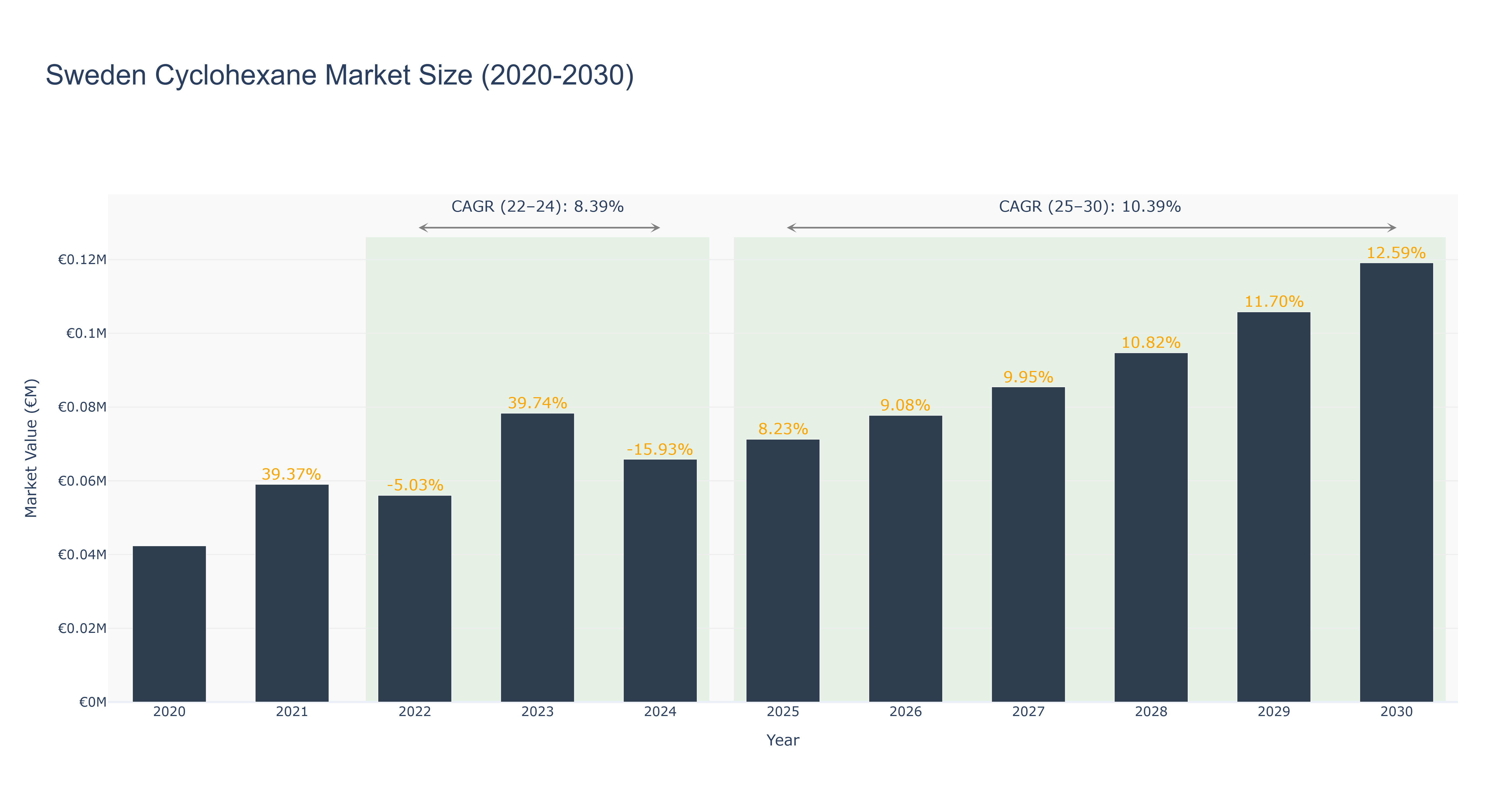
The Sweden cyclohexane market experienced notable fluctuations between 2020 and 2024, with a peak market size of €78.32 thousand in 2023, reflecting a substantial growth of 39.74% from the previous year. However, this period also saw a decline in 2022 and a further drop in 2024, leading to an overall actual CAGR of 8.39% from 2022 to 2024. Transitioning to the forecasted period from 2025 to 2030, the market is projected to grow at a CAGR of 10.39%, with expected market sizes reaching €119.12 thousand by 2030. This growth is likely driven by increasing demand from the automotive and chemical industries, alongside advancements in production technology. Furthermore, investments in sustainable practices and regulatory support for greener chemicals are anticipated to bolster market expansion. Overall, the Sweden cyclohexane market is positioned for a robust recovery and growth trajectory in the coming years.
Sweden Cyclohexane Market: Production & Trade Performance (2019-2025)
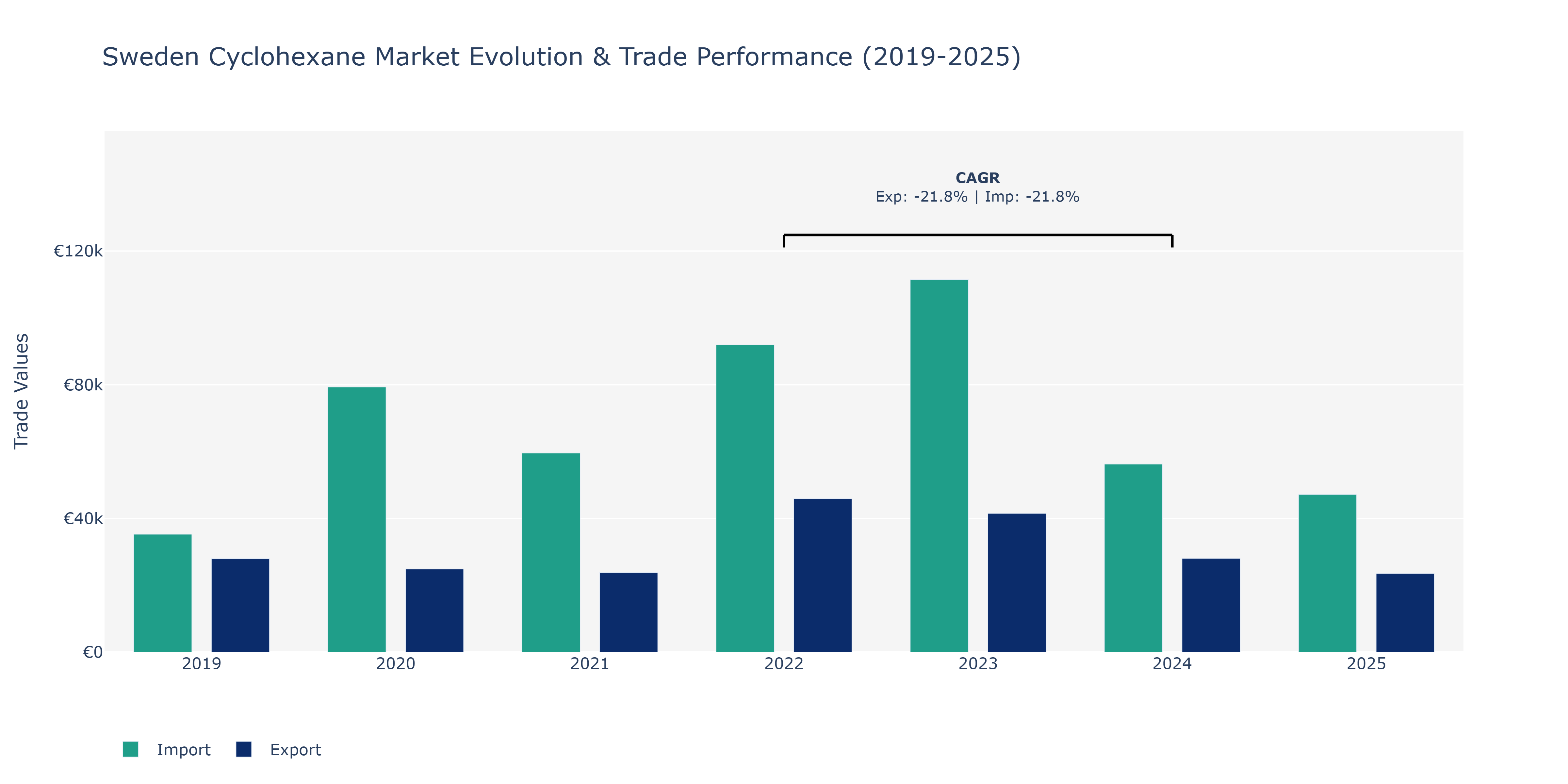
The Sweden Cyclohexane Market experienced fluctuations in both exports and imports over the years, reflecting dynamic shifts in the industry. In 2019, exports stood at €27.96 thousand, decreased to €24.86 thousand in 2020, and further declined to €23.79 thousand in 2021, before witnessing a significant surge to €45.89 thousand in 2022. This spike was followed by a decline to €41.50 thousand in 2023 and a further drop to €28.07 thousand in 2024. On the other hand, imports followed a similar pattern, starting at €35.26 thousand in 2019, increasing sharply to €79.34 thousand in 2020, dropping to €59.58 thousand in 2021, peaking at €111.45 thousand in 2023, and then decreasing to €56.27 thousand in 2024. The peaks and troughs in both exports and imports can be attributed to various factors such as changing global demand, economic conditions, and regulatory influences. For instance, the surge in exports in 2022 could be linked to increased production capacity or a rise in international demand for cyclohexane, while the subsequent decline in 2023 might indicate a shift in market dynamics or competitive pressures impacting exports. The fluctuations in imports could be influenced by factors like changes in domestic consumption patterns or supply chain disruptions. Overall, these trends highlight the market's sensitivity to external factors and the need for industry players to adapt swiftly to changing conditions to maintain competitiveness in the global market.
Sweden Cyclohexane Market Overview
The cyclohexane market in Sweden is primarily driven by its application in the production of nylon and other chemical intermediates. Cyclohexane is essential in the synthesis of various chemicals, including adipic acid and caprolactam, which are used in the textile and automotive industries. The market is influenced by fluctuations in crude oil prices and the global demand for synthetic fibers. Moreover, the increasing focus on sustainable production methods and the development of bio-based alternatives are shaping the future of the cyclohexane market, prompting manufacturers to adapt to changing regulatory requirements.
Drivers of the market
The cyclohexane market in Sweden is primarily driven by its extensive use as a solvent and an intermediate in the production of various chemicals, including nylon. The increasing demand for nylon in the textile and automotive industries is a significant factor contributing to the growth of the cyclohexane market. Additionally, the rising need for solvents in paint, coatings, and adhesives applications supports market growth. The push for sustainable and eco-friendly production methods in the chemical industry is also leading to the development of greener processes for cyclohexane production, which may further drive demand.
Challenges of the market
The cyclohexane market in Sweden faces various challenges that hinder its growth potential. One major issue is the increasing competition from alternative solvents and chemicals that offer similar properties but are perceived as more environmentally friendly. This shift in preference can diminish demand for cyclohexane, particularly in industries focused on sustainability. Additionally, fluctuations in the prices of raw materials used in cyclohexane production can lead to instability in profit margins. Regulatory pressures aimed at reducing volatile organic compounds (VOCs) also pose challenges, requiring manufacturers to adapt their processes and products to comply with stricter guidelines.
Government Policy of the market
Swedens strict environmental regulations, in line with the European Green Deal, influence the cyclohexane market, as it is derived from petroleum products. Policies aimed at reducing carbon footprints and promoting sustainable chemical practices necessitate advanced production technologies with lower emissions. Additionally, restrictions on volatile organic compounds (VOCs) and hazardous substances impact the production and usage of cyclohexane, prompting companies to adopt cleaner processes to align with Swedish environmental standards.
Key Highlights of the Report:
- Sweden Cyclohexane Market Outlook
- Market Size of Sweden Cyclohexane Market, 2025
- Forecast of Sweden Cyclohexane Market, 2032
- Historical Data and Forecast of Sweden Cyclohexane Revenues & Volume for the Period 2022 - 2032
- Sweden Cyclohexane Market Trend Evolution
- Sweden Cyclohexane Market Drivers and Challenges
- Sweden Cyclohexane Price Trends
- Sweden Cyclohexane Porter`s Five Forces
- Sweden Cyclohexane Industry Life Cycle
- Historical Data and Forecast of Sweden Cyclohexane Market Revenues & Volume By Application for the Period 2022 - 2032
- Historical Data and Forecast of Sweden Cyclohexane Market Revenues & Volume By Adipic acid for the Period 2022 - 2032
- Historical Data and Forecast of Sweden Cyclohexane Market Revenues & Volume By Caprolactam for the Period 2022 - 2032
- Historical Data and Forecast of Sweden Cyclohexane Market Revenues & Volume By Others for the Period 2022 - 2032
- Historical Data and Forecast of Sweden Cyclohexane Market Revenues & Volume By End-use for the Period 2022 - 2032
- Historical Data and Forecast of Sweden Cyclohexane Market Revenues & Volume By Nylon 6 for the Period 2022 - 2032
- Historical Data and Forecast of Sweden Cyclohexane Market Revenues & Volume By Nylon 66 for the Period 2022 - 2032
- Historical Data and Forecast of Sweden Cyclohexane Market Revenues & Volume By Others for the Period 2022 - 2032
- Sweden Cyclohexane Import Export Trade Statistics
- Market Opportunity Assessment By Application
- Market Opportunity Assessment By End-use
- Sweden Cyclohexane Top Companies Market Share
- Sweden Cyclohexane Competitive Benchmarking By Technical and Operational Parameters
- Sweden Cyclohexane Company Profiles
- Sweden Cyclohexane Key Strategic Recommendations






































