Switzerland Ferrochrome Market Growth Rate Analysis (2025 - 2031)
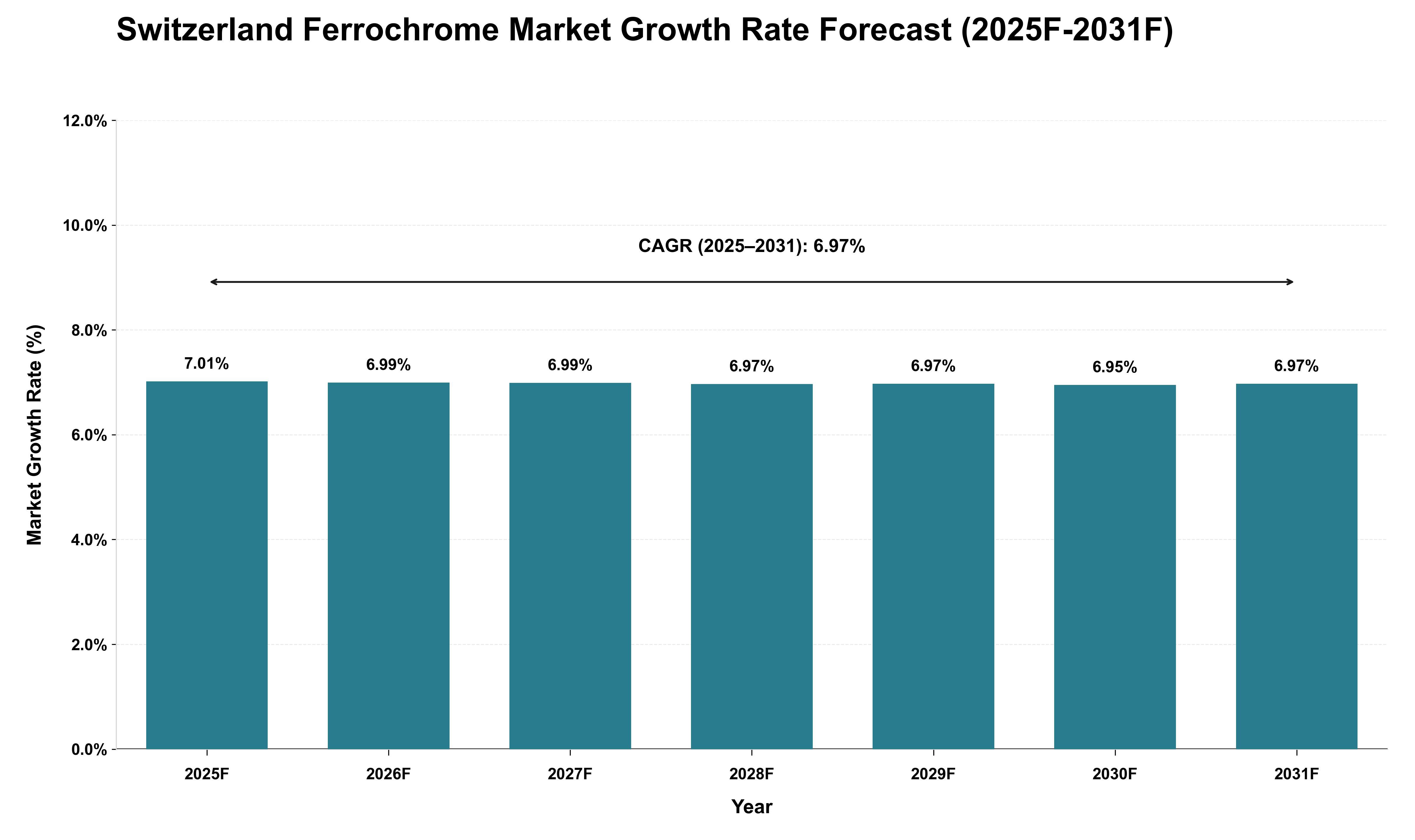
The forecast for the Swiss ferrochrome market will reflect a robust growth trajectory, driven primarily by increasing demand from the stainless steel industry and ongoing investments in infrastructure. As global economic conditions improve, particularly in emerging markets, the anticipated compound annual growth rate (CAGR) of 6.97% from 2025 to 2031 will be supported by rising industrial activity and urbanization trends. Import dependencies will play a crucial role, as Switzerland relies on external sources for ferrochrome supply; fluctuations in global trade policies and commodity prices could influence market dynamics. Additionally, cyclical trends associated with steel production cycles will likely contribute to consistent demand for ferrochrome, with annual growth rates hovering around 7% initially before stabilizing slightly towards the end of the forecast period. This interplay of macroeconomic factors will shape a favorable environment for sustained investment and consumption in the ferrochrome sector.
Key Highlights of the Report:
- Switzerland Ferrochrome Market Outlook
- Market Size of Switzerland Ferrochrome Market, 2025
- Forecast of Switzerland Ferrochrome Market, 2032
- Historical Data and Forecast of Switzerland Ferrochrome Revenues & Volume for the Period 2022-2032F
- Switzerland Ferrochrome Market Trend Evolution
- Switzerland Ferrochrome Market Drivers and Challenges
- Switzerland Ferrochrome Price Trends
- Switzerland Ferrochrome Porter`s Five Forces
- Switzerland Ferrochrome Industry Life Cycle
- Historical Data and Forecast of Switzerland Ferrochrome Market Revenues & Volume By Type for the Period 2022-2032F
- Historical Data and Forecast of Switzerland Ferrochrome Market Revenues & Volume By High carbon for the Period 2022-2032F
- Historical Data and Forecast of Switzerland Ferrochrome Market Revenues & Volume By Medium carbon for the Period 2022-2032F
- Historical Data and Forecast of Switzerland Ferrochrome Market Revenues & Volume By Low carbon for the Period 2022-2032F
- Historical Data and Forecast of Switzerland Ferrochrome Market Revenues & Volume By Applications for the Period 2022-2032F
- Historical Data and Forecast of Switzerland Ferrochrome Market Revenues & Volume By Stainless steel for the Period 2022-2032F
- Historical Data and Forecast of Switzerland Ferrochrome Market Revenues & Volume By Other steels for the Period 2022-2032F
- Switzerland Ferrochrome Import Export Trade Statistics
- Market Opportunity Assessment By Type
- Market Opportunity Assessment By Applications
- Switzerland Ferrochrome Top Companies Market Share
- Switzerland Ferrochrome Competitive Benchmarking By Technical and Operational Parameters
- Switzerland Ferrochrome Company Profiles
- Switzerland Ferrochrome Key Strategic Recommendations






































