Switzerland Gym Apparel Market: Import Trend Analysis
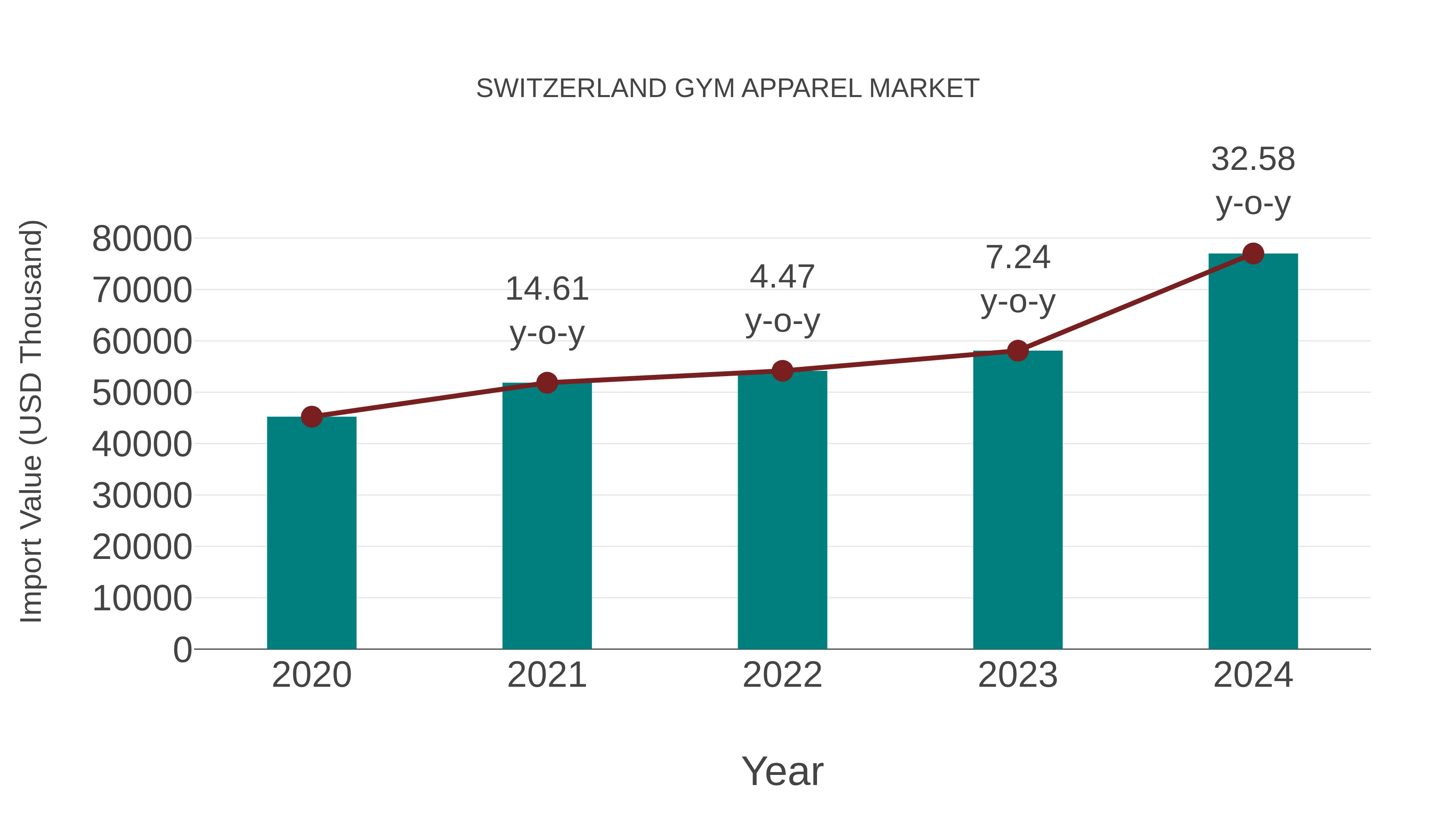
Switzerland gym apparel market saw a notable import trend, with a growth rate of 32.58% from 2023 to 2024. The compound annual growth rate (CAGR) for 2020-2024 stood at 14.22%. This surge in imports can be attributed to the increasing demand for high-quality fitness wear among Swiss consumers.
Switzerland Gym Apparel Market Market Overview
The gym apparel market in Switzerland has been experiencing steady growth in recent years, driven by an increasing focus on fitness and wellness among Swiss consumers. The market is characterized by a strong demand for high-quality, functional activewear that offers both performance and style. International brands such as Nike, Adidas, and Lululemon have a significant presence in the market, catering to the discerning Swiss consumers who value both performance and fashion in their gym wear. However, there is also a growing trend towards sustainable and ethically produced gym apparel, with Swiss consumers showing a preference for brands that prioritize eco-friendly materials and ethical manufacturing practices. Overall, the gym apparel market in Switzerland is expected to continue growing as health and fitness remain key priorities for Swiss consumers.
Switzerland Gym Apparel Market Trends
The gym apparel market in Switzerland is experiencing a shift towards sustainable and eco-friendly materials, as consumers are becoming more conscious of their environmental impact. Brands are incorporating recycled materials, organic cotton, and other sustainable fabrics into their collections. Additionally, there is a growing demand for versatile and multi-functional gym wear that can seamlessly transition from workouts to everyday activities. Athleisure continues to be a popular trend, with consumers seeking stylish and comfortable pieces that can be worn both in and out of the gym. Customization and personalization options are also gaining traction, allowing customers to create unique pieces that reflect their individual style preferences. Overall, the Swiss gym apparel market is moving towards a more sustainable, versatile, and personalized approach to meet the evolving needs of consumers.
Switzerland Gym Apparel Market Challenges
In the Switzerland gym apparel market, one of the main challenges faced is intense competition from both domestic and international brands. With a growing focus on health and fitness, the market is becoming saturated with numerous options for consumers to choose from, making it difficult for new or smaller brands to gain visibility and market share. Additionally, Swiss consumers are known for their preference for high-quality products, which can pose a challenge for companies trying to establish themselves in the market without a strong reputation or brand recognition. Keeping up with changing trends, maintaining sustainable practices, and pricing competitively while ensuring quality are also key challenges for players in the Switzerland gym apparel market.
Switzerland Gym Apparel Market Investment Opportunities
The gym apparel market in Switzerland presents promising investment opportunities due to the growing health and fitness trends in the country. Consumers are increasingly focused on leading active lifestyles, driving the demand for high-quality and stylish gym wear. Key opportunities lie in offering sustainable and ethically sourced activewear, as the Swiss market values eco-friendly products. Additionally, there is potential for innovation in smart fabrics and technologies that enhance performance and comfort during workouts. Collaborations with local fitness influencers and gyms can help brands gain visibility and build credibility in the competitive market. Overall, investing in the Swiss gym apparel market presents a chance to tap into a health-conscious consumer base and capitalize on the growing popularity of fitness activities.
Switzerland Gym Apparel Market Government Policy
In Switzerland, the gym apparel market is primarily regulated by general consumer protection laws and regulations, ensuring product quality and safety standards are met. The Swiss government also imposes regulations on labeling and advertising practices to prevent misleading information to consumers. Additionally, there are tax policies that may impact the pricing and import/export of gym apparel in the country. While there are no specific government policies tailored specifically for the gym apparel market, businesses operating in this sector must comply with the overarching regulatory framework to ensure fair competition and consumer protection. Overall, the Swiss government aims to maintain a transparent and competitive market environment for gym apparel while safeguarding consumer interests.
Switzerland Gym Apparel Market Future Outlook
The future outlook for the gym apparel market in Switzerland appears promising, driven by factors such as the growing health and fitness trend among consumers, increasing awareness about the importance of activewear in enhancing performance, and the rise of athleisure as a fashion statement. With a focus on sustainability and innovation, Swiss gym apparel brands are likely to gain traction, catering to the demand for high-quality, functional, and stylish activewear. The market is expected to see continued growth as more people prioritize wellness and engage in physical activities. Digitalization and online retail are also anticipated to play a significant role in expanding market reach and accessibility for consumers. Overall, the Switzerland gym apparel market is poised for expansion and evolution in the coming years.
Key Highlights of the Report:
- Switzerland Gym Apparel Market Outlook
- Market Size of Switzerland Gym Apparel Market,2025
- Forecast of Switzerland Gym Apparel Market, 2032
- Historical Data and Forecast of Switzerland Gym Apparel Revenues & Volume for the Period 2022-2032F
- Switzerland Gym Apparel Market Trend Evolution
- Switzerland Gym Apparel Market Drivers and Challenges
- Switzerland Gym Apparel Price Trends
- Switzerland Gym Apparel Porter's Five Forces
- Switzerland Gym Apparel Industry Life Cycle
- Historical Data and Forecast of Switzerland Gym Apparel Market Revenues & Volume By Type for the Period 2022-2032F
- Historical Data and Forecast of Switzerland Gym Apparel Market Revenues & Volume By Compression Wear for the Period 2022-2032F
- Historical Data and Forecast of Switzerland Gym Apparel Market Revenues & Volume By Moisture-Wicking Clothes for the Period 2022-2032F
- Historical Data and Forecast of Switzerland Gym Apparel Market Revenues & Volume By Eco-Friendly Gym Wear for the Period 2022-2032F
- Historical Data and Forecast of Switzerland Gym Apparel Market Revenues & Volume By Material for the Period 2022-2032F
- Historical Data and Forecast of Switzerland Gym Apparel Market Revenues & Volume By Spandex for the Period 2022-2032F
- Historical Data and Forecast of Switzerland Gym Apparel Market Revenues & Volume By Polyester Blend for the Period 2022-2032F
- Historical Data and Forecast of Switzerland Gym Apparel Market Revenues & Volume By Bamboo Fiber for the Period 2022-2032F
- Historical Data and Forecast of Switzerland Gym Apparel Market Revenues & Volume By End User for the Period 2022-2032F
- Historical Data and Forecast of Switzerland Gym Apparel Market Revenues & Volume By Athletes for the Period 2022-2032F
- Historical Data and Forecast of Switzerland Gym Apparel Market Revenues & Volume By General Users for the Period 2022-2032F
- Historical Data and Forecast of Switzerland Gym Apparel Market Revenues & Volume By Eco-Conscious Buyers for the Period 2022-2032F
- Historical Data and Forecast of Switzerland Gym Apparel Market Revenues & Volume By Distribution Channel for the Period 2022-2032F
- Historical Data and Forecast of Switzerland Gym Apparel Market Revenues & Volume By Sports Stores for the Period 2022-2032F
- Historical Data and Forecast of Switzerland Gym Apparel Market Revenues & Volume By Online Stores for the Period 2022-2032F
- Historical Data and Forecast of Switzerland Gym Apparel Market Revenues & Volume By Department Stores for the Period 2022-2032F
- Historical Data and Forecast of Switzerland Gym Apparel Market Revenues & Volume By Certification for the Period 2022-2032F
- Historical Data and Forecast of Switzerland Gym Apparel Market Revenues & Volume By OEKO-TEX Certified for the Period 2022-2032F
- Historical Data and Forecast of Switzerland Gym Apparel Market Revenues & Volume By REACH Certified for the Period 2022-2032F
- Historical Data and Forecast of Switzerland Gym Apparel Market Revenues & Volume By Fair Trade Certified for the Period 2022-2032F
- Switzerland Gym Apparel Import Export Trade Statistics
- Market Opportunity Assessment By Type
- Market Opportunity Assessment By Material
- Market Opportunity Assessment By End User
- Market Opportunity Assessment By Distribution Channel
- Market Opportunity Assessment By Certification
- Switzerland Gym Apparel Top Companies Market Share
- Switzerland Gym Apparel Competitive Benchmarking By Technical and Operational Parameters
- Switzerland Gym Apparel Company Profiles
- Switzerland Gym Apparel Key Strategic Recommendations






































