Switzerland Luxury Handbag Market: Import Trend Analysis
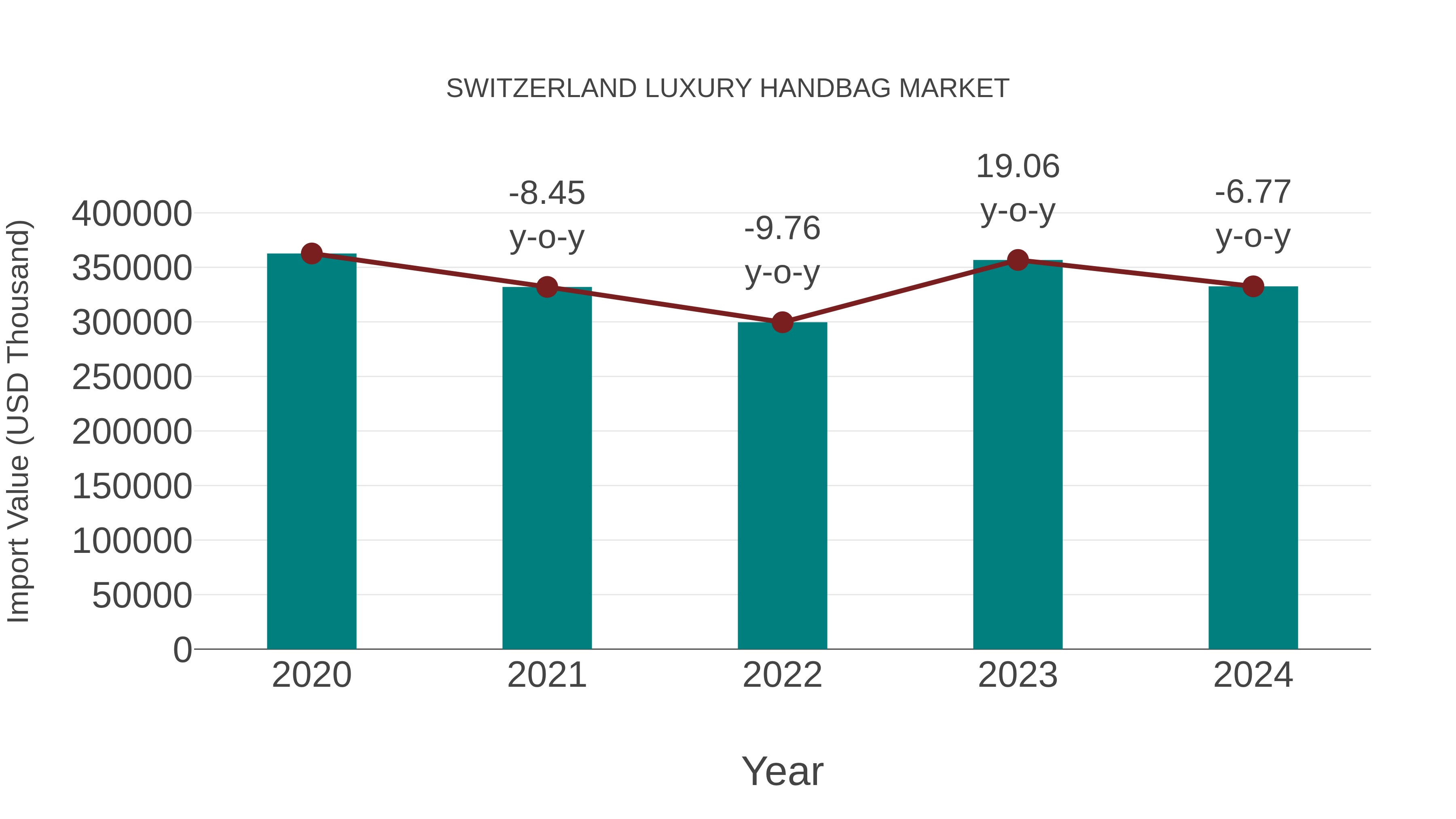
Switzerland import trend for the luxury handbag market experienced a decline, with a growth rate of -6.77% from 2023 to 2024. The compound annual growth rate (CAGR) for 2020-2024 was -2.14%. This decline could be attributed to shifting consumer preferences or economic factors impacting demand.
Switzerland Luxury Handbag Market Overview
The Switzerland luxury handbag market is characterized by a strong demand for high-end designer handbags among affluent consumers. Luxury brands such as Louis Vuitton, Gucci, and Chanel dominate the market, offering premium quality materials, exquisite craftsmanship, and iconic designs that appeal to the sophisticated Swiss clientele. Swiss consumers value luxury handbags as status symbols and fashion statements, driving consistent sales in the market. The demand for luxury handbags is also supported by the country`s stable economy, high disposable income levels, and a culture that appreciates luxury goods. Retail channels such as department stores, luxury boutiques, and online platforms contribute to the accessibility of luxury handbags in Switzerland, catering to the diverse preferences of consumers seeking exclusive and prestigious accessories.
Switzerland Luxury Handbag Market Trends
The luxury handbag market in Switzerland is currently experiencing a trend towards sustainability and ethical sourcing. Consumers are increasingly seeking handbags made from eco-friendly materials, produced using ethical labor practices, and with transparent supply chains. Luxury brands are responding to this demand by incorporating sustainability into their design processes and production methods. Additionally, there is a growing preference for timeless and classic designs over trendy styles, as Swiss consumers value longevity and quality in their luxury handbag purchases. Personalization and customization options are also gaining popularity, allowing customers to create unique and bespoke pieces that reflect their individual style. Overall, the Switzerland luxury handbag market is evolving towards a more conscious and personalized approach to luxury fashion.
Switzerland Luxury Handbag Market Challenges
In the Switzerland luxury handbag market, one of the key challenges faced is increased competition from both traditional luxury brands and new entrants. With the rise of online shopping and e-commerce platforms, consumers have more options to choose from, making it harder for brands to stand out. Additionally, the impact of global economic uncertainties and fluctuations in currency exchange rates can affect consumer spending on luxury goods, leading to fluctuations in demand. Brands also need to navigate changing consumer preferences and trends, such as the shift towards sustainable and ethically sourced products, which can require significant investments in research and development. Moreover, the presence of counterfeit products in the market poses a threat to the reputation and authenticity of luxury brands, requiring constant vigilance and enforcement efforts.
Switzerland Luxury Handbag Market Investment Opportunities
Investment opportunities in the Switzerland luxury handbag market are promising due to the country`s reputation for quality craftsmanship and luxury goods. Swiss luxury handbag brands have a strong global presence and are highly sought after by discerning consumers. Investors can benefit from the growing demand for luxury handbags in the region, driven by affluent local consumers and tourists. Additionally, Switzerland`s stable economy and reputation for precision and attention to detail create a conducive environment for luxury brands to thrive. Investing in Swiss luxury handbag companies or partnering with established brands to expand their market presence could yield profitable returns in this lucrative market segment.
Switzerland Luxury Handbag Market Government Policy
In Switzerland, government policies related to the luxury handbag market primarily focus on consumer protection and promoting fair competition. The Swiss government imposes strict regulations on labeling, materials, and advertising to ensure that consumers are well-informed about the products they are purchasing. Additionally, the government enforces anti-counterfeiting laws to protect the intellectual property rights of luxury handbag brands. Import and export regulations are also in place to manage the flow of luxury goods in and out of the country. Overall, the government aims to create a transparent and competitive market environment for luxury handbag retailers and consumers in Switzerland.
Switzerland Luxury Handbag Market Future Outlook
The future outlook for the Switzerland luxury handbag market remains positive, driven by factors such as strong economic growth, increasing consumer disposable income, and a growing preference for high-end, quality products. The demand for luxury handbags in Switzerland is expected to continue to rise, fueled by a desire for exclusivity and status symbols among affluent consumers. However, the market may face challenges from changing consumer preferences towards sustainability and ethical production practices. To stay competitive, luxury handbag brands in Switzerland may need to adapt by incorporating sustainable materials and transparent supply chains into their products. Overall, the Switzerland luxury handbag market is poised for growth, but brands will need to innovate and meet evolving consumer demands to maintain their market share.
Key Highlights of the Report:
- Switzerland Luxury Handbag Market Outlook
- Market Size of Switzerland Luxury Handbag Market,2025
- Forecast of Switzerland Luxury Handbag Market, 2032
- Historical Data and Forecast of Switzerland Luxury Handbag Revenues & Volume for the Period 2022-2032F
- Switzerland Luxury Handbag Market Trend Evolution
- Switzerland Luxury Handbag Market Drivers and Challenges
- Switzerland Luxury Handbag Price Trends
- Switzerland Luxury Handbag Porter's Five Forces
- Switzerland Luxury Handbag Industry Life Cycle
- Historical Data and Forecast of Switzerland Luxury Handbag Market Revenues & Volume By Type for the Period 2022-2032F
- Historical Data and Forecast of Switzerland Luxury Handbag Market Revenues & Volume By Tote Bags for the Period 2022-2032F
- Historical Data and Forecast of Switzerland Luxury Handbag Market Revenues & Volume By Clutch Bags for the Period 2022-2032F
- Historical Data and Forecast of Switzerland Luxury Handbag Market Revenues & Volume By Shoulder Bags for the Period 2022-2032F
- Historical Data and Forecast of Switzerland Luxury Handbag Market Revenues & Volume By Crossbody Bags for the Period 2022-2032F
- Historical Data and Forecast of Switzerland Luxury Handbag Market Revenues & Volume By Satchels for the Period 2022-2032F
- Historical Data and Forecast of Switzerland Luxury Handbag Market Revenues & Volume By Material for the Period 2022-2032F
- Historical Data and Forecast of Switzerland Luxury Handbag Market Revenues & Volume By Leather for the Period 2022-2032F
- Historical Data and Forecast of Switzerland Luxury Handbag Market Revenues & Volume By Canvas for the Period 2022-2032F
- Historical Data and Forecast of Switzerland Luxury Handbag Market Revenues & Volume By Exotic Skins for the Period 2022-2032F
- Historical Data and Forecast of Switzerland Luxury Handbag Market Revenues & Volume By Synthetic for the Period 2022-2032F
- Historical Data and Forecast of Switzerland Luxury Handbag Market Revenues & Volume By Distribution Channel for the Period 2022-2032F
- Historical Data and Forecast of Switzerland Luxury Handbag Market Revenues & Volume By Online for the Period 2022-2032F
- Historical Data and Forecast of Switzerland Luxury Handbag Market Revenues & Volume By Offline for the Period 2022-2032F
- Historical Data and Forecast of Switzerland Luxury Handbag Market Revenues & Volume By Boutiques for the Period 2022-2032F
- Switzerland Luxury Handbag Import Export Trade Statistics
- Market Opportunity Assessment By Type
- Market Opportunity Assessment By Material
- Market Opportunity Assessment By Distribution Channel
- Switzerland Luxury Handbag Top Companies Market Share
- Switzerland Luxury Handbag Competitive Benchmarking By Technical and Operational Parameters
- Switzerland Luxury Handbag Company Profiles
- Switzerland Luxury Handbag Key Strategic Recommendations






































