Switzerland Packaged Water Market: Import Trend Analysis
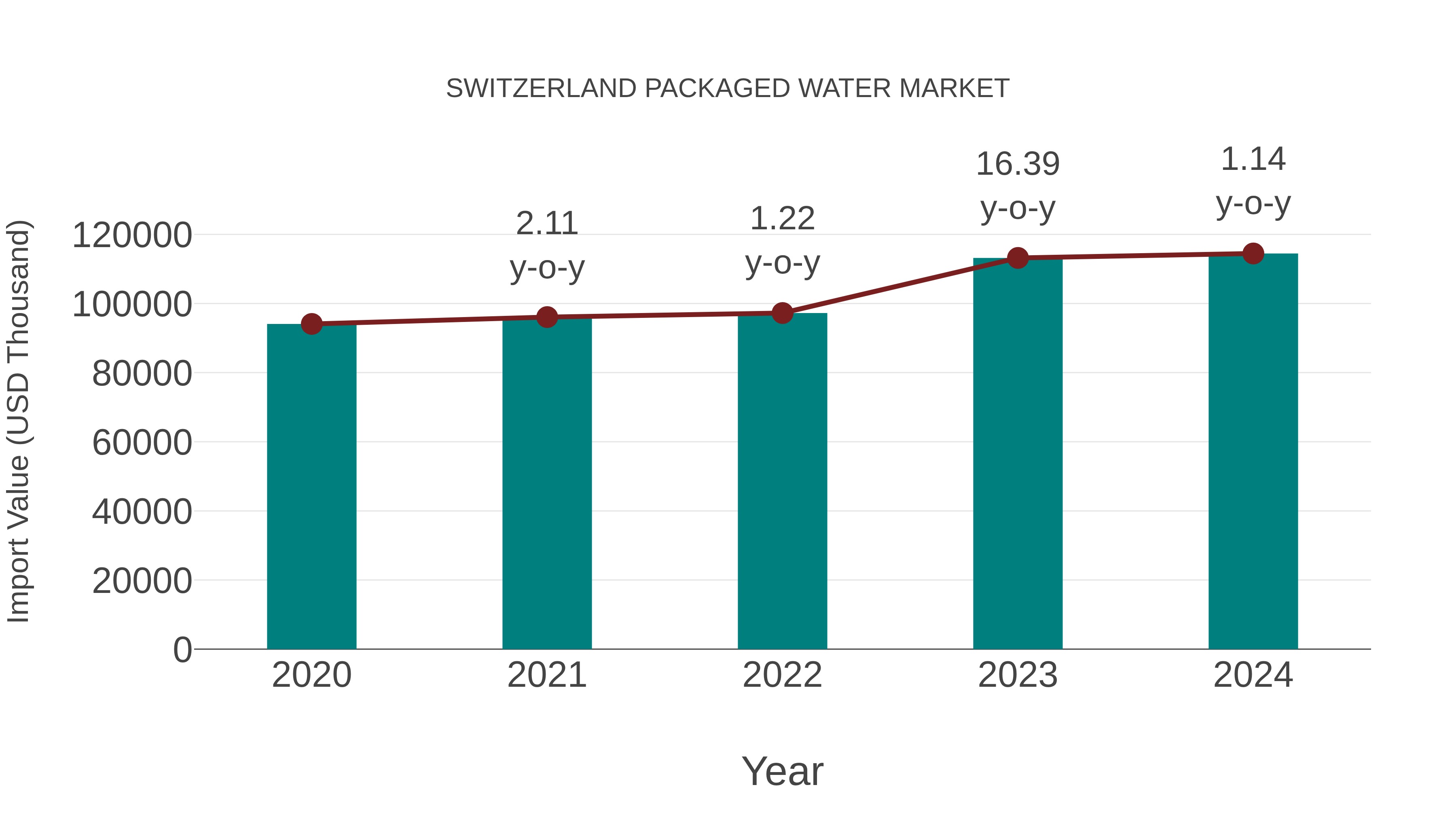
Switzerland import trend for the packaged water market showed a growth rate of 1.14% from 2023 to 2024, with a compound annual growth rate (CAGR) of 5.02% for 2020-2024. This growth could be attributed to increasing consumer awareness of health and wellness, driving demand for packaged water products.
Switzerland Packaged water Market Overview
The packaged water market in Switzerland is characterized by a high demand for premium and high-quality bottled water products. The market is driven by factors such as the country`s strong economy, high disposable income levels, and a health-conscious consumer base. Swiss consumers prioritize purity, taste, and sustainability when choosing packaged water, leading to a preference for natural mineral water sourced from the Swiss Alps. Key players in the market focus on product differentiation through innovative packaging, eco-friendly practices, and brand positioning. The market is also influenced by growing concerns about plastic waste and environmental sustainability, leading to an increased demand for recyclable and biodegradable packaging solutions. Overall, the Switzerland packaged water market is expected to continue its growth trajectory driven by consumer preferences for premium, natural, and sustainable bottled water options.
Switzerland Packaged water Market Trends and Opportunities
The Switzerland packaged water market is experiencing a shift towards healthier and more eco-friendly options, with a growing demand for natural mineral water and flavored water varieties. Consumers are increasingly looking for products that are free from additives and chemicals, as well as those that are packaged in sustainable materials. Opportunities exist for companies to innovate with new packaging formats such as recycled plastics or biodegradable materials to cater to this demand. Additionally, the rise of e-commerce platforms and online grocery shopping presents a chance for brands to expand their reach and offer personalized options to target specific consumer preferences. Overall, the market is ripe for companies to differentiate themselves through sustainable practices and product innovation to capture the evolving consumer preferences in Switzerland.
Switzerland Packaged water Market Challenges
In the Switzerland packaged water market, challenges include increasing competition from other beverage categories like sports drinks and flavored water, as well as rising consumer concerns about environmental sustainability and single-use plastic waste. Additionally, the market is saturated with numerous brands offering similar products, making it difficult for new entrants to differentiate themselves and gain market share. Regulatory pressures surrounding packaging materials and recycling also pose challenges for companies operating in this market, as they must comply with strict environmental standards. Furthermore, changing consumer preferences towards healthier and more natural beverage options could impact the growth potential of traditional packaged water products. Overall, companies in the Switzerland packaged water market must navigate these challenges to stay competitive and sustain growth in the face of evolving consumer demands and industry dynamics.
Switzerland Packaged water Market Drivers
The Switzerland Packaged water market is primarily being driven by increasing health consciousness among consumers, leading to a growing preference for clean and safe drinking water. The convenience of packaged water, especially in on-the-go situations, is also a significant driver as consumers seek portable hydration options. Concerns about the quality of tap water and the convenience of single-use packaging are further fueling the demand for packaged water in Switzerland. Additionally, the influence of marketing and advertising campaigns promoting the benefits of packaged water, such as mineral content and hydration benefits, are contributing to the market growth. Overall, factors such as health awareness, convenience, quality concerns, and effective marketing strategies are key drivers shaping the Switzerland Packaged water market.
Switzerland Packaged water Market Government Policy
In Switzerland, the packaged water market is regulated by stringent government policies aimed at ensuring the safety and quality of bottled water. The Federal Food Safety and Veterinary Office (FSVO) is responsible for monitoring and enforcing regulations that govern the production, labeling, and distribution of packaged water. These regulations include strict quality standards, hygiene requirements, and labeling guidelines to provide consumers with transparent information about the water they are purchasing. Additionally, the Swiss government promotes sustainability in packaging materials to minimize environmental impact. Overall, the government policies in Switzerland aim to safeguard public health, promote consumer confidence, and uphold environmental sustainability in the packaged water market.
Switzerland Packaged water Market Future Outlook
The Switzerland packaged water market is expected to continue its growth trajectory in the foreseeable future, driven by factors such as increasing health consciousness among consumers, rising disposable incomes, and the convenience offered by packaged water. With a shift towards healthier beverage options and a greater emphasis on hydration, the demand for packaged water is likely to remain strong. Furthermore, the growing trend towards sustainability and eco-friendly packaging materials is expected to shape the market dynamics, with consumers showing a preference for brands that prioritize environmental responsibility. Market players are anticipated to focus on product innovation, such as functional and flavored water variants, to cater to evolving consumer preferences and maintain a competitive edge in the market.
Key Highlights of the Report:
- Switzerland Packaged water Market Outlook
- Market Size of Switzerland Packaged water Market, 2025
- Forecast of Switzerland Packaged water Market, 2032
- Historical Data and Forecast of Switzerland Packaged water Revenues & Volume for the Period 2022 - 2032F
- Switzerland Packaged water Market Trend Evolution
- Switzerland Packaged water Market Drivers and Challenges
- Switzerland Packaged water Price Trends
- Switzerland Packaged water Porter's Five Forces
- Switzerland Packaged water Industry Life Cycle
- Historical Data and Forecast of Switzerland Packaged water Market Revenues & Volume By Product for the Period 2022 - 2032F
- Historical Data and Forecast of Switzerland Packaged water Market Revenues & Volume By Still for the Period 2022 - 2032F
- Historical Data and Forecast of Switzerland Packaged water Market Revenues & Volume By Carbonated for the Period 2022 - 2032F
- Historical Data and Forecast of Switzerland Packaged water Market Revenues & Volume By Flavored for the Period 2022 - 2032F
- Historical Data and Forecast of Switzerland Packaged water Market Revenues & Volume By Functional for the Period 2022 - 2032F
- Switzerland Packaged water Import Export Trade Statistics
- Market Opportunity Assessment By Product
- Switzerland Packaged water Top Companies Market Share
- Switzerland Packaged water Competitive Benchmarking By Technical and Operational Parameters
- Switzerland Packaged water Company Profiles
- Switzerland Packaged water Key Strategic Recommendations






































