Switzerland Waterless Cosmetic Market Growth Rate Analysis (2025 - 2031)
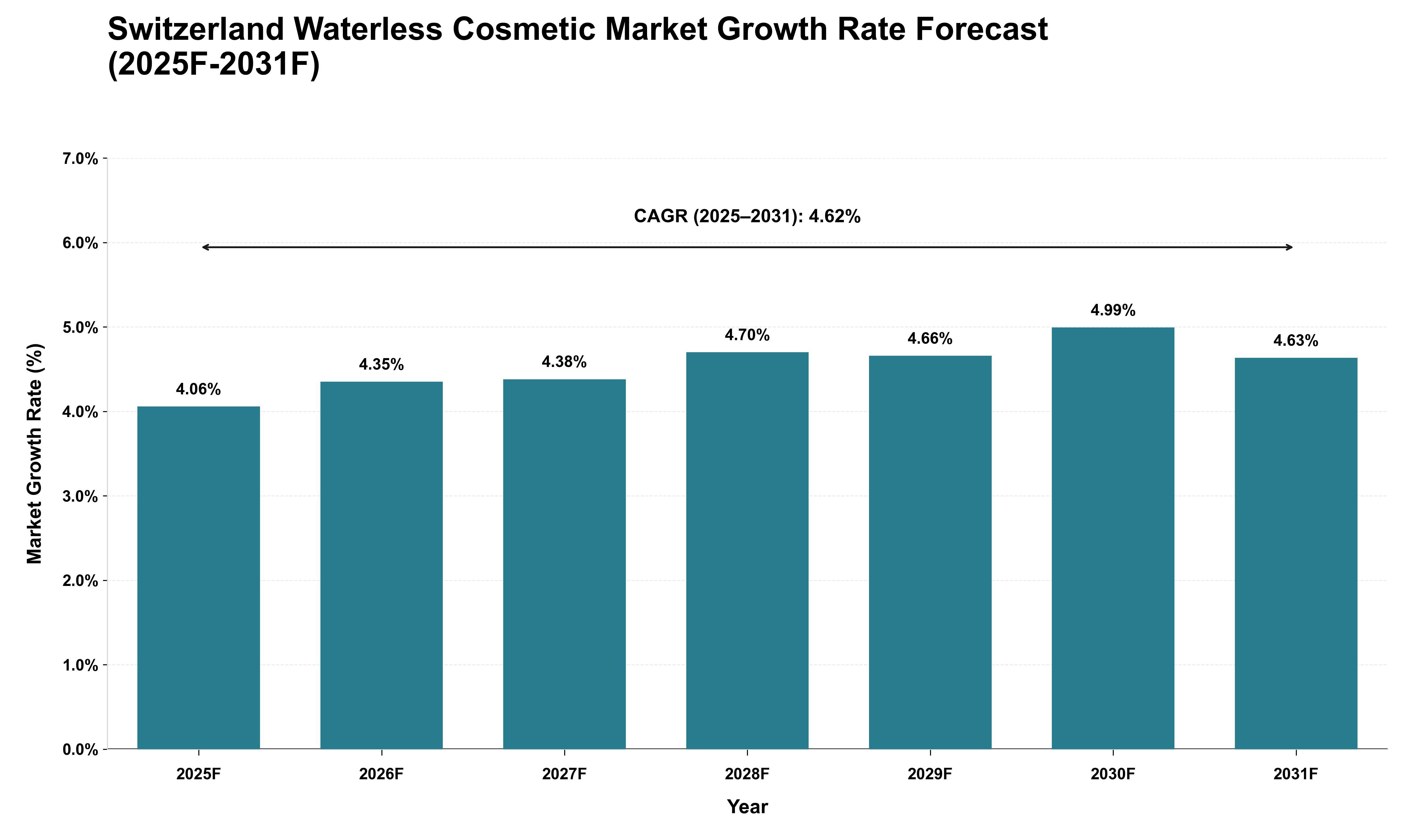
The Switzerland waterless cosmetic market is projected to experience a compound annual growth rate of 4.62% from 2025 to 2031, reflecting a robust trajectory driven by evolving consumer preferences towards sustainability and eco-friendly products. As the market grows, import dynamics will play a crucial role; Switzerland's reliance on imported raw materials for cosmetic formulations will likely increase, necessitating strategic trade partnerships with exporting nations that specialize in innovative ingredients. The annual growth rates indicate a gradual acceleration, peaking at 4.99% in 2030, which suggests that as consumer awareness heightens and regulatory frameworks evolve to support sustainable practices, demand for waterless cosmetics will intensify. This trend may also stimulate export opportunities for Swiss brands looking to penetrate international markets, thereby enhancing trade flows and contributing positively to the overall economic landscape within the sector during this forecast period.
Key Highlights of the Report:
- Switzerland Waterless Cosmetic Market Outlook
- Market Size of Switzerland Waterless Cosmetic Market, 2025
- Forecast of Switzerland Waterless Cosmetic Market, 2032
- Historical Data and Forecast of Switzerland Waterless Cosmetic Revenues & Volume for the Period 2022-2032F
- Switzerland Waterless Cosmetic Market Trend Evolution
- Switzerland Waterless Cosmetic Market Drivers and Challenges
- Switzerland Waterless Cosmetic Price Trends
- Switzerland Waterless Cosmetic Porter's Five Forces
- Switzerland Waterless Cosmetic Industry Life Cycle
- Historical Data and Forecast of Switzerland Waterless Cosmetic Market Revenues & Volume By Type for the Period 2022-2032F
- Historical Data and Forecast of Switzerland Waterless Cosmetic Market Revenues & Volume By Solid Cleansers for the Period 2022-2032F
- Historical Data and Forecast of Switzerland Waterless Cosmetic Market Revenues & Volume By Powder-Based Skincare for the Period 2022-2032F
- Historical Data and Forecast of Switzerland Waterless Cosmetic Market Revenues & Volume By Balm-Based Products for the Period 2022-2032F
- Historical Data and Forecast of Switzerland Waterless Cosmetic Market Revenues & Volume By Oil-Based Makeup for the Period 2022-2032F
- Historical Data and Forecast of Switzerland Waterless Cosmetic Market Revenues & Volume By Dry Shampoos for the Period 2022 - 2032F
- Historical Data and Forecast of Switzerland Waterless Cosmetic Market Revenues & Volume By Key Ingredients for the Period 2022-2032F
- Historical Data and Forecast of Switzerland Waterless Cosmetic Market Revenues & Volume By Plant-Based Oils for the Period 2022-2032F
- Historical Data and Forecast of Switzerland Waterless Cosmetic Market Revenues & Volume By Minerals & Clays for the Period 2022-2032F
- Historical Data and Forecast of Switzerland Waterless Cosmetic Market Revenues & Volume By Shea Butter for the Period 2022-2032F
- Historical Data and Forecast of Switzerland Waterless Cosmetic Market Revenues & Volume By Essential Oils for the Period 2022-2032F
- Historical Data and Forecast of Switzerland Waterless Cosmetic Market Revenues & Volume By Starches & Silica for the Period 2022 - 2032F
- Historical Data and Forecast of Switzerland Waterless Cosmetic Market Revenues & Volume By End User for the Period 2022-2032F
- Historical Data and Forecast of Switzerland Waterless Cosmetic Market Revenues & Volume By Personal Users for the Period 2022-2032F
- Historical Data and Forecast of Switzerland Waterless Cosmetic Market Revenues & Volume By Beauty Salons for the Period 2022-2032F
- Historical Data and Forecast of Switzerland Waterless Cosmetic Market Revenues & Volume By Retail Stores for the Period 2022-2032F
- Historical Data and Forecast of Switzerland Waterless Cosmetic Market Revenues & Volume By Cosmetic Brands for the Period 2022-2032F
- Historical Data and Forecast of Switzerland Waterless Cosmetic Market Revenues & Volume By Travel Enthusiasts for the Period 2022 - 2032F
- Historical Data and Forecast of Switzerland Waterless Cosmetic Market Revenues & Volume By Application for the Period 2022-2032F
- Historical Data and Forecast of Switzerland Waterless Cosmetic Market Revenues & Volume By Skin Cleansing for the Period 2022-2032F
- Historical Data and Forecast of Switzerland Waterless Cosmetic Market Revenues & Volume By Face Care for the Period 2022-2032F
- Historical Data and Forecast of Switzerland Waterless Cosmetic Market Revenues & Volume By Hydration for the Period 2022-2032F
- Historical Data and Forecast of Switzerland Waterless Cosmetic Market Revenues & Volume By Sustainable Beauty for the Period 2022-2032F
- Historical Data and Forecast of Switzerland Waterless Cosmetic Market Revenues & Volume By Hair Care for the Period 2022 - 2032F
- Historical Data and Forecast of Switzerland Waterless Cosmetic Market Revenues & Volume By End Use for the Period 2022-2032F
- Historical Data and Forecast of Switzerland Waterless Cosmetic Market Revenues & Volume By Professional Tattooing for the Period 2022-2032F
- Historical Data and Forecast of Switzerland Waterless Cosmetic Market Revenues & Volume By Tattoo Studios for the Period 2022-2032F
- Switzerland Waterless Cosmetic Import Export Trade Statistics
- Market Opportunity Assessment By Type
- Market Opportunity Assessment By Key Ingredients
- Market Opportunity Assessment By End User
- Market Opportunity Assessment By Application
- Market Opportunity Assessment By End Use
- Switzerland Waterless Cosmetic Top Companies Market Share
- Switzerland Waterless Cosmetic Competitive Benchmarking By Technical and Operational Parameters
- Switzerland Waterless Cosmetic Company Profiles
- Switzerland Waterless Cosmetic Key Strategic Recommendations






































