Tajikistan Aerosol Cans Market Size Growth Rate
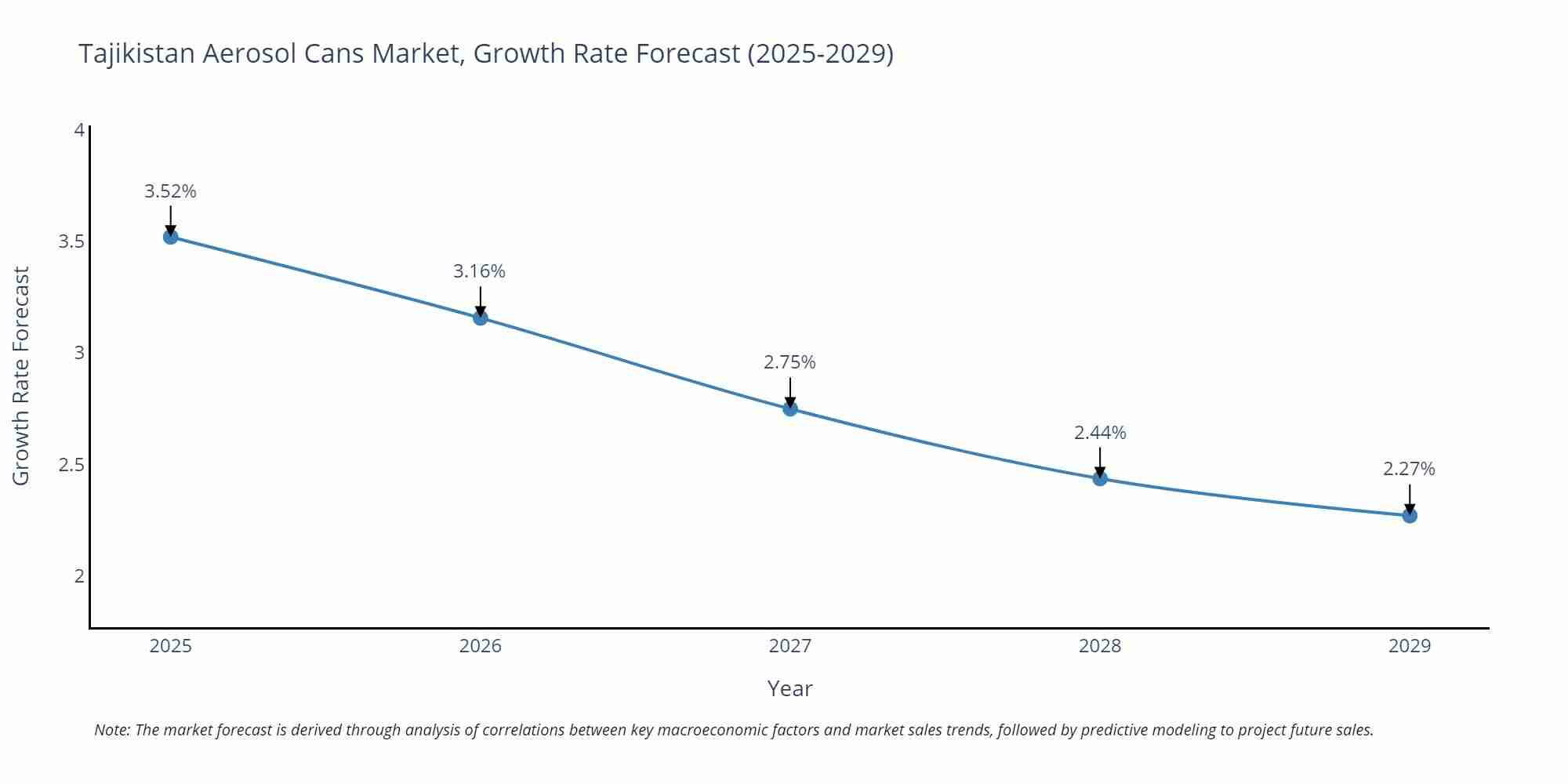
The Tajikistan Aerosol Cans Market may undergo a gradual slowdown in growth rates between 2025 and 2029. Starting high at 3.52% in 2025, the market steadily declines to 2.27% by 2029.
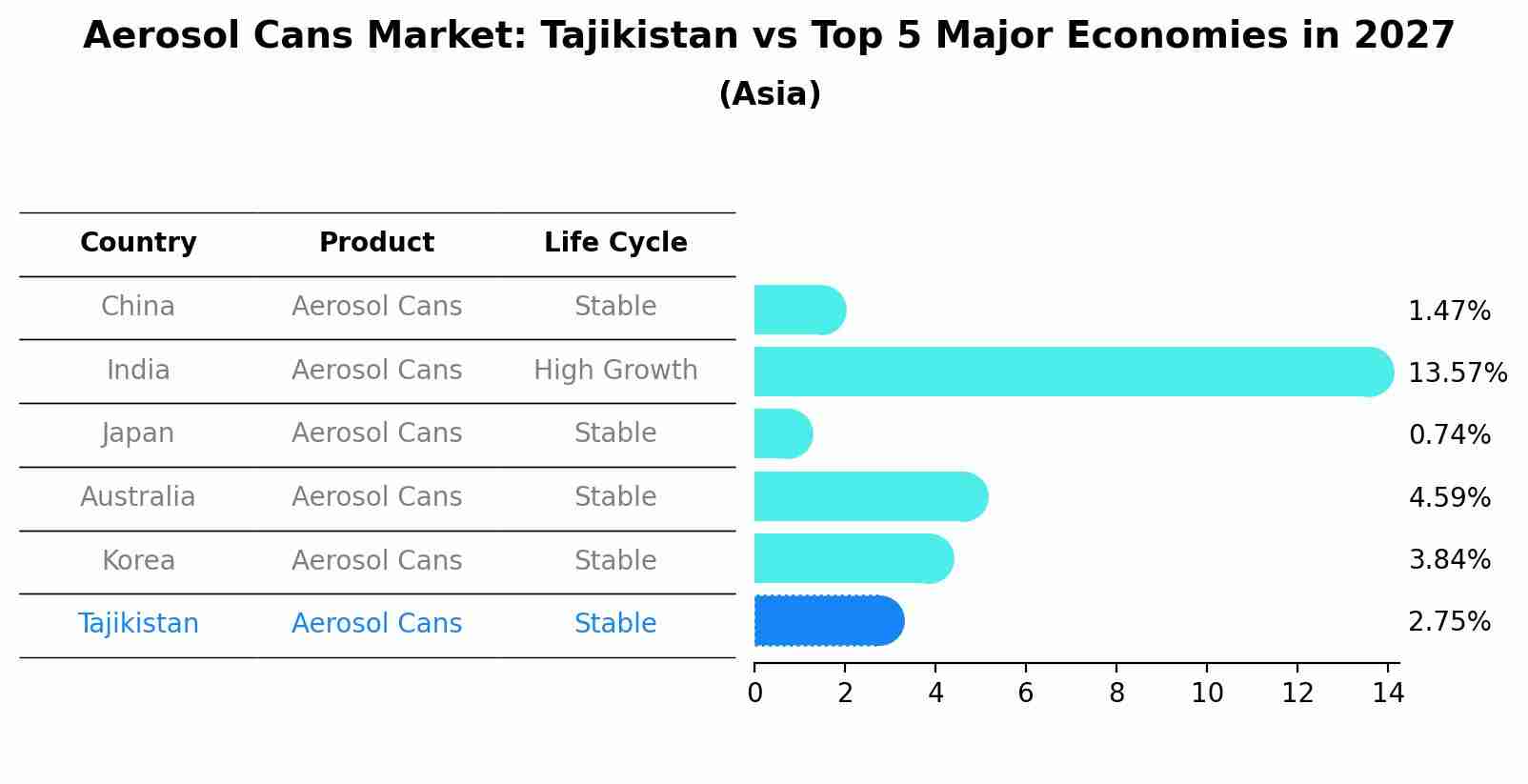
Aerosol Cans Market: Tajikistan vs Top 5 Major Economies in 2027 (Asia)
By 2027, Tajikistan's Aerosol Cans market is forecasted to achieve a stable growth rate of 2.75%, with China leading the Asia region, followed by India, Japan, Australia and South Korea.
Tajikistan Aerosol Cans Market Synopsis
The Tajikistan aerosol cans market is experiencing steady growth driven by increasing demand from various end-use industries such as personal care, household products, automotive, and paints & coatings. The market is characterized by the presence of both domestic and international players, offering a wide range of products to cater to diverse consumer needs. Factors such as convenience, portability, and ease of use are driving the adoption of aerosol cans in Tajikistan. Additionally, the growing awareness regarding sustainability and environmental concerns is prompting manufacturers to develop eco-friendly aerosol packaging solutions. The market is expected to continue its growth trajectory, fueled by innovation in product design, materials, and technology to meet evolving consumer preferences and regulatory standards.
Tajikistan Aerosol Cans Market Trends
The Tajikistan Aerosol Cans Market is experiencing growth due to increasing demand from various industries such as cosmetics, household products, and automotive. Consumers are preferring aerosol cans for their convenience, ease of use, and prolonged shelf life of products. There is a noticeable shift towards eco-friendly and sustainable aerosol packaging solutions, driven by growing environmental consciousness among consumers. Manufacturers are focusing on developing recyclable and reusable aerosol cans to meet these demands. Additionally, advancements in technology have led to the introduction of innovative designs and materials for aerosol cans, catering to the evolving preferences of consumers. Overall, the market is witnessing a trend towards sustainability, innovation, and diversified applications in Tajikistan.
Tajikistan Aerosol Cans Market Challenges
In the Tajikistan Aerosol Cans Market, several challenges are faced, including limited consumer awareness about the benefits and uses of aerosol products, leading to slower adoption rates. Additionally, the lack of advanced technology and infrastructure for aerosol can production within the country poses a challenge in meeting quality standards and cost-effectiveness. Import restrictions and customs regulations on aerosol cans also impact market growth and accessibility for both domestic producers and international companies. Furthermore, environmental concerns related to aerosol products` propellants and packaging materials have led to increased scrutiny and demands for sustainable alternatives, putting pressure on companies to innovate and adapt to changing consumer preferences and regulatory requirements. Overall, overcoming these challenges will require investment in education, technology, and sustainable practices within the Tajikistan Aerosol Cans Market.
Tajikistan Aerosol Cans Market Investment Opportunities
The Tajikistan aerosol cans market presents promising investment opportunities due to the country`s growing consumer goods sector and increasing demand for aerosol products such as cosmetics, household cleaners, and personal care items. With a relatively untapped market and a rising middle-class population driving consumption patterns, investors can explore opportunities in setting up manufacturing facilities for aerosol cans, distribution networks, or even investing in existing aerosol product manufacturers in the region. Additionally, the government`s efforts to attract foreign investment and improve infrastructure further enhance the attractiveness of the market for potential investors looking to capitalize on the growing demand for aerosol products in Tajikistan.
Jordan Agar Market Government Policies
The Tajikistan government has implemented policies related to the aerosol cans market to regulate the use of environmentally harmful substances in aerosol products. These policies aim to promote sustainable development and protect the environment by restricting the use of ozone-depleting substances and volatile organic compounds in aerosol cans. Additionally, the government has introduced regulations to ensure the safe handling, storage, and disposal of aerosol cans to minimize the risk of environmental contamination. Companies operating in the Tajikistan aerosol cans market are required to comply with these regulations to minimize their impact on the environment and contribute to sustainable practices in the country.
Tajikistan Aerosol Cans Market Future Outlook
The Tajikistan Aerosol Cans Market is expected to show steady growth in the coming years, driven by factors such as increasing demand from industries like personal care, automotive, and household products. The market is likely to benefit from the country`s growing economy and rising disposable incomes, leading to higher consumer spending on packaged goods. Additionally, the shift towards sustainable and eco-friendly packaging solutions is anticipated to drive innovation in the aerosol cans industry, offering opportunities for market expansion. However, challenges such as fluctuating raw material prices and regulatory constraints may impact the market`s growth trajectory. Overall, with evolving consumer preferences and technological advancements, the Tajikistan Aerosol Cans Market is poised for moderate growth in the foreseeable future.
Key Highlights of the Report:
- Tajikistan Aerosol Cans Market Outlook
- Market Size of Tajikistan Aerosol Cans Market, 2024
- Forecast of Tajikistan Aerosol Cans Market, 2031
- Historical Data and Forecast of Tajikistan Aerosol Cans Revenues & Volume for the Period 2021 - 2031
- Tajikistan Aerosol Cans Market Trend Evolution
- Tajikistan Aerosol Cans Market Drivers and Challenges
- Tajikistan Aerosol Cans Price Trends
- Tajikistan Aerosol Cans Porter's Five Forces
- Tajikistan Aerosol Cans Industry Life Cycle
- Historical Data and Forecast of Tajikistan Aerosol Cans Market Revenues & Volume By Material for the Period 2021 - 2031
- Historical Data and Forecast of Tajikistan Aerosol Cans Market Revenues & Volume By Aluminium for the Period 2021 - 2031
- Historical Data and Forecast of Tajikistan Aerosol Cans Market Revenues & Volume By Steel-Tinplate for the Period 2021 - 2031
- Historical Data and Forecast of Tajikistan Aerosol Cans Market Revenues & Volume By Other Materials for the Period 2021 - 2031
- Historical Data and Forecast of Tajikistan Aerosol Cans Market Revenues & Volume By End-user Vertical for the Period 2021 - 2031
- Historical Data and Forecast of Tajikistan Aerosol Cans Market Revenues & Volume By Cosmetic and Personal Care for the Period 2021 - 2031
- Historical Data and Forecast of Tajikistan Aerosol Cans Market Revenues & Volume By Household for the Period 2021 - 2031
- Historical Data and Forecast of Tajikistan Aerosol Cans Market Revenues & Volume By Pharmaceutical/Veterinary for the Period 2021 - 2031
- Historical Data and Forecast of Tajikistan Aerosol Cans Market Revenues & Volume By Paints & Varnishes for the Period 2021 - 2031
- Historical Data and Forecast of Tajikistan Aerosol Cans Market Revenues & Volume By Automotive/Industrial for the Period 2021 - 2031
- Historical Data and Forecast of Tajikistan Aerosol Cans Market Revenues & Volume By Other End-user Industries for the Period 2021 - 2031
- Tajikistan Aerosol Cans Import Export Trade Statistics
- Market Opportunity Assessment By Material
- Market Opportunity Assessment By End-user Vertical
- Tajikistan Aerosol Cans Top Companies Market Share
- Tajikistan Aerosol Cans Competitive Benchmarking By Technical and Operational Parameters
- Tajikistan Aerosol Cans Company Profiles
- Tajikistan Aerosol Cans Key Strategic Recommendations






































