Tajikistan Chlorine Market Size Growth Rate
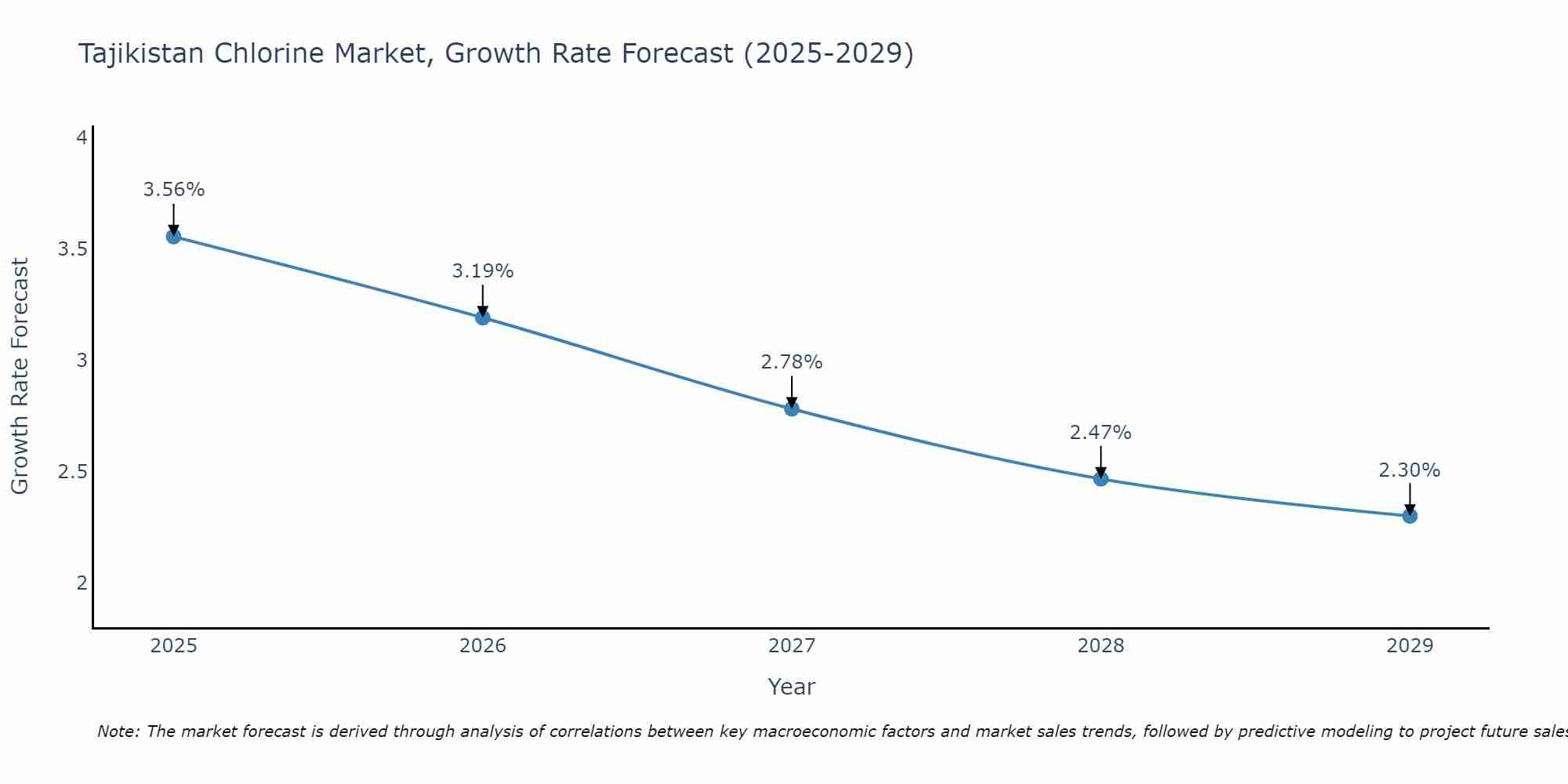
The Tajikistan Chlorine Market could see a tapering of growth rates over 2025 to 2029. Starting high at 3.56% in 2025, the market steadily declines to 2.30% by 2029.
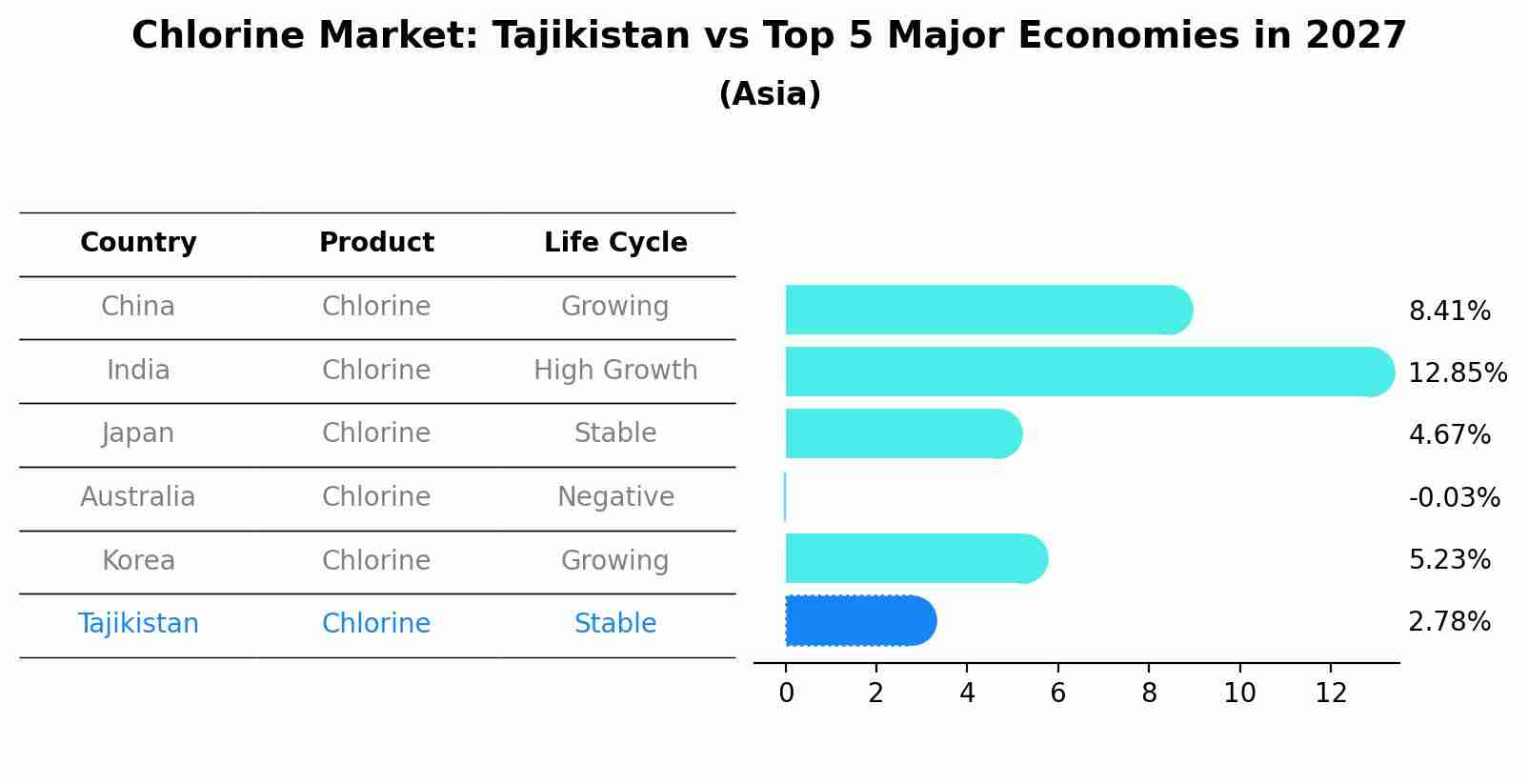
Chlorine Market: Tajikistan vs Top 5 Major Economies in 2027 (Asia)
The Chlorine market in Tajikistan is projected to grow at a stable growth rate of 2.78% by 2027, highlighting the country's increasing focus on advanced technologies within the Asia region, where China holds the dominant position, followed closely by India, Japan, Australia and South Korea, shaping overall regional demand.
Tajikistan Chlorine Market Overview
The Tajikistan Chlorine Market is driven primarily by the water treatment industry, with a focus on ensuring access to clean and safe drinking water. The demand for chlorine in Tajikistan is also influenced by its use in the manufacturing of various chemicals, including PVC, solvents, and pharmaceuticals. The market is characterized by a few key players dominating the supply side, leading to a somewhat oligopolistic market structure. Additionally, government regulations and standards regarding water quality and sanitation play a significant role in shaping the demand for chlorine in Tajikistan. The market is expected to witness steady growth in the coming years, driven by increasing urbanization, industrial development, and a growing awareness of the importance of water treatment and sanitation in the country.
Tajikistan Chlorine Market Trends
The Tajikistan Chlorine market is currently experiencing a steady growth due to increasing demand from various industries such as water treatment, pharmaceuticals, and agriculture. The market is being driven by the government`s initiatives to improve water quality and sanitation infrastructure across the country. Additionally, the rising awareness about the importance of clean water for health and agriculture is boosting the demand for chlorine products. However, challenges such as fluctuating raw material prices and environmental regulations are impacting the market growth. Market players are focusing on innovation, product development, and strategic partnerships to gain a competitive edge in the Tajikistan Chlorine market and capitalize on the growing opportunities in the region.
Tajikistan Chlorine Market Challenges
In the Tajikistan Chlorine Market, some key challenges include limited domestic production capacity, reliance on imports, fluctuating prices due to currency exchange rates, and insufficient infrastructure for storage and distribution. The country`s geographical location, being landlocked and mountainous, poses logistical challenges for importing chlorine. Additionally, inconsistent electricity supply and outdated technology in production facilities hinder the market`s growth potential. Political instability and regulatory issues can also impact market dynamics. Overall, these challenges create barriers to entry for new players, restrict market competitiveness, and affect the availability and pricing of chlorine in Tajikistan. Addressing these challenges will require investment in infrastructure, technology, and regulatory reforms to enhance the market`s efficiency and sustainability.
Tajikistan Chlorine Market Investment Opportunities
In the Tajikistan Chlorine Market, there are several investment opportunities worth considering. With the growing demand for chlorine in various industries such as water treatment, sanitation, and chemical manufacturing, investing in chlorine production or distribution facilities could be lucrative. Additionally, there is potential for investment in technology and equipment upgrades to enhance the efficiency and sustainability of chlorine production processes in Tajikistan. Furthermore, exploring partnerships with local businesses or government entities to meet the increasing demand for chlorine in the country can also be a promising investment avenue. Overall, the Tajikistan Chlorine Market presents opportunities for investors to capitalize on the growing need for chlorine-based products and services in various sectors within the country.
Tajikistan Chlorine Market Government Policy
The government of Tajikistan has implemented policies aimed at regulating the chlorine market in the country. These policies focus on ensuring the safety and quality of chlorine products, as well as promoting sustainable production practices. The government has put in place regulations regarding the handling, storage, and transportation of chlorine to prevent any potential hazards. Additionally, there are guidelines in place to monitor the pricing and distribution of chlorine to ensure fair competition and consumer protection. The government also encourages research and development in the chlorine industry to promote innovation and efficiency. Overall, Tajikistan`s government policies related to the chlorine market aim to ensure the availability of high-quality chlorine products while safeguarding public health and the environment.
Tajikistan Chlorine Market Future Outlook
The future outlook for the Tajikistan Chlorine Market appears positive, driven by increasing industrial activities, especially in the water treatment and manufacturing sectors. The demand for chlorine is expected to rise as the country continues to invest in infrastructure development and modernization projects. Additionally, the growing awareness of the importance of water sanitation and hygiene is likely to fuel the demand for chlorine-based products. However, factors such as fluctuating raw material prices and regulatory challenges may pose some constraints on market growth. Overall, with the anticipated economic growth and development in Tajikistan, the chlorine market is forecasted to experience steady growth in the coming years.
Key Highlights of the Report:
- Tajikistan Chlorine Market Outlook
- Market Size of Tajikistan Chlorine Market, 2024
- Forecast of Tajikistan Chlorine Market, 2031
- Historical Data and Forecast of Tajikistan Chlorine Revenues & Volume for the Period 2021 - 2031
- Tajikistan Chlorine Market Trend Evolution
- Tajikistan Chlorine Market Drivers and Challenges
- Tajikistan Chlorine Price Trends
- Tajikistan Chlorine Porter's Five Forces
- Tajikistan Chlorine Industry Life Cycle
- Historical Data and Forecast of Tajikistan Chlorine Market Revenues & Volume By Application for the Period 2021 - 2031
- Historical Data and Forecast of Tajikistan Chlorine Market Revenues & Volume By EDC/PVC for the Period 2021 - 2031
- Historical Data and Forecast of Tajikistan Chlorine Market Revenues & Volume By Isocyanates and Oxygenates for the Period 2021 - 2031
- Historical Data and Forecast of Tajikistan Chlorine Market Revenues & Volume By Chloromethanes for the Period 2021 - 2031
- Historical Data and Forecast of Tajikistan Chlorine Market Revenues & Volume By Solvents and Epichlorohydrin for the Period 2021 - 2031
- Historical Data and Forecast of Tajikistan Chlorine Market Revenues & Volume By Inorganic Chemicals for the Period 2021 - 2031
- Historical Data and Forecast of Tajikistan Chlorine Market Revenues & Volume By Other Applications for the Period 2021 - 2031
- Historical Data and Forecast of Tajikistan Chlorine Market Revenues & Volume By End-user Industry for the Period 2021 - 2031
- Historical Data and Forecast of Tajikistan Chlorine Market Revenues & Volume By Water Treatment for the Period 2021 - 2031
- Historical Data and Forecast of Tajikistan Chlorine Market Revenues & Volume By Pharmaceutical for the Period 2021 - 2031
- Historical Data and Forecast of Tajikistan Chlorine Market Revenues & Volume By Chemicals for the Period 2021 - 2031
- Historical Data and Forecast of Tajikistan Chlorine Market Revenues & Volume By Paper and Pulp for the Period 2021 - 2031
- Historical Data and Forecast of Tajikistan Chlorine Market Revenues & Volume By Plastic for the Period 2021 - 2031
- Historical Data and Forecast of Tajikistan Chlorine Market Revenues & Volume By Pesticides for the Period 2021 - 2031
- Historical Data and Forecast of Tajikistan Chlorine Market Revenues & Volume By Other End-user Industries for the Period 2021 - 2031
- Tajikistan Chlorine Import Export Trade Statistics
- Market Opportunity Assessment By Application
- Market Opportunity Assessment By End-user Industry
- Tajikistan Chlorine Top Companies Market Share
- Tajikistan Chlorine Competitive Benchmarking By Technical and Operational Parameters
- Tajikistan Chlorine Company Profiles
- Tajikistan Chlorine Key Strategic Recommendations






































