Tajikistan Electrical Equipment Market Summary
The tajikistan electrical equipment market was estimated at USD 510 Million in 2025 and is projected to reach USD 736 Million by 2032, growing at a CAGR of 6.3% from 2026 to 2032.
Tajikistan Electrical Equipment Market Year-wise Growth Rate and Key Drivers
This graph highlights how the Tajikistan Electrical Equipment Market has steadily grown over the past five years, supported by major growth factors.
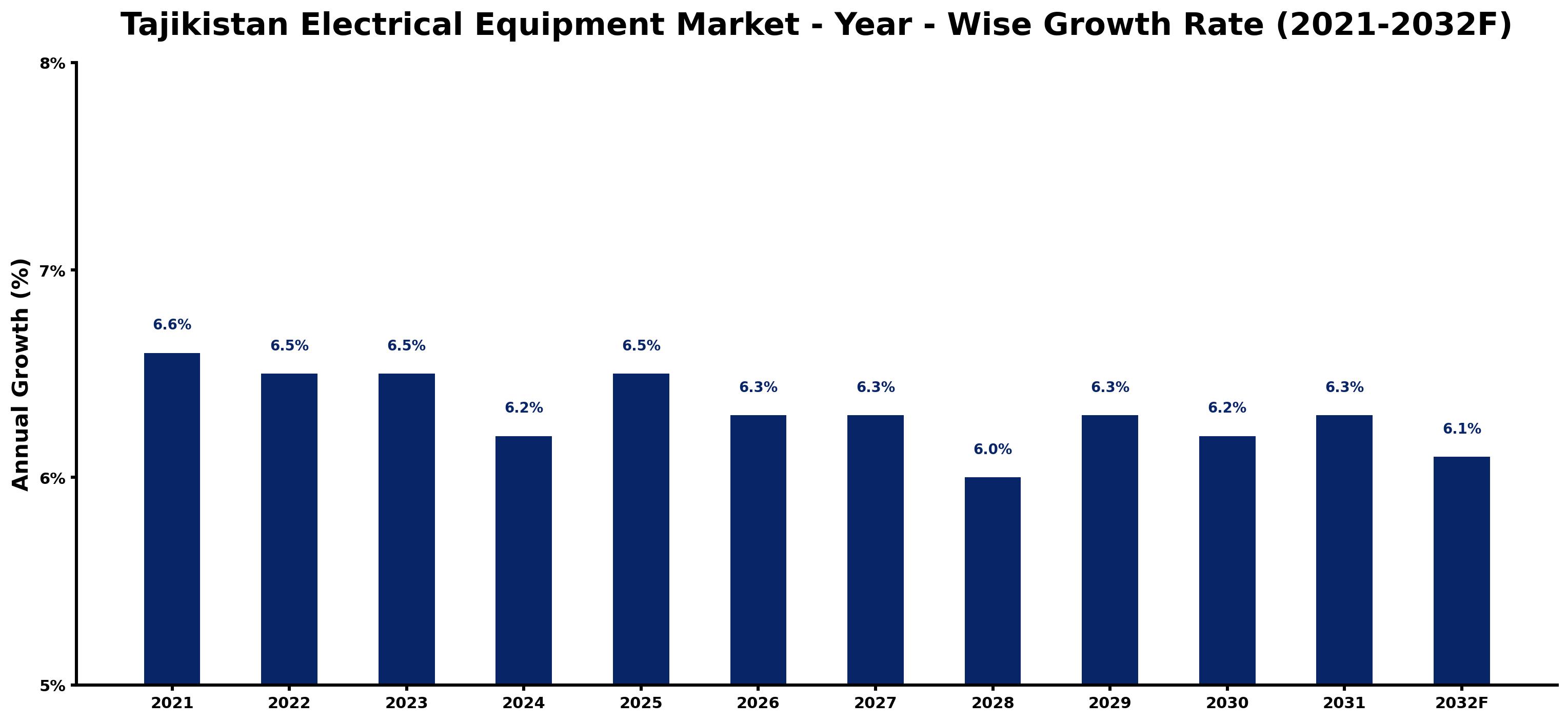
The table below presents the year wise growth rates along with the key drivers influencing the market
| Year | Growth Rate | Major Drivers |
| 2021 | 6.6% | Electricity access issues prompted investments in alternative electrical solutions across Tajikistan. |
| 2022 | 6.5% | Infrastructure development projects unveiled opportunities for electrical equipment manufacturers and suppliers. |
| 2023 | 6.5% | Increased focus on renewable energy sources influenced market dynamics and consumer preferences. |
| 2024 | 6.2% | International partnerships fostered technology transfer for advanced electrical equipment development. |
| 2025 | 6.5% | Tajikistan's urbanization trends created heightened demand for residential electrical installations and upgrades. |
| 2026 | 6.3% | Diverse energy supply challenges urged innovation in energy-efficient electrical solutions across sectors. |
| 2027 | 6.3% | Rural electrification programs expanded, attracting investments in localized electrical equipment production. |
| 2028 | 6.0% | Corporate sector growth emphasized automation, generating demand for sophisticated electrical systems. |
| 2029 | 6.3% | Educational initiatives promoted technical skills, enhancing local workforce capabilities in electrical engineering. |
| 2030 | 6.2% | Energy diversification strategies led to increased adoption of smart grid technologies in urban areas. |
| 2031 | 6.3% | Local regulations encouraged domestic manufacturing of electrical components, boosting the local economy. |
| 2032 | 6.1% | Technological interoperability became essential as regional markets integrated sustainable energy practices. |
Note - Market size estimations and growth projections presented in this report are based on 6Wresearch's advanced forecasting approach, validated with industry datasets as of June 2026.
Tajikistan Electrical Equipment Market Synopsis
The Tajikistan Electrical Equipment Market is projected to reach 6.3% and witness significant growth during the forecast period (2026-2032). This growth can be attributed to various factors, including increasing urbanization, extensive infrastructure development, and heightened industrialization efforts within the country. The demand for essential electrical equipment such as transformers, cables, switchgear, and various lighting products is experiencing an upswing as ongoing construction projects progress alongside modernization efforts in power grids.
Tajikistan Electrical Equipment Market Growth Drivers
Several key drivers are propelling the growth of the Tajikistan Electrical Equipment Market. Notably, the rapid pace of urbanization is contributing to the rising need for reliable electrical infrastructure to support densely populated areas. Infrastructure development initiatives are vital for the country's economic growth, leading to increased demand for electrical equipment in several sectors. Additionally, the modernization of existing power grids to enhance energy efficiency is driving the adoption of advanced electrical solutions.
- The urban population growth necessitates improved energy supply and distribution, driving demand for electrical equipment.
- Government infrastructure projects are creating opportunities for suppliers of electrical equipment.
- Modernization of the energy sector aims to improve energy efficiency and reliability, increasing demand for advanced technologies.
- International investments in the country's electrical grid create a competitive environment for local manufacturers and suppliers.
- Growing public awareness regarding energy conservation is leading to a higher preference for energy-efficient products.
Tajikistan Electrical Equipment Market Trends and Opportunities
In the Tajikistan Electrical Equipment Market, current trends reflect a significant shift towards sustainability and energy efficiency. The government's focus on enhancing the electrical infrastructure underlines the increasing adoption of smart technologies and renewable energy solutions. As construction and industrial activities continue to grow, the market is witnessing substantial demand for essential electrical components, including transformers, circuit breakers, and distribution cables.
- There is a marked increase in the adoption of smart electrical equipment, contributing to better energy management.
- The emphasis on renewable energy sources, including solar and wind, is fostering the development of new electrical solutions.
- Innovation in technology, such as digital monitoring systems, is enhancing operational efficiency in electrical supply.
- Regulatory support for energy-saving devices is stimulating supplier interest in developing eco-friendly product lines.
- Investment in electrical infrastructure, including transmission and distribution systems, presents substantial opportunities for market expansion.
Tajikistan Electrical Equipment Market Challenges and Restraints
Despite the favorable growth landscape, the Tajikistan Electrical Equipment Market faces several challenges that could hinder its potential. Limited access to financing options restricts market entry for new players and sustains the reliance on foreign technologies. Furthermore, inadequate infrastructure for distribution and maintenance poses a significant barrier to efficient delivery and service. Political instability and regional conflicts add an element of uncertainty, affecting overall market confidence.
- Access to modern technology remains limited, hampering the adoption of advanced electrical solutions.
- The underdeveloped distribution network affects the delivery of products and services, resulting in market inefficiencies.
- Inconsistent government policies and regulations lead to market volatility, complicating investment decisions.
- A skilled workforce shortage may hinder the growth of technological innovation within the sector.
- Unreliable power supply can detract from the overall demand for electrical equipment, impacting market growth.
Tajikistan Electrical Equipment Market Investment Opportunities
The Tajikistan Electrical Equipment Market presents numerous investment opportunities fueled by a strong focus on infrastructure development and modernization of the energy sector. Investors may particularly benefit from targeting renewable energy equipment, such as solar panels and wind turbines, given the country's abundant natural resources. Upgrading the aging electrical transmission and distribution infrastructure also represents a fruitful avenue for investment.
- Investing in renewable energy technologies aligns with the government's commitment to sustainable energy production.
- Partnerships with local firms can facilitate entry and operational expansion in the market.
- Government initiatives aimed at enhancing the electrical grid create a favorable investment climate.
- Investment in workforce development programs can mitigate the skills gap in the electrical sector.
- Public-private partnerships may enhance project viability and expedite infrastructure developments.
Tajikistan Electrical Equipment Market Government Investment and Initiatives
The Tajik government is actively engaging in policies and initiatives centered around the Electrical Equipment Market, aimed at fostering domestic production and reducing import reliance. Various measures, including import tariffs and encouraging foreign investments, demonstrate the government's commitment to strengthening local manufacturers. Additionally, incentives for renewable energy development and enhanced efficiency standards for electrical equipment underscore the government's proactive approach to improving the sector.
- The government is instituting import tariffs to protect and promote local manufacturers in the electrical equipment market.
- Investment incentives focus on renewable energy projects to align with global sustainability goals.
- Plans to enhance the regulatory framework are intended to ensure safety and quality standards in electrical products.
- Public spending initiatives are geared towards modernizing electricity infrastructure, boosting demand for electrical equipment.
- Development programs prioritize workforce training to address skill shortages in the electrical sector.
Tajikistan Electrical Equipment Market Latest Developments (May 2025 - June 2026)
Recent developments in the Tajikistan Electrical Equipment Market have indicated a continued commitment to infrastructure enhancement and modernization efforts. The government has intensified its focus on renewable energy sources, with new policies aimed at attracting foreign investments to support ongoing projects. During this period, various initiatives to upgrade electrical transmission and distribution systems have surfaced, reflecting the growing recognition of the need for reliable energy supply across the nation. The trend towards adopting smart technologies is also gaining traction as stakeholders strive to improve operational efficiency and energy management.
Tajikistan Electrical Equipment Market - Key Attractiveness of the Report
- 10 Years of Market Numbers
- Historical Data Starting from 2022 to 2025
- Base Year: 2025
- Forecast Data until 2032
- Key Performance Indicators Impacting the Market
- Major Upcoming Developments and Projects
Key Highlights of the Report:
- Tajikistan Electrical Equipment Market Outlook
- Market Size of Tajikistan Electrical Equipment Market, 2025
- Forecast of Tajikistan Electrical Equipment Market, 2032F
- Historical Data and Forecast of Tajikistan Electrical Equipment Revenues & Volume for the Period 2022-2032F
- Tajikistan Electrical Equipment Market Trend Evolution
- Tajikistan Electrical Equipment Market Drivers and Challenges
- Tajikistan Electrical Equipment Price Trends
- Tajikistan Electrical Equipment Porter's Five Forces
- Tajikistan Electrical Equipment Industry Life Cycle
- Historical Data and Forecast of Tajikistan Electrical Equipment Market Revenues & Volume By Types for the Period 2022-2032F
- Historical Data and Forecast of Tajikistan Electrical Equipment Market Revenues & Volume By Electronic and electrical wires and cables for the Period 2022-2032F
- Historical Data and Forecast of Tajikistan Electrical Equipment Market Revenues & Volume By Batteries and accumulators for the Period 2022-2032F
- Historical Data and Forecast of Tajikistan Electrical Equipment Market Revenues & Volume By Wiring devices for the Period 2022-2032F
- Historical Data and Forecast of Tajikistan Electrical Equipment Market Revenues & Volume By Electric lighting equipment for the Period 2022-2032F
- Historical Data and Forecast of Tajikistan Electrical Equipment Market Revenues & Volume By Others for the Period 2022-2032F
- Historical Data and Forecast of Tajikistan Electrical Equipment Market Revenues & Volume By Applications for the Period 2022-2032F
- Historical Data and Forecast of Tajikistan Electrical Equipment Market Revenues & Volume By Residential end-users for the Period 2022-2032F
- Historical Data and Forecast of Tajikistan Electrical Equipment Market Revenues & Volume By Non-residential end-users for the Period 2022-2032F
- Tajikistan Electrical Equipment Import Export Trade Statistics
- Market Opportunity Assessment By Types
- Market Opportunity Assessment By Applications
- Tajikistan Electrical Equipment Top Companies Market Share
- Tajikistan Electrical Equipment Competitive Benchmarking By Technical and Operational Parameters
- Tajikistan Electrical Equipment Company Profiles
- Tajikistan Electrical Equipment Key Strategic Recommendations






































