Tanzania Critical Infrastructure Protection Market Size & Growth Rate (2026-2032)
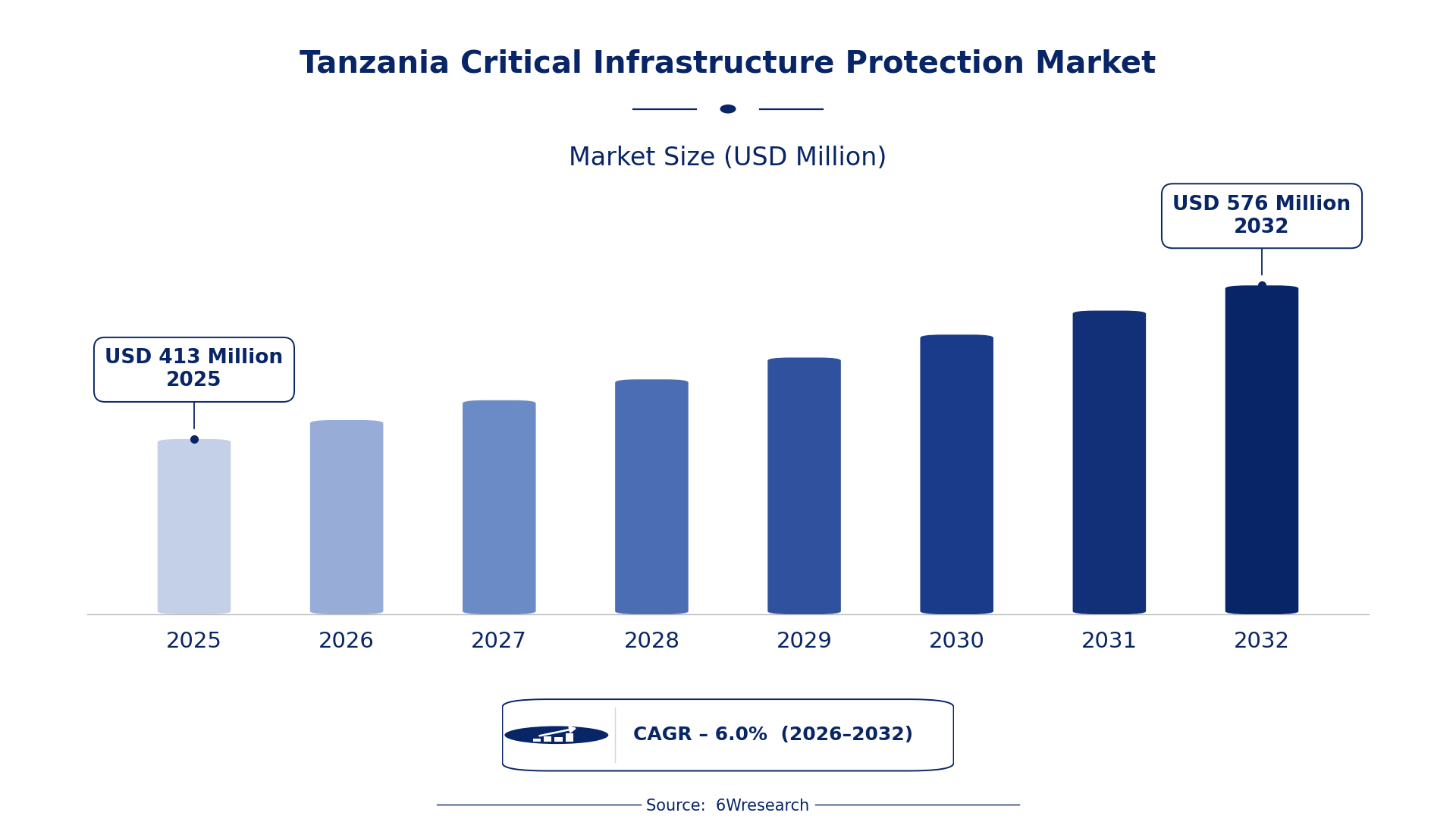
The Tanzania Critical Infrastructure Protection Market was estimated at USD 413 Million in 2025 and is projected to reach USD 576 Million by 2032, growing at a CAGR of 6.0% from 2026 to 2032.
Tanzania Critical Infrastructure Protection Market Synopsis
The security of Tanzania’s critical infrastructure is becoming increasingly paramount as the nation grapples with growing cyber threats and the vulnerabilities that come with infrastructural development. The government is recognizing the urgent need for cohesive strategies that safeguard essential sectors, including energy and transportation, from both physical and digital attacks.
Investments are surging in advanced security technologies such as video surveillance, access control systems, and integrated cybersecurity solutions tailored to the specific challenges faced by these sectors. As technology providers collaborate with government agencies, the focus on developing robust security frameworks is expected to enhance the resilience of Tanzania's critical assets.
Tanzania Critical Infrastructure Protection Market Year-wise Growth Rate and Key Drivers
This graph illustrates the annual growth rates of the Tanzania Critical Infrastructure Protection Market from 2021 to 2032, highlighting a steady upward trajectory and projected expansion over the forecast period.
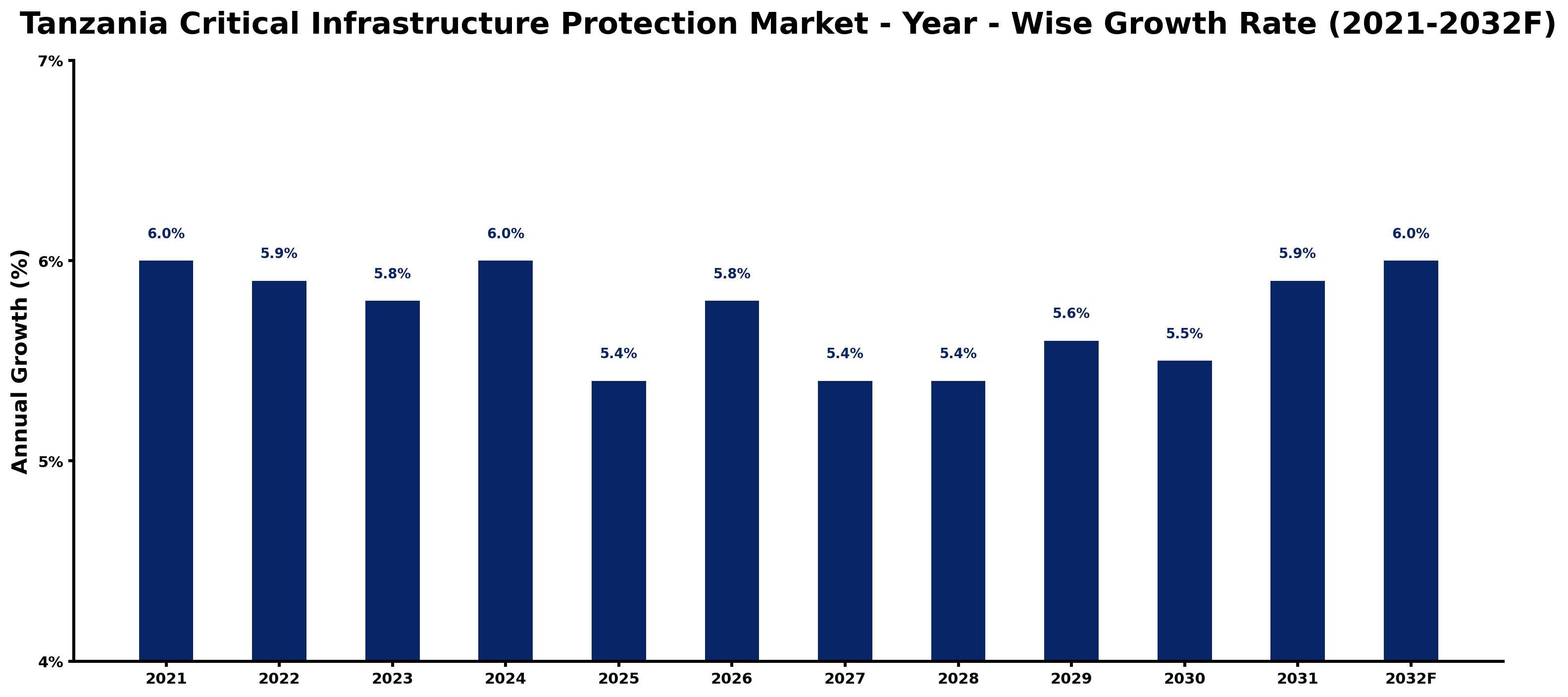
The table below presents the year‑wise growth rates along with the key drivers influencing the market
| Year | Growth Rate | Major Drivers |
| 2021 | 6.0% | Tanzania's national strategy for cybersecurity investments launched. |
| 2022 | 5.9% | Increased focus on protecting digital infrastructure post-pandemic. |
| 2023 | 5.8% | Government regulations mandating security for critical systems established. |
| 2024 | 6.0% | Public-private partnerships enhancing security tech adoption growing. |
| 2025 | 5.4% | Rising awareness of cyber threats among businesses increases demand. |
| 2026 | 5.8% | Investment in local cybersecurity firms gaining government support. |
| 2027 | 5.4% | Growing incidences of cyberattacks prompting infrastructural reinforcements. |
| 2028 | 5.4% | Tanzania's Vision 2025 emphasizes infrastructure resilience and security. |
| 2029 | 5.6% | Corporate cyber insurance policies driving protective technology investments. |
| 2030 | 5.5% | Youth tech workforce strengthening innovation in security solutions. |
| 2031 | 5.9% | International aid funding critical security infrastructure programs expanding. |
| 2032 | 6.0% | Regulatory compliance drives technology upgrades for infrastructure protection. |
Note: Market size estimations and growth projections presented in this report are based on 6Wresearch's proprietary forecasting methodology, utilizing the latest available industry data, government publications, and primary research inputs.
Tanzania Critical Infrastructure Protection Market Key Takeaways
Below are some of the specific key takeaways from the market, including:
- Heightened awareness of cybersecurity risks is pushing organizations to prioritize critical infrastructure protection.
- Cloud-based security solutions are gaining traction, enabling remote monitoring and management capabilities.
- Public-private partnerships are crucial for enhancing collaborative efforts in mitigating threats to critical infrastructure.
- Investment opportunities in sectors like energy and telecommunications are expanding as demand for advanced security solutions rises.
- Regulatory policies are evolving to reinforce standards for safeguarding essential infrastructures against emerging threats.
Evaluation of Restraints in Tanzania Critical Infrastructure Protection Market
Despite its potential, the Tanzania Critical Infrastructure Protection Market faces several restraints that hinder its growth. A significant barrier is the inadequate funding allocated for comprehensive security measures, which limits the ability of organizations to implement robust solutions. Additionally, there's a notable lack of awareness among many stakeholders regarding the critical need for infrastructure protection, compounded by insufficient cybersecurity expertise in local organizations.
The geographical spread of critical infrastructure across Tanzania also presents logistical challenges for maintaining consistent security protocols. Without effective coordination and information sharing between public and private sectors, achieving a unified strategy for critical infrastructure protection becomes increasingly difficult. Addressing these issues will require focused investment and capacity-building initiatives.
Tanzania Critical Infrastructure Protection Market Trends
A number of emerging trends are shaping the Tanzania Critical Infrastructure Protection Market. Firstly, there is an escalating investment in biometric systems and advanced surveillance technologies to safeguard critical assets against both cyber threats and physical intrusions. Companies are increasingly recognizing the importance of proactive security measures rather than reactive responses.
The shift towards cloud-based security solutions is not just a trend but a necessity, enabling organizations to monitor their critical infrastructures efficiently from any location. on top of that, there is a growing emphasis on collaboration between public and private sectors, fostering a more synchronized approach to addressing infrastructure vulnerabilities and ensuring sustainable security enhancements.
Tanzania Critical Infrastructure Protection Market Opportunities
Investment opportunities abound in Tanzania's Critical Infrastructure Protection Market, particularly within sectors like transportation, energy, telecommunications, and healthcare. With the government's commitment to modernizing infrastructure, there is a pressing demand for sophisticated security solutions to counteract potential cyberattacks and physical threats.
Venture prospects extend to developing cybersecurity systems, surveillance technologies, access control, and disaster recovery services. Additionally, as organizations strive to bolster their capabilities in risk management, there is a clear avenue for investment in training programs and consultancy services, which are vital for navigating the complexities of infrastructure protection.
Government Initiatives in the Tanzania Critical Infrastructure Protection Market
The Tanzanian government is actively shaping the Critical Infrastructure Protection Market through various initiatives that emphasize security and resilience. By implementing regulatory standards and promoting public-private collaborations, the government seeks to ensure comprehensive protection of vital assets. This regulatory focus is crucial as it lays the groundwork for enhancing the nation’s security infrastructure.
- A regulatory framework established in 2025 mandates enhanced security measures for critical sectors such as energy and telecommunications.
- Currently underway is a national cybersecurity awareness campaign aimed at educating organizations about the risks associated with critical infrastructure.
- A public-private partnership initiative launched in early 2025 focuses on improving risk assessment protocols and sharing intelligence across sectors.
- Plans are in motion for a comprehensive infrastructure audit to be conducted by 2026, assessing vulnerabilities and establishing improved security protocols.
Future Insights of the Tanzania Critical Infrastructure Protection Market
Looking ahead, the Tanzania Critical Infrastructure Protection Market is set for significant transformation between 2026 and 2032. With continued investment in infrastructure development, there will be a pronounced emphasis on securing these assets against a backdrop of rising cybersecurity threats. The collaboration between government and private entities will likely intensify, leading to a more integrated security approach.
As awareness surrounding the importance of infrastructure protection grows, companies providing advanced technologies and services will find fertile ground for expansion. The pressing need to counteract emerging threats is expected to drive innovation and foster a new era of security solutions, cementing Tanzania’s position in the regional security landscape.
Tanzania Critical Infrastructure Protection Market Latest Developments
Recent developments in the Tanzania Critical Infrastructure Protection Market indicate a vigorous push towards adopting advanced security technologies and frameworks. The past year has seen various initiatives aimed at enhancing the protection of vital infrastructure, reflecting a growing recognition of the need for sophisticated security measures across sectors.
- An advanced video surveillance system was implemented in late 2025 across major transport hubs to bolster security and monitoring capabilities.
- A cybersecurity enhancement program, initiated in Q2 2025, is currently ongoing, focusing on elevating local organizations’ cybersecurity practices.
- A new partnership between public sector entities and technology firms was established in early 2026 to develop integrated security solutions for critical infrastructure.
- Plans for a nationwide security awareness program aimed at training personnel in emergency response strategies are expected to launch by late 2026.
Tanzania Critical Infrastructure Protection Market - Key Attractiveness of the Report
- 10 Years of Market Numbers
- Historical Data Starting from 2022 to 2025
- Base Year: 2025
- Forecast Data until 2032
- Key Performance Indicators Impacting the Market
- Major Upcoming Developments and Projects
The increasing cyber threats and the government’s proactive stance on securing essential infrastructure are major growth drivers. There’s a notable rise in investments aimed at enhancing security capabilities across sectors such as energy and transportation.
Key Highlights of the Report:
- Tanzania Critical Infrastructure Protection Market Outlook
- Market Size of Tanzania Critical Infrastructure Protection Market, 2025
- Forecast of Tanzania Critical Infrastructure Protection Market, 2032
- Historical Data and Forecast of Tanzania Critical Infrastructure Protection Revenues & Volume for the Period 2022-2032F
- Tanzania Critical Infrastructure Protection Market Trend Evolution
- Tanzania Critical Infrastructure Protection Market Drivers and Challenges
- Tanzania Critical Infrastructure Protection Price Trends
- Tanzania Critical Infrastructure Protection Porter's Five Forces
- Tanzania Critical Infrastructure Protection Industry Life Cycle
- Historical Data and Forecast of Tanzania Critical Infrastructure Protection Market Revenues & Volume By Solution for the Period 2022-2032F
- Historical Data and Forecast of Tanzania Critical Infrastructure Protection Market Revenues & Volume By Physical Safety for the Period 2022-2032F
- Historical Data and Forecast of Tanzania Critical Infrastructure Protection Market Revenues & Volume By Security Video Surveillance Systems for the Period 2022-2032F
- Historical Data and Forecast of Tanzania Critical Infrastructure Protection Market Revenues & Volume By Screening for the Period 2022-2032F
- Historical Data and Forecast of Tanzania Critical Infrastructure Protection Market Revenues & Volume By Scanning for the Period 2022-2032F
- Historical Data and Forecast of Tanzania Critical Infrastructure Protection Market Revenues & Volume By Cybersecurity for the Period 2022-2032F
- Historical Data and Forecast of Tanzania Critical Infrastructure Protection Market Revenues & Volume By Encryption for the Period 2022-2032F
- Historical Data and Forecast of Tanzania Critical Infrastructure Protection Market Revenues & Volume By Threat Intelligence for the Period 2022-2032F
- Historical Data and Forecast of Tanzania Critical Infrastructure Protection Market Revenues & Volume By Component for the Period 2022-2032F
- Historical Data and Forecast of Tanzania Critical Infrastructure Protection Market Revenues & Volume By Solution for the Period 2022-2032F
- Historical Data and Forecast of Tanzania Critical Infrastructure Protection Market Revenues & Volume By Services for the Period 2022-2032F
- Historical Data and Forecast of Tanzania Critical Infrastructure Protection Market Revenues & Volume By Vertical for the Period 2022-2032F
- Historical Data and Forecast of Tanzania Critical Infrastructure Protection Market Revenues & Volume By Financial Institutions for the Period 2022-2032F
- Historical Data and Forecast of Tanzania Critical Infrastructure Protection Market Revenues & Volume By Government for the Period 2022-2032F
- Historical Data and Forecast of Tanzania Critical Infrastructure Protection Market Revenues & Volume By Defense for the Period 2022-2032F
- Historical Data and Forecast of Tanzania Critical Infrastructure Protection Market Revenues & Volume By Transport and Logistics for the Period 2022-2032F
- Historical Data and Forecast of Tanzania Critical Infrastructure Protection Market Revenues & Volume By Energy and Power for the Period 2022-2032F
- Historical Data and Forecast of Tanzania Critical Infrastructure Protection Market Revenues & Volume By Commercial Sector for the Period 2022-2032F
- Historical Data and Forecast of Tanzania Critical Infrastructure Protection Market Revenues & Volume By Telecom for the Period 2022-2032F
- Historical Data and Forecast of Tanzania Critical Infrastructure Protection Market Revenues & Volume By Chemicals and Manufacturing for the Period 2022-2032F
- Tanzania Critical Infrastructure Protection Import Export Trade Statistics
- Market Opportunity Assessment By Solution
- Market Opportunity Assessment By Cybersecurity
- Market Opportunity Assessment By Component
- Market Opportunity Assessment By Vertical
- Tanzania Critical Infrastructure Protection Top Companies Market Share
- Tanzania Critical Infrastructure Protection Competitive Benchmarking By Technical and Operational Parameters
- Tanzania Critical Infrastructure Protection Company Profiles
- Tanzania Critical Infrastructure Protection Key Strategic Recommendations






































